How does this directly benefit the AXL token holder? Does every swap generate meaningful buying pressure, reduce circulating supply or create sustained demand for AXL? I’m interested in the actual economic mechanics, not another announcement about network adoption. A successful network and a successful investment are two entirely different things.
You’re explaining how liquidity pools can work, but you’re not explaining why XRP would be necessary. Why couldn’t two tokenized assets trade directly through a liquidity pool? Why couldn’t another cryptocurrency serve as the intermediary? And even if XRP were used, what evidence suggests that would create sustained buying pressure and increase its market value? You’re describing a technological possibility, not demonstrating an investment thesis. Those are two entirely different things.
You’re making several enormous assumptions here. First, what evidence do you have that increased XRP utility will necessarily translate into sustained buying pressure? If XRP can be purchased, transferred, and sold within seconds, why would enormous transaction volume require an enormous market cap? Second, why are you assuming a trillion dollar market cap eliminates volatility? Bitcoin has reached trillion dollar valuations and still experienced significant price swings. Third, what happens when institutions use Ripple’s technology or RLUSD without needing to hold XRP? You’re treating utility, demand, price appreciation, and stability as though they’re all the same thing. They’re not. Can you explain the actual economic mechanism that connects them without relying on speculation about future adoption?
I’m genuinely curious where you’re getting this 1,700+ contracts figure.
Contracts with whom?
Which banks specifically?
Are these signed agreements, actual production deployments, transactions processed, or simply smart contracts deployed on a blockchain?
Because those are four very different things.
How many of these contracts involve financial institutions actually choosing Solana over Ripple or the XRP Ledger?
What transaction volume and revenue are they generating? Are these institutions using SOL itself, stablecoins on Solana, or merely the network’s infrastructure? And most importantly, what evidence demonstrates that any of this creates sustained demand for the SOL token? The same questions apply to XRP. I’m interested in measurable adoption, not announcements, partnerships, or impressive sounding numbers without context.
If 1,700 contracts really demonstrate institutional preference, there should be verifiable data supporting that conclusion. Can you provide it? Otherwise, aren’t we just replacing one cryptocurrency’s speculative narrative with another?
@Xfinancebull Will increased real world utility actually create enough sustained demand for XRP to meaningfully appreciate its market value?
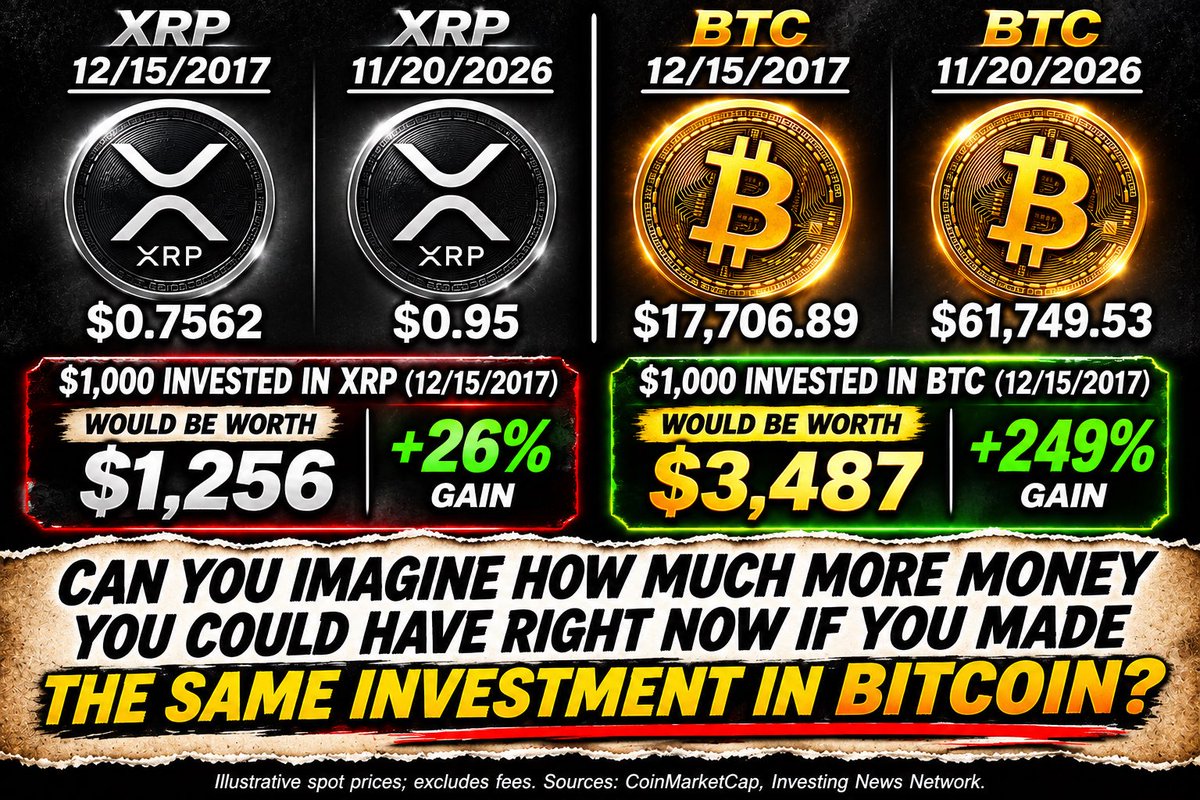
Unfortunately adoption alone doesn’t guarantee XRP investors benefits.
It’s a gamble
Congratulations to Ripple on growing RLUSD. Now explain what any of this has to do with XRP appreciating in value. RLUSD is backed by dollars, Treasuries, and cash equivalents, NOT XRP. Ripple itself confirms RLUSD operates across multiple blockchains, including Ethereum, without requiring XRP. The $2.82 billion represents stablecoin circulation, not $2.82 billion invested in XRP. Even on the XRP Ledger, XRP is primarily needed for small transaction fees and account reserves, not to collateralize every RLUSD token. Ripple can build a highly profitable stablecoin business without creating proportional buying pressure on XRP. The XRP promotional machine seems interested in answering.
How much measurable, sustained XRP demand has this $2.82 billion in RLUSD actually generated?
Until you can demonstrate that, you’re celebrating Ripple’s business growth and marketing it as XRP holder value. Those are two very different things.