#USMNT striker Folarin Balogun on his immediate reaction to red card:
“I think it was just important to stay calm. I never want to react out of anger and out of emotion. There’s still lots of people we’re inspiring, little kids, boys and girls who are watching, and we have to show them the correct way to handle things, even when you think it's unjust.”
On shaking ref’s hand postgame:
“As said, you can feel like something, injustice can happen to you. It’s not an excuse to be disrespectful… I'm aware that the World Cup might be the first time a lot of American viewers are tuning in. So it's important just to show people, whether things happen to you, good or bad, just to continue to be yourself.”
That was some straight B.S. from the GREAT Geno Auriemma. Never — ever — thought I’d see the day when the greatest woman’s college coach in history would go down so CLASSLESSLY!!! Horrible look, and should be called out for it. He got OUTCOACHED. Plain and simple. And gets in her face like she did something wrong to him instead of being gracious. Had Dawn Staley acted like that we would be all over her. #HorribleGENO!
Geno Auriemma accountability impossible challenge
UCONN star Sarah Strong rips her own jersey in a fit of rage, then Geno goes on a rant throwing shade at Dawn Staley and claiming his players are getting hacked.
Meanwhile, UCONN has gotten away with murder on defense all game.
WOW.
Geno Auriemma and Dawn Staley going at it at the Women’s Final Four
Sportsmanship level -1000 for Coach Auriemma after going straight to the locker room and refusing to shake South Carolina’s hands.
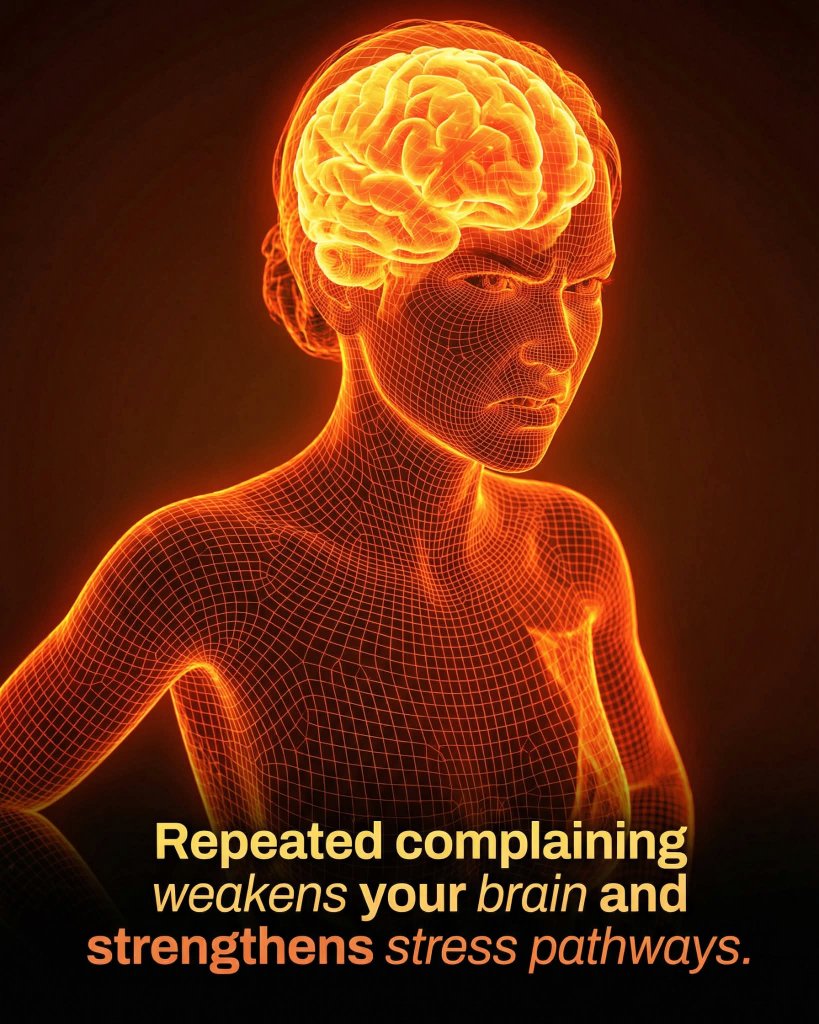
🚨 Research shows repeated complaining physically rewires your brain to prioritize stress and negativity.
The way we speak about our daily challenges does more than just vent frustration; it physically alters the architecture of the brain.
When we engage in chronic complaining, we repeatedly activate neural networks responsible for detecting threats and processing stress.
Through the biological process of neuroplasticity, these circuits become stronger and more efficient every time they are used. Essentially, the brain learns to become more adept at finding things to be unhappy about, turning a temporary mood into a permanent biological predisposition toward negativity and fear-based thinking.
As these negative pathways become the brain's default setting, individuals often experience a measurable increase in baseline stress levels and emotional volatility. This heightened sensitivity means that even minor inconveniences can trigger an intense stress response because the brain has been conditioned to interpret the world through a lens of threat. Findings discussed by the Stanford University School of Medicine emphasize that while this mechanism is powerful, understanding the science of affective neuroscience is the first step in consciously redirecting those pathways toward more resilient emotional patterns.
Source: Stanford University School of Medicine. (2023). Neural Plasticity and the Impact of Negative Thought Patterns on Emotional Regulation. Stanford Medicine News.