Kyrgyzstan’s massive shifts in trade during the Ukraine war triggered the EU’s first use of anti-circumvention sanctions in April. But it’s not the only former Soviet state showing risks of transshipping Western goods to Russia’s war machine.
The Kharon Brief’s latest Data Point details what other countries might be on the EU’s sanctions radar:
https://t.co/w7jUVWZwnn
China’s booming commercial space sector is deeply embedded in Beijing’s military-industrial complex. From Iranian missile targeting to Russian surveillance in Ukraine, "private" firms are providing Western adversaries critical warfighting tools.
Kharon traces China’s rocket economy heading for public listings on Shanghai's STAR Market.
Read more: https://t.co/wjYaCH5Qcj
On June 17 at 2:00 PM ET, Kharon’s Ethan Woolley will join AAFA’s Audrey Clark and former DHS Director of the Entity List Office, Leroy Potts, for a technical deep dive into the evolving landscape of forced labor compliance.
Register here: https://t.co/2EouAuVTjW
Kharon will be exhibiting at the NielsonSmith Trade Compliance Tech Forum next week. If your team is working through how AI fits into trade compliance, come find us at our booth.
Request to meet with us here: https://t.co/S0ubsfwTqP
Kharon is proud to be recognized in Everest Group’s Top 50™ Financial Crime and Compliance Technology Providers 2026 report.
The distinction reflects Kharon’s role in advancing intelligence-led compliance as organizations seek deeper risk intelligence to identify hidden exposure, understand complex networks, and respond to evolving financial crime typologies.
Learn more: https://t.co/0H1c9un0Up
OFAC’s Lawrence Scheinert will sit down with Kharon's Howard Mendelsohn to discuss the sham transactions guidance, the enforcement focus on gatekeepers, and the growing convergence of AML and sanctions.
Don’t miss this exclusive conversation: https://t.co/ViMEZGCyo1
Tomorrow, Kharon’s Freya Page, a founding member of OFSI, will sit down with Deputy Director Beth Davies to reflect on a decade of milestones and break down the new OFSI Strategy 2026–29.
Don’t miss this exclusive session: https://t.co/UOEghzPjhR
Kharon will be exhibiting at the HERSA Annual Conference. We partner with HERSA to support higher education institutions navigating complex export control and research security challenges.
Click here to request a meeting with us at the event: https://t.co/1GbvKl2wCK
China’s commercial space sector is now fully integrated into Beijing’s military-industrial complex. Using PLA launch sites and supporting Russian and Iranian intelligence, Beijing’s rocket-economy firms are functioning as modern space mercenaries even as they seek public funding.
Get the full story here: https://t.co/JbBDT5mtNo
Kharon will be leading a workshop at SIFMA AML26 on the proposed AML/CFT modernization rules and what they mean for firms.
Our team will also be at Booth #9 to showcase how Kharon helps firms identify hidden risk.
Request to meet: https://t.co/K0sQqTN3ma
Traditional screening is no longer enough to keep pace with today’s complex trade landscape. As sanctions and export control requirements evolve, compliance teams need to look beyond names on a list to uncover hidden ownership and control risks.
Join experts from Kharon and Tradeflow for a live webinar exploring what this shift means in practice.
Register here: https://t.co/AfuBBuJ55i
The U.S. Bureau of Industry and Security (BIS) opened 2026 by turning a series of long-term export-control investigations into high-price penalties.
In a Kharon webinar, Berliner Corcoran & Rowe LLP’s Dan Fisher-Owens explained what the BIS cases signal about U.S. enforcement and the compliance oversights that are costing exporters the most.
Read more: https://t.co/isWPqEJfqA
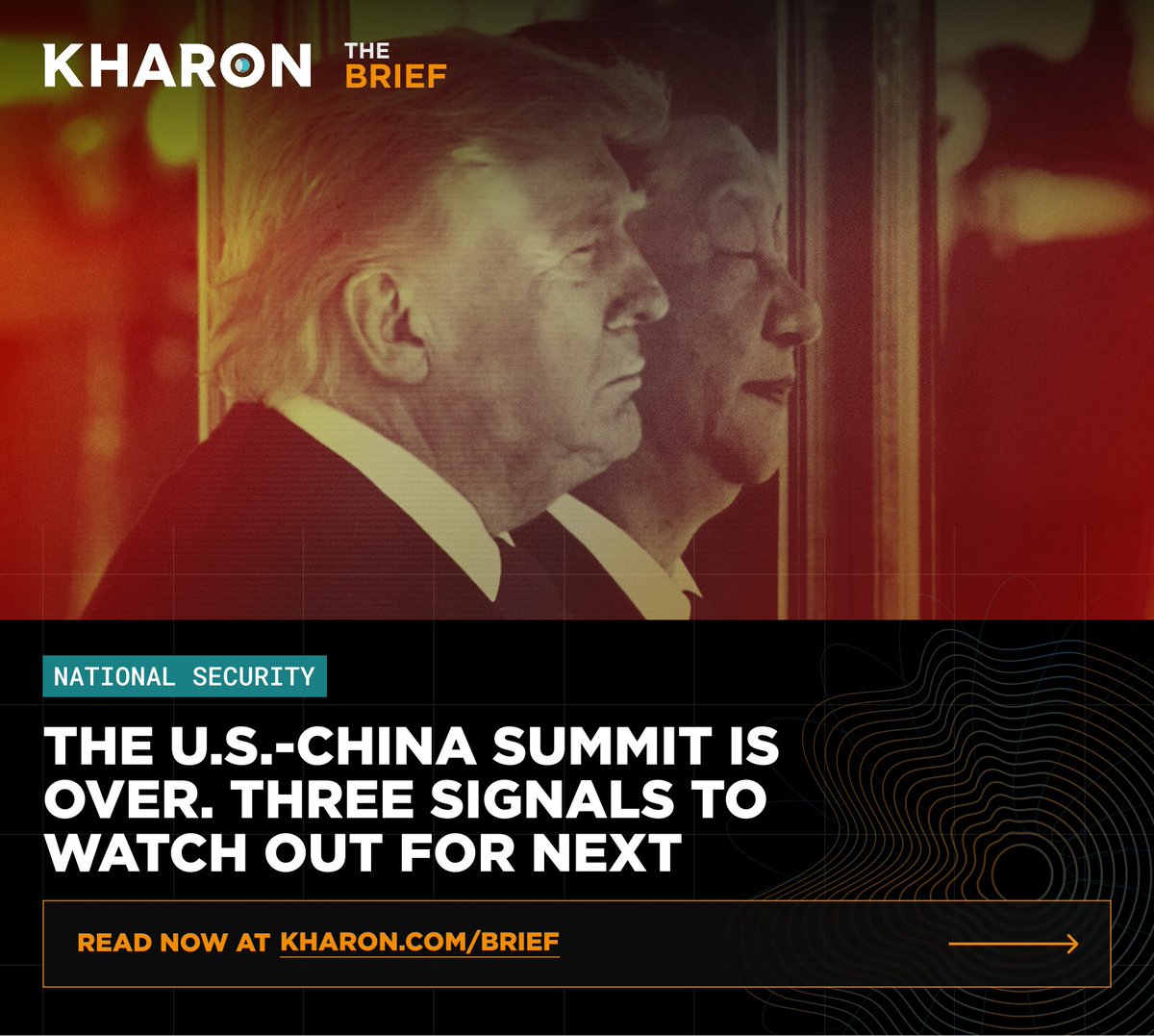
"Don’t get mesmerized by the diplomatic verbiage," U.S. intelligence veteran David Shedd tells Kharon in a sitdown.
While Washington and Beijing both said they’re pursuing “strategic stability” out of last week’s summit, the operational reality tells a slightly different story. The real signals aren’t in the pomp and press releases, says Shedd–they’re in the enforcement actions.
Find out what to watch out for next: https://t.co/ZBs3BVyIda
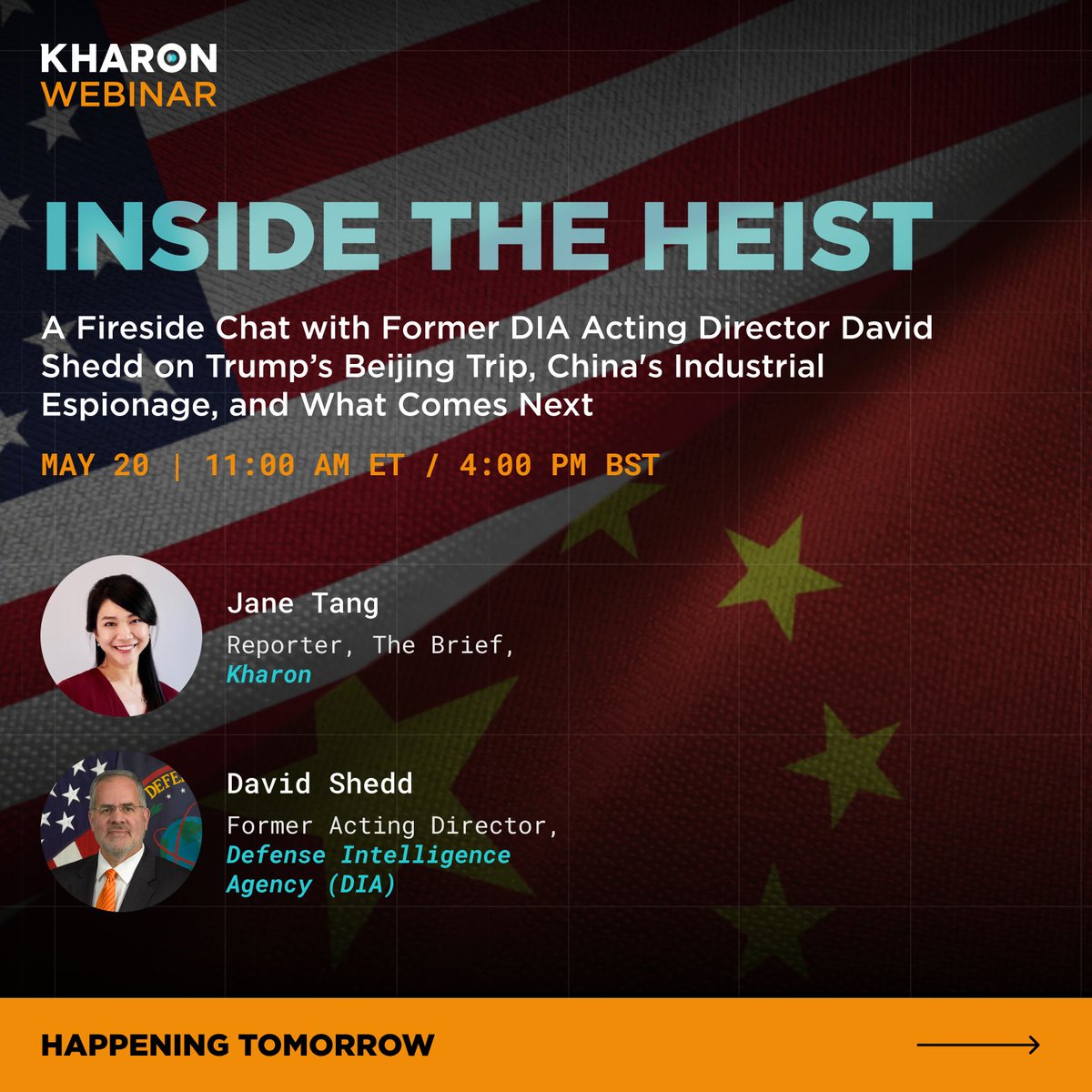
Our fireside chat with David Shedd, former Acting Director of DIA, is now on demand. Mr. Shedd discusses the recent Trump-Xi summit and what it signals for U.S.–China strategic competition, China's industrial espionage, and corporate exposure.
Watch now: https://t.co/DP0yZBlwaz
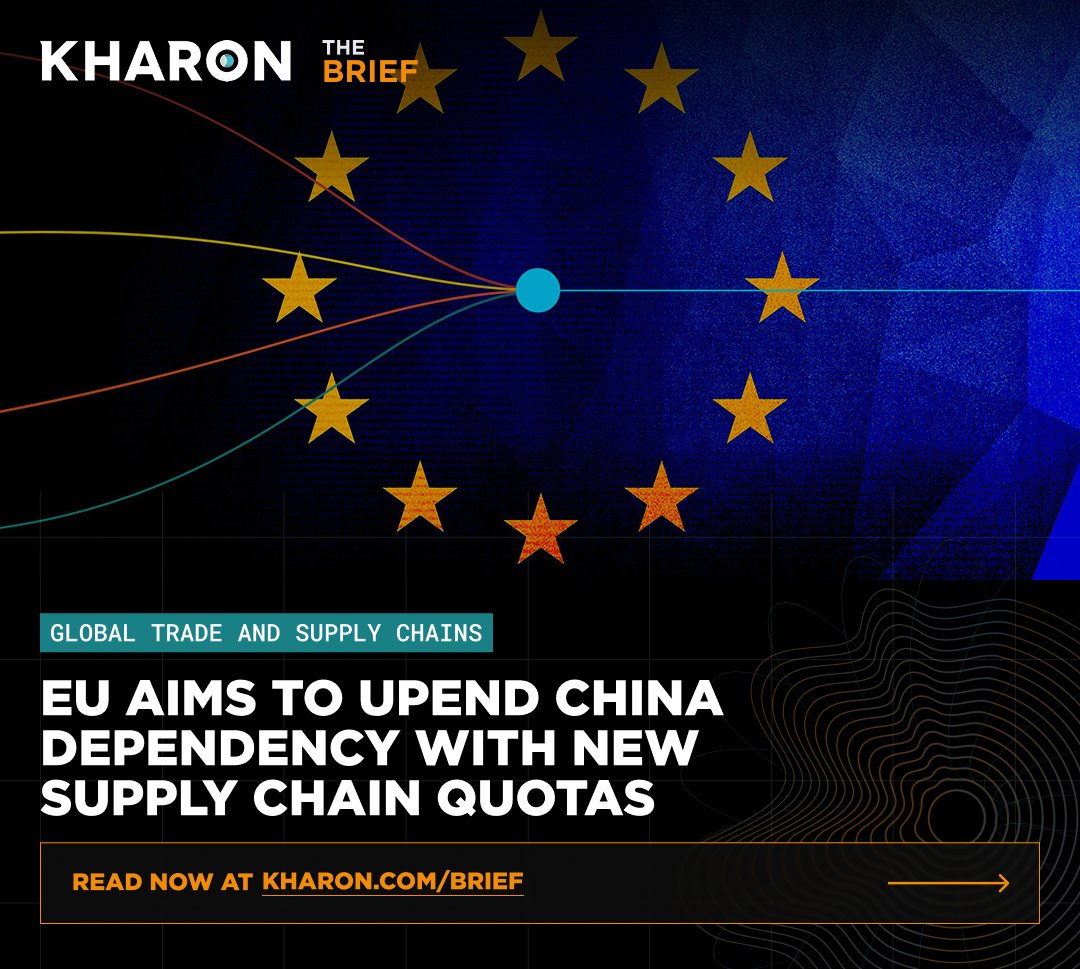
The EU is drafting aggressive new trade measures that would compel European companies to diversify their supply chains away from single-country dependencies, a move meant to counter threats posed by over-reliance on Chinese exports and Beijing’s trade practices.
Read the full story: https://t.co/FZXsgU1XBw
The Trump administration is transforming the risk calculus for foreign companies doing business with Cuba. New IEEPA-based secondary sanctions have already sent one Canadian miner's stock down nearly 50% and frozen its Cuban operations.
Read more: https://t.co/tRsvJt3gtC
Kharon will be exhibiting at the European Network Conference on Research Security on May 26 - 27.
Meet with Ethan Woolley, Kharon's Global Director of Strategy, to learn more about how we help research security professionals identify hidden entity relationships, surface undisclosed connections, and assess collaboration risk before it compromises the integrity of your research program.
Learn more: https://t.co/IrzjC2JBcA
Just days after the Trump-Xi summit, David Shedd, former Acting Director of the DIA, will join us to unpack what it signals for U.S.–China strategic competition — and how it connects to China's decades-long industrial espionage campaign.
Register here: https://t.co/9XdjttzMb2
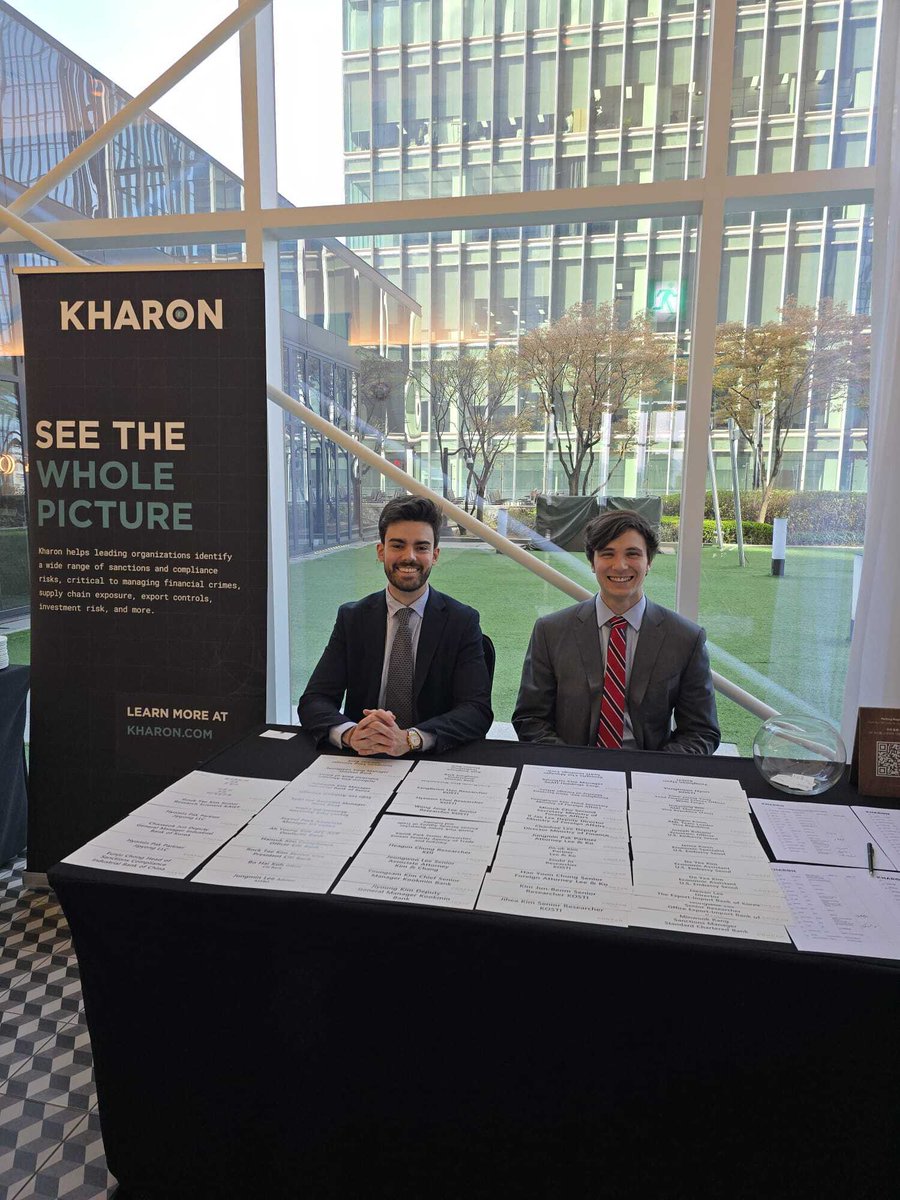
Kharon partnered with the U.S. Department of State to host a two-day workshop in Seoul, South Korea, focused on best practices in sanctions risk management.
The engagement brought together public and private sector professionals to strengthen sanctions implementation and detect potential evasion networks. Kharon subject matter experts shared data-driven insights to help participants identify and mitigate exposure to Chinese and Russian proliferation networks.
The event featured:
• Thematic topics related to the global 50% ownership rules and how to calculate OFAC’s 50 Percent Rule
• Interactive case studies on Russian and Chinese evasion tactics used to illicitly acquire dual-use items.
• Open-source research techniques to enhance due diligence efforts
• Collaborative efforts to reinforce the need for cross-sector cooperation to enhance the detection of procurement networks.
Thank you to the participants for their commitment to global security and enhancing sanctions-risk oversight.