GPT-5.6 becomes far more useful when you remove the chat window.
I put Sol, Terra, and Luna inside one Agent OS with Claude, Hermes, Grok, and Codex.
One dashboard.
One memory system.
One workspace for every build.
Andrew Ng and AMD CEO revealed the plan
How anyone can become a $40k AI engineer from scratch:
00:00 - one engineer with AI can replace 5 employees
14:15 - one day with AI can replace 3 months of work
23:28 - how to build a profitable company for $20
This free 26-minute talk is worth more than a $90,000 Stanford AI degree
Bookmark and watch it today
Then read the article below
Finally switched from Claude to Codex. Two reasons:
1. Fable (in Web) kept redirecting to 4.8. I don't want to spend my days arguing with a model or asking it to rephrase my prompts to be acceptable
2. 5.6 Sol is a beast at attacking coding problems
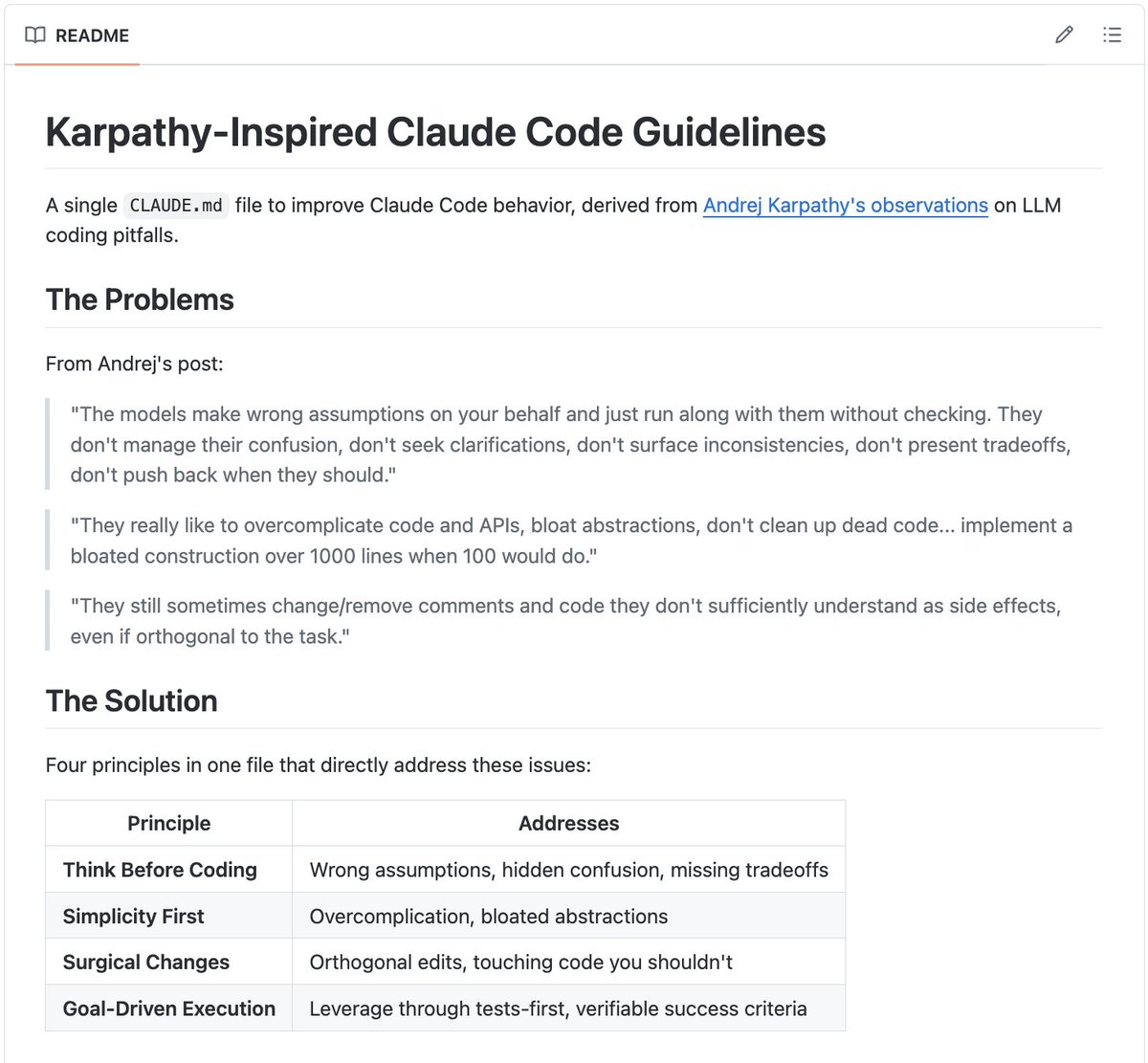
A single 𝗖𝗟𝗔𝗨𝗗𝗘.𝗺𝗱 file just hit 192k GitHub stars.
(derived from Karpathy's coding rules)
Andrej Karpathy observed that LLMs make the same predictable mistakes when writing code: over-engineering, ignoring existing patterns, and adding dependencies you never asked for.
If you've used AI coding assistants, you've hit all of these.
But here's the thing:
If the mistakes are predictable, you can prevent them with the right instructions.
That's exactly what this 𝗖𝗟𝗔𝗨𝗗𝗘.𝗺𝗱 does. You drop one markdown file into your repo, and it gives Claude Code a structured set of behavioral guidelines for your entire project.
This is a big deal.
- Built entirely around prompt engineering for AI coding assistants
- No framework, no complex tooling, just one .md file that shapes behavior
Developers are moving past "use AI to write code" and into "engineer the AI's behavior so the code is actually good."
The Claude Code ecosystem is growing fast, and the best tools in it aren't always software. Sometimes they're just well-crafted instructions.
100% open-source.
Link to the GitHub repo: https://t.co/pq6g88tNE3
That said, I wrote an article on the anatomy of the .claude folder, which was read by 11 million people.
It's a complete guide to 𝗖𝗟𝗔𝗨𝗗𝗘.𝗺𝗱, hooks, skills, agents, and permissions, and how to set them up properly.
The article is quoted below.
$JPM JPMorganChase Q2 FY26.
• Net revenue +28% Y/Y to $57.3B ($6.7B beat)
• Net Income +41% Y/Y to $21.2B
• $4.6B net gain related to Visa shares
• Asset & Wealth AUM +18% Y/Y to $5.1T
• FY26 NII guide unchanged ~$96.5B (+$1.5B)
How to use both Claude Fable 5 and GPT-5.6 all day without hitting limits.
Most people don't know you can run both inside the same session.
Fable 5 as the orchestrator. GPT-5.6 as the executor. 10 subagents working in parallel.
This setup saves at least 60% of your Fable 5 token consumption — and you never hit the 5-hour limit again.
You only need to set it up once. Here's exactly how:
━━━━━━━━━━━━━━━━━━━━━━━━━━
STEP 1 — Install the Codex plugin inside Claude Code
Run these three commands:
/plugin marketplace add openai/codex-plugin-cc
/plugin install codex@openai-codex
/reload-plugins
━━━━━━━━━━━━━━━━━━━━━━━━━━
STEP 2 — Tell Fable 5 to finish the setup
Paste this prompt into Claude Code:
"Set up Codex inside this Claude Code environment. Use the official OpenAI Codex plugin that was just installed. Run /codex:setup. If Codex CLI is missing, install it. If Codex is installed but not authenticated, ask me to authenticate with my ChatGPT account. After auth is complete, verify that Codex works from inside Claude Code. Then confirm that the codex:codex-rescue sub-agent is available. Do not change any project code during setup."
━━━━━━━━━━━━━━━━━━━━━━━━━━
STEP 3 — Authenticate once
Fable 5 will trigger the Codex setup automatically.
You authenticate your ChatGPT or Codex account once.
After that, Codex runs from inside Claude Code using your existing Codex subscription — no extra cost, no extra setup.
━━━━━━━━━━━━━━━━━━━━━━━━━━
STEP 4 — Tell Fable 5 how to delegate work
Paste this prompt:
"From now on, use this workflow:
You are the orchestrator.
Use Fable 5 for planning, repo understanding, architecture decisions, task decomposition, and final review.
Use codex-rescue as the executor when a task needs heavy implementation, debugging, test fixing, refactoring, or multi-file code edits.
When delegating to Codex, use /codex:rescue.
Prefer GPT-5.6 Sol medium as the daily driver for implementation tasks.
Keep Codex tasks focused and specific.
After Codex finishes, inspect the result yourself before accepting it.
Do not blindly trust Codex output."
━━━━━━━━━━━━━━━━━━━━━━━━━━
WHICH GPT-5.6 MODEL TO USE AND WHEN
This is where most people leave money on the table. Not all GPT-5.6 tiers are equal.
GPT-5.6 Sol medium → your daily driver
DeepSWE score: 61. Cost: $1.86. Fewer steps than almost every other model on the benchmark. This is the model doing 80% of the execution work in this setup. Fast, cheap, accurate enough for most implementation tasks.
GPT-5.6 Sol extra high → planning and orchestration
DeepSWE score: 71. Cost: $4.70. Use this when the task needs serious reasoning — architecture decisions, task decomposition, complex debugging. Scores higher than Fable 5 extra high (70) at less than a third of the cost ($13.41 vs $4.70). This is the model that replaced Fable 5 as my planning layer.
GPT-5.6 Terra/Luna → pure execution
Fast. Cheap. No overthinking. Once the plan is locked, this is what runs it. Extremely fast execution, minimal bugs, high quality output on well-defined tasks.
━━━━━━━━━━━━━━━━━━━━━━━━━━
THE ULTIMATE PLAN: 3-MODEL WORKFLOW
If you want maximum output quality at minimum cost, this is the setup:
Step 1 → Plan with GPT-5.6 Sol extra high
Full task/session/project planning. Architecture. Decomposition. Edge cases.
Step 2 → Critique with Fable 5 high
Find loopholes. Patch loose ends. Challenge assumptions. Fable 5 is at its best here — pure reasoning, no implementation cost.
Step 3 → Execute with GPT-5.6 Terra/Luna
Implement the battle-tested plan. Fast, clean, no waste.
TLDR:
Plan → GPT-5.6 extra high
Critique → Fable 5 high
Execute → GPT-5.6 Terra/Luna
The orchestrator thinks. The critic patches. The executor builds. You review.
━━━━━━━━━━━━━━━━━━━━━━━━━━
4 PRO TIPS TO NEVER HIT A LIMIT AGAIN
→ Tip 1: Turn this into a skill
Name it Fable-GPT. Call it at the start of every session. One command activates the entire workflow — no re-pasting prompts every time.
→ Tip 2: Use skill + goal for heavy tasks
Goals are best for long-horizon work. Set the goal, activate the skill, let the orchestrator-executor loop run until it's done. Check back when it surfaces for review.
→ Tip 3: Use subagents if you're on the Codex 20x Pro plan
Run 5 to 7 parallel subagents at once. With this setup, you will never hit the 5-hour limit. Each agent works independently on its assigned task while the others run in parallel.
→ Tip 4: Clear context after 4 compactions
Context rot is real. After 4 /compact cycles the conversation quality degrades. Use a /handoff skill before clearing to preserve the critical context — task state, decisions made, what's left to do. Start the new session by loading the handoff file.
━━━━━━━━━━━━━━━━━━━━━━━━━━
THE FULL PICTURE
Before this setup:
→ Fable 5 hits limits by midday
→ Heavy implementation burns your best tokens
→ You manually switch between tools
→ One model, one pace, one bill
After this setup:
→ GPT-5.6 Sol medium handles 80% of execution at $1.86/task
→ GPT-5.6 extra high outplans Fable 5 at 3x lower cost
→ 3-model critique loop catches every bug before it ships
→ 5 to 7 parallel subagents running simultaneously
→ 60%+ fewer Fable 5 tokens consumed
→ Never hit the 5-hour limit again
One setup. Runs forever.
Save this. Set it up tonight.
Some scary stats on China's militaro-industrail complex's capacity:
- China casts more metal products than the next nine countries combined and >5× the US.
- Its shipbuilding capacity is ~200× the US (a total-capacity figure, not per-ship speed).
- It makes ~90% of the world's commercial drones, and controls ~80% of drone components.
- Chinese civilian factories could retool within a year to produce ~1 billion weaponized drones annually using under 1% of existing assembly capacity.
Anthropic CEO Dario Amodei:
"I was one of the first folks to join OpenAI - I was there about five years - and that's what takes us to the founding of Anthropic."
the path from wanting to understand the universe to building Claude:
→ he started in physics - just wanted to understand the universe. AI felt like science fiction, not even on his radar
→ so he switched to neuroscience to study "the closest thing to real intelligence" - then AlexNet hit and it suddenly got real
→ Baidu, then Google Brain, then OpenAI - GPT-2 in 2019 convinced him scaling would just keep working, and he left to build Anthropic
bookmark this ↓
Marc Andreessen founder of a16z leaked why AI is the only way to go from zero to millionaire in 2026:
00:19 - only AI can change your life forever
11:04 - AI is already changing war medicine and politics
23:48 - AI for $20 replaces a team of 10 engineers
This talk gives you for free what a16z charges $10,000 an hour for at private meetings.
Watch it today, then read the full breakdown in the article below.
Iran struck American military assets in the Gulf and Jordan on Sunday after US air strikes hit Iranian cities following an Iranian attack on a ship in the Strait of Hormuz
https://t.co/q6deweFnyh
BREAKING: Bahrain's Ministry of Interior says air raid sirens have been activated.
The ministry has urged people to avoid using or obstructing main roads unless necessary, adding that further safety instructions will follow.
🔴 LIVE updates: https://t.co/U0h5Kbu8xv
SK Hynix shares dropped as much as 8.2% in early Seoul trade on July 13 as investors booked profit, after a high-profile US listing saw the world's leading AI memory chipmaker surge 12.8% in its Nasdaq debut on July 10 https://t.co/7J5ttlhFug
Though foie gras is hardly a classic Chinese dish, the cuisine includes duck and meat innards such as tripe, helping local foodies embrace the French creation. https://t.co/2DIOhe0wFW