Why did China sanction ten U.S. defense companies, including AeroVironment?
1. AeroVironment specializes in the manufacture of drones and aerial systems; Red Cat Holdings and its subsidiary, Teal Drones, focus on the R&D and mass production of autonomous drone systems for military and commercial use, serving as key players in U.S. military drone exports.
2. IMSAR specializes in synthetic aperture radar (SAR) systems, equipment widely used in military reconnaissance and target monitoring; Jay Robotics focuses on maritime defense equipment, specifically the R&D of autonomous underwater robots and marine monitoring gear, which are extensively deployed for missions such as maritime military reconnaissance and underwater defense deployments.
3. Ball Aerospace (now a subsidiary of BAE Systems) has long undertaken R&D projects for U.S. space equipment and military sensor systems.
4. Oshkosh Defense supplies various military combat vehicle platforms to the U.S. military and its allies.
5. L3Harris Maritime Services is a subsidiary of the U.S. defense giant L3Harris Technologies; its business covers maritime military communications and defense system integration.
The primary reason is as follows: most of these companies are frequent participants in U.S.-Taiwan defense industry exhibitions and cooperative activities.
In September 2024, organized by the American Institute in Taiwan (AIT), an official trade delegation comprising over 20 U.S. manufacturers of drones, counter-drone systems, and underwater unmanned equipment visited Taiwan; Jay Robotics was among them, participating throughout the three-day defense industry matchmaking event.
Teams from L3Harris Maritime Services and Red Cat Holdings traveled to Taiwan to attend the Taipei Aerospace & Defense Technology Exhibition (TADTE). This exhibition is hosted by the Taiwan External Trade Development Council (TAITRA) and serves as a regular venue for U.S. defense companies to connect with Taiwan's defense authorities and the Chung-Shan Institute of Science and Technology (CSIST) regarding arms procurement and cooperation.
However, these companies are deeply involved in Taiwan-related matters and play a pivotal role in the U.S. arms sales chain to Taiwan. They not only directly sell various weapons—such as military drones—to the Taiwan region but also engage in deep military collusion with the Taiwan side, including the transfer of production technologies for military equipment. Such actions severely undermine China's national security and core interests, embolden "Taiwan independence" separatist forces to continue provoking the mainland, and disrupt the process of China's peaceful reunification.
This is not the first time China has taken countermeasures against U.S. defense companies. Last December, the Ministry of Foreign Affairs announced sanctions against 20 U.S. defense firms and 10 senior executives; the list included L3Harris Maritime Services, Teal Drones (and its executives), and Red Cat Holdings.
The imposition of dual controls by both the Ministry of Foreign Affairs and the Ministry of Commerce underscores the particularly egregious nature of these companies' collusion with "Taiwan independence" forces and the profound damage inflicted on my country's core interests. These combined controls entail a complete halt to trade in dual-use goods, technical cooperation, and technology exports between the parties. This move aims to maximally curtail external support for "Taiwan independence" separatists, minimize interference with and sabotage of China's peaceful reunification efforts, and demonstrate China's firm resolve to curb malicious actions regarding the Taiwan issue.
Regarding strategic resources, Mountain Pass Materials and USA Rare Earth have also been added to the export control list. Mountain Pass Materials operates the only active rare earth mine in the U.S. with large-scale extraction and processing capabilities, and the U.S. Department of Defense holds a stake in the company; USA Rare Earth is an emerging producer and processor of rare earths.
In January of this year, Taiwan and the U.S. held the sixth Economic Prosperity Partnership Dialogue and signed a joint statement pledging to deepen cooperation in areas such as critical minerals. Kung Ming-hsin, head of Taiwan's economic affairs authority, stated that Taiwan would likely import rare earths from the U.S. in the future, adding that the two sides would establish a dedicated working group to advance cooperation across multiple sectors, including critical minerals.
Rare earths are essential raw materials for manufacturing weaponry such as fighter jets, warships, missiles, and military drones. The U.S. utilizes rare earths to produce military hardware and subsequently supplies equipment—including F-16V fighter jets, various missiles, and drones—to Taiwan through arms sales, thereby continuously jeopardizing China's national security. Placing these U.S. rare earth companies under control aims to undermine the material foundation of U.S. arms sales to Taiwan at the upstream stage of the supply chain.
𝗕𝗘𝗛𝗜𝗡𝗗 𝗧𝗛𝗘 𝗣𝗔𝗚𝗘𝗥 𝗔𝗧𝗧𝗔𝗖𝗞𝗦: 𝗧𝗛𝗘 𝗦𝗧𝗢𝗥𝗬 𝗧𝗛𝗔𝗧 𝗪𝗔𝗦 𝗡𝗘𝗩𝗘𝗥 𝗧𝗢𝗟𝗗
The true, unvarnished story of the September 2024 pager attacks remains one of the most shrouded chapters of modern asymmetric warfare.
While global headlines focused on the immediate kinetic spectacle, Hezbollah’s official narrative has remained conspicuously absent.
According to sources close to the organization’s internal security apparatus, this silence is not merely a byproduct of chaos; it is driven by a complex matrix of humanitarian priorities toward thousands of wounded families, highly sensitive ongoing internal security audits, and a deliberate refusal to offer performative explanations under the duress of active warfare.
However, a reconstruction of the deep intelligence arc, compiled from Lebanese counter-intelligence files and regional security dossiers, reveals a twenty-year chess match stretching from the battlefields of Iraq in 2003 to the corporate offices of Taiwan, culminating in the events of 2024.
𝐓𝐡𝐞 𝐈𝐧𝐭𝐞𝐫𝐧𝐚𝐥 𝐈𝐧𝐪𝐮𝐞𝐬𝐭 𝐚𝐧𝐝 𝐭𝐡𝐞 𝐃𝐢𝐬𝐫𝐮𝐩𝐭𝐢𝐨𝐧 𝐨𝐟 𝐋𝐞𝐚𝐝𝐞𝐫𝐬𝐡𝐢𝐩
Despite the unprecedented depth of the intelligence breach, internal records indicate that Hezbollah’s security branch had pieced together the operational mechanics of the supply-chain compromise within the first 48 hours.
In his final televised address on Thursday, September 19, 2024, just two days after the initial Tuesday detonations, the late Secretary-General Sayyed Hassan Nasrallah announced that the party had established a complete chronological view of the failure.
Earlier that week, an emergency assembly of departmental heads established a restricted, high-level investigative committee led by Sayyed Hashem Safieddine.
The mandate was clear: assign institutional accountability and overhaul procurement protocols.
However, the rapidly cascading events of the following days, beginning with the targeted assassination of the elite Radwan Force command structure and culminating in the assassination of Sayyed Nasrallah himself, abruptly shifted the party’s focus from internal investigations to existential survival.
𝗧𝗵𝗲 𝗨.𝗦. 𝗙𝗼𝗼𝘁𝗽𝗿𝗶𝗻𝘁 𝗮𝗻𝗱 𝘁𝗵𝗲 𝗖𝗵𝗲𝗺𝗶𝘀𝘁𝗿𝘆 𝗼𝗳 “𝐂𝐋-𝟐𝟎”
From an internal procurement perspective, the reluctance to publish a formal post-mortem is dictated by strategic constraints rather than an attempt to mask failure.
A definitive official account requires formal indictments and systemic accountability, luxuries an organization cannot afford mid-war.
Nevertheless, persistent findings within hezbollah’s security circles point toward a direct, operational U.S. footprint in two key turning points: the structural execution of the pager attack and the precision intelligence tracking that led to the assassination of Sayyed Hassan Nasrallah.
Internal investigative files assert that the primary strategic objective of the supply-chain manipulation was to inflict catastrophic human attrition, aiming to instantly neutralize between 15,000 and 30,000 personnel.
Such mass casualties via civilian infrastructure would have carried an untenable political cost for Western powers at the UN Security Council had the plot succeeded in its maximum parameters.
Furthermore, technical analysis of the unexploded devices recovered by hezbollah’s ordnance teams identified the explosive agent as CL- 20, reputed to be among the most powerful non-nuclear military compounds in existence.
Crucially, the dossier notes that access to CL- 20 was long understood to be restricted to exclusive U.S. defense stockpiles before limited quantities reportedly surfaced in Chinese supply chains years later, raising fundamental questions within Lebanese intelligence regarding how Israel’s Mossad secured the material.
𝐌𝐢𝐭𝐢𝐠𝐚𝐭𝐢𝐧𝐠 𝐭𝐡𝐞 𝐁𝐥𝐨𝐰: 𝐓𝐡𝐞 𝐑𝐚𝐝𝐰𝐚𝐧 𝐅𝐨𝐫𝐜𝐞 𝐄𝐱𝐜𝐞𝐩𝐭𝐢𝐨𝐧
A central pillar of the media narrative surrounding the attack claimed it successfully paralyzed the “Radwan Force”, Hezbollah’s elite force, thereby thwarting a planned ground incursion into the Galilee.
The operational reality paints a different picture.
Casualties within the Radwan Force did not exceed one hundred personnel.
Approximately two weeks prior to the detonations, the force’s commander, Ibrahim Aqil (Haj Abdul Qader), had issued a preventative military directive ordering all Radwan operatives and officers to return their pagers, deeming them redundant for active field deployments.
𝐂𝐚𝐬𝐮𝐚𝐥𝐭𝐲 𝐃𝐢𝐬𝐭𝐫𝐢𝐛𝐮𝐭𝐢𝐨𝐧 𝐏𝐫𝐨𝐟𝐢𝐥𝐞 (𝐒𝐞𝐩𝐭𝐞𝐦𝐛𝐞𝐫 𝟐𝟎𝟐𝟒)
- Total Injured/Killed: ~3,000 individuals.
- Radwan Force Personnel: Less than 4% of total casualties.
- Primary Sectors Affected: Administrative, logistical, medical, and civilian-facing cadres.
Consequently, the comprehensive operational paralysis envisioned by Western and Israeli planners was not achieved.
Immediately following the Tuesday pager explosions, command orders went out to withdraw all handheld wireless radios.
The secondary detonations that occurred the following day were a result of communication delays in reaching a few isolated, peripheral outposts that failed to receive the evacuation directive in time.
𝐓𝐡𝐞 𝐇𝐢𝐬𝐭𝐨𝐫𝐢𝐜𝐚𝐥 𝐆𝐞𝐧𝐞𝐬𝐢𝐬: 𝐈𝐫𝐚𝐪 𝐚𝐧𝐝 𝐭𝐡𝐞 𝟐𝟎𝟎𝟑 𝐈𝐝𝐞𝐧𝐭𝐢𝐟𝐢𝐜𝐚𝐭𝐢𝐨𝐧
To understand how the supply chain was compromised, the timeline must be rolled back to 2001–2002, when Hezbollah first adopted low-tech pagers to bypass electronic eavesdropping.
The turning point occurred in the autumn of 2003.
As Hezbollah provided clandestine technical and military assistance to the nascent Iraqi resistance against the U.S. occupation, under the direct supervision of military chief Imad Mughniyeh and senior operative Youssef Hashem (known as Sayyed Sadiq), U.S. signals intelligence intercepted unfamiliar communication patterns.
U.S. forces subsequently seized communications hardware from the Iraqi theater.
Technical analysis revealed the equipment did not belong to local Iraqi factions but matched Hezbollah’s domestic networks.
Armed with this hardware fingerprint, U.S. intelligence mapped Hezbollah’s reliance on specific commercial equipment and shared these findings with Israeli counterparts.
This cross-theater intelligence sharing birthed the initial concept of targeting the group’s commercial supply lines.
𝐓𝐡𝐞 𝐓𝐚𝐢𝐰𝐚𝐧 𝐆𝐚𝐦𝐛𝐢𝐭: 𝐓𝐡𝐞 𝐅𝐚𝐢𝐥𝐞𝐝 𝟐𝟎𝟎𝟒 𝐑𝐞𝐜𝐫𝐮𝐢𝐭𝐦𝐞𝐧𝐭
In 2004, a security incident in southern Lebanon left behind a battlefield cache that included an active pager.
By cross-referencing its serial codes, U.S. and Israeli intelligence traced the hardware back to a single source: Gold Apollo, a manufacturing firm based in Taiwan.
The procurement channel relied on a Lebanese commercial proxy operating under a legitimate regional import-export cover out of an office in Taipei.
That same year, counter-intelligence operatives noticed unusual activity when two unidentified individuals entered the Lebanese agent’s Taipei office, inquiring about large-scale hardware acquisitions.
The agent noted that another individual had already leased a sub-office within his premises to handle these exact bulk orders.
The intelligence operatives tracking the chain made a critical methodology error: they claimed they discovered Gold Apollo via an online portal in early 2004, a period during which the Taiwanese manufacturer did not yet maintain an active website.
The operation escalated to a targeted recruitment attempt during a dinner at an Arabic restaurant attached to a major Taipei hotel.
The Lebanese agent was introduced to a foreign intelligence operative known only as “Mr. C.” Sensing a trap, the Lebanese proxy left the table, used a public payphone to verify the hotel registry, confirming the identities provided were entirely fabricated, and immediately contacted Imad Mughniyeh in Beirut.
Mughniyeh ordered an immediate evacuation.
The agent fled Taiwan to a third country for three days before returning to Lebanon. Recognizing the connection between the Iraq intercepts and the Taipei approach, Mughniyeh ordered the immediate freezing of that commercial channel.
The operation went dormant for nearly ten years, leaving the intermediary pipeline uncompromised, though Hezbollah eventually resumed dealing with Gold Apollo derivatives under the assumption that upgraded security protocols were sufficient.
𝐓𝐡𝐞 𝟐𝟎𝟏𝟖 𝐓𝐮𝐫𝐧𝐢𝐧𝐠 𝐏𝐨𝐢𝐧𝐭: 𝐅𝐨𝐫𝐜𝐞𝐝 𝐇𝐚𝐫𝐝𝐰𝐚𝐫𝐞 𝐔𝐩𝐠𝐫𝐚𝐝𝐞𝐬
The operational trajectory shifted decisively in 2018, during the administration of U.S. President Donald Trump, when the supply-chain operation was revived under a new corporate cover.
Control of the procurement channel shifted following an internal restructuring at the manufacturer, where management passed from father to son.
Concurrently, a female sales representative identified in recent investigative reports as “Teresa” assumed control of a subsidiary handling regional distribution.
She informed the Lebanese proxy that all future orders for Gold Apollo hardware would be routed exclusively through her firm.
This mandatory shift raised alarms within Hezbollah’s security apparatus, triggering months of bureaucratic delays and rigorous demands for technical clarity.
Internal communications show that Hezbollah adamantly refused newer models, explicitly demanding the older, time-tested AL924 models, which utilized standard, removable batteries.
This directly refutes Western media narratives, including reports by programs like 60 Minutes, which suggested the group eagerly adopted new models due to an aggressive marketing campaign.
In reality, the newer, modified models were forced upon the buyers; the parent company refused to fulfill orders for the legacy hardware, threatening a total termination of the supply contract if they did not upgrade.
When the shipment finally arrived in Lebanon, security teams flagged technical anomalies.
Hezbollah quarantined a sub-batch of 500 devices, which were withheld from distribution for technical inspection.
However, the organization’s laboratory diagnostic protocols suffered from a critical technical blind spot.
𝐓𝐡𝐞 𝐃𝐢𝐚𝐠𝐧𝐨𝐬𝐭𝐢𝐜 𝐁𝐥𝐢𝐧𝐝 𝐒𝐩𝐨𝐭
Standard security screening relies on X-ray density differentials and spectrum analysis to detect anomalous components inside a device’s casing.
In this case, the CL-20 explosive was not packed into a separate visible charge; instead, it was chemically synthesized directly into the plastic composition of the battery casing and the structural sidewalls of the pager itself.
Because the explosive material perfectly mimicked the signature, weight, and density of standard manufactured components, standard laboratory diagnostic protocols failed to detect it, a blind spot the planners had explicitly engineered and exploited.
𝐓𝐡𝐞 𝐏𝐨𝐥𝐢𝐭𝐢𝐜𝐚𝐥 𝐂𝐚𝐭𝐚𝐥𝐲𝐬𝐭: 𝐍𝐞𝐭𝐚𝐧𝐲𝐚𝐡𝐮’𝐬 𝐒𝐭𝐫𝐚𝐭𝐞𝐠𝐢𝐜 𝐆𝐚𝐦𝐛𝐥𝐞
Intelligence reports indicate that the final decision to detonate the devices was driven by immediate political pressures within Israel.
The head of the Mossad reportedly approached Prime Minister Benjamin Netanyahu, urging him to execute the operation to secure a definitive security achievement before his tenure concluded.
The original strategic blueprint required holding the detonation trigger until vast quantities of both pagers and next-generation walkie-talkies were fully integrated across all tiers of Lebanese civil and military infrastructure.
The intended goal was a synchronized strike to inflict 30,000 to 40,000 casualties simultaneously with the elimination of the senior leadership, effectively ending the conflict in a single blow.
However, the timeline was advanced.
Israeli planners detected early signs of suspicion within Hezbollah’s secondary security echelons, suggesting the compromise was on the verge of exposure.
Faced with the total loss of a multi-decade asset, Tel Aviv chose to execute prematurely, exposing operational vulnerabilities within Hezbollah’s internal oversight bodies that are now the subject of intense, quiet scrutiny.
𝐓𝐡𝐞 𝐖𝐚𝐫 𝐨𝐟 𝐏𝐞𝐫𝐜𝐞𝐩𝐭𝐢𝐨𝐧𝐬
This two-decade intelligence struggle underscores the dual nature of modern asymmetric conflict, where the combined, massive resources of the United States and Israel—spanning deep technological intelligence, economic isolation, and overwhelming kinetic power—sought to induce structural paralysis and force the total collapse of Hezbollah. Yet, the strategic reality of the war today in 2026 demonstrates the absolute failure of this campaign. Even after the unprecedented operational shock of the pager operations and successive high-level leadership decapitation strikes, the joint effort has failed to break the organization's back.
Ultimately, the alliance’s primary strategic objectives, the total neutralization of Hezbollah and the comprehensive dismantling of the elite Radwan Force, have proved completely unachievable, a reality punctuated by U.S. President Donald Trump's public frustration that Israel simply cannot finish the job through pure military force.
By maintaining its core operational footprint and heavy frontline leverage through a campaign of historic intensity, the hezbollah has demonstrated that its survival threshold is higher than the coalition's capacity for kinetic eradication.
This outcome solidifies a fundamental truth of modern asymmetric warfare: when an irregular force is deeply integrated into its geographic and social ecosystem, it cannot be destroyed by firepower alone; its sheer survival defeats the strategy of total elimination, dealing a definitive structural failure to the political objectives of even the world's most dominant military powers.
For more information about the pager attack and the ongoing war, watch this interview: https://t.co/rgCNUCwcQD
@AbbassFneich@JeserPodcast
پاکستانیوں کی ذہنی پستی دیکھیں!!
اب رینٹ پر پروٹوکول ملتا ہے!!
یہ آپکو ائیرپورٹ سے pick کرتا ہے, اور گھر Drop کرتا ہے, بندے کے مطابق 4 لاکھ روپے لئیے جاتے ہیں!!
🇺🇸🇮🇱‼️How Israel and the US are imposing digital apartheid in Gaza
‼️Soon....🇺🇸🌏 coming to a neighborhood near you!
Against the backdrop of genocide and total blockade, Israel and the US are rolling out a system of total digital control in Gaza, where access to food, water, and basic services has become a revocable privilege managed by algorithms. Palestinians are forced to surrender facial scans and fingerprints just to obtain food. Those who refuse are condemned to starvation.
By early 2024, as Israeli forces pushed deeper into Gaza under near-total siege and with virtually no humanitarian access, these systems began to appear, turning the battlefield into a laboratory for algorithmic population control. At the centre are two pillars: Israel's Unit 8200, which developed the biometric AI, and a US network of private firms and agencies providing infrastructure and operational control.
Unit 8200 created the facial recognition systems "Red Wolf," "Blue Wolf," and the Wolfpack database that scan Palestinians at checkpoints. Its AI "Lavender" processes biometric and surveillance data to assign "suspicion scores" and generate kill lists of tens of thousands for military strikes, often with minimal human oversight.
The "Red Wolf" system at checkpoints and the "Blue Wolf" mobile application scan Palestinian faces and automatically enter them into the Wolfpack database. Soldiers receive incentives for the highest number of faces photographed. Palestinians see a colour-coded signal, green, yellow, or red, that decides whether they can pass.
These Israeli tools are being integrated into US-managed infrastructure. At its heart is Israeli-American businessman Mordechai Kahana and his US-based Global Development Company (GDC), described as the "Uber for war zones." GDC employs former Israeli and US intelligence officers, including ex-Military Intelligence chief Yossi Kuperwasser.
Kahana's plan, approved by White House NSA Jake Sullivan, creates "humanitarian bubbles," walled enclaves controlled by CIA-trained mercenaries. Entry requires biometric identification, and those who refuse are denied aid. The plan first surfaced in October 2024, when GDC discussed with the Israeli government the establishment of biometrically secure "aid zones" in Gaza.
The US operational role is fulfilled by the Defence Forensics and Biometrics Agency, an Obama-era body whose biometric matching function now runs Gaza's "humanitarian bubble" checkpoints. The agency is central to controlling Palestinians. It is also part of a broader US strategy to test surveillance for global deployment.
Digital control also runs through the Gaza Humanitarian Foundation, or GHF, a US-Israeli project launched in early 2024 to replace UN aid. GHF turned food points into death traps. Euro-Med Monitor recorded 1,568 killed and 5,000 injured between late May and early August 2025 while Palestinians sought food. US contractors Safe Reach Solutions and UG Solutions deployed drones and facial recognition over these points.
Data from these cameras is fed in real time to joint US-Israeli control rooms, merging aid infrastructure with military targeting. Skyline International links more than 2,000 Palestinian deaths to this system. The integration of humanitarian aid with targeting systems means that seeking food can become a death sentence.
Google is paying $32 bln to acquire the Israeli company Wiz, founded by Unit 8200 veterans. Human rights groups warned that this is "playing with fire," and that Google is deepening its ties to Israel's apartheid system. Wiz will strengthen Project Nimbus, a $1.2 bln joint contract between Google, Amazon, and the Israeli government, which is already used for surveillance of Palestinians.
geopolitics_prime
#GAS ⛽️ and Oil for blood 🩸 ⚠️⚠️⚠️
#Palestine (The Gaza Marine Field)
The Gaza Marine field was discovered in 2000, holding an estimated 1 trillion cubic feet of natural gas. It has never been extracted. Under international law, it belongs to the Palestinian people, but Israel maintains military control over Gaza's maritime borders.
Israhell is preventing Palestinian development or carrying out military campaigns to eventually seize this gas for itself.
Legally, Israel cannot simply extract gas from #GazaMarine without violating international law and triggering severe global backlashes!
Palestine Investment Fund (PIF): The sovereign wealth fund of the Palestinian Authority, which holds the official rights and license to the field.
EGAS (Egyptian Natural Gas Holding Company): The state-owned Egyptian company. In 2022 and 2023, Egypt, Israel, and the Palestinian Authority were finalizing a deal for EGAS to develop the field so the gas could be piped to Egypt, sold, and the revenue sent to the Palestinian Authority. This deal was completely frozen by the outbreak of the war.
#Lebanon has long hoped that offshore gas could save it from its economic crisis, but its exploration areas border Israel, leading to fierce disputes over ownership.
Military flare-ups between Israel and Hezbollah are often framed as an attempt by Israel to seize Lebanese maritime fields (like Qana) or protect its own fields (like Karish).
In October 2022, the U.S. successfully brokered a maritime border deal between Lebanon and Israel. Israel kept full control of the active Karish field, while Lebanon took full rights to the Qana field (promising Israel a small royalty percentage if gas is found there). While initial drilling in Block 9 yielded disappointing results, international consortiums signed new deals to explore Block 8 right along the border. The violence is driven by decades-old political, ideological, and territorial conflicts, though both sides have highly militarized their offshore gas platforms to protect them from retaliatory strikes.
Here the Main Names Operating in #Lebanon:
✔️TotalEnergies (France): Holds a 35% stake and acts as the primary operator drilling in Lebanese waters.
✔️Eni (Italy): Holds a 35% stake in the Lebanese exploration consortium.
✔️QatarEnergy (Qatar): Holds a 30% stake, stepping in to back the project financially.
#Israel (The Leviathan & Tamar Fields)
Israel is currently the major energy exporter in the Levantine Basin. Because its fields are geographically close to #Lebanon and #Palestine, they are frequently central to these accusations.‼️‼️ Israhell is using its military dominance to monopolize the entire Mediterranean energy market at the expense of its neighbors.
Israel has its own (stolen) gas fields (Leviathan and Tamar) however, Israel's primary strategic goal is to defend these multi-billion dollar platforms from attacks by Hezbollah or Hamas, while using the gas ⛽️ diplomatically to cement ties with Egypt, Jordan, and ⚠️Europe.
The Main Names Operating in Israel:
🚩Chevron (USA): The American oil giant acquired Noble Energy and is the main operator of Israel’s largest gas fields, Leviathan and Tamar.
🚩NewMed Energy & Ratio Energies (Israel): The primary Israeli corporate partners that co-own the fields alongside
#EastMedPipeline
#GazaMarine #LevantBasin
#GruppoApi #IPGruppoApi
#NJFCapital #FerdinandoBrachettiPeretti
#Nicolejunkermann (Epstein’ Pimp)
If you thought Flock cameras were concerning, meet what comes next.
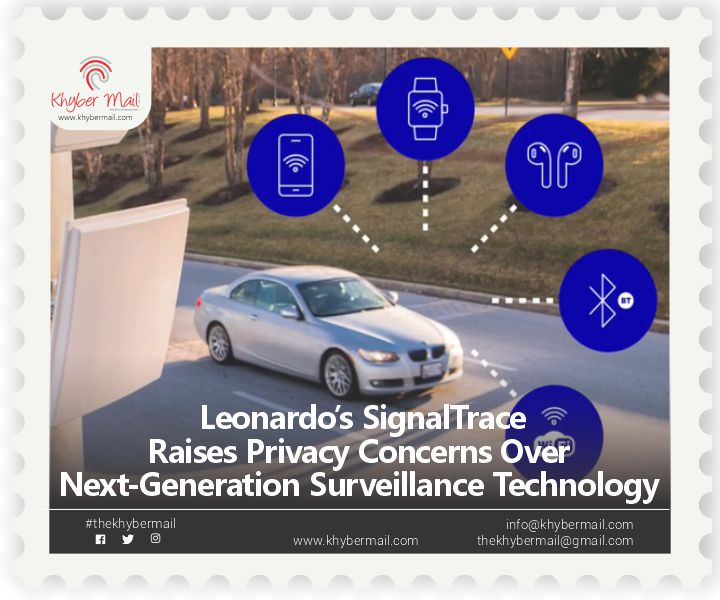
A company called Leonardo has developed a system called ELSAG SignalTrace. It broke into public awareness just days ago and is already being marketed to law enforcement agencies across the country. It makes Flock Safety look modest by comparison.
Here is what SignalTrace does:
It clips sensors directly onto existing license plate reader cameras — the same poles, the same hardware already installed in your community. No new infrastructure required. A software and sensor upgrade is all it takes.
Every time you drive past one of these upgraded cameras, the sensor sweeps up the unique electronic identifiers of every device in your vehicle. Your cell phone. Your smartwatch. Your wireless headphones. Your fitness tracker. Your laptop. Your tablet. Your car's own infotainment system. Your tire pressure sensors. Your vehicle's Bluetooth hotspot.
And your pet's microchip.
Every one of those devices emits a signal. SignalTrace captures those signals, timestamps them, ties them to your license plate, and stores them in a searchable database for future investigative use. The result is what Leonardo calls an electronic fingerprint — a unique profile built not from your face or your name, but from the constellation of devices you carry with you every day.
Leonardo announced the ELSAG EOC Plus patent as early as May 2024, describing it as an electronic detection system for identifying people of interest through electronic device signatures. SignalTrace is the commercial product built on that foundation. The patent came first. The marketing came after. The sales calls are happening now.
Here is where it gets worse.
SignalTrace is explicitly designed to track vehicles even when the license plate cannot be read. If your plate is obscured, dirty, or misread — it does not matter. The system identifies your vehicle by the electronic fingerprint of the devices inside it instead. The plate reader becomes optional. The surveillance does not.
The strategic advantage for police agencies is adoption friction. SignalTrace can be pitched as an extension of an existing ALPR ecosystem rather than a wholly separate surveillance buildout. That is exactly what happened with Flock. License plate readers went in first. Video came later through a software update. Nobody voted on the expansion. Nobody was told. SignalTrace follows the same playbook — attach to existing infrastructure and expand what it captures without requiring a new procurement process, a new vote, or a new public conversation.
Who is Leonardo and why does their background matter?
Leonardo US Cyber and Security Solutions is not a Silicon Valley startup. It is the American subsidiary of Leonardo S.p.A. — one of the largest aerospace, defense, and security conglomerates in the world, headquartered in Rome, Italy. Recent public market estimates place Leonardo S.p.A.'s market capitalization at approximately €29.76 billion — roughly $32 billion USD. For context that is nearly four times Flock Safety's valuation.
Leonardo's US operations trace back to a joint venture with Remington Arms in 2004, became a wholly owned subsidiary in 2008, and in 2024 rebranded from Selex ES Inc. to Leonardo US Cyber and Security Solutions — a change the company said better reflects the synergy between its brand and the cutting-edge products it offers. Leonardo US has manufacturing facilities in Greensboro, North Carolina and software engineering in Brewster, New York. Its US arm holds contracts with US Special Operations Command and the General Services Administration. This is a major international defense contractor with a direct pipeline from special operations military applications to local American law enforcement.
The Italian government holds a significant ownership stake in Leonardo S.p.A. That means a foreign government — through a defense contractor — is selling surveillance technology to American law enforcement. If the Flock Safety story involves a CIA-seeded venture capital network, the Leonardo story involves a partially state-owned Italian defense conglomerate with US Special Operations Command contracts. Neither of these companies is what most Americans picture when their city council votes to upgrade the cameras on a street pole.
What is ELSAG — and why SignalTrace is more dangerous than it sounds.
ELSAG is Leonardo's license plate recognition product line — the company's core law enforcement technology that has been deployed across American communities for over two decades. ELSAG cameras are what you think of when you picture a standard license plate reader. Fixed cameras on poles. Mobile units mounted on patrol vehicles. Solar powered. Cellular connected. Reading plates and logging vehicle data.
ELSAG is already deployed in all fifty states. Virginia State Police is a documented customer. Leonardo holds statewide procurement contracts in New York, Maryland, New Mexico, Ohio, and Pennsylvania among others, and is listed on the federal GSA schedule available to agencies nationwide. Their cameras are already on street poles and patrol vehicles across the country — quietly, routinely, and largely without public awareness.
SignalTrace is not a new camera. It is not a new company. It is an upgrade — a sensor that clips directly onto ELSAG cameras already in the field and adds a new layer of data collection on top of the license plate reading that was already happening. The same pole. The same hardware. A new sensor attached to it that now also sweeps up every electronic device signal in every passing vehicle.
That is precisely what makes it so significant. The deployment barrier is almost zero. Any law enforcement agency that already has Leonardo ELSAG cameras can add SignalTrace capability without purchasing new infrastructure, without a new procurement process, and — depending on how their existing contract is written — potentially without returning to their city council for approval. Sound familiar? It should. It is the exact same function creep mechanism that allowed Flock Safety to add video streaming, vehicle fingerprinting, and AI people search to cameras that were originally sold as simple plate readers.
The infrastructure goes in first. The capabilities expand later. The public finds out last — if at all.
Leonardo's defense of the system sounds very familiar.
They say SignalTrace captures device signals but does not read the contents of communications. They say it stores data until a specific investigative request is made of the system by an investigator. They say it was designed to ensure it does not infringe on the rights of individuals.
That is the exact same argument Flock Safety makes about license plate readers. It captures plate numbers but not driver information. It stores data until law enforcement queries it. It was designed with privacy in mind.
Courts are still debating whether Flock's version of that argument is constitutionally sound after eight years of deployment and 80 plus cities canceling contracts. SignalTrace captures exponentially more data about exponentially more people — not just the vehicle but every person inside it and every device they carry. If the argument barely holds for plate readers, it almost certainly does not hold for a system that vacuums up every electronic signal emitted by every device in every vehicle passing a sensor.
The data retention problem.
With Flock we at least know the default data retention period is 30 days — though the contract language grants Flock a perpetual license to use that data regardless. With SignalTrace the situation is more opaque. Leonardo's product materials state that all data collected may be uploaded to the EOC server and archived for future queries and analysis — with no published retention limit. How long does Leonardo store your electronic fingerprint? Who has access to it? Can it be shared with other agencies or federal entities? Can it be purchased by data brokers? Leonardo's materials do not answer these questions. That silence is itself an answer.
The retail and private deployment problem.
Leonardo is actively marketing SignalTrace to shopping malls, retail centers, and private businesses — not just law enforcement. Their materials describe deploying SignalTrace in parking lots and inside shopping centers to track individuals involved in organized retail crime. By identifying and correlating electronic devices carried by suspects, retailers can gain critical insights into criminal patterns.
That means SignalTrace sensors could be on private property you visit every day — your grocery store parking lot, your shopping mall, your workplace — operated by a private company with no law enforcement oversight, no warrant requirement, no public accountability, and no notification to you. Your electronic fingerprint captured every time you park your car. Stored indefinitely. Shared with whoever the private operator decides to share it with.
The no-plate-needed problem — and what it means for pedestrians.
The implication of being able to track a vehicle by its electronic fingerprint without reading the plate goes further than most people realize. Deliberately obscuring your plate — which some people do to avoid surveillance — provides zero protection against SignalTrace. The sensor does not need the plate. It reads your phone.
More critically — the sensor does not know or care whether the device it is reading is inside a vehicle or in the pocket of a pedestrian walking past the pole. A person walking down the sidewalk past a SignalTrace-equipped camera is emitting the same Bluetooth and Wi-Fi signals as a person driving past in a car. The system's sensors capture signals from whatever passes within range. Whether that includes pedestrian device capture is not addressed in Leonardo's public materials. The fact that it is not addressed is worth noting.
Does Flock plan to integrate or copy this technology?
No confirmed partnership between Flock and Leonardo has been announced. But four things are worth noting.
Flock already expanded into audio detection in October 2025 — their Raven devices now listen for human distress and alert officers when they detect screaming. Device signal detection is the next logical step in exactly the same direction. Flock's product roadmap has consistently expanded from vehicle data toward person data. Vehicle fingerprinting. FreeForm people search by physical description. Audio detection of human behavior. Electronic device fingerprinting would complete that progression.
Flock's Wing platform is specifically designed to pull third-party camera infrastructure into its ecosystem. If Leonardo's SignalTrace cameras are deployed in a city that also uses Flock, the data from both systems could flow into the same FlockOS platform without any formal partnership between the two companies.
Flock's Nova platform already combines license plate data with court records, jail records, CAD records, and commercially available personal data. Adding device signal intelligence to that profile would be consistent with what Nova is already designed to do.
And Flock's entire business model is built on continuous software-defined capability expansion through over-the-air updates. No new hardware. No public vote. Whether Flock is currently developing device signal detection capability is something we do not know. Whether the competitive pressure from Leonardo creates a powerful financial incentive for them to do so is not in question.
The constitutional problem is worse than anything we have discussed before.
The Fourth Amendment arguments against Flock center on the aggregation of license plate reads into a comprehensive record of your vehicle's movements. Courts are divided on whether that crosses the constitutional line.
SignalTrace does not aggregate your vehicle's movements. It aggregates your personal electronic identity — every device you carry, every signal you emit — and ties it permanently to a location, a timestamp, and a plate number. It does not track your car. It tracks you. Personally. Individually. Every time you pass a sensor, whether you are suspected of anything or not.
The legal issue is that public policy often treats each input separately — a plate image, a device signal, a timestamp, a location record. SignalTrace's purpose is to combine recurring signals into a searchable investigative profile. The Mosaic Theory argument we have made against Flock says that aggregated location data eventually reveals the whole of a person's life. SignalTrace is designed from the ground up to reveal exactly that — not as a byproduct but as the product.
The Supreme Court has not ruled on whether device signal collection at this scale requires a warrant. The courts have not yet caught up to Flock. They are further still from catching up to what Leonardo is now selling to law enforcement agencies in all fifty states.
Why this matters right now.
We are currently waiting on the City of Texarkana to respond to our public records requests about Flock Safety cameras already operating on our streets. We do not yet know how many cameras exist here, which features are active, or what data sharing agreements are in place.
What we do know is that the surveillance infrastructure being built across America — of which Flock Safety is the most visible example — is expanding faster than public awareness, faster than legislation, and faster than the courts can rule on it.
The cameras in our area are one node. SignalTrace shows you what the next node looks like. And the one after that. Each addition is sold as a modest upgrade to existing infrastructure. Each addition captures something your government previously could not capture without a warrant. Each addition happens without a public vote.
---
SOURCES
1. Leonardo US — ELSAG SignalTrace Product Page
https://t.co/HmnXStfH3V
2. Leonardo US — SignalTrace Product Sheet
https://t.co/DH3VLIpuOg
3. Leonardo US — Procurement Contracts
https://t.co/D4pBW7clAQ
4. CarBuzz — "Don't Like Car License Plate Readers Invading Your Privacy? It's About To Get A Lot Worse" (June 2026)
https://t.co/hd7j97eqHl
5. The Deep Dive — "Leonardo's SignalTrace Could Let Police Plate Readers Track Your Devices" (June 2026)
https://t.co/HvGl2xbkK2
6. Security Industry Association — Leonardo/ELSAG Member Profile
https://t.co/EzRYrc4MTH
7. DHS — Automated License Plate Readers Market Survey Report (June 2025)
https://t.co/XfJf84A3hA
8. Senator Ron Wyden / Congressman Raja Krishnamoorthi — Letter to FTC regarding Flock Safety cybersecurity (November 2025)
https://t.co/etluNhx9np
🎩 Deflocking Texarkana
⚡️ 🔴 U.S. Federal Bureau of Investigation (FBI):
- A massive attack targeting the White House was thwarted.
- The attack was planned to be carried out on Sunday.
- Estimates indicate the involvement of more than 20 suspects.
- The attack was planned to include suicide drones (booby-trapped), snipers, and an assault group as part of a "second wave" of the attack.
🇨🇳 China’s military goes all-in on FPV drone warfare
Chinese kids with military drones is pure nightmare fuel
Getting tag-teamed by them in Counter-Strike 2 is bad enough
Writers: Monica, Ian