@Roseemadeit@avastudio_ Spotting trend formats and generating batch variations takes a lot of the blank-page friction out of short-form testing. Keeping tight brand guardrails and testing one hook at a time makes batch workflows actually pay off.
Spent some time going through ZAMNA Coin's whitepaper today, and a few things stood out 📖
↳ the vision is built around music and community, not trading
↳ Base is listed as the home chain it's intended for
↳ service integrations are clearly marked as planned
What I appreciate is how plainly it's all written.
There's no attempt to make planned features look live.
What I'd like next is a simple view of which pieces come first and where official updates are posted, so newer people can follow along without guessing.
Follow @zamnacoin
When you're following several tokens across different chains, constantly searching for the same markets gets pretty annoying.
The Watchlist feature on @perptools makes it easier to keep your preferred tokens in one place and monitor their price movements.
I'd rather build a watchlist around markets I understand than chase whichever token happens to be trending that day.
A small feature, but genuinely useful for everyday traders.
AI is moving far beyond generating answers alone. It's now getting work done.
People are familiar with large language models (LLMs) like ChatGPT, Claude and Gemini. These are tools that you give them a prompt, they process information and generate a response for you.
Incredibly useful, but the challenge begins when it comes to turning that responses into a completed work across actual applications.
The concept of a Large Action Model (LAM) by @ActionModelAI is built natively for this.
LAM is designed around understanding and executing actions within digital environments, not just to generate text.
If an LLM can explain how to update a spreadsheet, then an action-oriented AI can understand the interface, navigate the spreadsheet, enter information and verify whether task is completed or not.
Action Model is building around such idea through a community-owned AI ecosystem.
Its approach involves a continuous action loop:
1. Observe: to understand the current screen and environment.
2. Decide: to determine the next step based on the objective.
3. Act: to interact with the interface through clicks, typing and navigation.
4. Verify: to check the result before continuing.
What's particularly interesting is how the community contributes to building this intelligence.
Through their browser extension, contributors like me and you help train the Large Action Model using real interaction patterns with the vision to make the people contributing to AI development participants in the value it creates.
The people helping build the future of AI system should have a stake in what they create.
Both of us could be a contributors today. Explore this uprising ecosystem and earn while contributing.
Join: https://t.co/0ZvQCHIXrQ
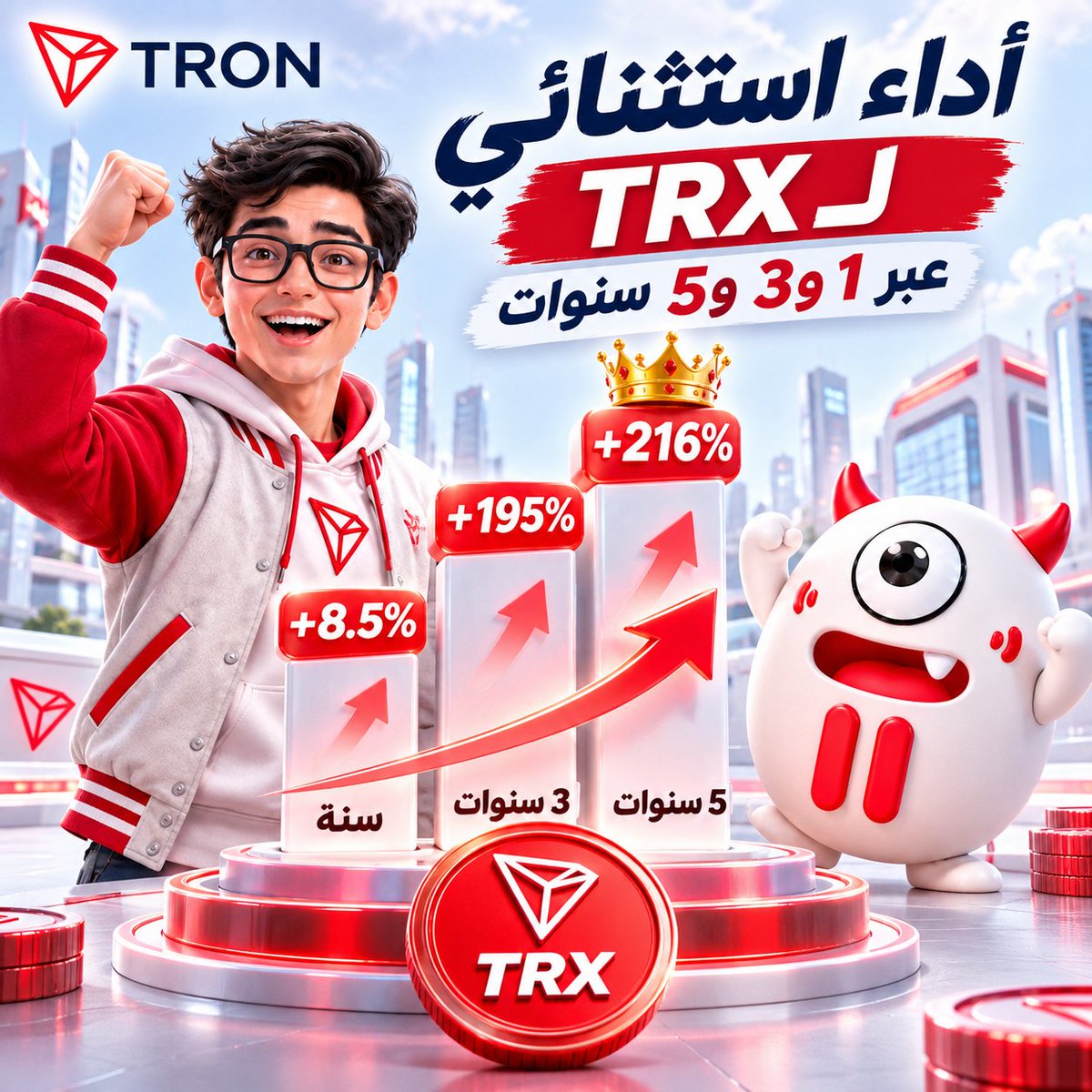
📢 🔻| عملة $TRX بتثبت حضورها في سباق الأداء طويل الأجل!📊🚀
في سوق الكريبتو، اللي بيتحرك بسرعة وبيشهد تقلبات مستمرة، فيه فرق كبير بين أصل بيحقق مكاسب مؤقتة، وأصل بيقدر يحافظ على أداء إيجابي عبر فترات زمنية مختلفة. 📈
وهنا بنحكي حكاية $TRX ، اللي سجلت أداءً لافتًا خلال 3 فترات زمنية: سنة، 3 سنوات، و5 سنوات! 👀
📌 أداء TRX خلال آخر سنة
خلال الفترة دي، TRX حققت عائدًا إيجابيًا بنسبة +8.5%، وجاءت في المركز الأول بين الأصول الرقمية الرئيسية الموجودة في المقارنة. 🥇
واللافت إن TRX كانت العملة الوحيدة في القائمة اللي حققت عائدًا إيجابيًا خلال السنة، بينما سجلت أصول كبيرة زي BTC وBNB وETH تراجعات ملحوظة.
🔹 TRX: +8.5%
🔹 Chainlink: -31%
🔹 Bitcoin: -32%
🔹 BNB: -36%
🔹 Ethereum: -42%
وده بيوضح اختلاف أداء الأصول خلال نفس الفترة، خصوصًا في ظل ظروف السوق المتقلبة. 🌐
📌 الأداء خلال 3 سنوات.. TRX في الصدارة!
لما نوسع النظرة ونبص على آخر 3 سنوات، الصورة بتكشف عن أداء تراكمي أقوى. 🔍
TRX حققت عائدًا إجماليًا بلغ +195%، بمعدل عائد سنوي تقريبي +43%، لتحتل المركز الأول في المقارنة. 🏆
🔹 TRX: +195%
🔹 BNB: +145%
🔹 Bitcoin: +63%
🔹 XRP: +55%
🔹 Solana: +22%
وفي المقابل، سجلت بعض الأصول تراجعات تراكمية خلال نفس الفترة، من بينها ETH وDOGE وLINK وLTC وADA وAVAX وDOT.
📌 5 سنوات من الأداء.. أرقام بتتكلم!
على المدى الأطول، TRX سجلت عائدًا تراكميًا وصل إلى +216%، بمعدل عائد سنوي تقريبي +26%، واستمرت في المركز الأول بين الأصول المعروضة. 🚀
🔹 TRX: +216%
🔹 Bitcoin: +7.9%
🔹 XRP: -6.1%
🔹 BNB: -10%
وده معناه إن الاستثمار الافتراضي في TRX خلال الفترة المحددة كان هيحقق نموًا تراكميًا أعلى من الأصول الأخرى الموجودة في المقارنة. 📊
💡 إيه أهمية مقارنة الأداء على أكتر من فترة؟
لما بنقيّم أي أصل رقمي، النظر إلى فترة واحدة ممكن يدي انطباع غير مكتمل عن أدائه. 🧠
علشان كده، المقارنة بين سنة و3 سنوات و5 سنوات بتساعدنا نفهم أكتر من جانب:
🔸 الأداء قصير الأجل: هل الأصل قدر يحافظ على مكاسبه وسط تقلبات السوق؟
🔸 الأداء متوسط الأجل: هل حقق نموًا تراكميًا مقارنة بالأصول المنافسة؟
🔸 الأداء طويل الأجل: هل استطاع الحفاظ على مسار إيجابي عبر دورات سوق مختلفة؟
والأهم إن العائد التراكمي مش هو نفسه العائد السنوي؛ فالعائد التراكمي بيقيس إجمالي التغير خلال الفترة، بينما العائد السنوي بيوضح معدل النمو السنوي المكافئ تقريبًا. 📐
📊 الأرقام دي بتسلط الضوء على أداء TRX التاريخي مقارنةً بمجموعة من العملات الرقمية الرئيسية، وبتوضح إزاي ترتيب الأصول ممكن يختلف بشكل كبير عند الانتقال من فترة زمنية للتانية.
⚠️ مهم نوضح إن الأداء التاريخي مش ضمان لتحقيق نفس النتائج مستقبلًا، وإن سوق العملات الرقمية بيظل عالي التقلب، وأي قرار استثماري لازم يعتمد على دراسة المخاطر وظروف السوق.
⁉️ شاركنا إجابتك في التعليقات 👇
لو بتقيّم أداء أي عملة رقمية، إيه الفترة اللي بتعتبرها الأهم؟
الأداء خلال سنة واحدة؟
ولا العائد التراكمي خلال 3 سنوات؟
ولا بتفضّل تدرس الأداء طويل الأجل خلال 5 سنوات؟
وإيه رأيك في استمرار TRX بالمركز الأول عبر الفترات الزمنية الثلاث؟ 📈
📌 لمزيد من التفاصيل: تابع بيانات الأداء التاريخي وقارن العوائد بين الأصول الرقمية المختلفة قبل اتخاذ أي قرار.
#TRON
#TGF
#TRONGlobalFriends
Quinn Talen went from a level 1 outcast to copying shadow powers and draining blood banks just to survive. High risk, insane upside.💀
Claim your early whitelist spot.
You are early! ⏳
🔗 https://t.co/i5osMcQlaj
#bloodorqi#bloodorqinft
A per-wallet inscribe limit is an interesting tool on @beepzfun but it's important to understand what problem it is designed to address.
Think about a launch where one wallet is allowed to inscribe up to 500 units.
That limit controls how much that wallet can obtain through the inscription process under the launch rules.
It doesn't automatically tell you how many people will participate, how evenly the supply will be distributed, or what happens to balances after transfers.
Those are separate questions.
This is why I wouldn't automatically describe a wallet limit as a guarantee of fair distribution.
It's a participation rule, not a complete picture of ownership.
Understanding that distinction helps people evaluate a launch more carefully instead of assuming one setting solves every distribution problem.
AI agents are becoming more useful when they can do more than just generate answers.
That’s what caught my attention about @termix_ai and https://t.co/XjBM4oUEUQ
Instead of keeping AI agents in isolated environments, https://t.co/XjBM4oUEUQ introduces a marketplace where one agent can post a research task, others can compete to complete it, and the agent delivering the work gets paid on $BNB Chain.
This creates an interesting model built around real tasks, competing agents and payment for delivered work.
@termix_ai is worth watching: as agents become more capable, they may not just assist us but also collaborate, exchange services, and create their own economic activity.
Data-driven research. Practical agent use cases. Onchain coordination.
That’s the direction AI gets interesting
gTermix
𝐒𝐨𝐦𝐞𝐭𝐡𝐢𝐧𝐠 𝐈𝐧𝐭𝐞𝐫𝐞𝐬𝐭𝐢𝐧𝐠 𝐈𝐬 𝐇𝐚𝐩𝐩𝐞𝐧𝐢𝐧𝐠 𝐀𝐫𝐨𝐮𝐧𝐝 𝐈𝐧𝐣𝐞𝐜𝐭𝐢𝐯𝐞. 𝐘𝐨𝐮 𝐂𝐚𝐧 𝐍𝐨𝐰 𝐀𝐜𝐜𝐞𝐬𝐬 @injective 𝐓𝐰𝐨 𝐃𝐢𝐟𝐟𝐞𝐫𝐞𝐧𝐭 𝐈𝐧𝐯𝐞𝐬𝐭𝐦𝐞𝐧𝐭 𝐑𝐨𝐮𝐭𝐞𝐬.
𝐈𝐦𝐚𝐠𝐢𝐧𝐞 𝐝𝐢𝐬𝐜𝐨𝐯𝐞𝐫𝐢𝐧𝐠 𝐚𝐧 𝐢𝐧𝐯𝐞𝐬𝐭𝐦𝐞𝐧𝐭 𝐨𝐩𝐩𝐨𝐫𝐭𝐮𝐧𝐢𝐭𝐲 𝐲𝐨𝐮 𝐛𝐞𝐥𝐢𝐞𝐯𝐞 𝐡𝐚𝐬 𝐥𝐨𝐧𝐠-𝐭𝐞𝐫𝐦 𝐩𝐨𝐭𝐞𝐧𝐭𝐢𝐚𝐥.
𝐘𝐨𝐮 𝐝𝐨 𝐲𝐨𝐮𝐫 𝐫𝐞𝐬𝐞𝐚𝐫𝐜𝐡, 𝐮𝐧𝐝𝐞𝐫𝐬𝐭𝐚𝐧𝐝 𝐭𝐡𝐞 𝐩𝐫𝐨𝐣𝐞𝐜𝐭 𝐚𝐧𝐝 𝐝𝐞𝐜𝐢𝐝𝐞 𝐲𝐨𝐮 𝐰𝐚𝐧𝐭 𝐞𝐱𝐩𝐨𝐬𝐮𝐫𝐞 𝐭𝐨 𝐢𝐭𝐬 𝐠𝐫𝐨𝐰𝐭𝐡.
𝐁𝐮𝐭 𝐭𝐡𝐞𝐧 𝐲𝐨𝐮 𝐟𝐚𝐜𝐞 𝐚 𝐪𝐮𝐞𝐬𝐭𝐢𝐨𝐧:
Do you want to own the actual crypto asset, or would you rather access it through a traditional investment product?
This is the choice investors are presented with when comparing $INJ and $INJC.
Although both are connected to the same Injective ecosystem, they are not the same thing.
Let's look at what makes them different.
$INJ: Direct ownership and participation
Buying $INJ means purchasing the actual Injective token.
You can store your tokens in your own wallet and maintain control of your private keys.
But ownership also comes with opportunities to participate.
You can stake your tokens to help secure the network and potentially earn rewards.
You can vote on governance proposals and take part in decisions affecting the ecosystem.
You can also use $INJ across applications built on Injective.
This is more than simply watching the market and hoping the price increases.
It gives you direct access to the network's onchain activities.
$INJC: Traditional investment access
Now, consider someone who believes in INJ but doesn't want the responsibility of managing cryptocurrency.
They may prefer a traditional brokerage account.
$INJC provides that alternative through the Canary Staked INJ ETF.
Instead of purchasing INJ tokens yourself, you purchase shares of the fund.
The ETF holds INJ, with BitGo serving as custodian, and seeks to stake a portion of its holdings.
This allows investors to gain exposure without personally managing wallets, private keys or staking activities.
However, ETF shareholders do not receive the same direct ownership, governance rights or onchain access as token holders.
What should investors take away from this?
$INJ is about direct token ownership and ecosystem participation.
$INJC is about accessing INJ exposure through a traditional investment structure.
Both have different responsibilities, benefits and limitations.
Before choosing either, understand the fees, custody arrangements, staking structure, risks and rights attached to each option.
The bigger picture is that Injective is opening different doors for people who want exposure to its ecosystem.
You just need to understand which door you are walking through.
#Crypto
I noticed a new Contribution Leaderboard for @quipnetwork is now live on Nucleus.
There’s a total of $20,000 in stablecoins allocated to the top 200 contributors.
The idea behind Quip is interesting. It aims to build a shared network where anyone can access quantum computing power.
This campaign is a good opportunity to help more people understand what Quip is trying to build and spread the word about its vision.
Join here 👇
https://t.co/9ddRXCmmN6…