The relationship between Rwanda and M-23 is incidental. The FDLR is committed to killing Banyarwanda, especially the Tutsi along with those who disagree that the Tutsis should be exterminated in both Rwanda and the DRC.
So it is the FDLR, through its aims, that creates links between Rwanda and M-23.
Therefore, any relationship between Rwanda and M-23 would be to prevent the stated aims of the FDLR - which is to exterminate their people in Rwanda and in the Kivus.
Why would anyone be against that? Why would anyone even ask the question in the first place as if they would find some benefit in such extermination?
Who we’re building Rugira for 👇🏿
Rugira is a Swiss, non‑custodial platform for desks that want AI‑driven execution and hard risk controls:
• Family offices
• Small crypto funds
• Crypto brokers
Trade‑only keys, multi‑venue bots, risk shields and tax‑ready reports for gains, income & FX.
🔗 https://t.co/Le4ktBbTNQ
@Rick_1400 Hey Rick, I am actually curious;
1. Who's that wealthy Ugandan you're referring to?
2. What makes you say those first ten kings did not exist?
3. Which history was erased after Rucunshu?
4. How & why does homosexuality come in?
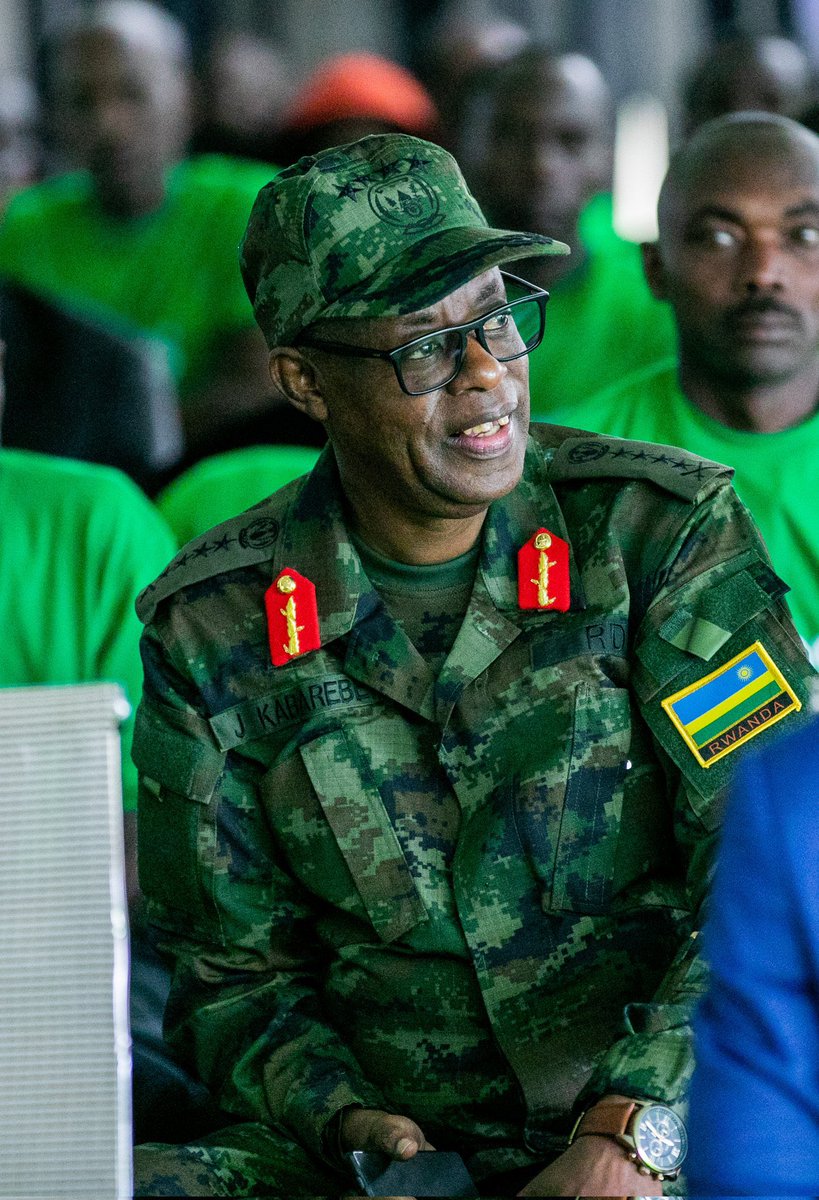
Someone help me get this; By virtue of his birth, Afande @KabarebeJames was condemned to a life of perpetual exile. He has lived a life of struggle, first to get a homeland, to build it and protect it. For whatever reasons, Someone says "From now on, you can only live and work in THAT country," and call that a sanction?
A war has been raging on our borders for years now, with countries openly threatening to invade Rwanda and forming coalitions with the genocidal FDLR. I know I speak for many when I say that at no point was I worried about what would happen to us, our families, or our country. I have no doubt that as long as President Kagame is in charge, WE WILL BE FINE! He has our best interests at heart, and absolutely NOTHING will stand in our way! This sense of security is what I wish for all our African brothers and sisters.
They may call him names and try to vilify him, heck they may even sanction our
generals, but WE KNOW OUR MAN! Our trust in him is unshakeable, and our love for him knows no bounds. That is something ABSOLUTELY NO ONE AND NOTHING can take away from us!
While our beautiful Rwanda is hosting the FIA awards and shining on the global stage, RNC guys are over on X spaces hurling insults at President Kagame and obsessing over their outdated Hutu-Tutsi narratives. Honestly, it’s almost sad—but I get it. All eyes are on Kigali, Rwanda is standing on business, and they simply lack the range or capacity to add anything meaningful to the conversation.
Soon, I’ll share with you my detailed analysis of Rwanda’s “political opposition”. At this rate, I might as well start holding workshops for them😁
As for us? We move!
I recently took the liberty to attend some X spaces hosted by figures in the Rwandan “opposition” and let me tell you something, if Rwanda’s future depended on these people we would be in trouble!
During X spaces hosted by senior RNC members, including a vice coordinator…
@DecaymanR True! But that doesn’t explain the “contiguity” of the Palestinian territory. Its literal definition would be that there should be no non-Palestinian territory between the west bank, Gaza & east Jerusalem.
On Rwanda’s vote at the UNGA…
States often base their decisions on realism rather than idealism (More on that later). However, Rwanda’s abstention from the vote may in fact be based on matter of principle;
The resolution’s emphasis on “integrity and CONTIGUITY ” of Palestinian territory, if taken literally, could imply “from the river to the sea”—a premise that undermines Israel’s existence. While Rwanda may support a two-state solution and the right of self-determination for the Palestinian people, it likely rejects such interpretations, hence its abstention.
The General Assembly today overwhelmingly approved a resolution on Palestinian people's right to self-determination, including the right to their independent State of #Palestine, with a round of applause following the vote.
https://t.co/xKQtxhBaIh
Question pour un champion:
Given that president Kagame's legitimacy is based more on his proven track record than on his electoral victories, one could argue that even without campaigning, he could easily win by a landslide.
So, why does he run campaigns?
@Lionel_SN Can Hutu Power ideology be characterized as anything other than "genocidal" and "criminal"? Referring to it as an extremist political movement implies that a less extreme version might exist. Can Hutu Power be diluted to an acceptable stance?
The Rwandan Patriotic Front (RPA) was not a Tutsi army
By the time the RPF waged the war of liberation in 1990, there had been two major waves of refugees fleeing Rwanda because of persecution.
The first wave was in the early 1930s and consisted of Hutus (Belgians had assigned ethnic identity to Rwandans shortly before) fleeing colonial overload that included flogging (kiboko) as punishment for failing to fulfil forced labor obligations, mainly in cash crop (coffee and tea) production. Most of these refugees fled to what became Uganda and settled in the general area of Masaka, not too close to Rwanda and not too far from it. Many Banyarwanda still live in this area, have intermarried, are culturally integrated into the Baganda culture, speak fluent Luganda and have adopted Baganda names. Most importantly, some of them are conscious of being Banyarwanda (by origin, but Ugandan by nationality), while others simply identified as Banyarwanda at the time of the liberation war. None identify as Hutu.
This first wave of refugees is less well known. They fled to Uganda mainly because they could not flee to Congo or Burundi, which were under the same (Belgian) colonial burden as Rwanda.
The second wave of exodus from Rwanda consisted of refugees from the late 1950s and early 1960s. These were Tutsis fleeing what the British philosopher Bertrand Russell described in 1959 as "the most horrible and systematic massacre we have witnessed since the extermination of the Jews by the Nazis". They fled to Uganda, Burundi, Congo and Tanzania.
In Uganda, these two groups of refugees identified themselves as Banyarwanda. They always spoke of their grievances in terms of the need for Banyarwanda refugees to return home. Since they were in the majority, including in the top leadership of the political (RPF) and army (RPA) wings, this unifying ideology subsumed any sub-ethnic consciousness that fighters from other countries, who identified themselves as Tutsis, might have brought with them. So both groups returned as Banyarwanda, not as Tutsi or Hutu. This became the identity of the RPA.
However, the ethnic dynamics they found in Rwanda during the war, and especially during the genocide, categorised them as Tutsis, even for those who had been part of the Hutu exodus in the 1930s.
Significantly, Rwanda's internal politics considered all refugees to be Tutsis. In the dynamics of ethnic polarisation, RPA fighters became part of the oppressed group. They identified with the plight of the Tutsis. In other words, by defining all refugees as Tutsis, President Habyarimana and the genocidal regime helped to foster the consciousness of Hutu soldiers in the RPA as Tutsis, even though they had considered themselves Banyarwanda.
Interestingly, the RDF has never been interested in identifying itself as Hutu, despite the political mileage it would bring in the face of constant accusations of being a Tutsi army. On the contrary, it has worked tirelessly to restore and maintain the unifying identity of Banyarwanda. Obviously, any form of ethnic profiling on the part of the RDF would be tantamount to succumbing to the ideology of Hutu power, which divides the Banyarwanda into destructive categories. The RDF cannot simultaneously be involved in building a national consciousness of Banyarwanda identity and then engage in any form of ethnic census, whatever the political gains. It would be a tactical victory at the cost of a strategic one, self-sabotage.
Mzee Tito, one of the founding cadres of the RPF, once laughed at a BBC reporter who said that the RPA was a Tutsi-dominated army. He was not interested in proving how far from the truth this was. This is the kind of ideological clarity Rwanda needs from its leaders.
The RPA's past is further proof that ethnicity is not static.
There seems to be a lot of confusion around this issue;
People own the land, not the other way around! As such, no “people” can be “undesirable” anywhere. Conversely, a state can indeed become undesirable, and it is within people's capability to remove or secede from it…
The choice is simple. You recognize the landowners as Congolese or they will take their land away.
There is still time to make the right choice, but that window is closing fast.
@kagoma_flies You seem to be in line with chairman Nkunda’s diagnosis that for true “liberation” of the eastern congo communities (Tutsi included) to be fulfilled, the DRC has to be rid of its corrupt and incompetent government. Kivu is free only if the DRC is free.