Happy 92nd birthday to Professor Wole Soyinka, GCON, Nigeria’s only Nobel Prize Winner, our greatest playwright, poet, essayist, activist, literary icon, global superstar ❤️👑🥳🎉💙.
Yesterday, July 10, 2026, marked 27 years since George Iwilade, popularly known as Afrika, a vibrant, brilliant, and courageous student leader and Secretary-General of the Students' Union Government of Obafemi Awolowo University, Ile-Ife, was murdered by cult gangs sponsored by the university authorities.
Since his brutal killing on July 10, 1999, Afrika has grown from a fallen comrade into a timeless legend of the Nigerian student movement. His courage, conviction, and sacrifice continue to inspire generations of young people committed to justice and liberation.
For context, this photograph was taken during one of our solidarity actions in Yaba, Lagos, protesting the persecution of OAU students. Standing together were Afrika, then OAU SUG President Lanre Adeleke aka "Legacy", and my humble self as we unfurled a giant banner inside a massive police cordon in defiance of intimidation.
Afrika and I shared many struggles before I left Nigeria in February 1999. His life was cut short, but his ideals could not be buried. Twenty-seven years later, we still remember him not merely for how he died, but for how he lived: fearless, principled, and unwavering in pursuing justice.
Aluta Continua. Victoria Ascerta. #RevolutionNOW
Proud to be Yoruba, we are the cradle of humanity!
Our ancestors told us that Ẹlẹ́dùmarè sent Òbàtálá from Ọ̀run to begin creation. For generations, many dismissed our traditions as myths. Today, modern genetics suggests that the ancestors of the Yoruba and Mande peoples inherited DNA from an unidentified archaic human lineage.
Our oral traditions also preserve accounts of some of our divinities and revered ancestors descending from and later ascending to Ọ̀run. Whether viewed through the lens of faith, history, or symbolism, they reflect the depth and richness of the Yoruba worldview.
Colonial Borders Have Wrecked African Minds
Pan-Africanists PLO Lumumba and Joshua Maponga make a good point in this @thee_alfa_house clip.
Even if African borders are erased, we still have to deal with the divisions that lurk in African minds.
Will you read the books they mentioned? Drop us a comment.
For more like this, follow The Spearhead.
Video credit: @thee_alfa_house
Lmao I have 2.
Mother Teresa and Mahatma Gandhi.
Mother Teresa let dying patients be treated with blunt reused needles, had a mortality rate about 40% in her clinics and when she was confronted about the conditions, said there’s something beautiful in seeing the poor accept their lot, and to suffer it like Christ’s Passion. Doctors called her facilities “homes for the dying”. And cancer patients were given aspirin for pain.
Gandhi too, the face of universal peace, the person that said “be the change you wish to see”, spent years in South Africa describing Black Africans as “savage”, “dirty” and living like animals. He campaigned actively to prove to British rulers that Indians were superior to native Black Africans. He also organized a brigade to help suppress a Zulu uprising. His defenders say he evolved. Maybe.
Nobody likes to talk about the entire sides of history.
And these are their summarized versions btw.
The problem started when I said "e choke" in a meeting.
My colleague Linda from accounting paused mid-slide. She said, Is everything okay with your throat?
I said, No, Linda, it means the numbers are impressive.
She wrote that down. She literally wrote it down. Three days later she told our boss the quarterly projections were choking her. HR got involved.
I work in Toronto, in a glass office where the only other Nigerian is a man named Tunde who has completely assimilated. The kind who pronounces "schedule" like he invented the language. He avoids me in the breakroom because I remind him of jollof rice and his mother's expectations.
So I suffer alone.
Last month I told a project manager that the deadline was giving me wahala. He emailed my supervisor asking if wahala was a vendor we needed to loop in. I now have a meeting on Friday about clarifying communication styles.
The worst was when I said "abeg" to an intern. She thought it was a new productivity tool. She searched the internal software catalogue. By Tuesday, IT had opened a ticket.
I tried explaining slangs to my coworkers once. Big mistake. Now every Monday morning, Kevin from sales greets me with "How far?" but he says it like "How far, my good man?" and waits for a response as if I am a foreign exchange student he is sponsoring.
Linda has started saying "e choke" whenever she completes a spreadsheet. She does finger quotes around it. She has made a PowerPoint slide titled "Nigerian Business Expressions for Cross-Cultural Synergy."
I sat Tunde down last week. I said, Tunde, you need to help me. They've weaponized our entire lexicon.
He adjusted his cardigan. He said, I'm sorry, I don't really speak it anymore.
I said, You were born in Owerri.
He said, That was a long time ago. He stirred his green tea. No sugar. No milk. Just assimilation and regret.
Yesterday I overheard my boss on a client call. She said the deal was giving her gbe body. I had told her "gbe body" means being alert. She now uses it to mean proactive. The client loved it. They want it in the brochure.
I have created a monster.
The office Christmas party is next week and Kevin told me he is planning to say "shey you dey whine me" during his toast. He has been practising pronunciation with a YouTube video titled "Speak Nigerian in 5 Minutes."
I will not be attending.
Every diaspora office has one person fighting for their slangs and one Tunde drinking green tea pretending he cannot remember the taste of chin chin.
@funshographix True. The man on the right is no ordinary man That's Nas! They collaborated on this legendary track together: "Bridging the Gap"
https://t.co/lQtwxHvYVy
The more you understand what to watch for, the easier it becomes to counter arguments. Ashley is the best at explaining these tactics that people use to grab our attention, and now you know how to stop them. #DemsUnited
Your fridge runs 24 hours a day. Solar panels only work while the sun’s out. That mismatch is the entire reason this plant exists, and the fix is just hot salt.
The Dunhuang plant in China’s Gobi Desert uses 12,000 mirrors aimed at a single tower about as tall as an 80-story building. All that focused sunlight heats a mix of salts (the same stuff in fertilizer) to 565°C, hot enough to glow red. That liquid salt gets pumped into giant insulated tanks. The tanks are so well insulated they only lose about 1°C per day. When the city needs electricity at 2am, the hot salt boils water into steam, the steam spins a turbine, and you get power. Same basic process as a coal plant. Just no coal.
Here’s what makes this different from regular solar: the storage lasts 11 hours. Sun goes down, plant keeps running all night. The big batteries that cities plug into their power grids right now? Those typically hold about 4 hours of electricity. Building batteries that last 11 hours is possible, but the cost balloons fast. A German energy storage study found that storing energy in hot salt costs roughly 33x less than storing it in the lithium-ion batteries we use today.
China has built 27 of these plants so far, enough to power roughly a million homes. They doubled that number in 2025 alone. Another 3,000 megawatts (enough for about 2 million more homes) are under construction right now, with 4,000 more in the planning stage. Beijing wants 15,000 megawatts by 2030.
The US tried this same technology once. Ivanpah, out in the Mojave Desert. Cost $2.2 billion. But they skipped the storage part entirely, so it could only make power while the sun was shining. It needed natural gas every morning just to start up. It’s now slated to shut down in 2026, thirteen years early, because regular solar panels got so cheap they made the whole project obsolete. China took the same idea, added the one part America left out, and is now building dozens of them.
One more thing worth knowing. The salt is made from basic industrial chemicals. No lithium mining. No cobalt. No rare earth metals. And it lasts 30 years of daily use before the tanks need work.
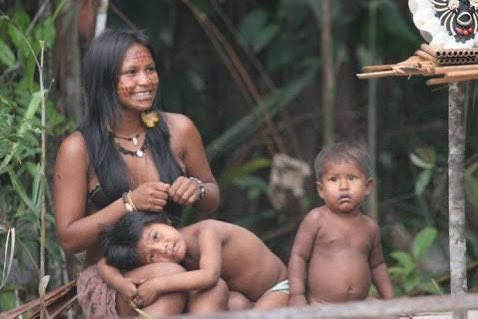
This reminds me of a fascinating story I read,of when in the 1970s Daniel Everett,a linguist and Christian went to the Amazon jungle to convert a tribe called the piraha people to Christianity and completely failed for one crazy reason 😂😂
When Daniel Everett arrived with his wife and kids at the remote Pirahã village in the Amazon, His mission was clear…learn their language,translate the New Testament,and convert this isolated hunter gatherer group to Christianity.
What he encountered instead was one of the most radical cultural and linguistic worldviews ever documented 😂.
From his experience,Everett eventually formalized what he called the “Immediacy of Experience Principle”. What this means in essence is the Pirahã culture and grammar strongly constrain what can be meaningfully discussed or believed…to them,knowledge must be anchored in direct,personal observation or at most in the recent testimony of living people you know.
Things that happened long ago,that no one alive has seen,or that exist only in abstract or supernatural realms fall into the category of what they called xibipío (“gone out of experience”). They don’t deny it outrightly.. to them, such things simply carry no weight and are not worth serious talk.
This principle shapes everything for them… and is why they have No creation myths or origin storis , No numbers beyond rough quantities like “a few” or “many.” , No recursive embedding in grammar (you can’t easily say “kelvin’s brother’s house” … you say two separate sentences). Their Stories and discourse stay tethered to the here and now.
Now Christian theology, by contrast, is built on precisely the kind of claims the Pirahã worldview filters out…A distant creation,Miracles and events from thousands of years ago, A savior no living person has met, Salvation and afterlife described in ancient texts.
Everett tried …He told them the story of Jesus..his birth,teachings,death,and resurrection. The Pirahã listened politely,then asked the questions their language and culture demanded…
“Have you met this man?”
“Did you see him?”
“Did your father see him?”
When Everett admitted he had not , that these events happened 2,000 years earlier and were known only through a book,the conversation effectively ended 😂.
“That’s interesting,” some of them would say, treating the Gospel the same way they treated any other distant tale…as something outside lived experience, therefore irrelevant to how they live and what they believe.
Notice It wasn’t hostile rejection(like the one you’d get from the people of the sentinel islands in India). It was epistemological incompatibility. The theology couldn’t even gain traction because their entire system of knowledge validation rejected second hand ancient testimony.
Everett kept trying for years. He failed to produce a usable Bible translation. Meanwhile, living among people who were profoundly content, generous, and empirically grounded …with no concept of sin, eternal punishment, or a distant deity.
By 1982 he himself started havinv serious doubts about his beliefs and by 1985 he had quietly become an atheist. The man who had come to convert the Pirahã had instead been “converted” by their way of seeing reality.😅
As Everett later wrote and said in interviews, the deepest challenge wasn’t an argument against Christianity. It was living inside a culture where the very criteria for what counts as real knowledge made supernatural historical claims feel as weightless as yesterday’s dream.
The Pirahã didn’t need to debate theology. Their language and worldview simply had no slot for it and, in the process, they helped a missionary lose his faith without ever raising their voices.😂
Makes you wonder, what would a Christian say the fate of these people is? Eternal torment? We can all see how that would be problematic.
Would they somehow make heaven and get judged by how they live their lives? But That would make the whole Christian message irrelevant. 🙂
How Big Tech Frames African Audiences As Intellectually Lazy.
African social media audiences are not “dumb” - they are being conditioned.
When Africans have to engage with western controlled information ecosystems, the engagement is never a fair one. Not in traditional media, and certainly not in digital media. It always follows the same colonial playbook of extraction and social engineering over any kind of meaningful conversation or useful solution.
The exploitative relationship between Western-controlled tech giants and Africa's social media audiences is often overlooked, but it shapes almost everything we see or value - and even how we understand ourselves. The low-effort, oversexualized content that has become recognised as the preferred taste of African audiences is not in fact an organic phenomenon. To put it bluntly, Western colonial tech monopolies are actively engineering African social media spaces into cesspits of anti-intellectual slop.
Africa must rise to resist this intellectual suppression by building information and communication ecosystems by Africans and for Africans.