Brand designers learn illustration — because identities need original visual language, not just layouts.
Video editors learn motion design — because cutting footage is not the same as designing movement.
Illustrators learn brand storytelling — because images now live inside systems, not just frames.
Product designers learn UX writing — because interfaces are shaped as much by words as visuals.
UI designers learn interaction design — because screens are judged by how they behave, not just how they look.
Motion designers learn storytelling and pacing — because movement without intent is just animation.
Specialists are still valuable. But the industry now rewards designers who can extend their craft beyond a single label.
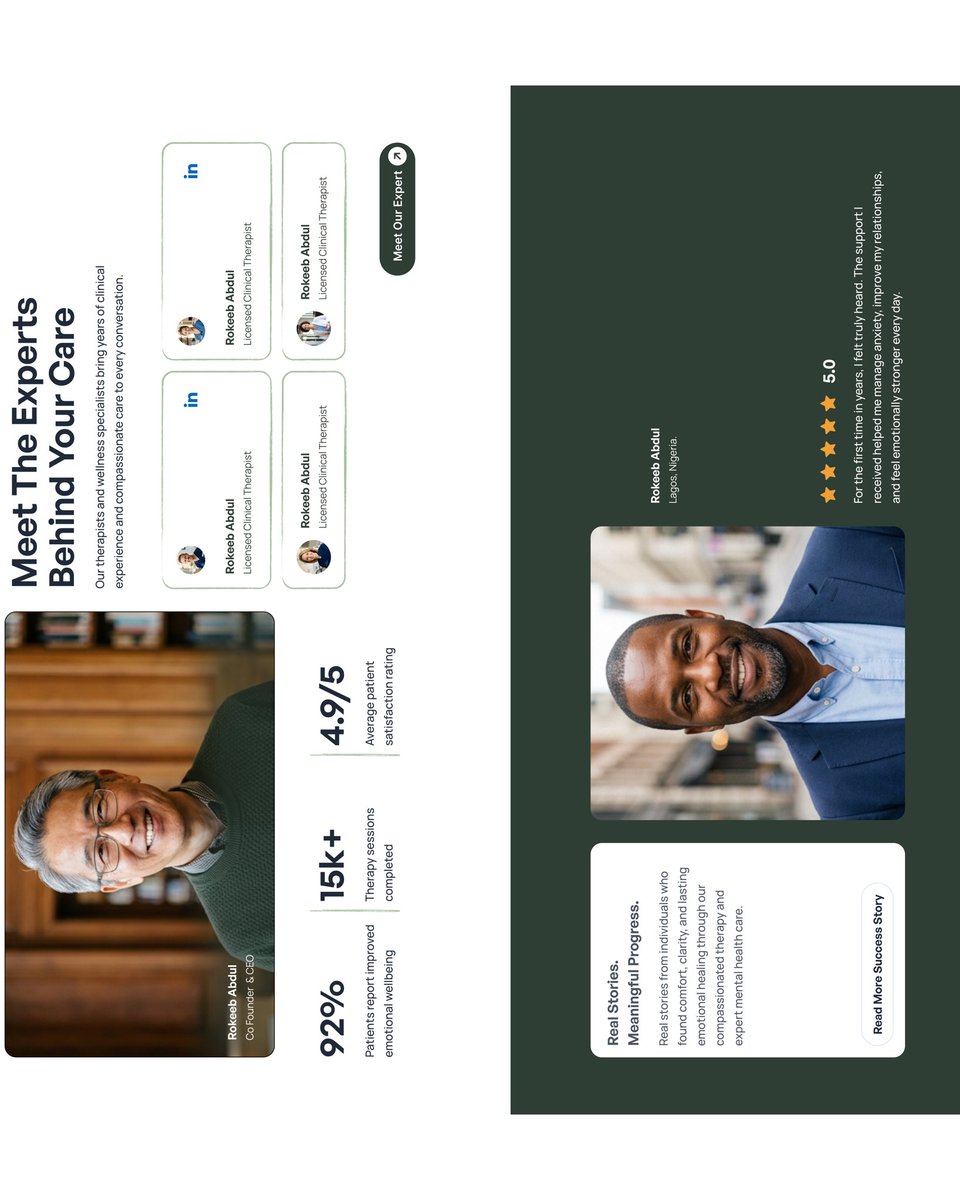
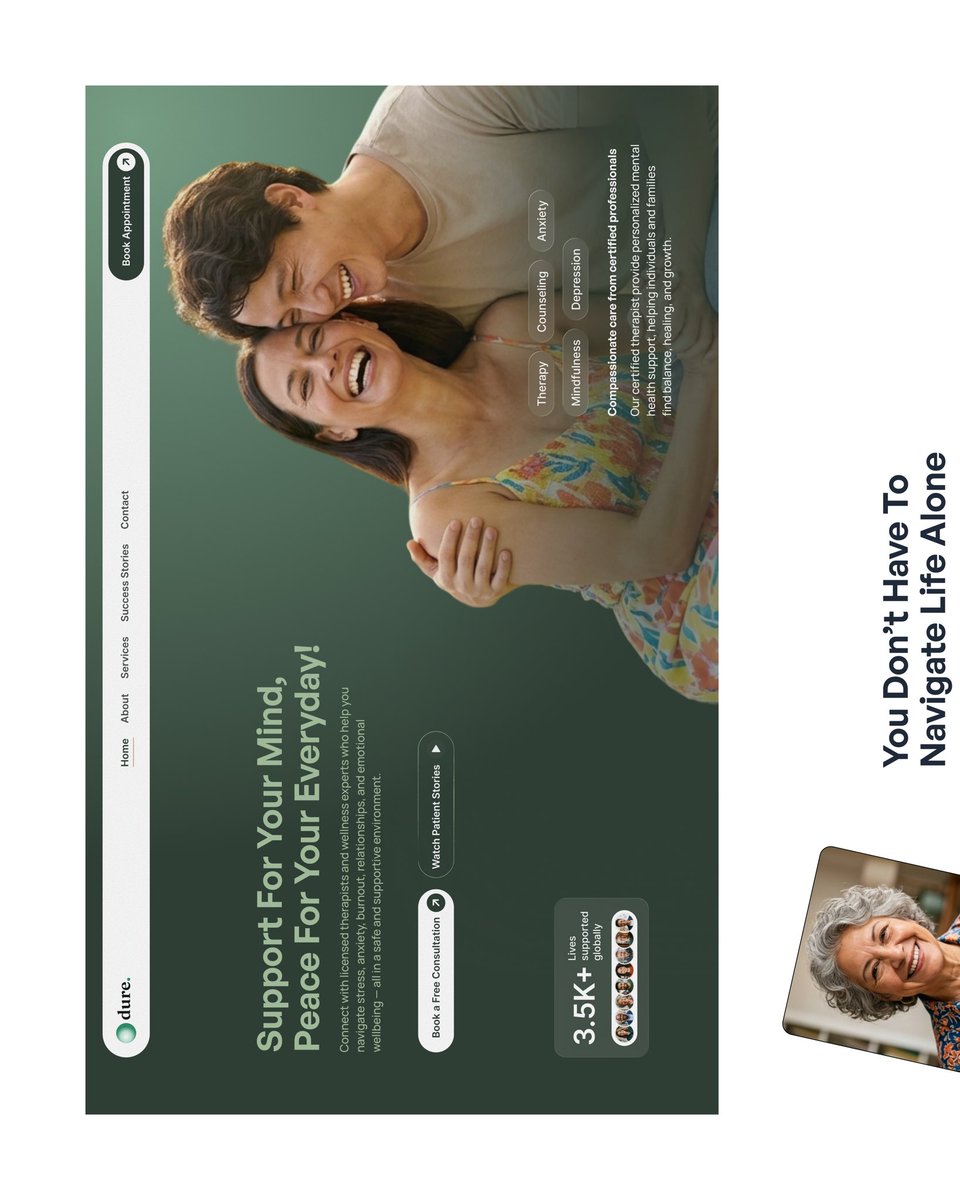
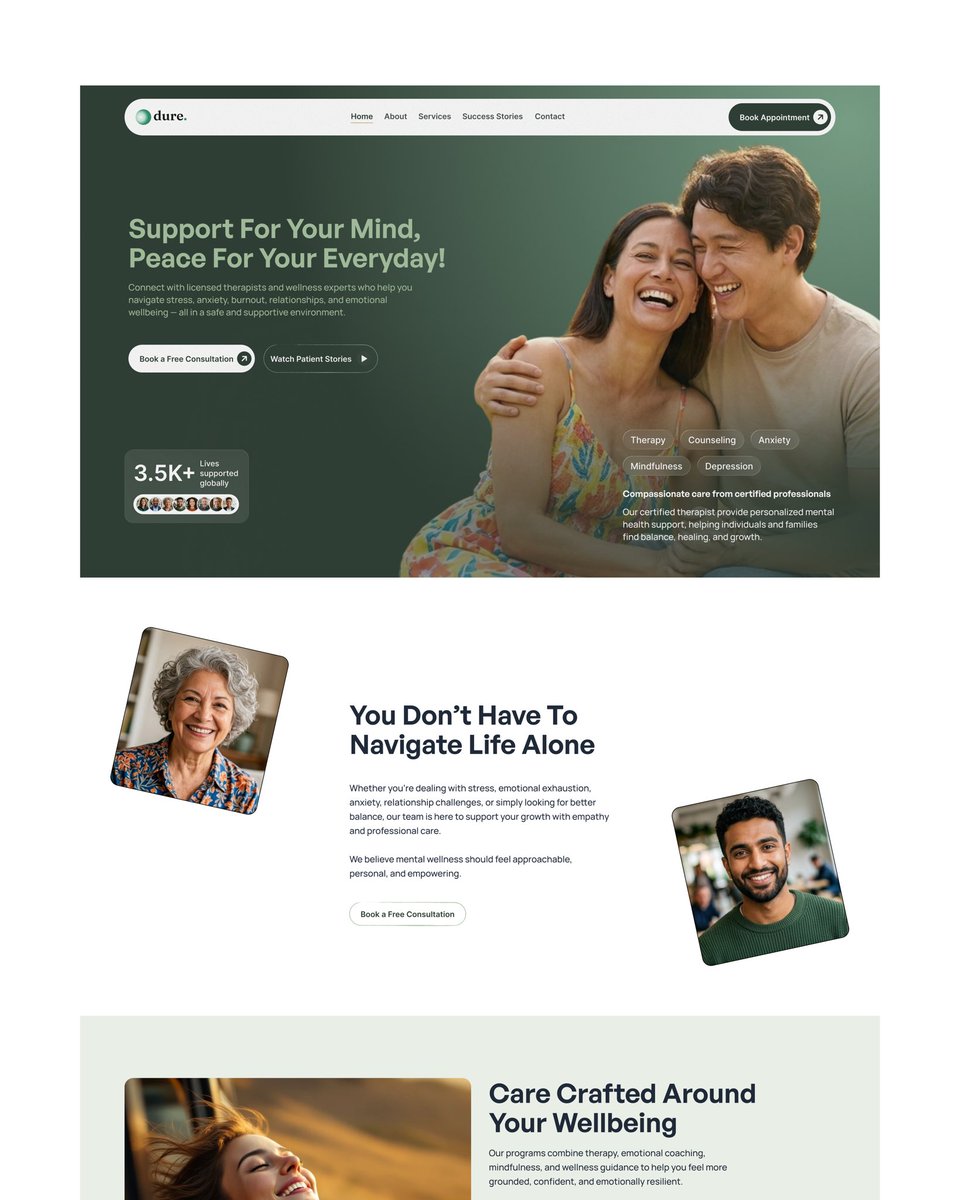
Mental Health Clinic Landing Page
Designed with a clean, clinical, yet comforting aesthetic, it features clear service breakdowns, real patient testimonials, and an approachable layout to build trust and ease anxiety.
Open for new design collaborations!
I think at some rate product designers lost the plot. We were meant to be inventors, thinkers, and a bridge between humans and the message or invention.
We aren’t meant to merely declutter, simplify, or make things pretty.
Designers are meant to make the very thing humans will be working with, in every imaginable way possible.
We are not rectangle builders, we are not pixel pushers, we are inventors and builders pushing to communicate to humans or let humans communicate to our inventions.
I have tried to ignore this trend. But my people keep tagging me to it. Let me just say a few things since they want to know why.
First and foremost, shaving off the hair of a new born is rooted in our religion. And we practice it because we believe the Creator knows the best way to start a life.
Once you accept that, then the logic and wisdom behind it fall into place. Shaving the head on the seventh day is a total reset for the child. The prophet (peace be upon him) said:
أَمِيطُوا عَنْهُ الأَذَى
which means "Remove from him the harm." That word “Aza” is what people translate as dirt, but it means so much more. It refers to anything that is a burden, an uncleanness, or a lingering weight.
When people say that first hair is dirt, what they mean is that the hair it is soaked in womb fluids and birth oils for nine months. It is residue from a life that is finished.
So, removing it is a physical and spiritual transition that lets the child start with a clean slate. It is like washing away the remnants of the past so the child can be fully present in this world.
Apart from that, there are health benefits to it. A quick research I made revealed to me that the birth hair is usually vellus hair, which is thin and temporary. It often traps old skin and cradle cap that can make the scalp uncomfortable for the baby. Leaving it means the permanent hair has to fight through all that old buildup to grow.
So when they tell you to shave the hair of a new born, it is like clearing a field before you plant new seeds. You remove the old grass so the new crop has the best chance to be strong. It’s a wisdom that says choose the long term health of the scalp over the short term vanity of birth curls. As you can see the mum is so amazed of the baby’s hair curls.
Again the Prophet (peace be upon him) was said to weigh the hair and give its value in silver to the poor. The lesson here is in the value and charity that starts before the child can even speak. It teaches the parents to see their child as a gift to the community and it anchors the child in a system of gratitude.
It shows that even the smallest part of a person has a worth that can be used to help someone else. So when someone mocks the tradition, they are only looking at the surface level.
As Muslims, we are looking at a purification process that sets the whole life in order. It is about the wisdom of the collective and the discipline of our faith.
As a concluding statement, we care more about the roots than the leaves.
Allah knows best.
Design skill isn’t just visual taste.
It’s the ability to step outside your own knowledge and see the product like a first-time user.
What feels obvious to you might feel overwhelming to them.
Empathy is what turns interfaces into experiences.