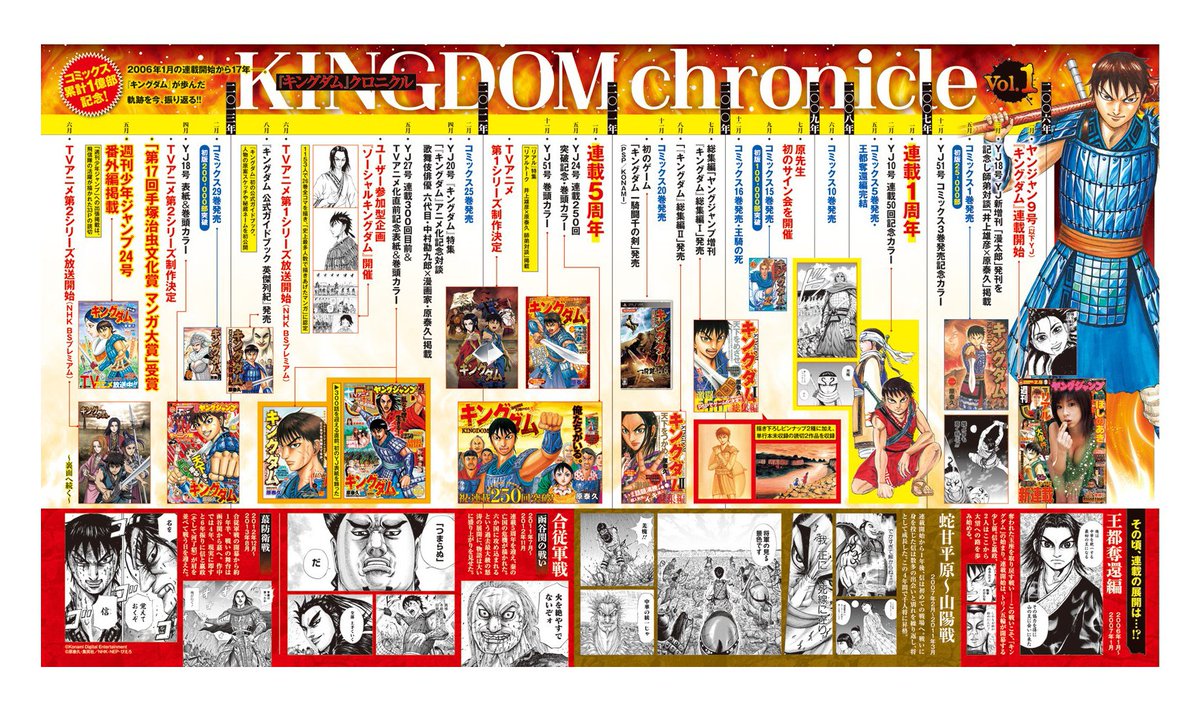
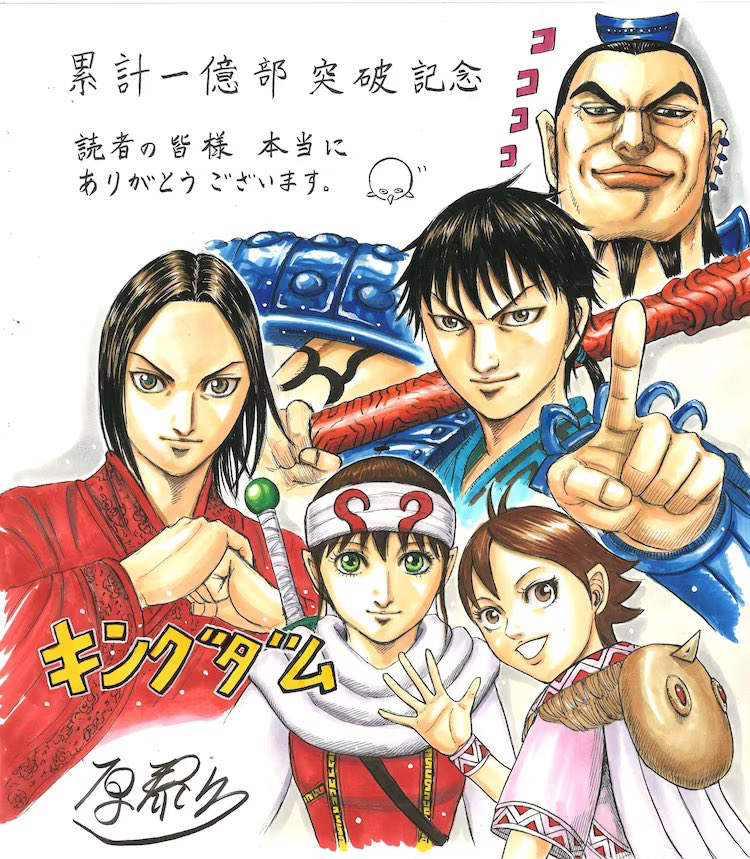
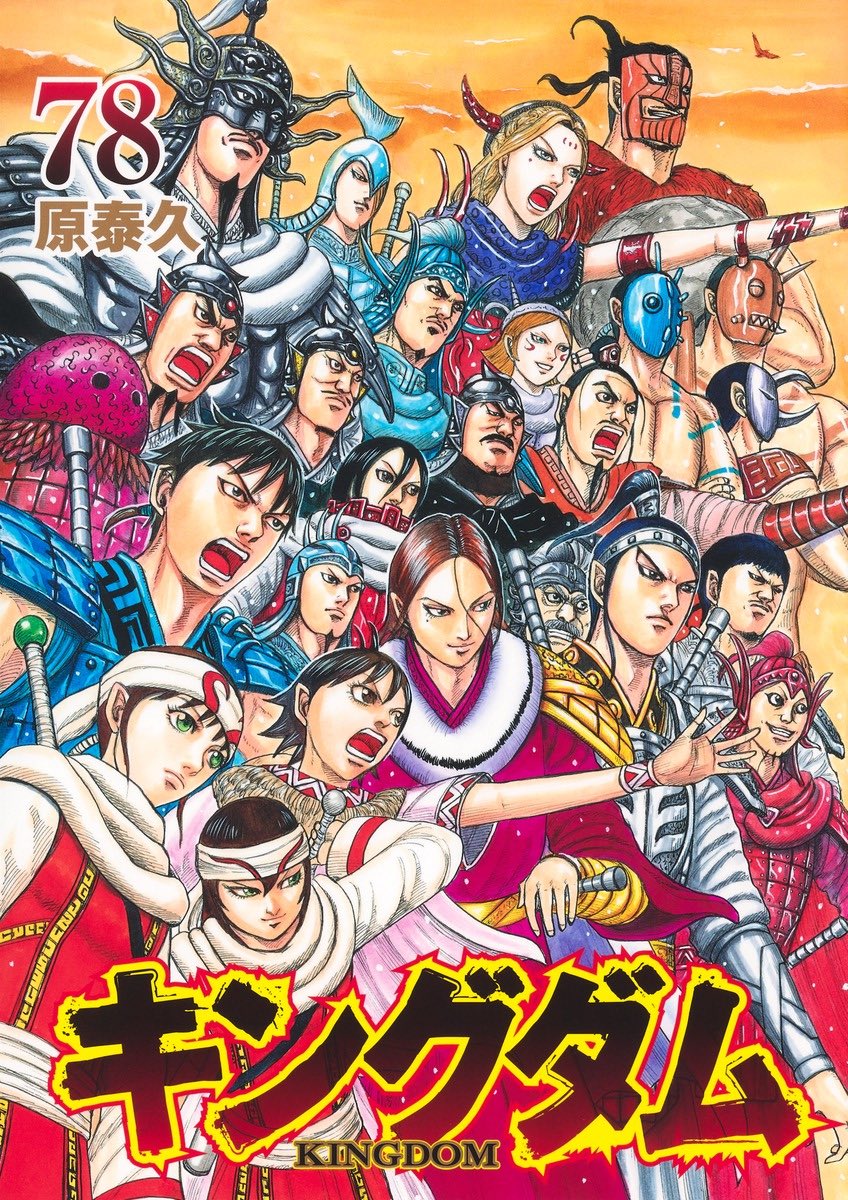
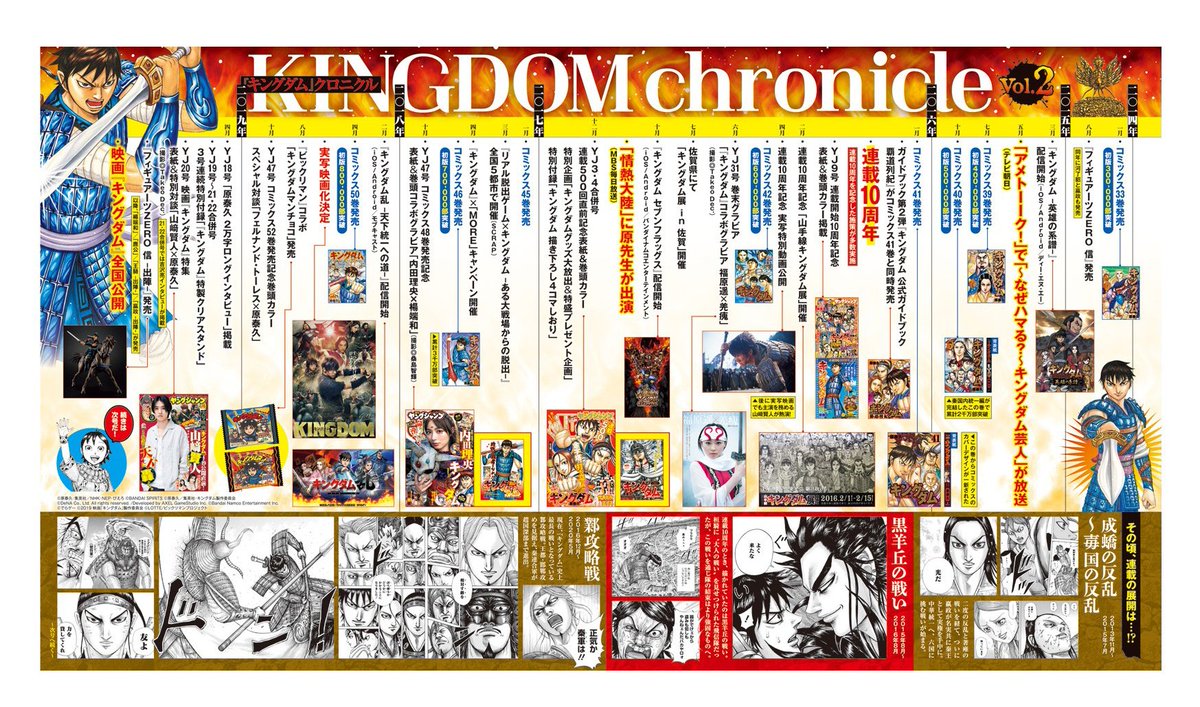
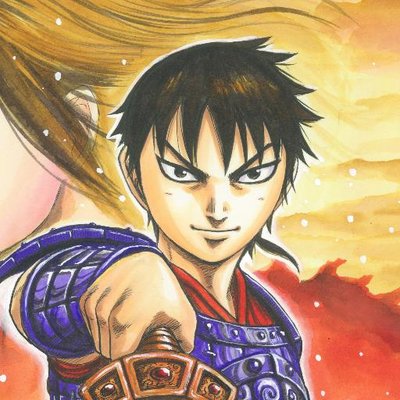
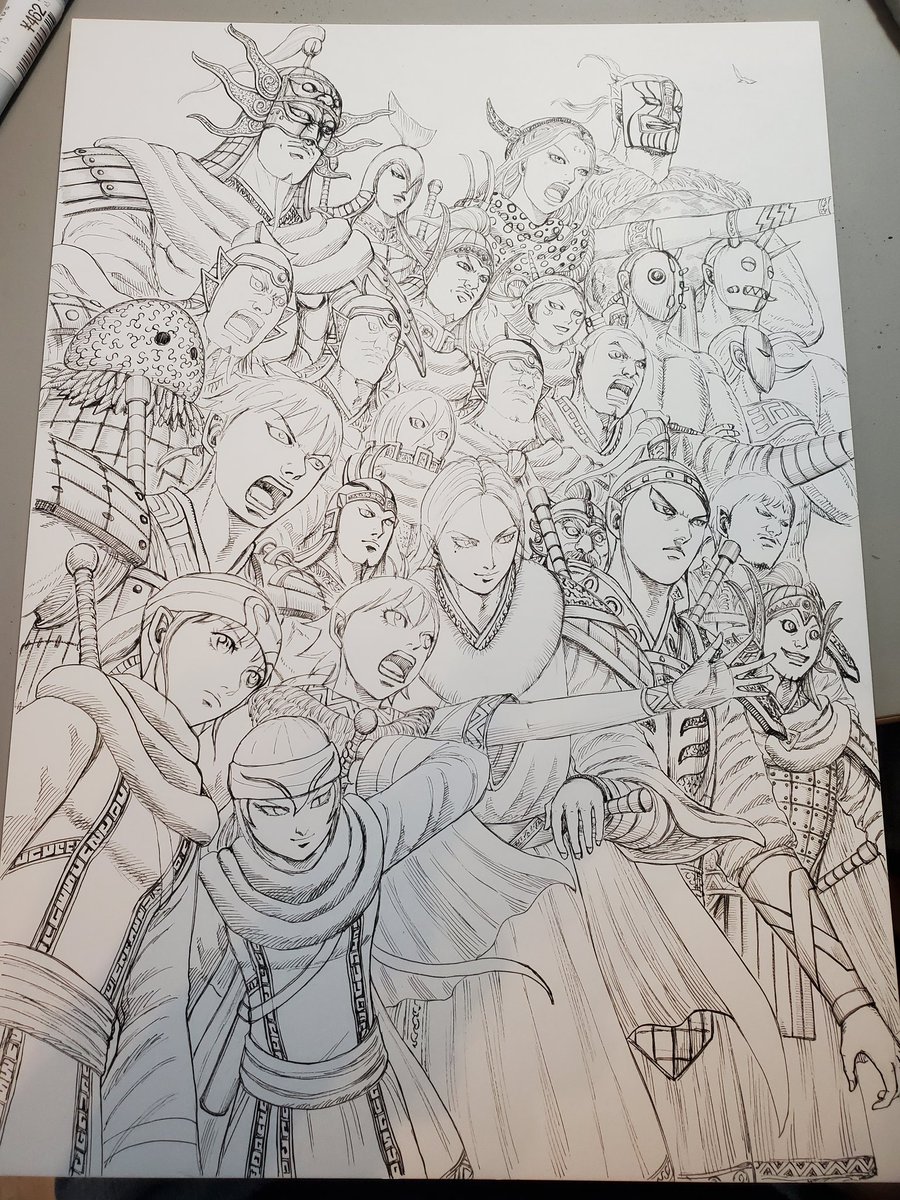
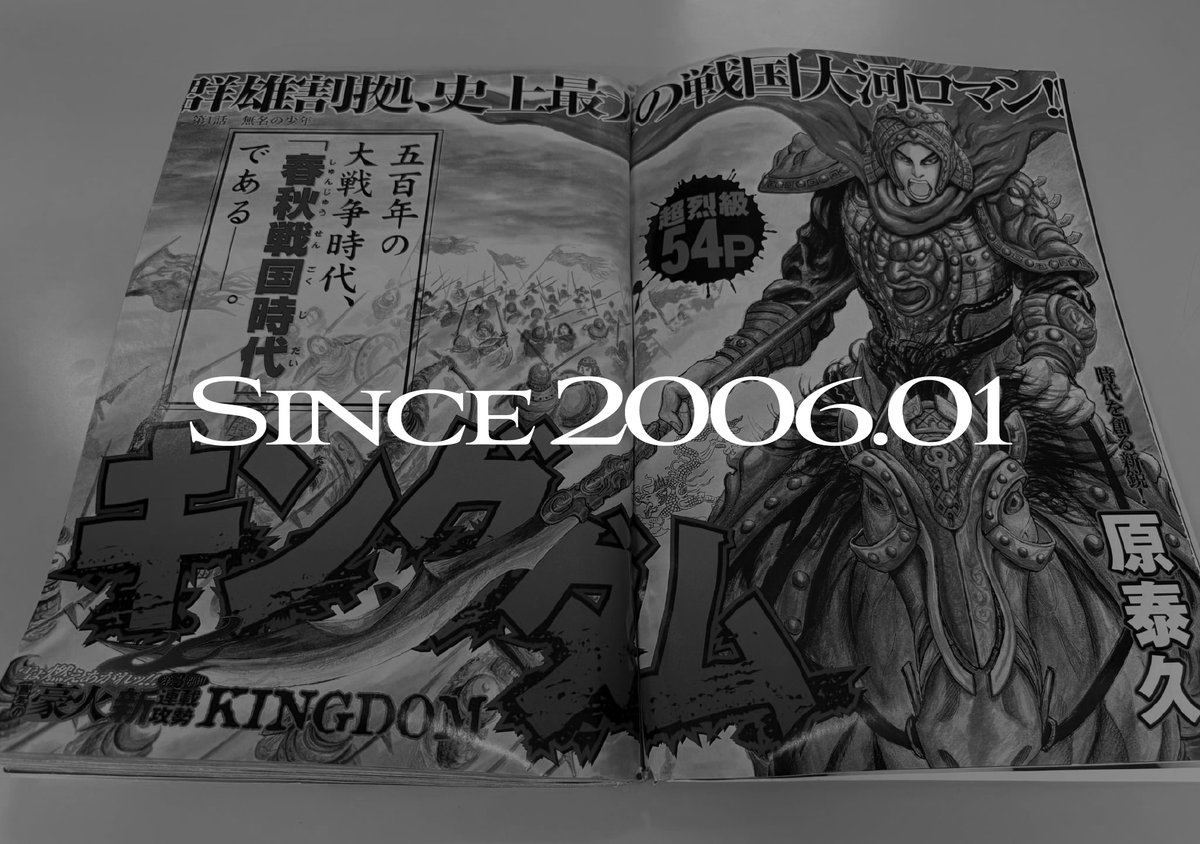
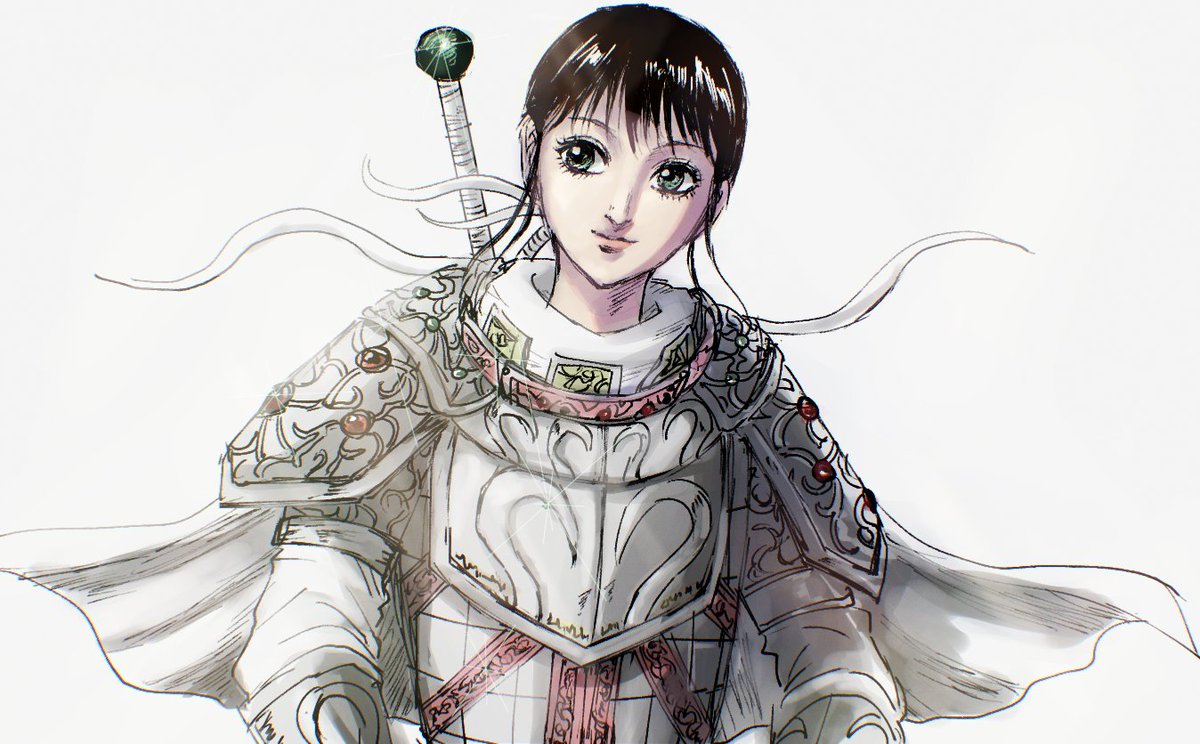
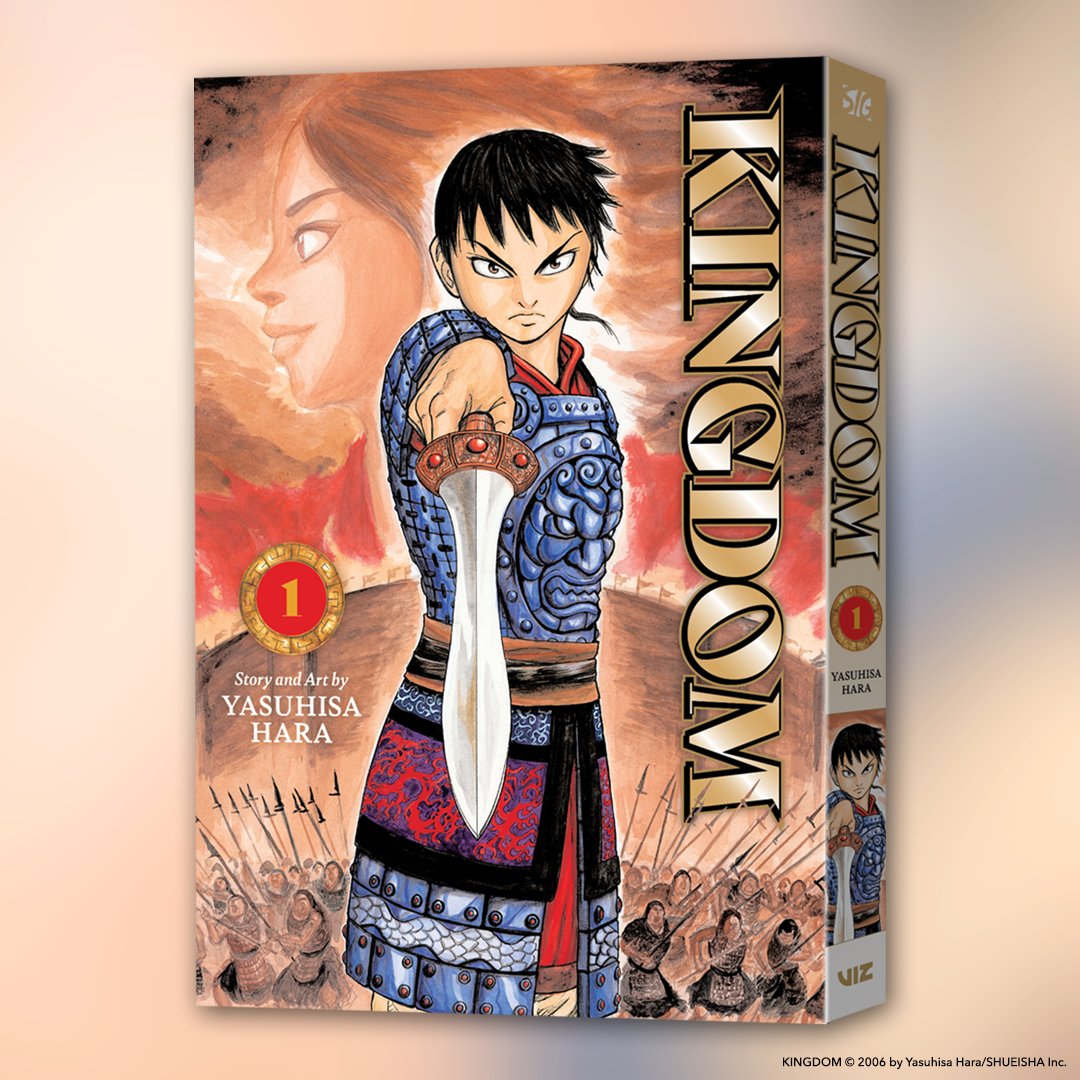
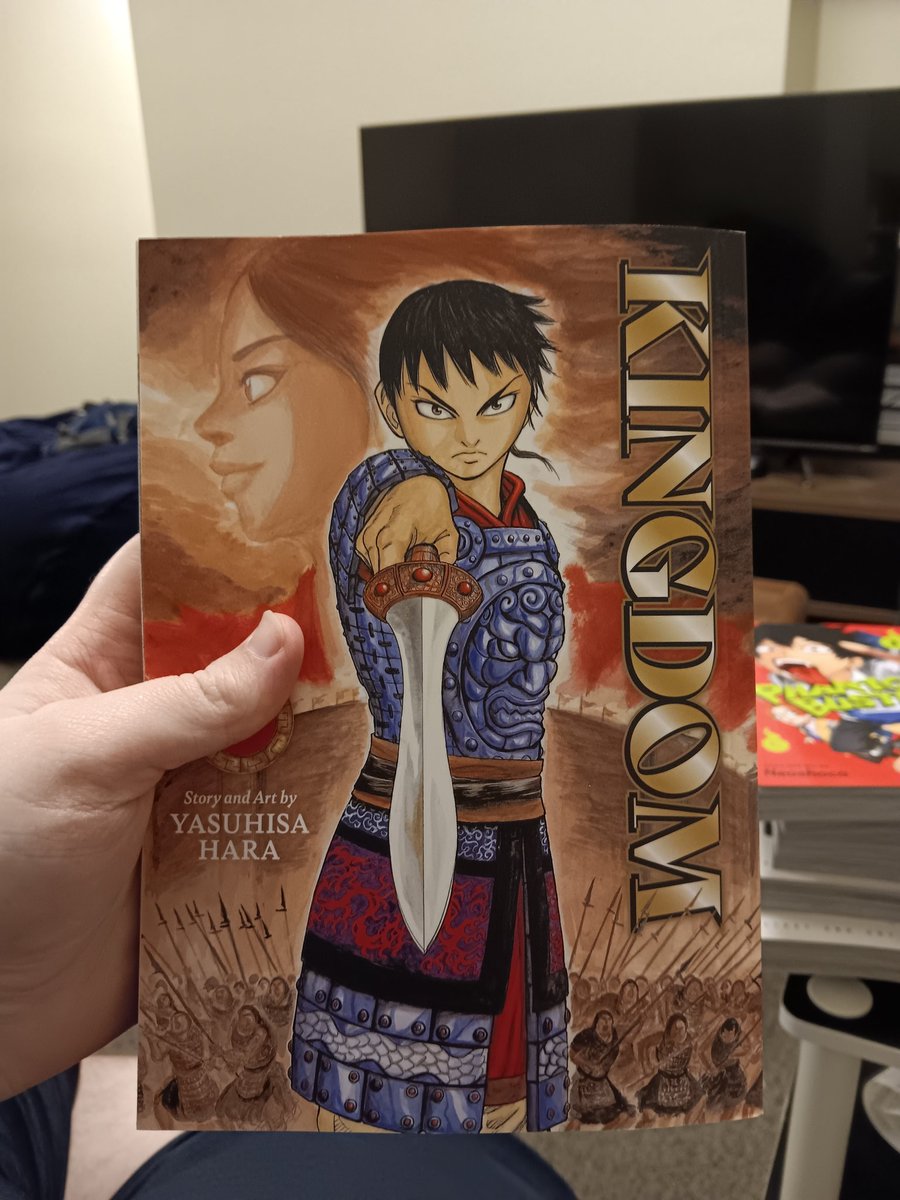
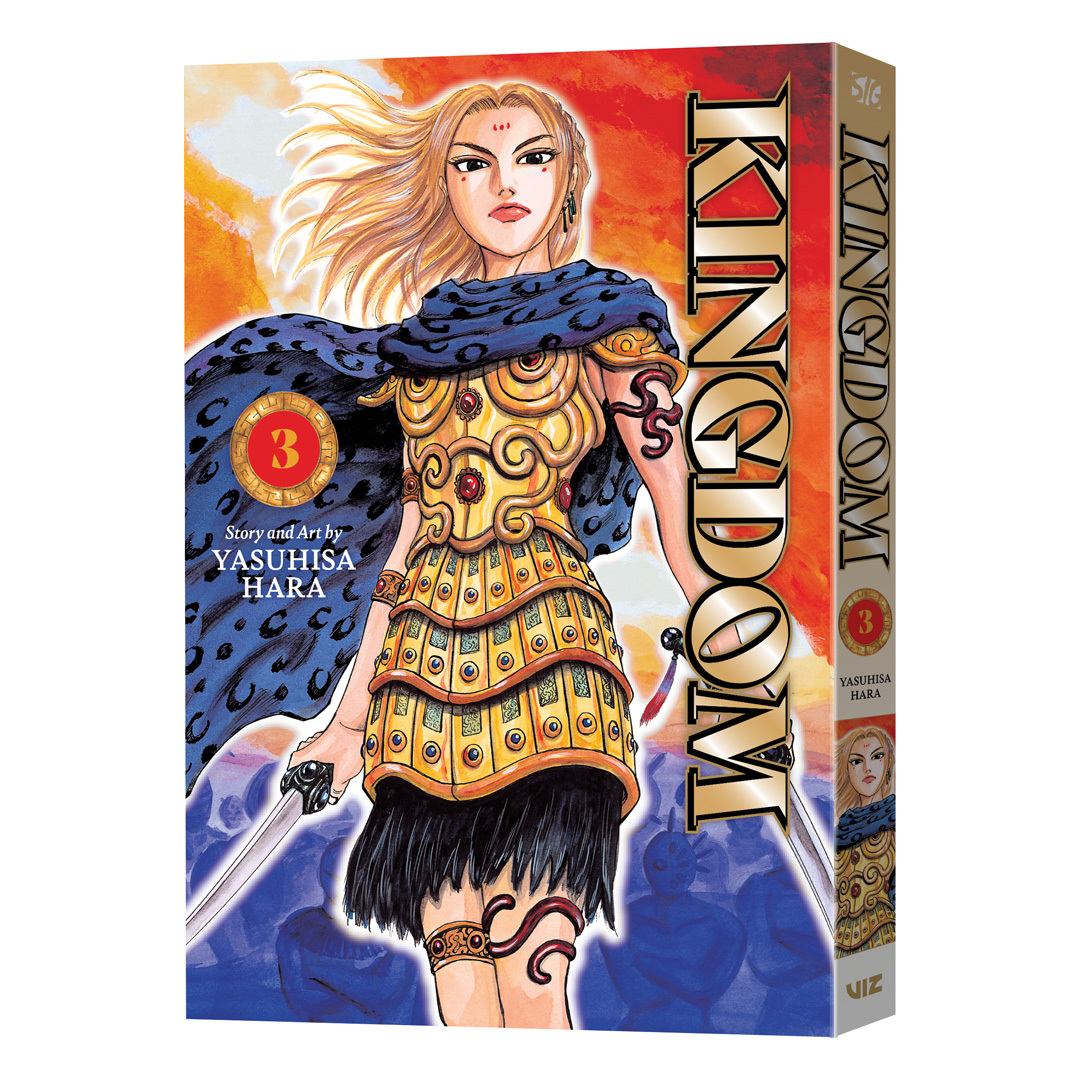
Climbing from the depths of obscurity to becoming Shueisha’s best-selling Seinen manga in history and crossing 100 million—this is Kingdom Chronicle, the history of Kingdom.
This is Part 1, documenting the major events from 2006 to April 2019.
THREAD 🧵
20 years of serialization for a manga that was on the brink of cancelation is an astounding achievement.
This longform tweet we did a couple years back would be worth reading if you’re interested about the early days of Kingdom!
We found some details regarding Yasuhisa Hara’s manga journey that led to Kingdom, so we thought it’d be interesting to share here. Hoping you find this just as fascinating as we did:
Since elementary school, Hara had a reputation for being skilled at drawing. When he drew pictures of “Kinnikuman” in his sketchbook, friends would line up, eagerly asking him to draw more. However, at that time, he was unaware that 'drawing' could become a profession.
From this time onwards, he had a deep love for movies and manga, with Jump (Shounen Jump) being a weekly purchase by his parents, and he would meticulously read every corner. According to Hara, Kingdom is often said to have the vibe of the old-school Jump. He attributes this to the fact that the Jump he read during his student days has subtly become an essence within him, manifesting in his work.
During his student years, he also became enthralled with historical dramas and manga, sparking a natural interest in 'history' from that time.
After spending his student years in this manner, upon graduating from high school, influenced by his love for movies, he aspired to become a film director and enrolled at Kyushu Institute of Design. At the time, with aspirations of being a film director, he thoroughly enjoyed crafting stories. He is said to have created over 100 stories, spanning various mediums such as manga, film, and novels.
However, upon entering an art-focused university and being exposed to various information, he began to feel that “making a living as a film director is realistically challenging.”Around his third year in university, the realization struck him:
“Movies can't be made alone, but with manga, I can do it all by myself!”
With this insight, he shifted his aspirations to become a manga artist, where he could handle scriptwriting, drawing, and performance all on his own.
Then, in 1997, about a year after he began drawing manga in earnest, in his fourth year of university, he won the Encouragement Award (期待賞) in the Young Category of the 36th Chiba Tetsuya Award for “Ueda-kun's Theory of Degeneration (上田君の退化論)”.
"I was so surprised and happy that I jumped up and down when I received my first award. It was the most exciting time of my life."
It was at this moment that the profession of a manga artist first felt tangible and real to him.
After graduating from university, he continued to create manga while studying programming in postgraduate school, and in 1999 he won the runner-up prize in the Young Division of the 40th Chiba Tetsuya Award with “Otomatsu (於兎松)”, which was then published in Bessatsu Young Magazine, marking his debut as a manga artist. Later, while still in school, he drew a number of oneshots with the aim of being serialized, but unfortunately, he was unable to reach serialization. Following graduation from graduate school, he entered the workforce as a systems engineer in a corporate setting.
At the company where he joined as a systems engineer, there were several small teams, and Hara was assigned to the team responsible for creating a search engine system.
Working within these small teams, Hara began to realize that each team had its own roles, and they functioned organically, with each part contributing to the overall operation. Engaging in mutual competition within the team, witnessing team leaders challenging their superiors, and observing the aggressive movements of each individual felt dramatic. Hara sensed that this dynamic, driven atmosphere within the small teams heavily influenced the depiction of “Go” in Kingdom (a famous Qin battle formation as well as Shin’s first-ever team’s name during the battle of Dakan Plains, details: https://t.co/2l07Vp8235).
These various experiences as a company employee were indispensable in drawing Kingdom, and Hara recalls that he could not have drawn Kingdom without his experience of working in a company.
When he first joined the company, he thought he would get out early and debut as a manga artist, but he was too busy with his daily work to take the time to draw manga.
“At the time, I was a Software Engineer in a specialized team with patented technology. When my senior programmer retired, I found myself solely responsible for programming, a situation that pushed me to my limits. I made quite a few mistakes, and there was even an instance where a bug I caused led to significant losses for the company. At that point, I went to a meeting fully prepared for the worst, almost like facing seppuku. However, despite being clearly at fault, my boss, in a fit of anger that could be described as a reverse tantrum, defended me. It was genuinely heartening, and I couldn't help but admire how cool they were.”
“It was a short time - 3 years - but we were a small team, and I had a lot of experience. I drank both good and bitter wine. I learned a lot of things while being scolded, teased, and loved by my seniors, which is exactly what I experienced when I was an office worker. Without that experience, I would not have been able to depict the crude side of the Hi Shin Unit and would have ended up only depicting the formally cool side.”
With a growing desire to truly engage with manga and draw it properly, at the age of 27 in 2003, Hara made the decision to resign from the company and started earnestly pursuing a career as a manga artist. He devoted himself to creating manga, entered magazine competitions, and submitted his work to 12 publishers. As a result, his work was recognized by Shounen Magazine and Young Jump, and he eventually worked towards serialization in Young Jump.
In 2003, he won the Encouragement Award at the 23rd Young Jump MANGA Grand Prix with his oneshot "Ha to Sen". It was a fantasy story set in the Spring and Autumn and Warring States Period (770 BC to 221 BC in Ancient China), but Hara gradually ran out of ideas, so he started drawing a new oneshot set in the Spring and Autumn and Warring States Period, the predecessor to Kingdom.
At the oneshot stage, he thought that only Ei Sei would be the main character, and Shin was in a supporting position, but he felt that if he made only Ei Sei the main character, the story would focus on the royal court and he would not be able to depict the 'battles' and 'infantry frontline' that he wanted to depict, so he finally made Shin the main character. In addition, if the story were to be set in history up to the generally well-known Three Kingdoms, there would be a risk that the story may not be able to develop freely due to the many restrictions. Aware of potential limitations, Hara found solace in the fact that Shiji (Records of the Grand Historian) provided minimal documented details even within the surviving Chinese literature – only a few lines of description – leaving much to the imagination. He appreciated the freedom to envision and decide the untold aspects, making it a perfect fit for his creative expression. Thus, he embarked on crafting the story of Kingdom rooted in the fragments of Shiji records.
The completed result “Kingdom” was thus set to be serialized in Weekly Young Jump.
Since Hara lacked prior assistant experience, at the editorial team's suggestion, he spent 4 months, from the decision to serialize Kingdom to its actual commencement, as an assistant under Takehiko Inoue (SLAM DUNK, Vagabond, and REAL mangaka). Later on, Hara referred to Inoue as “someone who serves as a guiding figure in the world of manga,” considering this encounter a significant asset in his life.
Finally, in 2006, when Hara was 30 years old, he started the serialization of Kingdom in Weekly Young Jump.
Kingdom is crafted based on Shiji (Records of the Grand Historian) with the story evolving as ideas take shape and details are added. However, Hara emphasizes that “design is crucial for Kingdom”. He creates a detailed blueprint by meticulously planning and reverse-engineering how to build excitement within the constraints, using Excel to create timelines.
Hara is committed to portraying Kingdom in a way that aligns with the facts documented in Shiji (Records of the Grand Historian). However, he allows himself creative freedom in areas not explicitly detailed in the historical records. For instance, the decision to depict Kyoukai as a female character stems from the fact that Shiji does not distinctly mention the person’s gender.
Furthermore, to avoid creating a complete historical narrative that might create a distance between the readers and the story, Hara is said to deliberately infuse a contemporary sync by depicting costumes, buildings, and other elements without adhering too closely to historical styles.
However, in its early serialization, Kingdom struggled to gain popularity, even recording the lowest rankings in reader surveys. There was a time when it was very plausible for the manga to get the axe.
Feeling the urgency of the situation, Hara sought advice from his mentor, Inoue Takehiko. The advice he received from Inoue, in his own words:
“The story is interesting; it's just that Shin's eyes are too small.”
Basing his adjustments on Inoue's advice, Hara enlarged Shin's pupils by one size, which inevitably led to overall modifications in the art style. As a result, Shin's character became more dynamic and befitting of a protagonist.
With the change in art, Kingdom gradually started gaining popularity, eventually securing consecutive first places in reader surveys. In 2012, it was adapted into an anime for the first time, and the following year, in 2013, it won the Manga Grand Prize at the 17th Tezuka Osamu Cultural Prize.
Fast forward to November 2023, Kingdom has become the first Seinen manga in Shueisha’s history to cross 100 million copies in circulation.
We found some details regarding Yasuhisa Hara’s manga journey that led to Kingdom, so we thought it’d be interesting to share here. Hoping you find this just as fascinating as we did:
Since elementary school, Hara had a reputation for being skilled at drawing. When he drew pictures of “Kinnikuman” in his sketchbook, friends would line up, eagerly asking him to draw more. However, at that time, he was unaware that 'drawing' could become a profession.
From this time onwards, he had a deep love for movies and manga, with Jump (Shounen Jump) being a weekly purchase by his parents, and he would meticulously read every corner. According to Hara, Kingdom is often said to have the vibe of the old-school Jump. He attributes this to the fact that the Jump he read during his student days has subtly become an essence within him, manifesting in his work.
During his student years, he also became enthralled with historical dramas and manga, sparking a natural interest in 'history' from that time.
After spending his student years in this manner, upon graduating from high school, influenced by his love for movies, he aspired to become a film director and enrolled at Kyushu Institute of Design. At the time, with aspirations of being a film director, he thoroughly enjoyed crafting stories. He is said to have created over 100 stories, spanning various mediums such as manga, film, and novels.
However, upon entering an art-focused university and being exposed to various information, he began to feel that “making a living as a film director is realistically challenging.”Around his third year in university, the realization struck him:
“Movies can't be made alone, but with manga, I can do it all by myself!”
With this insight, he shifted his aspirations to become a manga artist, where he could handle scriptwriting, drawing, and performance all on his own.
Then, in 1997, about a year after he began drawing manga in earnest, in his fourth year of university, he won the Encouragement Award (期待賞) in the Young Category of the 36th Chiba Tetsuya Award for “Ueda-kun's Theory of Degeneration (上田君の退化論)”.
"I was so surprised and happy that I jumped up and down when I received my first award. It was the most exciting time of my life."
It was at this moment that the profession of a manga artist first felt tangible and real to him.
After graduating from university, he continued to create manga while studying programming in postgraduate school, and in 1999 he won the runner-up prize in the Young Division of the 40th Chiba Tetsuya Award with “Otomatsu (於兎松)”, which was then published in Bessatsu Young Magazine, marking his debut as a manga artist. Later, while still in school, he drew a number of oneshots with the aim of being serialized, but unfortunately, he was unable to reach serialization. Following graduation from graduate school, he entered the workforce as a systems engineer in a corporate setting.
At the company where he joined as a systems engineer, there were several small teams, and Hara was assigned to the team responsible for creating a search engine system.
Working within these small teams, Hara began to realize that each team had its own roles, and they functioned organically, with each part contributing to the overall operation. Engaging in mutual competition within the team, witnessing team leaders challenging their superiors, and observing the aggressive movements of each individual felt dramatic. Hara sensed that this dynamic, driven atmosphere within the small teams heavily influenced the depiction of “Go” in Kingdom (a famous Qin battle formation as well as Shin’s first-ever team’s name during the battle of Dakan Plains, details: https://t.co/2l07Vp8235).
These various experiences as a company employee were indispensable in drawing Kingdom, and Hara recalls that he could not have drawn Kingdom without his experience of working in a company.
When he first joined the company, he thought he would get out early and debut as a manga artist, but he was too busy with his daily work to take the time to draw manga.
“At the time, I was a Software Engineer in a specialized team with patented technology. When my senior programmer retired, I found myself solely responsible for programming, a situation that pushed me to my limits. I made quite a few mistakes, and there was even an instance where a bug I caused led to significant losses for the company. At that point, I went to a meeting fully prepared for the worst, almost like facing seppuku. However, despite being clearly at fault, my boss, in a fit of anger that could be described as a reverse tantrum, defended me. It was genuinely heartening, and I couldn't help but admire how cool they were.”
“It was a short time - 3 years - but we were a small team, and I had a lot of experience. I drank both good and bitter wine. I learned a lot of things while being scolded, teased, and loved by my seniors, which is exactly what I experienced when I was an office worker. Without that experience, I would not have been able to depict the crude side of the Hi Shin Unit and would have ended up only depicting the formally cool side.”
With a growing desire to truly engage with manga and draw it properly, at the age of 27 in 2003, Hara made the decision to resign from the company and started earnestly pursuing a career as a manga artist. He devoted himself to creating manga, entered magazine competitions, and submitted his work to 12 publishers. As a result, his work was recognized by Shounen Magazine and Young Jump, and he eventually worked towards serialization in Young Jump.
In 2003, he won the Encouragement Award at the 23rd Young Jump MANGA Grand Prix with his oneshot "Ha to Sen". It was a fantasy story set in the Spring and Autumn and Warring States Period (770 BC to 221 BC in Ancient China), but Hara gradually ran out of ideas, so he started drawing a new oneshot set in the Spring and Autumn and Warring States Period, the predecessor to Kingdom.
At the oneshot stage, he thought that only Ei Sei would be the main character, and Shin was in a supporting position, but he felt that if he made only Ei Sei the main character, the story would focus on the royal court and he would not be able to depict the 'battles' and 'infantry frontline' that he wanted to depict, so he finally made Shin the main character. In addition, if the story were to be set in history up to the generally well-known Three Kingdoms, there would be a risk that the story may not be able to develop freely due to the many restrictions. Aware of potential limitations, Hara found solace in the fact that Shiji (Records of the Grand Historian) provided minimal documented details even within the surviving Chinese literature – only a few lines of description – leaving much to the imagination. He appreciated the freedom to envision and decide the untold aspects, making it a perfect fit for his creative expression. Thus, he embarked on crafting the story of Kingdom rooted in the fragments of Shiji records.
The completed result “Kingdom” was thus set to be serialized in Weekly Young Jump.
Since Hara lacked prior assistant experience, at the editorial team's suggestion, he spent 4 months, from the decision to serialize Kingdom to its actual commencement, as an assistant under Takehiko Inoue (SLAM DUNK, Vagabond, and REAL mangaka). Later on, Hara referred to Inoue as “someone who serves as a guiding figure in the world of manga,” considering this encounter a significant asset in his life.
Finally, in 2006, when Hara was 30 years old, he started the serialization of Kingdom in Weekly Young Jump.
Kingdom is crafted based on Shiji (Records of the Grand Historian) with the story evolving as ideas take shape and details are added. However, Hara emphasizes that “design is crucial for Kingdom”. He creates a detailed blueprint by meticulously planning and reverse-engineering how to build excitement within the constraints, using Excel to create timelines.
Hara is committed to portraying Kingdom in a way that aligns with the facts documented in Shiji (Records of the Grand Historian). However, he allows himself creative freedom in areas not explicitly detailed in the historical records. For instance, the decision to depict Kyoukai as a female character stems from the fact that Shiji does not distinctly mention the person’s gender.
Furthermore, to avoid creating a complete historical narrative that might create a distance between the readers and the story, Hara is said to deliberately infuse a contemporary sync by depicting costumes, buildings, and other elements without adhering too closely to historical styles.
However, in its early serialization, Kingdom struggled to gain popularity, even recording the lowest rankings in reader surveys. There was a time when it was very plausible for the manga to get the axe.
Feeling the urgency of the situation, Hara sought advice from his mentor, Inoue Takehiko. The advice he received from Inoue, in his own words:
“The story is interesting; it's just that Shin's eyes are too small.”
Basing his adjustments on Inoue's advice, Hara enlarged Shin's pupils by one size, which inevitably led to overall modifications in the art style. As a result, Shin's character became more dynamic and befitting of a protagonist.
With the change in art, Kingdom gradually started gaining popularity, eventually securing consecutive first places in reader surveys. In 2012, it was adapted into an anime for the first time, and the following year, in 2013, it won the Manga Grand Prize at the 17th Tezuka Osamu Cultural Prize.
Fast forward to November 2023, Kingdom has become the first Seinen manga in Shueisha’s history to cross 100 million copies in circulation.
20 years strong!
Japan has entered January 26, which means today is Kingdom’s 20th birthday!
Since its debut in Young Jump on this day in 2006, after almost getting canceled, Kingdom is Shueisha's best-selling Seinen manga today, crossing 120 million in sales.
#キングダム
Kingdom releases its official 20th anniversary commemoration video: “A year begins where we can fully immerse ourselves in the world of ‘Kingdom’!”
Lots of announcements coming soon!