@HopiumPapi Yes very
Publicly shows that you have skills
As you did with many coins
very rare to see
Most of KOLs just yaps and sell airdrop deals, and 99% of them are worthless
You want to make money, but can't hold longer then a day
The amount of people i see that buy coins and sell in 1hr span is insane
You never gonna make it like this
Everyone is focused on ArrowPad right now, but I think the market is missing the bigger picture.
Arrow isn’t fundamentally a launchpad.
It’s a CDP protocol built around tokenized equities and RWAs, with the launchpad acting as a complementary growth and revenue engine.
That’s an important distinction.
Most DeFi ecosystems eventually converge around a handful of foundational protocols. Historically those have been lending markets because lending creates utility for every other asset on the chain.
MakerDAO turned idle ETH into productive collateral.
Aave expanded that model across multiple assets.
Morpho optimized capital efficiency.
Robinhood Chain introduces an entirely new collateral class: tokenized equities.
If Robinhood succeeds in onboarding millions of users and bringing public markets on-chain, those assets need financial infrastructure. Simply tokenizing a stock doesn’t create utility. The real unlock comes when users can borrow against their portfolios without selling, just as they do in traditional finance.
That’s where Arrow fits.
What I also like is the protocol design.
They’re not simply copying Maker or Liquity.
The protocol combines a Stability Pool to efficiently handle liquidations, a Peg Stability Module to strengthen the stablecoin, and an opt-in rehypothecation model where only excess collateral can generate additional yield.
Unlike traditional banks, where customer deposits are constantly deployed without sharing much of the upside, Arrow allows users to explicitly choose whether they want additional capital efficiency while ensuring required collateral remains untouched.
It feels like a more modern CDP architecture rather than another clone.
The launchpad is where I think people are misunderstanding the strategy.
I don’t view ArrowPad as the business.
I view it as an additional revenue engine.
Lending protocols naturally earn more during volatile markets through borrowing demand and liquidations. During quieter periods, protocol revenue slows.
A launchpad offsets that.
New launches create trading volume, bring builders into the ecosystem, attract new users, and generate protocol revenue regardless of whether liquidations are occurring. Instead of relying on a single source of fees, Arrow diversifies its revenue across lending and ecosystem growth.
That makes the overall protocol much more resilient.
It also aligns well with Robinhood Chain itself.
Robinhood isn’t trying to become another generic Layer 2. Its focus is tokenized equities, RWAs, and bringing traditional financial assets on-chain.
Arrow is building directly around that thesis instead of importing an existing DeFi model.
As Robinhood grows, more tokenized assets create more collateral.
More collateral creates more borrowing demand.
More borrowing creates more stablecoin liquidity.
More liquidity attracts more builders.
More builders launch through ArrowPad.
Each product reinforces the next.
To me, that’s the interesting part.
The moat isn’t the launchpad.
The moat is becoming the financial infrastructure that makes tokenized assets productive.
If Robinhood succeeds, protocols that own lending and capital efficiency around those assets could become some of the most valuable applications in the ecosystem.
That’s why I think the CDP is the real story, and the launchpad is simply another piece that strengthens the flywheel.
bros we literally gave you memecoins that pay holders real-world assets on Robinhood.
Hold a meme. Earn tokenized stocks.
and y'all are still following the wrong crowd.
vltUSDC is a high real yield vault without liquidation risk. It is just a ERC20/4626 style managed LP position. Zap in with USDC for equal exposure to VLT / USDC at all time. Higher returns on USDC than just stable coin pure plays. Less volatile than holding VLT by itself. Real yield and high APR gets locked into your position. The system builds an ETH / USDC community lead balance sheet for the long term. All institutional grade, open source, and audited... ONLY ON ETHEREUM.
the new interface is up at
fun.noxa.eth
you can access it directly via brave built-in ens support
or via services like eth limo/link
https://t.co/zJUNolGUAH
https://t.co/fJTArcb17w
the interface lets you browse a historical snapshot of the tokens launched on noxa in the past, and claim any creator fees, as well as seeing the tokens you launched or where you are the fee receiver
we have pondered for long on the matters of token vamps, and the new token launch spam that has been going on
if crypto as a space has to move forward and improve, the change needs to come from the people
the biggest coins currently present on robinhood, the staples that made the chain what it has become today, even if still in its infancy
people loved the cat, it has been liberated
the legacy of the degens will stay forever
there is only one solution to avoid dilution of the tokens, the staples
and that is to keep new launches disabled
the noxa infrastructure was also never built to sustain such an unprecedented spam of new coins in the first place
after our conventional domains became unavailable, moving to a static ens/ipfs interface became the clear direction
defi summer is still happening
and the trading fees have been set to 100% for the creators
you've watched fees become liquidity.
what comes next changes what a launchpad can be.
CA: 0x1cd3e1523bc8ac03aa95f8f84cb95b051b3a27ac
https://t.co/BholWmUMdf soon.
Robinhood Chain is filling up fast.
while most tokens just sit there, Golito is the one you actually play.
early still means something. for now. $GOLITO
https://t.co/bxOiLwaJMy
A lot of people instantly turned bearish when @RamXBT mentioned Avici might raise again soon
This isn’t a traditional crypto “raise.” This is a fintech scaling moment, and the context matters
Early-stage fintechs like:
- Revolut
- Wise
- Stripe
- CashApp
- N26
All raised multiple rounds early because scaling financial infrastructure is expensive:
✅ licensing
✅ compliance
✅ payment rails
✅ virtual account partners
✅ settlement infrastructure
✅ fraud prevention
✅ card issuing
✅ treasury ops
The fact that @avici is already processing millions per month makes it normal that they raise for scaling their infra. Raising money to support hypergrowth is bullish, not bearish
It means the product is working too well that they need more capacity and imo that’s the best problem a startup can have...
+ the sale will only happen IF holders approve it, this is why Futarchy matters
This part is what most people ignore, Avici cannot raise anything unless OWNERS approve it via Futarchy
This isn’t:
❌ founders deciding
❌ backroom deals
❌ VC allocation insider dumping
❌ traditional ICO dilution
Instead, it's:
✅ holders voting
✅ market outcomes deciding
✅ aligned incentives
✅ transparent proposals
This is exactly why @MetaDAOProject Futarchy is 10x superior to ICO models, holders control the dilution, the raise, and the structure, Founders cannot force anything
In any other crypto project, the founder would simply announce the raise and dilute you
If the raise accelerates growth, so ownership becomes more valuable
If the raise is unnecessary, then holders reject it, and no dilution happens
This creates a smart filter, only the raises that increase owner value ever get approved
Most people are bearish because they still think in old-ICO mental models
People associate new raises with team dilution, greed, mismanagement, supply nuking, rug potential, desperation, etc
But none of this applies here because:
1⃣ Avici is not a “hype token,” it is a scaling fintech
2⃣ Futarchy prevents founders from diluting without approval
3⃣ All details will be on-chain and market-validated
4⃣ Raises fund infra expansion, not runway
5⃣ Growth metrics justify scaling spending
People will eventually realize that you can't compare Avici to meme projects... You have to compare it to real fintech companies that scale like startups
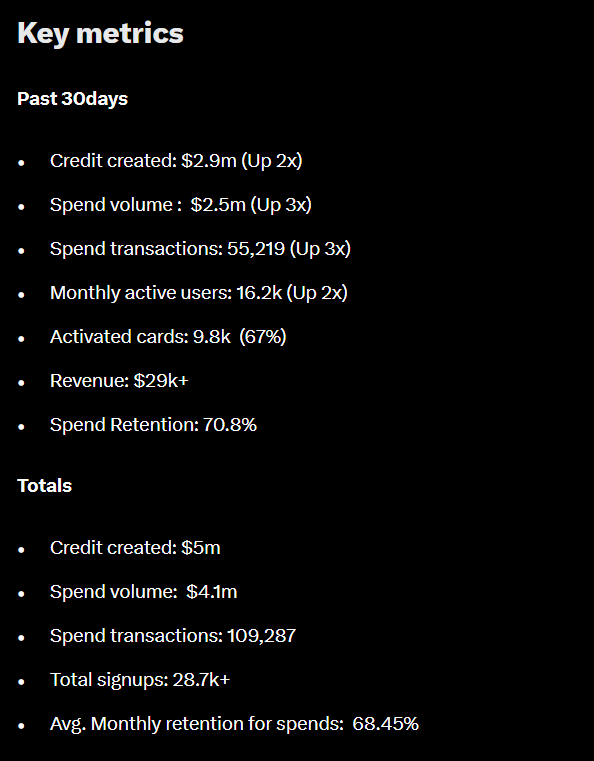
Made this TLDR below, picking the best parts from the article for anyone interested:
➡️ $2.9M credit created (2×), $2.5M spend volume (3×), 55k transactions (3×), 16.2k MAU (2×). For month 2, these numbers are insane and show real product-market fit
➡️ People aren’t just testing the card; they’re actively using it. High retention this early is rare in fintech and signals long-term stickiness
➡️ Named virtual accounts + MoonPay partnership are the biggest unlock so far: Off-ramps now arrive as normal bank transfers under the user’s own name.
➡️ Biz cards + institutional-grade Solana wallet infra shipped: This expands Avici from consumer fintech into business + high-value money flows
➡️ Public dashboards, viral marketing, new dev hires, new infra, LATAM GTM, all in one month
➡️ Some issues still need fixing but they’re transparent about it: Card balance withdrawal bugs, better wallet analytics, LATAM focus
➡️ Revenue is growing but they are reinvesting everything for marketshare: Interchange + card sales are already meaningful, but the plan is to use it as cashback
➡️ Team supply / new raise will be proposed transparently: Proposal likely Dec/Jan, and holders will need to approve it, this is why Futarchy matters
➡️ “Avi” is coming, personalization + deeper user experience: They want Avici to become people’s financial home, not just a spending card. More personalization = higher retention and bigger revenue per user
➡️ Metal cards + cashback targeting high spenders: Once spend volume 2-3×, interchange becomes big enough to reward users aggressively
➡️ They will double down on global + localized branding now that people get the narrative
The People’s bank
Ownership Supercycle
WELEPHANT is getting a lossless mining game. Our miner is a new evergreen use case for competing for WELEPHANT below the market price. It addresses a ton of issues found in existing games in the marketplace which cause them to collapse. First in foremost, our liquidity for ELEPHANT has no liquidity leaks and is 99.99% protocol owned and locked.
I've written a simulator that drives all the new contracts in a reproducible test environment. It simulates an arbitrary amount of people using our new miner. I've been using the simulator over the past weeks to harden the mining contracts and address all edge cases without putting funds at risk.
More news to come soon! Happy Holidays!
P R I V A C Y
You hear this a lot lately, it seems like a new trend. But which projects are leading the charge and worth keeping an eye on for potential $$$ airdrop?
1 | @Arcium, the backbone powering Solana’s privacy stack
2 | @stealf_finance, neo-bank offering 100% anonymous transactions + virtual & physical cards
3 | @darklakefi, turning swaps into private dark pools and flipping MEV into LP yield
4 | @theprivacycash, lets you transfer funds to a clean wallet without linking past addresses or transaction history
5 | @vanishTrade, encrypted trading interface for pros & funds. $1M pre-seed from Solana Ventures + Pivot Global
6 | @offgridcash, privacy-first crypto cards and instant payments. No KYC, no delays, no compromise.
7 | @meleemarkets, prediction markets with private order flow
8 | @UniFi_Labs, private perpetuals on Solana. Not live yet, but one to watch
9 | @UmbraPrivacy, “incognito mode” for Solana. Soon on mainnet
Are you bullish on privacy narrative in crypto right now? 👇
I know a lot of you are sidelined and that's okay
But what is not okay is to have all your money in CEX's or wallets doing nothing
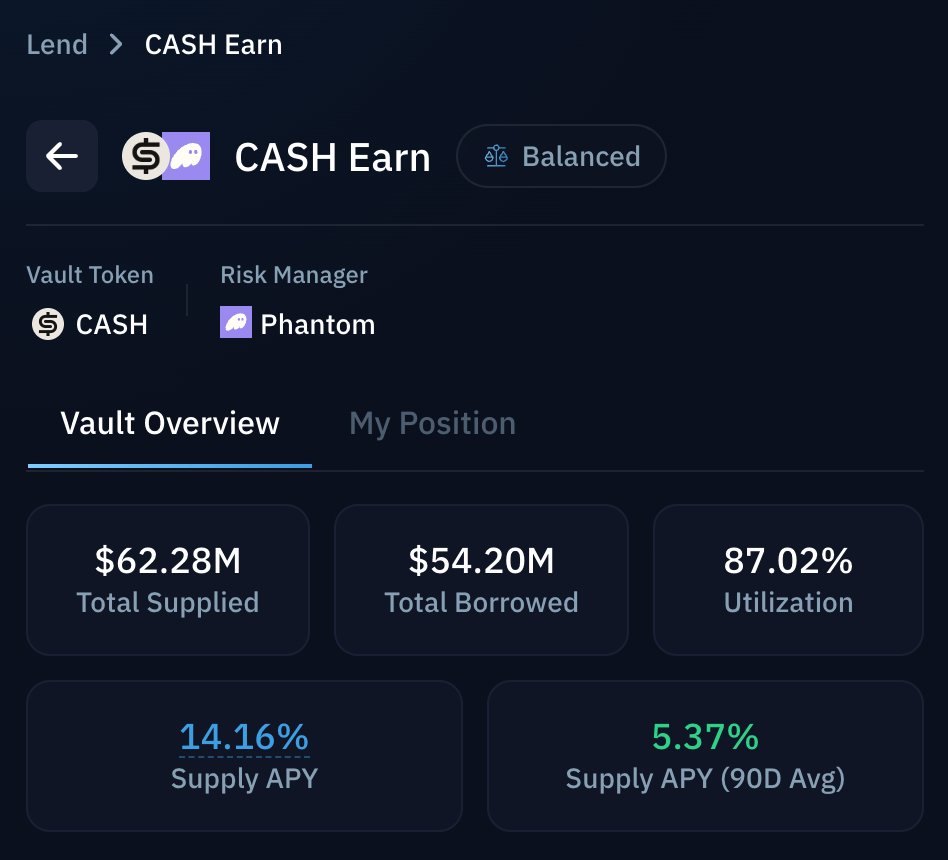
Stablecoin Strategy (4 clicks, don't be lazy)
— Lend
— Cash Earn vault, deposit
— 14.16% APY (from which 1.4% in KMNO rewards)
Can withdraw at any time.
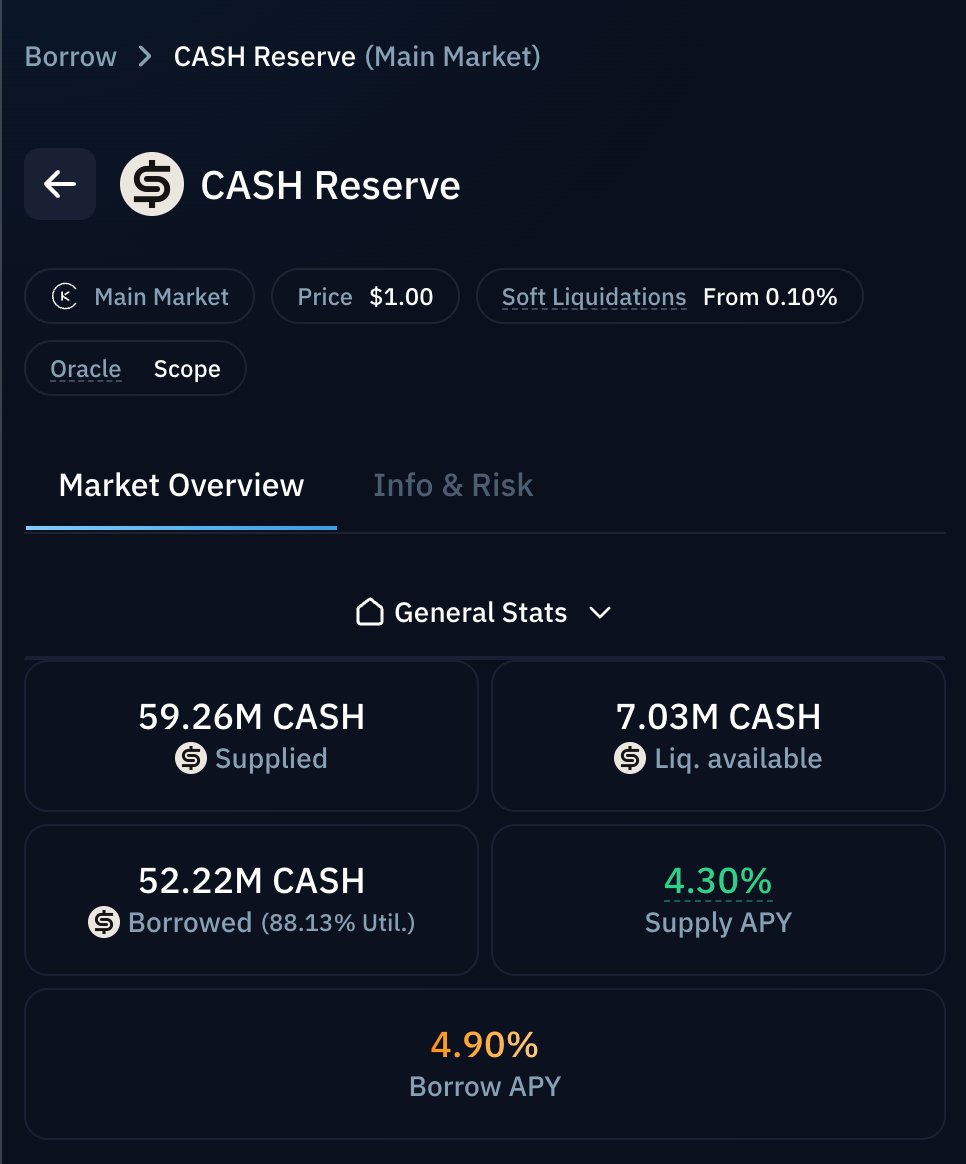
SOL & Stablecoin Strategy (6 clicks, no excuses)
— Deposit pSOL (LST)
— Borrow CASH (Stablecoin)
— Earn CASH rewards
— Borrow APY 5%, Rewards APY ~8%
You are liquid staking your SOL and getting paid in stables for borrowing against it.
I fly first class 40+ times per year
Stay at 5-star hotels monthly
Never paid a dollar
My credit cards fund my lifestyle while funding my business
Here's the $100K/year travel hack nobody teaches correctly:
Last year's travel retail value: $127,000
What I actually paid: $568
How? Points. But not how you think
Everyone knows about "points and miles"
Nobody understands the arbitrage
The Basic Math:
Chase Sapphire Reserve: 100K points signup
Amex Platinum: 150K points signup
Capital One Venture X: 100K points signup
That's 350K points = $7K in travel
But that's kindergarten shit
Here's the advanced game:
The Manufactured Spending Loop:
Buy $10K in Visa gift cards with credit card
Get 10K points (worth $200)
Use gift cards to buy money orders
Deposit money orders
Pay off credit card
Repeat
$200 profit per cycle
Do 10x per month = $2K
Annual value: $24K
The Business Card Stacking Method:
Personal cards limited to ~10
Business cards? Unlimited
I have 31 active cards:
- 12 personal
- 19 business
Each with signup bonus
Each with spending multipliers
Each printing points
The Category Maximization:
Amex Gold: 4x restaurants
Chase Ink: 5x office supplies
Citi Custom: 5x top category
US Bank: 5x phone/internet
Every expense optimized
Every dollar earning 2-5x
My phone bill generates $500/year in points
The Portal Arbitrage:
Same flight https://t.co/2U4K7GaXfp: $2,000
Through Chase portal: 1.5x points value
Through Amex travel: 2x value for premium
Through transfer partners: 3-4x value
SFO → Tokyo first class:
- Cash price: $18,000
- Points needed: 120K
- Value per point: 15 cents
That's 7.5x normal value
The Status Match Game:
Get Hilton Gold with Amex Platinum
Match to Marriott Gold
Match to Hyatt Explorist
Match to IHG Platinum
One card. Four hotel statuses
Free upgrades everywhere
Free breakfast ($50/day value)
Late checkout (priceless when hungover)
Real Examples This Year:
Dubai Trip:
- Emirates First Class: 140K points (retail $15K)
- Burj Al Arab 3 nights: 180K points (retail $9K)
- Total retail value: $24K
- Actual cost: $450 in taxes
Monaco/Vegas Run:
- Air France Business: 75K points
- Hotel de Paris: 90K points
- Wynn Las Vegas: 60K points
- Retail value: $18K
- Actual cost: $0
The Dark Secret:
Banks LOSE money on me
$400 annual fees across all cards
$8,000+ in signup bonuses
$24,000+ in points value
Zero interest paid
They're subsidizing my lifestyle
But here's why they don't care:
For every one of me, there's 1,000 idiots paying 24% APR
I'm a rounding error
They need me to keep the normies believing the dream
The Business Integration:
Every business expense = Points
Every client dinner = 4x points
Every Facebook ad = 4x points
Every inventory purchase = 2x points
$500K in business expenses last year
= 750K points minimum
= $15K in travel value
My business pays for my lifestyle
My lifestyle enhances my business
First class flights = Better recovery
5-star hotels = Better connections
Airport lounges = Office space
It's a tax-deductible luxury loop
The Credit Impact Truth:
31 cards
780 credit score
How?
$800K total credit limit
$40K average usage
5% utilization
The algorithm loves me
More cards = Lower utilization = Higher score
It's backwards but it works
The Future Play:
Teaching clients this system
Charge $5K for complete setup
Takes one weekend
They save $10K+/year forever
Already helped 47 people
$235K in consulting fees
For teaching credit card games
The Ultimate Hack:
Become the person who TEACHES the system
People pay me to learn what banks give away free
I get paid to show them how to get paid
Meta-arbitrage
Your competition is buying coach tickets with cash
You're about to fly first class for free while they subsidize your journey
Want my complete setup?
- All 31 cards ranked
- Application timeline
- Point maximization strategies
- Transfer partner secrets
dm "LUXURY" for the blueprint (must be following)
Life's too short for economy class
And too long to pay retail
Chase thought they were getting a customer
They got a professional thief
Legally
The Oct 11 Crypto Crash — What Really Happened
TL;DR:
Roughly $60–90M of $USDe was dumped on Binance, along with $wBETH and $BNSOL, exploiting a pricing flaw that valued collateral using Binance’s own order-book data instead of external oracles.
That localized depeg triggered $500M–$1B in forced liquidations, cascaded into $19B+ globally, and earned the attackers about $192M via $1.1B in BTC/ETH shorts opened on Hyperliquid hours earlier, but minutes before Trump tariff announcement.
It wasn’t a USDe failure!! It was Binance’s design flaw, timed with macro panic (Trump’s tariffs) for cover.
What looked like chaos was actually a coordinated exploitation of Binance’s internal pricing system, amplified by a macro shock and systemic leverage.
1️⃣ The Setup
Binance’s Unified Account let traders use assets like USDe, wBETH, and BNSOL as collateral.
Instead of oracle or redemption prices, Binance valued these using its own spot market - a major vulnerability.
On Oct 6, Binance announced a fix to move to oracle-based pricing, but rollout wasn’t until Oct 14, leaving an 8-day window.
2️⃣ The Exploit
During that window, sophisticated actors manipulated Binance’s order books, dumping ~$60–90M of USDe, driving it to $0.65 on Binance only (still ~$1 elsewhere).
Because the Unified Account marked collateral to internal prices, this instantly wiped margin value and triggered $500M–$1B in forced liquidations.
Then, Trump’s 100% China tariff headline hit, magnifying panic and liquidity stress.
3️⃣ The Profit Engine
The same day, fresh wallets on Hyperliquid opened $1.1B in BTC/ETH shorts, funded by $110M USDC from Arbitrum-linked sources.
As the Binance cascade unfolded, BTC and ETH cratered, those shorts netted $192M in profit before closing out at the bottom.
Timing, precision, and funding paths all suggest coordination.
4️⃣ The Contagion
Binance liquidations dumped BTC/ETH/ALTs into thin books.
Other exchanges mirrored the collapse through cross-market bots.
Market makers hedged across venues were forced to unwind everywhere.
Result: $19B+ global liquidations, with many alts down 50–70% intraday, all triggered by <$100M of manipulated collateral.
5️⃣ Who’s at fault?
Binance: design flaw + delay in oracle rollout = root cause.
Exploiters: executed and timed the manipulation, profited via external shorts.
Ethena (USDe): not at fault - protocol stayed 1:1 collateralized, redemptions normal, peg held everywhere else.
6️⃣ Aftermath
Binance admitted “platform-related issues,” promised compensation for affected margin/futures/loan users, and rolled out minimum price floors + oracle integration.
USDe remained operational, and the incident is now a case study in how exchange-side pricing errors can trigger system-wide liquidations.
Bottom line:
A ~$90M dump on Binance and a $1.1B leveraged short elsewhere sparked a $19B bloodbath.
Not a stablecoin failure, but a masterclass in exploiting flawed collateral valuation during peak macro stress.