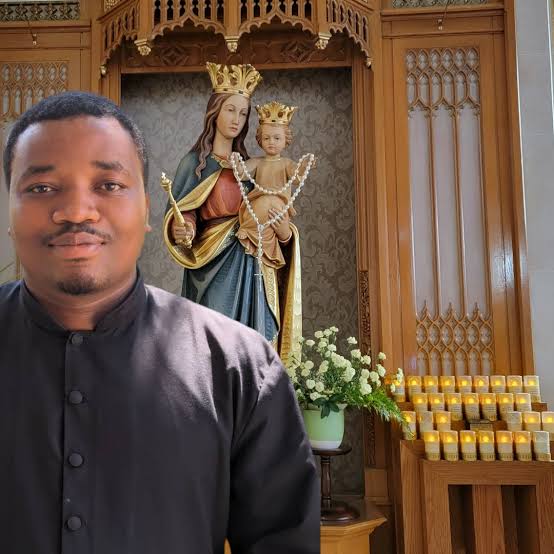
WHAT IF WE BECAME HUMAN?
Sem. @bigabwarugaba[email protected]
St Paul’s National Seminary - @KinyamasikaSem
In the beginning, Genesis offers more than a story of origins; it reveals a moral vision of existence. Humanity is described as created in the image and likeness of God, suggesting that to be human is to reflect divine attributes, love, justice, creativity, and responsibility. The word human itself comes from the Latin humanus, rooted in humus, meaning earth, reminding us of both our humility and shared origin.
We are beings formed from dust yet animated by breath, carrying within us a paradox of fragility and sacred worth. Socrates’ assertion that “the unexamined life is not worth living” reinforces that humanity is not automatic; it is cultivated through reflection and ethical living.
To be human, in its truest sense, is to consciously embody compassion, pursue truth, and act with moral clarity. But what if we truly lived this way? What if being human was not just a biological condition, but a deliberate practice of dignity and love?
Violence, whether physical or systemic, has become an accepted language of power. Inequality persists as societies elevate wealth above well-being. Corruption erodes trust while discrimination divides people along lines of race, tribe, class, and belief. Even indifference has become a vice; we witness suffering and move on, numbed by repetition. In many ways, we have grown comfortable with dehumanization, excusing it as necessity or inevitability. But this raises a critical question: if our actions consistently deny dignity, can we truly claim to be human? Or have we simply inherited the name while abandoning its meaning?
The philosophy of Ubuntu teaches that “I am because we are,” emphasizing that our humanity is interconnected. Leaders and thinkers have long reminded us that dignity cannot be selective and justice cannot be partial. Their words challenge us to confront systems that degrade life and to imagine societies grounded in equality and compassion.
Scripture reinforces this call with clarity and urgency. “What does the Lord require of you but to do justice, to love mercy, and to walk humbly?” (Micah 6:8). Here, humanity is defined not by status or identity, but by action. Similarly, “faith without works is dead” James 2:17 reminds us that belief must be lived to have meaning. The parable of the Good Samaritan illustrates that true humanity transcends boundaries; it is revealed in acts of compassion, especially toward those we might otherwise ignore. These teachings insist that to be human is to act, to defend dignity, to extend mercy, and to resist indifference. What if we allowed these principles to guide our lives?
To become human, then, is an ongoing process rather than a fixed state. It demands courage to challenge injustice, humility to acknowledge our failures, and love to bridge our differences. Love, in this sense, is not mere emotion but a commitment to the well-being of others. Unity does not erase diversity; it harmonizes it within a shared respect for life. Imagine a world where people consistently chose honesty over deception, kindness over hostility, and service over selfishness. Such a world is not beyond reach; it begins with individual choices repeated across communities.
The question “What if we become human?” is ultimately personal. It asks each of us to reflect on how we live and how we treat others. What if we refused to participate in systems that harm? What if we chose empathy where there is division? What if we lived as though every person carried inherent worth? These questions are not rhetorical; they are transformative when answered through action. It invites us to align our lives with the deeper purpose embedded in our existence. To become human is to return, to humility, to compassion, and to justice. And perhaps, if we truly embraced this calling, the world would not need to ask what humanity is, because it would finally see it lived.
depart with a smile, knowing we share something truly special.
With God as our guide, the journey continues in love and gratitude.
Deacon John Izizinga (Jinja Diocese)
From 2022–2026.
Dear Kinyamasika family,
Four years ago, we entered Kinyamasika Seminary with hearts full of dreams and a passion for priestly formation. ‘The Lord is my shepherd; I shall not want.’ (Psalm 23:1) Now we depart with a lifetime of cherished memories, a family of colleagues ...
leave the shore. We are now embarking upon a new season of personal growth, renewed energy, and fresh responsibilities as priests of the Roman Catholic Church.
We remain sons of the great Kinyamasika Seminary, yet it is time to build upon the dreams we have nurtured. We ...
#HappeningNow: The Archdiocese of Mbarara Laity Council has elected Eng. Dr. Silver Mugisha as the new Head of Laity succeeding Mr. Gervase Ndyanabo after a 6-year term.
Eng. Dr. Silver Mugisha is the Managing director of the National Water and Sewerage Corporation @nwscug.
He will be Deputised by Emmanuel Mbarebaki (Omuhumuriza).
#HappeningNow: The Archdiocese of Mbarara Laity Council has elected Eng. Dr. Silver Mugisha as the new Head of Laity succeeding Mr. Gervase Ndyanabo after a 6-year term.
Eng. Dr. Silver Mugisha is the Managing director of the National Water and Sewerage Corporation @nwscug.
He will be Deputised by Emmanuel Mbarebaki (Omuhumuriza).
KASESE CATHOLIC DIOCESE ONLINE TV @Kasesediocese
✍🏻 Moses Bwambale
The foot pilgrims from Beni - Butembo Diocese, DR Congo have now been welcomed at Kabuyiri Shrine after their long and prayerful journey. Their arrival has been welcomed with great joy, thanksgiving, and spiritual celebration as faithful believers gather to receive them at the holy shrine.
The pilgrimage reflects deep faith, devotion, and unity among the people, making this a truly blessed and memorable moment for everyone in attendance.
About 1,500 pilgrims from the Catholic Diocese of Beni - Butembo in DR Congo have arrived at the DR Congo–Uganda border.
Received by the Bishop of Kasese Diocese, Rt. Rev. Francis Aquirinus Kibira and accompanied by large numbers of people in Kasese district, they will be hosted at Kasese Catholic Diocese headquarters in Kasese town ahead of their official foot pilgrimage to Namugongo on Monday May 19th, 2026.
This is a moment of unity, faith, and spiritual fellowship between the people of DR Congo and Uganda.
Follow via tic tok for for more updates of videos
✍🏻B.Mumbere ((CC)
#KASESE CATHOLIC DIOCESE ONLINE TV
# 𝗘𝗱𝘂𝗰𝗮𝘁𝗶𝗻𝗴 𝗖𝗮𝘁𝗵𝗼𝗹𝗶𝗰𝘀 𝗶𝗻𝘀𝗽𝗶𝗿𝗶𝗻𝗴 𝗳𝗮𝗶𝘁𝗵
#ChristIsaliveInYouandMe
#Dioceseofkaseseleadsnamugongo2026
#PreparationsOngoing
#Namugongo2026
https://t.co/wvNRqsAMtz
“I am with you always, even to the end of the age.” ✨☁️
Today we celebrate the Ascension of the Lord, the glorious moment when Jesus, having completed His earthly mission, was taken up into Heaven and seated at the right hand of the Father.
The Ascension is not a story of absence, but of a new and deeper presence. Christ does not abandon His Church; He enters the glory of the Father with His glorified humanity, opening for us the way to Heaven. He goes before us, so that where He is, we too may one day be.
Understanding the Mystery of the Ascension:
1️⃣ The End of His Visible Earthly Presence: For forty days after His Resurrection, Jesus appeared to His disciples, teaching them, eating with them, and confirming the reality of His victory over death. Then, before their eyes, He was taken up into Heaven.
2️⃣ Humanity Brought into Glory: As a cloud received Him from their sight, Christ’s glorified humanity entered forever into the presence of the Father. In Him, our human nature has been lifted up and called to share in the life of Heaven.
3️⃣ The Way Opened for the Righteous: Christian tradition sees in Christ the Savior who opens the gates of Heaven to the righteous who had awaited redemption. He is the victorious King who leads humanity back to the Father.
4️⃣ Seated at the Right Hand of the Father: The Ascension reveals Christ’s kingship and His priestly intercession for us. He is not far from us; He reigns, intercedes, and prepares a place for those who remain faithful to Him.
The Ascension reminds us that while our feet are on earth, our true citizenship is in Heaven. We live in hope, knowing that our Lord has gone before us and remains with His Church always.
HOLY ORDERS (Ordination in the Catholic Church)
The Sacrament of Holy Orders is one of the seven sacraments instituted by Jesus Christ, through which the mission entrusted by Our Lord to His apostles continues to be exercised in the Church until the end of time. It is the sacrament of apostolic ministry, by which men alone are ordained as bishops, priests, or deacons to serve the People of God in the name and person of Christ ("in persona Christi"). Unlike the other sacraments, which are primarily oriented toward personal sanctification or initiation, Holy Orders is directed toward the sanctification and governance of the Church itself. It configures the recipient to Christ the Head and Shepherd in a unique and permanent way.
The roots of Holy Orders lie in the New Testament, where Jesus chose the Twelve Apostles and gave them authority to teach, sanctify, and govern. He commissioned them to “make disciples of all nations,” to baptize, and to celebrate the Eucharist in His memory. The apostles, in turn, laid hands on their successors, a practice that has continued unbroken through the centuries in the rite of ordination. This sacramental transmission of authority and grace is what the Church calls apostolic succession. The sacrament is conferred by the laying on of hands and the prayer of consecration by a bishop, who acts as the visible sign of the Church’s unity and continuity with the apostles.
Holy Orders exists in three degrees. The episcopate confers the fullness of the sacrament, making the bishop a successor of the apostles with the power to ordain others and to govern a particular Church. The presbyterate, or priesthood, configures a man to Christ the Priest so that he may celebrate the Eucharist, forgive sins, and shepherd a portion of the faithful. The diaconate is ordered to service; deacons assist bishops and priests, proclaim the Gospel, baptize, and serve the poor, but they do not receive the power to consecrate the Eucharist or absolve sins. In each case, the sacrament imprints an indelible spiritual character on the soul. Once conferred, Holy Orders cannot be repeated or undone, even if a man leaves active ministry.
Only baptized men may receive Holy Orders, a practice the Catholic Church maintains is part of the divine constitution of the sacrament as revealed by Christ and the apostles. The candidate must be called by the Church, judged suitable after years of formation, and freely consent. The grace of the sacrament strengthens the ordained man for a life of celibacy (in the Latin rite for priests and bishops), prayer, obedience, and pastoral charity. It equips him to preach the Gospel, administer the other sacraments, and lead the community in worship and service. While the ordained remain human and capable of weakness and sin, the Church teaches that the grace of Holy Orders is sufficient to remain faithful in their ministry for the benefit of all believers.
In essence, the Sacrament of Holy Orders is the Church’s way of ensuring that Christ’s presence as teacher, priest, and shepherd remains visible and active among His people. Through bishops, priests, and deacons, the saving work begun by the apostles continues in every generation, uniting the faithful more deeply to Christ and to one another in the communion of the Church.
Copied from @father_rmv