Croatian freediver Vitomir Maričić achieved one of the most extraordinary feats in human history by holding his breath underwater for 29 minutes and 3 seconds, a new Guinness World Record.
Experts had long considered such a duration impossible. While a trained dolphin can typically hold its breath for 8–10 minutes and most humans can barely manage one or two, Maričić remained completely still underwater for nearly half an hour on a single breath.
The attempt pushed his body to extreme limits. As the minutes passed, powerful contractions wracked his diaphragm and his organs endured intense physiological stress. Yet through years of rigorous training, mental discipline, and specialized breathing techniques, he stayed calm and focused until the end.
What makes this record even more impressive is Maričić’s purpose. He didn’t do it for fame or personal glory, he used the achievement as a powerful platform to raise global awareness about ocean conservation, marine protection, and the urgent threats facing our oceans.
A stunning demonstration of human potential and a heartfelt call to protect the planet’s most vital ecosystem.
Diese Sensoren liegen auf denselben Routen wo seit dem Kalten Krieg russische und chinesische U-Boote überwacht werden.
Das SOSUS-Netzwerk – Amerikas wichtigstes U-Boot-Erkennungssystem – wurde seit den 1950ern als zivile Ozeanforschung getarnt. Die OOI-Sensoren lieferten dieselben akustischen Daten. Project 2025 – finanziert von der Heritage Foundation – hatte das Netzwerk explizit als „Quelle von Klimaalarmismus" bezeichnet und seine Abschaltung gefordert.
Russland baut sein eigenes Unterwasser-Sensornetzwerk gerade massiv aus. China auch. Amerika baut seines ab. Wer profitiert? Die Frage stellt sich.
🇺🇸🇷🇺🇨🇳🇪🇺
Die Konsequenzen sind real und weitreichend:
Wetter und Klima:
AMOC – der Atlantische Umwälzstrom – könnte zusammenbrechen. Ohne diese Sensoren merken wir es erst wenn es passiert. Das würde Europas Klima dramatisch verändern – kältere Winter, extremere Stürme.
El Niño:
Ohne Pazifik-Sensoren können Wissenschaftler El-Niño-Ereignisse nicht mehr rechtzeitig vorhersagen. El Niño verursacht Dürren in Asien und Afrika, Überschwemmungen in Amerika – Millionen Menschen sind betroffen.
Fischerei:
Fischer weltweit verlieren Daten über Meerestemperaturen und Strömungen – die bestimmen wo Fische sind.
Militär:
U-Boot-Erkennung und Unterwassernavigation basieren teilweise auf Ozeandaten. Kein Zufall dass Russland und China ihre Meeresüberwachung gerade ausbauen.
Das größte Problem:
Diese Daten sind unersetzbar. Wenn das Netzwerk weg ist fehlen Jahrzehnte an kontinuierlichen Messungen. Man kann nicht zurückgehen und nachmessen.
https://t.co/ZXGZ8BpLRg
Trump lässt 900 Tiefseesensoren aus dem Atlantik und Pazifik herausziehen – ein 370-Millionen-Dollar-Netzwerk das seit 2016 läuft.
Es sollte 30 Jahre laufen. Es wird nach 10 Jahren gestoppt. Was diese Sensoren messen: Meerestemperaturen. Strömungen. Salzgehalt. CO₂-Aufnahme. El-Niño-Früherkennung. AMOC – den Atlantischen Umwälzstrom der Europas Wetter reguliert. Ozeanograph Ed Dever: „Es ist ein lähmender Informationsverlust."
Project 2025 hatte das Netzwerk explizit als Quelle von „Klimaalarmismus" bezeichnet und seine Abschaltung gefordert.
Der Kongress hatte die Finanzierung zweimal gerettet.
Die NSF zog es trotzdem durch. Die Folgen werden Jahrzehnte dauern. Daten die wir nie mehr bekommen werden. 1/2
🇺🇸🇪🇺
Das Altenheim für Tiere in Berlin hat einen neuen Standort eröffnet. Alte Tiere werden selten vermittelt. Im neuen Altenheim leben sie in einer großen Familie, ohne weggesperrt zu werden.
🐕🐈🐦
Es gibt zu viele negative News, deswegen poste ich jeden Tag eine #guteNewsdesTages.
The hair started falling out first.
Then came the blackouts.
The crushing exhaustion.
The unexplained pain.
For years, Gisèle Pelicot knew something was terribly wrong with her body.
One day, she looked at her husband and asked directly:
“Are you drugging me?”
Dominique Pelicot looked offended.
He denied everything.
After nearly fifty years of marriage, she believed him.
Why wouldn’t she?
They had raised children together.
Built a life together.
Retired to a quiet village in southern France where people saw them as the perfect couple.
But in 2020, everything shattered.
Police arrested Dominique for secretly filming women under their skirts in a supermarket.
When investigators searched his computer, they uncovered something horrifying:
Thousands of videos showing Gisèle unconscious in her own bed while men assaulted her.
For nearly a decade, Dominique had allegedly crushed sedatives into her food and drinks before inviting strangers into their home to rape her while she was unconscious.
He filmed everything.
The men came from all walks of life:
firefighters, nurses, journalists, soldiers,prison guards, husbands and fathers
Many later claimed they thought she was pretending to sleep.
Others argued that because her husband allowed it, it must have been consensual.
But an unconscious person cannot consent.
Gisèle remembered none of it.
She only knew she was constantly sick, confused, exhausted, and slowly losing herself while the man she trusted most manipulated her reality.
Then came the trial.
French law would have allowed Gisèle to remain anonymous.
She refused.
At 72 years old, she chose to reveal her identity publicly and demanded an open trial.
Her reason was simple:
“Shame must change sides.”
For months, she sat through testimony and watched evidence of what had been done to her.
She listened while men tried to excuse the inexcusable.
And she never backed down.
In December 2024, all 51 defendants were convicted.
Dominique Pelicot received the maximum sentence:
20 years in prison.
Outside the courthouse, Gisèle said:
“I wanted society to see what was happening. I never regretted this decision.”
Her courage transformed the conversation in France around drug-facilitated assault, consent, and victim shame.
Because what made her story so powerful was not only the horror of what happened.
It was what she refused to carry afterward.
Silence.
Embarrassment.
Shame.
She handed those back to the people who deserved them.
Gisèle Pelicot showed millions of survivors something the world too often forgets:
The shame does not belong to the victim.
It belongs to those who chose to harm them.
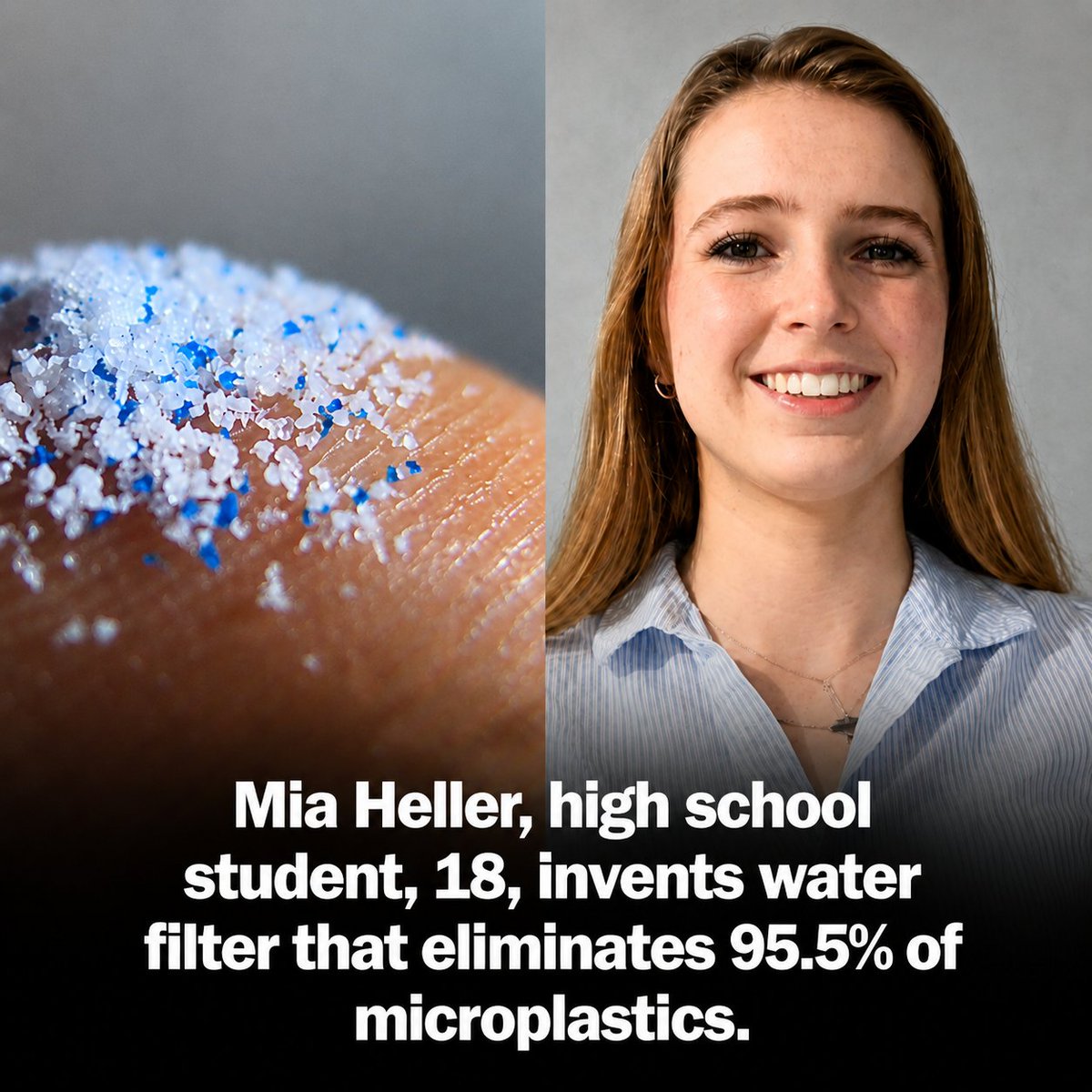
An 18-year-old just did what billion-dollar water companies couldn't.
Meet Mia Heller.
A high school junior from Warrenton, Virginia who built a water filter in her garage that strips out 95.5% of microplastics from drinking water.
That's better than most government treatment plants, which sit somewhere between 70% and 90%.
Her secret weapon? Ferrofluid. A magnetized liquid made of oil and powder that latches onto microplastic particles. Then a magnet yanks them out. No membranes. No constant filter replacements. No endless maintenance bills.
The ferrofluid even gets recycled, around 87% of it, in a closed loop.
The spark for all of this wasn't a classroom project. It was a local newspaper article warning that her town's tap water was loaded with PFAS and microplastics, and that nobody was coming to fix it.
So she watched her mom swap out filter after filter and thought, there has to be a smarter way.
She built the prototype herself. Tested it with a homemade turbidity sensor. Then walked into the Regeneron International Science and Engineering Fair and walked out with a special award from the Patent and Trademark Office Society.
Up against nearly 1,700 students from 62 countries.
She's now eyeing a household version that sits under your kitchen sink.
The future of clean water might not come from a lab in Silicon Valley. It might come from a teenager's garage in Virginia.
Source: Smithsonian Magazine
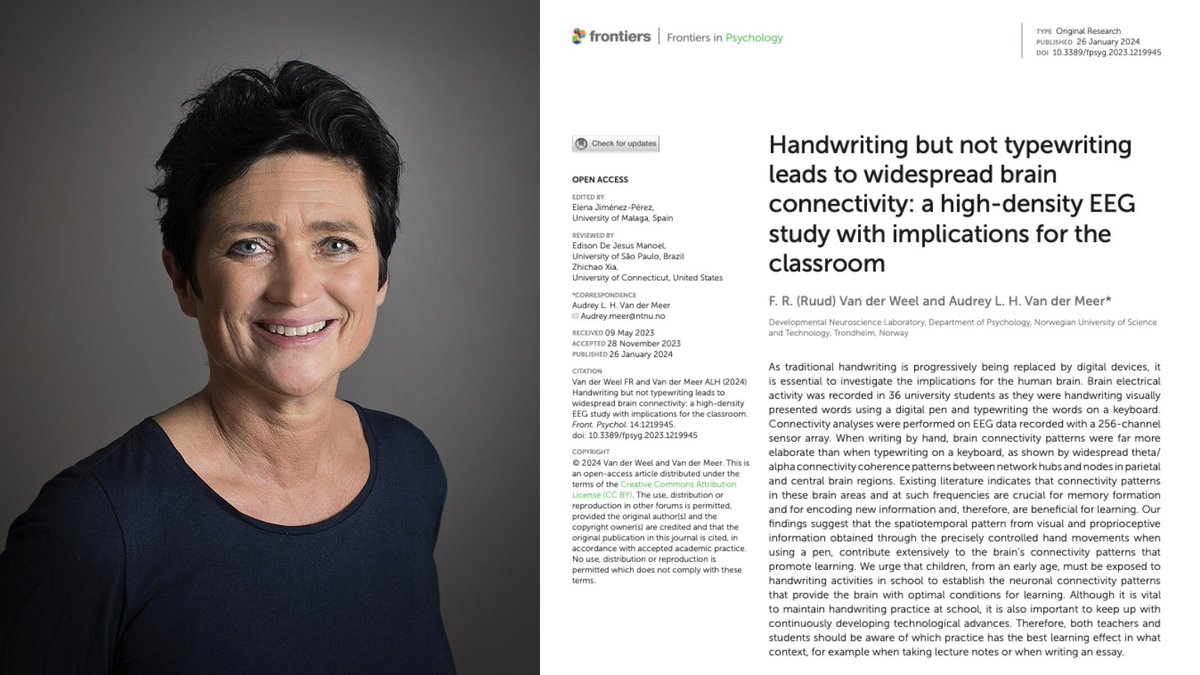
A Norwegian neuroscientist spent 20 years proving that the act of writing by hand changes the human brain in ways typing physically cannot, and almost nobody outside her field has read the paper.
Her name is Audrey van der Meer.
She runs a brain research lab in Trondheim, and the paper that closed the argument was published in 2024 in a journal called Frontiers in Psychology. The finding is brutal enough that it should have changed every classroom on Earth.
The experiment was simple. She recruited 36 university students and put each one in a cap with 256 sensors pressed against their scalp to record brain activity. Words flashed on a screen one at a time.
Sometimes the students wrote the word by hand on a touchscreen using a digital pen, and sometimes they typed the same word on a keyboard. Every neural response was recorded for the full five seconds the word stayed on screen.
Then her team looked at the part of the data most researchers had ignored for years, which is how different parts of the brain were communicating with each other during the task.
When the students wrote by hand, the brain lit up everywhere at once.
The regions responsible for memory, sensory integration, and the encoding of new information were all firing together in a coordinated pattern that spread across the entire cortex. The whole network was awake and connected.
When the same students typed the same word, that pattern collapsed almost completely.
Most of the brain went quiet, and the connections between regions that had been alive seconds earlier were nowhere to be found on the EEG.
Same word, same brain, same person, and two completely different neurological events.
The reason turned out to be something nobody had really paid attention to before her work. Writing by hand is not one motion but a sequence of thousands of tiny micro-movements coordinated with your eyes in real time, where each letter is a different shape that requires the brain to solve a slightly different spatial problem.
Your fingers, wrist, vision, and the parts of your brain that track position in space are all working together to produce one letter, then the next, then the next.
Typing throws all of that away. Every key on a keyboard requires the exact same finger motion regardless of which letter you are pressing, which means the brain has almost nothing to integrate and almost no problem to solve.
Van der Meer said it plainly in her interviews.
Pressing the same key with the same finger over and over does not stimulate the brain in any meaningful way, and she pointed out something that should scare every parent who handed their kid an iPad.
Children who learn to read and write on tablets often cannot tell letters like b and d apart, because they have never physically felt with their bodies what it takes to actually produce those letters on a page.
A decade before her, two researchers at Princeton ran the same fight using a completely different method and ended up at the same answer. Pam Mueller and Daniel Oppenheimer tested 327 students across three experiments, where half took notes on laptops with the internet disabled and half took notes by hand, before testing everyone on what they actually understood from the lectures they had watched.
The handwriting group won by a wide margin on every question that required real understanding rather than surface recall.
The reason was hiding in the transcripts of what the two groups had actually written down.
The laptop students typed almost word for word, capturing more total content but processing almost none of it as they went, while the handwriting students physically could not write fast enough to transcribe a lecture in real time, which forced them to listen carefully, decide what actually mattered, and put it in their own words on the page.
That single act of choosing what to keep was the learning itself, and the keyboard had quietly skipped the choosing and skipped the learning along with it.
Two studies. Two countries. Same answer.
Handwriting makes the brain work. Typing lets it coast.
Every note you have ever typed instead of written went into your brain through a thinner pipe. Every meeting, every book highlight, every idea you captured on your phone instead of on paper was processed at half depth.
You did not forget those things because your memory is bad. You forgot them because typing never woke the part of the brain that would have made them stick.
The fix is the thing your grandmother already knew.
Pick up a pen. Write the thing down. The slower road is the faster one.
Eine niederländische Wohnungsbaugesellschaft erprobt Zäune, die Regenwasser speichern. Sie sollen bei Starkregen die Kanalisation entlasten und in Trockenperioden Abhilfe verschaffen.
🌧️🌧️🌧️
Es gibt zu viele negative News, deswegen poste ich jeden Tag eine #guteNewsdesTages.
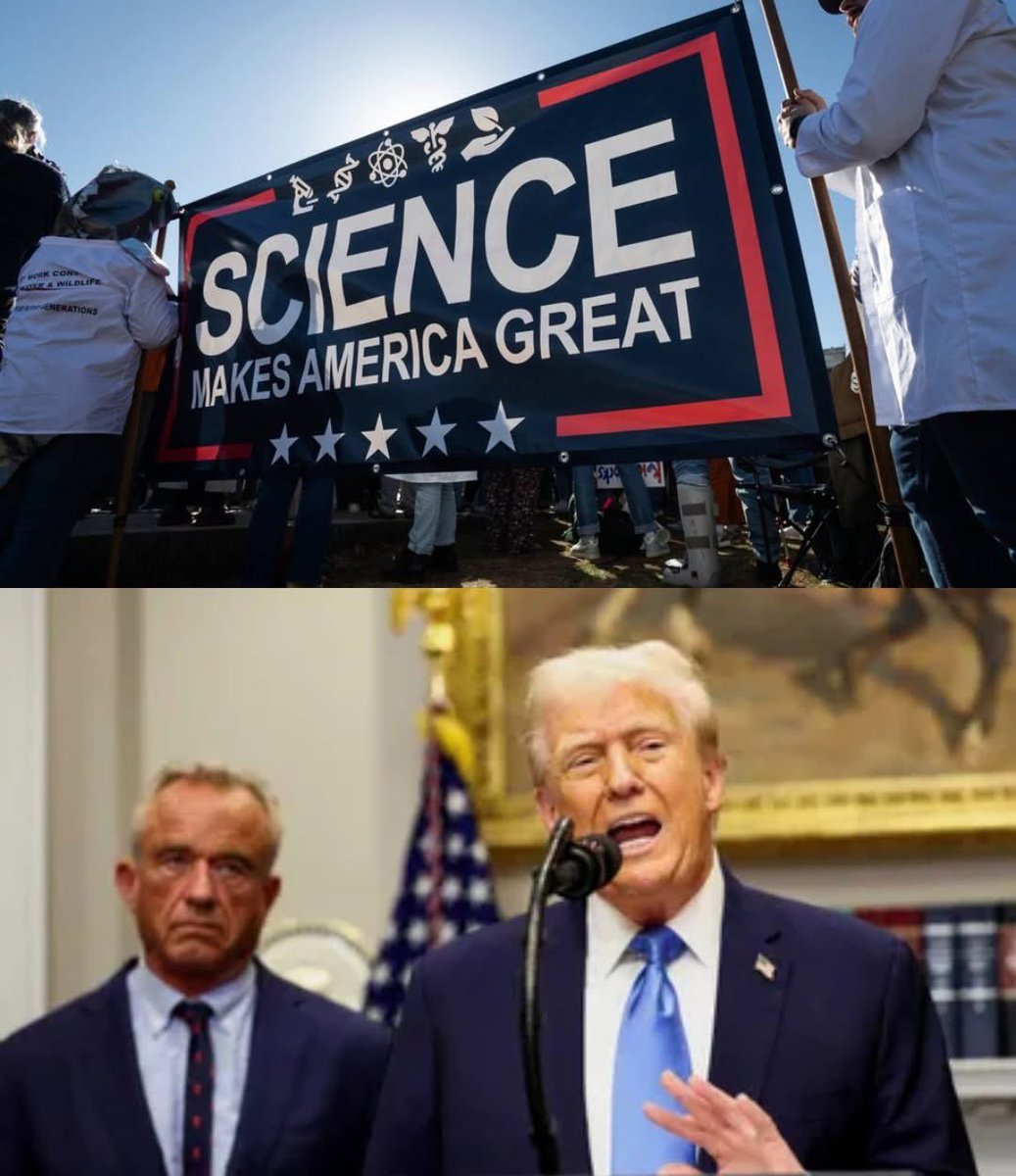
Trump just fired all 24 members of the National Science Board. Every single one. By email. No warning. No reason given. The board has existed since 1950.
The National Science Board is the independent body that oversees the National Science Foundation, the agency that distributes $9 billion in research grants every year.
Its members are scientists and engineers from universities and industry. They serve six-year staggered terms specifically so they cross presidential administrations and stay independent of whoever is in power.
On Friday, every single one of them got the same boilerplate email from Mary Sprowls of the Presidential Personnel Office: "On behalf of President Donald J Trump, I am writing to inform you that your position as a member of the National Science Board is terminated, effective immediately. Thank you for your service."
That's it. That's the whole letter. For 76 years of institutional independence.
The NSF funds the basic science behind MRIs. Cellphones. LASIK eye surgery. GPS. The internet itself. The Antarctic research stations. The deep-space telescopes. The research vessels mapping the ocean floor. Every breakthrough that made America the world's leader in science for the better part of a century traces back through grants this agency made and this board approved.
The board chair, Victor McCrary, was actively advising Congress on Trump's proposed 55% cut to NSF's budget. The board was helping fight back. So Trump fired the board.
Marvi Matos Rodriguez, one of the fired members, told reporters she had been reviewing an 80-page report as part of her board duties just days before being terminated.
Keivan Stassun, a physicist at Vanderbilt, said NSF's leadership had already stopped responding to board oversight requests months ago. "We would ask them, 'Are you following board governance directives?' And their answer would be, in effect, 'We don't listen to you anymore.'"
Now there's no board to answer to.
Rep. Zoe Lofgren of California, the top Democrat on the House Science Committee, called it "the latest stupid move made by a president who continues to harm science and American innovation. Will the president fill the NSB with MAGA loyalists who won't stand up to him as he hands over our leadership in science to our adversaries?"
That's the actual question.
Because while Trump is firing American scientists, China is building research universities at a rate we cannot match. The CDC just buried a study showing vaccines work.
RFK Jr. runs HHS. The EPA is gutted. The Forest Service is being broken. Half of American children are breathing dangerous air. And now the people who decide what gets researched in the United States have all been fired by email on a Friday afternoon.
The Cat Ba langur (also known as the golden-headed langur) is one of the rarest primates on Earth. It lives only on Cat Ba Island in Northern Vietnam and nowhere else in the wild.
There are only about 70 to 80 individuals left in existence.
Switzerland officially banned boiling lobsters alive.
Switzerland has overhauled its animal welfare laws to end the centuries-old practice of boiling lobsters alive. Under the revised regulations, chefs and home cooks must now ensure that crustaceans are rendered unconscious through electrical stunning or the mechanical destruction of the brain before they are cooked.
This landmark decision follows a series of scientific studies suggesting that lobsters and other crustaceans possess complex nervous systems capable of processing pain and distress, challenging the long-held culinary assumption that these marine animals lack sentience.
The new mandate also revolutionizes the logistics of the seafood industry by implementing strict storage and transport requirements. It is now illegal to keep live lobsters on ice or in ice water; instead, they must be maintained in environments that mimic their natural watery habitats. These changes reflect a significant shift in ethical standards, prioritizing humane treatment from the moment of capture to the point of consumption. By adopting these rigorous standards, Switzerland is leading a global conversation on the intersection of modern biological insights and traditional culinary practices.
source: CNN. (2018). Switzerland Bans Boiling Lobsters Alive Following Animal Welfare Law Revision.
Trump hat US-Zölle erhoben. Der Supreme Court hat sie im Februar als illegal eingestuft.
Morgen um 14 Uhr deutscher Zeit fließen 127 Milliarden Dollar an Erstattungen.
Die Tax Foundation hat berechnet: Jeder amerikanische Haushalt hat im letzten Jahr im Schnitt 1.000 Dollar mehr für Importwaren bezahlt.
Aber das Geld geht nicht an die Verbraucher. Es geht an Walmart, Costco, Apple, Amazon. Und es ist eines der größten Liquiditätsereignisse, das die US-Aktienmärkte seit Jahren gesehen haben.
Was morgen passiert:
Die US-Zollbehörde CBP schaltet um 8 Uhr Ortszeit Washington das CAPE-System frei. Über dieses Portal können US-Importeure ab diesem Moment Erstattungen für Zölle beantragen, die der Supreme Court am 20. Februar 2026 mit 6 zu 3 Stimmen als illegal eingestuft hat. Mehr als 56.000 Firmen haben sich bereits registriert. 53 Millionen Sendungen sind betroffen. In der ersten Phase werden 127 Milliarden Dollar freigegeben. Die Gesamtsumme könnte 166 Milliarden Dollar erreichen.
Wer bekommt das Geld?
Die “Importer of Record”. Das sind genau jene Konzerne, die Goldman Sachs zufolge 55 Prozent der Zollkosten an die US-Verbraucher weitergegeben haben. Walmart ist als größter Importeur des Landes der größte Profiteur. Mehrere Milliarden Dollar Erstattung werden erwartet. Costco, Target, Apple, Amazon, FedEx folgen.
Eine CNBC-Umfrage unter 25 Finanzchefs großer US-Konzerne brachte ein eindeutiges Ergebnis: 12 von ihnen beantragen die Erstattung. Null planen, das Geld an Kunden weiterzugeben. Treasury Secretary Scott Bessent hat das öffentlich bestätigt. Costco-Kunden, so Bessent, würden “wahrscheinlich keinen Cent” sehen.
Was das für die Märkte bedeutet:
Das ist kein Verbraucher-Thema. Das ist ein Liquiditäts-Tsunami für börsennotierte US-Konzerne. Walmart hatte bereits 2024 ein Aktienrückkaufprogramm über 30 Milliarden Dollar angekündigt. Analysten erwarten, dass die Zollerstattungen ab Juli direkt in eine Beschleunigung dieser Rückkäufe fließen. Bei Target wird die Erstattung bereits als “bullish catalyst” gehandelt. Konsumgüter-ETFs, Retail-Aktien und der gesamte S&P 500 Consumer Discretionary Sektor stehen vor einer einmaligen Sonderausschüttung, die nicht aus operativem Geschäft kommt, sondern aus dem Staatshaushalt.
Wall Street verdient doppelt. Hedgefonds und Logistikfirmen wie Flexport bieten kleinen Importeuren bereits an, ihre Erstattungsansprüche sofort gegen Cash aufzukaufen. Mit Abschlag. Wer auf das Geld nicht warten kann oder den Antrag nicht navigieren will, verkauft seinen Anspruch unter Wert. Wall Street kassiert die volle Summe.
Die fiskalische Seite ist explosiv:
Die USA müssen 127 Milliarden Dollar plus Zinsen zurückzahlen. In ein Haushaltsjahr, in dem die Staatsschulden bereits über 38 Billionen Dollar liegen und die Zinszahlungen erstmals die Marke von 1 Billion Dollar pro Jahr überschritten haben. Jeder Tag Verzögerung kostet zusätzliche Zinsen. Aufgewendet wird das Geld in einem Land, das gerade einen Krieg im Nahen Osten finanziert und dessen Notenbank politisch unter Druck steht.
Trump hat öffentlich gesagt, dass die Erstattungen “1929 again” auslösen würden, eine “Great Depression”. Genau das versucht er aktuell juristisch zu verzögern. Das CAPE-System startet morgen nur, weil das US Court of International Trade es angeordnet hat. Phase 1 deckt 63 Prozent der Forderungen ab. Die restlichen 37 Prozent, so Sanne Manders von Flexport, “könnten Jahre dauern”.
Die Inflation kommt durch die Hintertür zurück:
Wenn Konzerne Cash bekommen, ohne ihn an Kunden weiterzugeben, bleibt das Preisniveau hoch. Die ursprünglichen Preiserhöhungen waren mit Zöllen begründet. Die Zölle fallen weg, das Geld kommt zurück. Aber die Preise im Supermarkt bleiben. Der Effekt ist kein einmaliger, sondern ein dauerhafter Margenausbau bei den großen Handelsketten. Der Joint Economic Committee des US-Kongresses hat berechnet, dass amerikanische Verbraucher zwischen Februar 2025 und Januar 2026 Zollkosten von insgesamt 231 Milliarden Dollar getragen haben. Rund 1.745 Dollar pro Haushalt im Jahr.
Das ist die größte stille Vermögensumverteilung von Verbrauchern zu börsennotierten Konzernen, die wir seit Jahren gesehen haben. Und sie startet morgen um 14 Uhr deutscher Zeit.
Wenn dich solche Makro Insights interessieren und dir helfen, interagiere gerne mit dem Post. 🧡
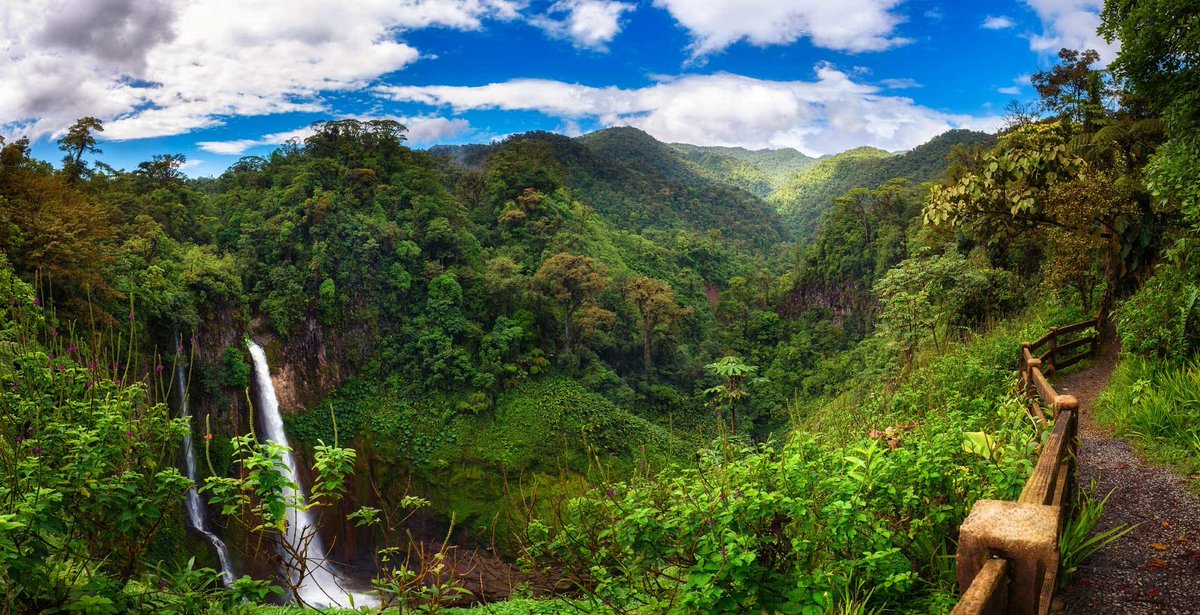
In 1987, 21% of Costa Rica was forest cover. Today, forest cover has swelled to 57%.
They did it by paying landowners not to cut their trees.
In the 1990s, Costa Rica passed a law funded by a tax on fossil fuels. Landowners receive direct payments for the ecosystem services their forests provide. Keeping the forest standing became worth more than clearing it.
Nearly a million hectares of forest have been protected or restored through the program. Biodiversity is recovering. Species that we thought were lost forever are coming back.
But it killed their economy, right? Nope. Costa Rica became the top per capita agricultural exporter in Latin America. The Costa Rican economy didn't collapse. It grew.
It's not forests or the economy. The forests can be the economy.
Your smart TV is taking screenshots of your screen every 15 seconds.
Not a guess. Not a theory.
A peer-reviewed study by researchers at UC Davis, UCL, and UC3M tested it.
Samsung TVs: every minute.
LG TVs: every 15 seconds.
Even when you're just using it as a monitor.
Here's how to turn it off for every brand:
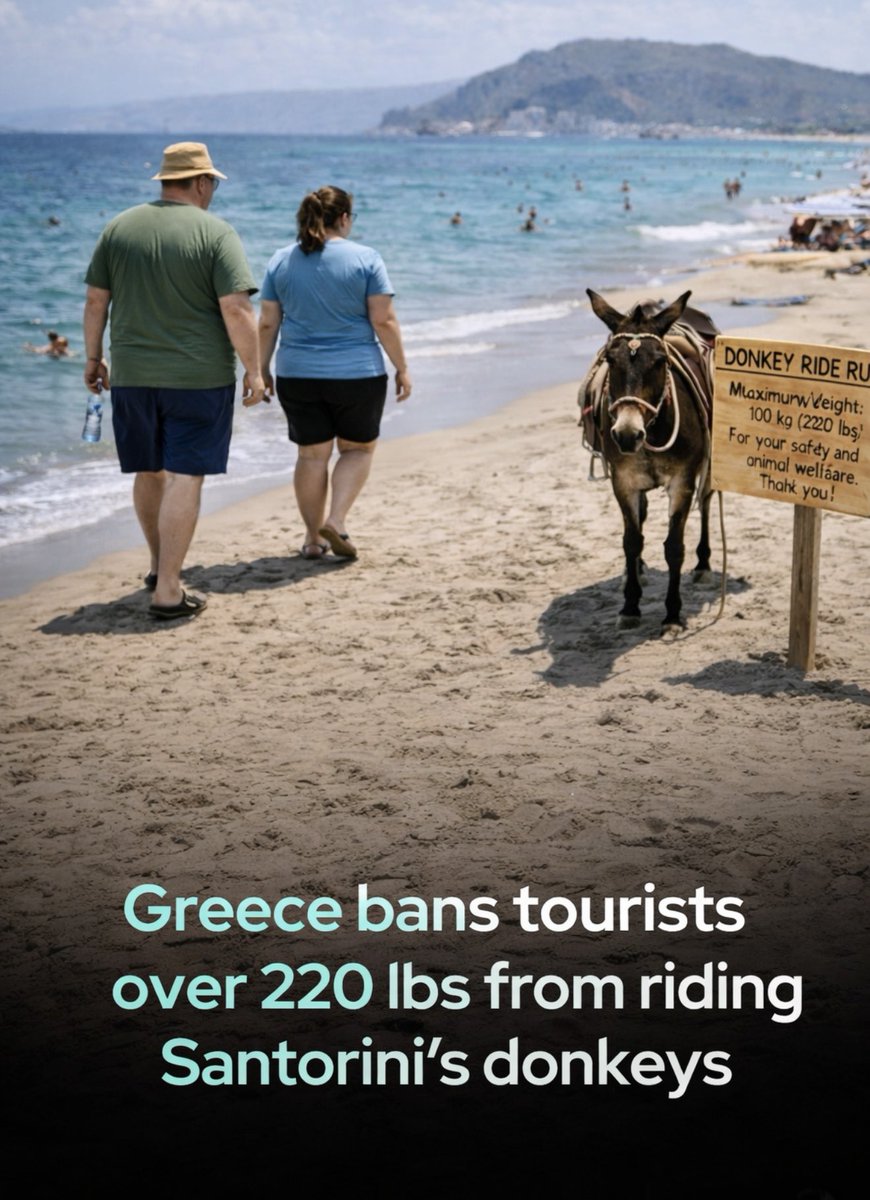
Tourists weighing over 220 pounds (100 kg) are no longer allowed to ride donkeys in Santorini under updated animal welfare rules.
The decision follows concerns that the animals were being overburdened, especially on the island’s steep routes, including the 500+ steps leading to Fira. Experts recommend donkeys carry no more than roughly 20% of their body weight.
New guidelines also require regular rest breaks, daily movement, and constant access to water. The changes came after pressure from animal welfare advocates highlighting overwork and heat exposure.
Visitors can still reach the top by walking or using the cable car—offering alternatives while reducing strain on the animals.
In this experiment, Dr Rob Thompson from the University of Reading shows how long it takes a cup of water to soak into parched ground.
This is why heavy rainfall after a drought can be really dangerous & might lead to flash flooding.
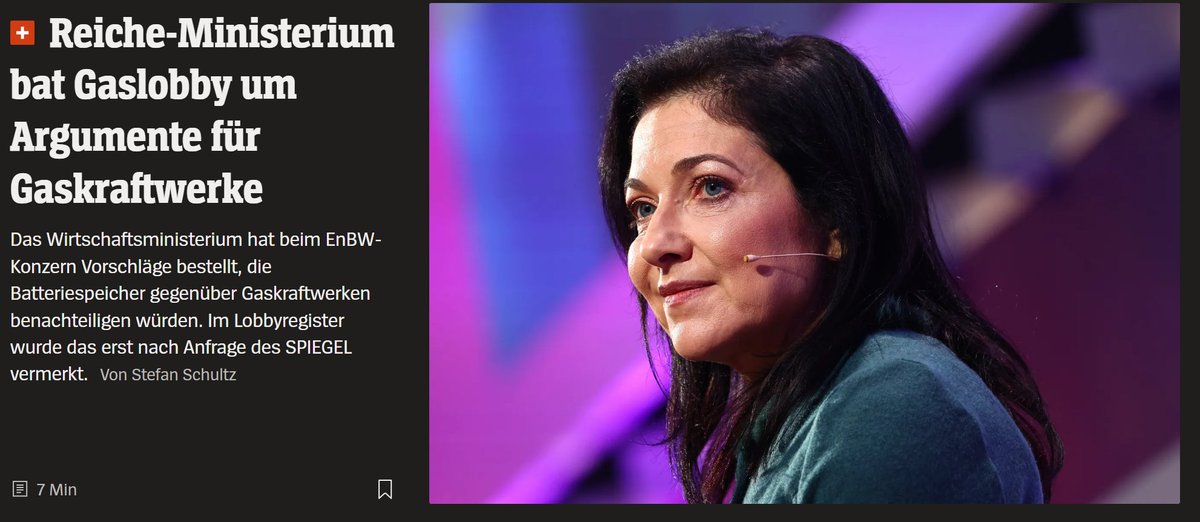
Was mag Gas-Katie am liebsten? Richtig. Gas. Was mag sie gar nicht? Batteriespeicher.
Aber dem Ministerium fehlten offenbar die Argumente. Also dachten sich Katies Mitarbeiter: Fragen wir doch mal bei den Profis nach.
Die Profis: EnBW und RWE. Beide wollen natürlich neue Gaskraftwerke bauen. Beide wurden aktiv vom Ministerium um Argumente gegen Batteriespeicher gebeten. ☝️
Nochmal zum Mitschreiben: Nicht die Gas-Anbieter haben von sich aus ihre Argumente ans Bundesministerium geschickt, NEIN, es war das Ministerium, dass proaktiv nachfragte.
Aber dann haben die vom Ministerium doch sicher auch die Batteriespeicher-Firmen um Argumente gebeten?
Nö. Kyon Energy wurde nicht gefragt. Eco Stor wurde nicht gefragt. Uniper und EWE dementieren ausdrücklich jeden Kontakt.
Wer nur eine Seite fragt, will keine Antwort. Er will eine Bestätigung.
Und der Hammer: EnBW hat erst nach Spiegel-Anfrage im Lobbyregister eingetragen, dass der Vorgang so passierte, wie er passierte – dazu verpflichtet wäre es schon Ende März gewesen.
Das gibt nur eine Ordnungswidrigkeit. Ein winziges Bußgeld von bis zu 50.000 Euro. Für einen Konzern, der Milliarden an Fördergeldern anstrebt.
Recherchiert hat das @derspiegel.
Guten Morgen? Nicht in Deutschland!
In Scotland, new building regulations will soon require the inclusion of “swift bricks” a simple addition that provides nesting spaces and supports birds living alongside people in urban environment