Environmentalist Hillary ‘Buzeki’ Kibiwott planted over 23k Trees in 24Hrs breaking Guiness world record,The boy child is always ahead,this is way better than hugging..
HISTORY https://t.co/oNfErOaPn2 Artemis II swings around the far side of the Moon, astronaut Christina Koch has just become the farthest-traveling woman in human https://t.co/T2A3mbaiYO the mission’s maximum distance — roughly 250,000 miles (402,000 km) from Earth — Koch has now traveled farther from our home planet than any woman before her. She surpasses the previous record set during Apollo 17 in 1972 and writes her name into the history books alongside the trailblazing women who came before her.While the entire crew is making this epic journey together, this milestone belongs to Christina Koch — a powerful symbol of how far women have come in space exploration.From the International Space Station to the lunar vicinity and beyond, Koch continues to push the boundaries of what’s possible. A new record. A new chapter. And we’re only getting started.
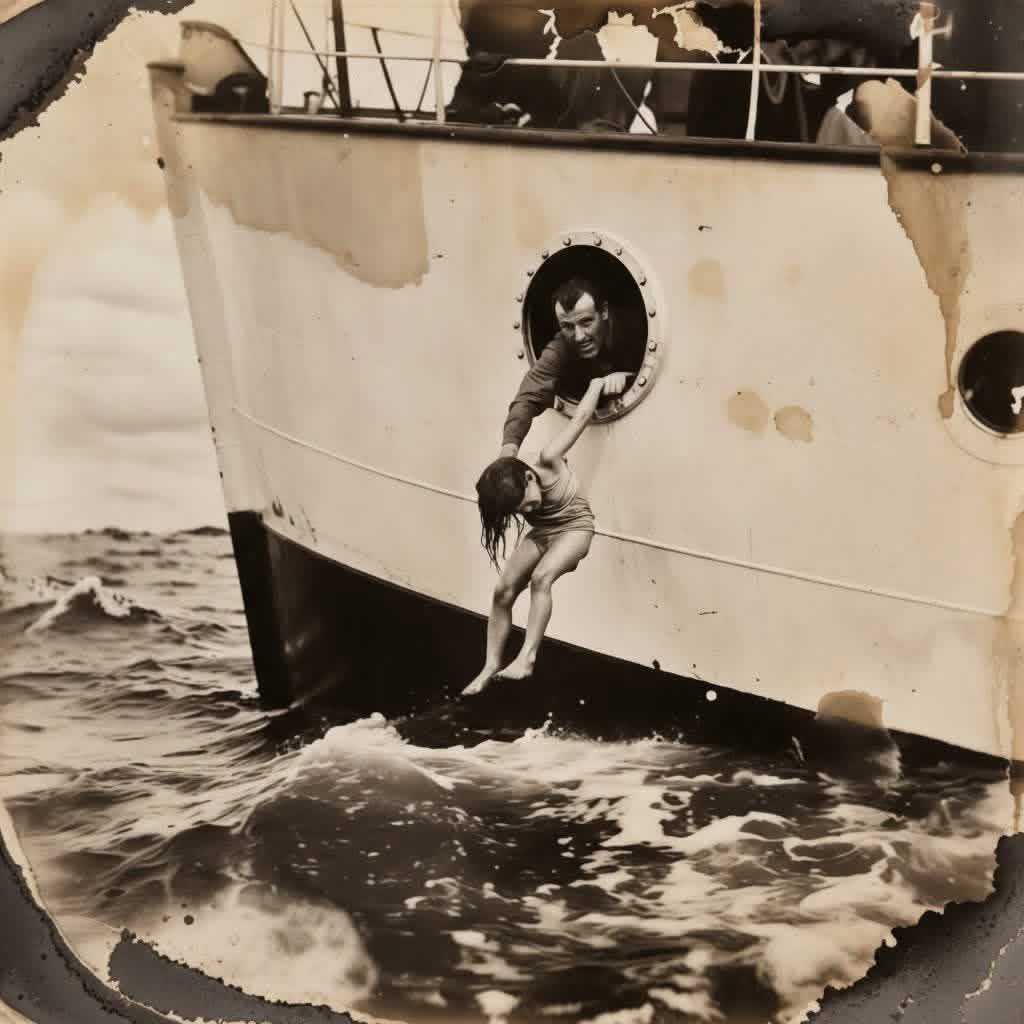
In October 1917, an immigrant passenger ship carrying Italians to New York was caught in a violent Atlantic storm. Among those aboard were Antonio Russo, a twenty-eight-year-old carpenter, and his five-year-old daughter, Maria. Antonio’s wife had died in childbirth two years earlier. America was his last hope—to escape poverty and give his daughter a future Italy could not.
At 2:00 a.m., towering waves smashed over the decks. Water flooded the lower compartments where third-class passengers slept. The ship began to list sharply. Screams filled the corridors as people surged toward the stairs, pushing and trampling in panic. Antonio lifted Maria from their bunk and fought forward, holding her above the rising water. But the crowd was too dense, the flooding too fast, the angle of the ship too steep.
Antonio understood the terrible truth: they would not reach the lifeboats.
Minutes remained.
Through the chaos, he reached a broken porthole, smashed open by the storm. It was barely large enough for a child. Beyond it lay the black, freezing Atlantic. In the distance, Antonio could see searchlights sweeping the water—rescue boats were coming.
He looked at Maria—terrified, crying for her mother, clinging to him.
And then he made the choice that would define his life.
Antonio pushed his daughter through the porthole.
Maria screamed as she fell into the ocean. Antonio shouted after her, his voice cutting through the storm:
“Swim, Maria! Swim to the light! Ships are coming! Swim!”
He knew she had a chance.
He knew he did not.
The ship sank seven minutes later. Antonio Russo drowned with 117 other third-class passengers trapped below decks. His body was never recovered.
Maria Russo was pulled from the water forty-five minutes later, suffering from severe hypothermia and near drowning—but alive. She was wrapped in blankets and taken to a hospital ship. She was five years old, orphaned, traumatized, in a foreign country, unable to speak English.
She remembered only her father’s last words:
“Swim to the light.”
Maria was placed in a New York orphanage. For years, she believed her father might still be alive. No one could tell her what had happened to Antonio Russo. As time passed, hope turned into confusion… then pain. She began to believe the unthinkable—that her father had abandoned her, that throwing her into the ocean meant he did not want her.
She lived with that belief for twenty-five years.
The truth did not reach her until she was thirty. A researcher, reviewing passenger records from the 1917 shipwreck, found Antonio Russo’s name among the dead. Only then did Maria learn what her father had done—that he had sacrificed himself so she could live.
Maria Russo lived until 2004, dying at the age of ninety-two.
In 1995, at eighty-three years old, she told her story during an interview about the shipwreck:
“I thought my father was killing me. I didn’t understand he was saving me. I thought for years that he threw me away. The truth was he threw me toward life.”
Maria went on to marry. She had four children, nine grandchildren, and six great-grandchildren—thirty-one descendants who existed because one man made an impossible choice in the dark Atlantic.
“Every birthday, every good moment in my life exists because my father chose me over himself. I see his face in that porthole every night. I hear him screaming ‘swim to the light.’ I’ve been swimming to the light for seventy-eight years. I hope I made him proud.”
Her final words about Antonio Russo were simple:
“Thank you, Papa. Thank you for throwing me toward life. Ti amo.”
Some acts of love last longer than lifetimes.
🚨🔵 Antoine Semenyo to Manchester City, here we go! Documents exchanged and sealed with Bournemouth.
£65m transfer fee, Semenyo to sign long term deal after medical tests on Thursday.
Semenyo picked #MCFC over 4 PL top clubs as wanted to work under Pep Guardiola.
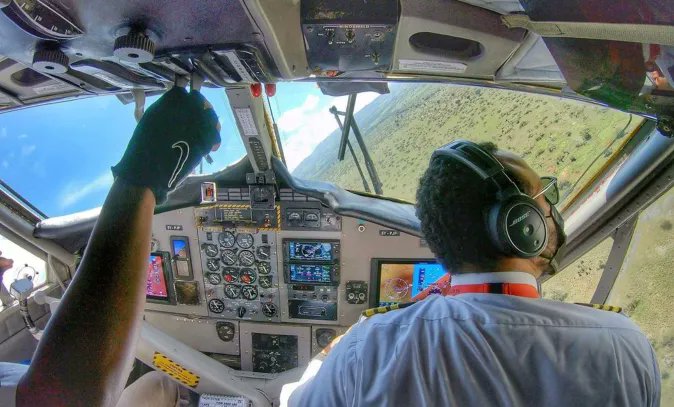
Kenya’s Winged Export: How an East African Nation Became a Global Pilot Powerhouse
In the high-stakes world of international aviation, where shortages of skilled pilots have airlines scrambling like passengers during turbulence, one African country stands out for its disproportionate contribution to the cockpit. Kenya, with a population of just over 50m, produces and exports commercial pilots at a rate that rivals far larger economies on the continent. While South Africa’s aviation sector benefits from its industrial heft, Ethiopia from its flag carrier’s expansive network, and Nigeria from sheer demographic scale, Kenyan aviators have quietly spread their wings across the globe—from the gleaming hubs of the Gulf to humanitarian missions in conflict zones. This phenomenon, akin to Kenya’s dominance in marathon running or tea exports, begs the question: why does this mid-sized East African nation punch so above its weight in the skies?
The roots of Kenya’s aviation prowess trace back to the colonial era, when the British Empire’s aerial ambitions laid the groundwork for a lasting legacy. East African Airways (EAA), established in 1946 as a joint venture between the territories that would become Kenya, Uganda, and Tanzania, was one of the continent’s earliest and most ambitious carriers. Operating from Nairobi’s Embakasi Airport (now Jomo Kenyatta International), EAA quickly became the second-largest British colonial airline in Africa after South African Airways, boasting routes that stretched from London to Johannesburg and beyond. It even claimed the distinction of being the first non-British airline to fly a reigning monarch, ferrying Queen Elizabeth II in 1952. When Kenya gained independence in 1963, EAA’s infrastructure—airports, training facilities, and a cadre of experienced personnel—provided a head start for local pilots. Unlike in apartheid-era South Africa, where black aviators faced systemic barriers until the 1990s (with South African Airways reporting only 15% black pilots as late as 2012), Kenyan pilots, many of them black, entered the global market decades earlier. The airline’s dissolution in 1977 led to the birth of Kenya Airways, which inherited EAA’s routes and ethos, further cementing Nairobi as an aviation nexus.
Today, that legacy manifests in a robust training ecosystem centred on Wilson Airport, Nairobi’s bustling hub for general aviation and tourism flights. Often dubbed Africa’s busiest airport for non-commercial operations, Wilson hosts over a dozen flight schools, including the Kenya School of Flying and Flitestar Academy, which churn out hundreds of pilots annually with licences recognised internationally. These institutions offer everything from private pilot licences to commercial endorsements, often at costs far below those in Europe or America—around $50,000-80,000 for full training, compared with up to $150,000 elsewhere. The airport’s focus on single-engine bush planes and tourism charters provides aspiring pilots with hands-on experience in challenging terrains, from the savannas of the Maasai Mara to coastal routes. This “bottom-up” pathway—from light aircraft to jetliners—mirrors Kenya’s entrepreneurial spirit, allowing pilots to log hours affordably before graduating to major carriers. Indeed, many alumni of Wilson-based schools have ascended to captain roles at global giants like Emirates and British Airways.
Geography and geopolitics have also played a pivotal role, turning necessity into opportunity. Kenya’s proximity to conflict-riven neighbours like Somalia and Sudan has made it a linchpin for humanitarian air operations. Kenyan pilots frequently fly for the United Nations Humanitarian Air Service (UNHAS), delivering aid to remote areas amid civil wars and famines. In Sudan, where ongoing strife has displaced millions, Kenyan aviators have been involved in cargo drops and evacuations, sometimes at great personal risk—one pilot was killed in a 2025 airstrike while ferrying supplies. Similarly, in Somalia, pilots navigate volatile airspace to support anti-famine efforts, as seen in a tragic 2025 crash involving a Kenyan aviator en route from humanitarian drops in South Sudan. These missions not only build invaluable flight hours but also foster a reputation for resilience, making Kenyan pilots attractive to international employers. UNHAS’s 2024 report highlighted major operations in these regions, with Africa accounting for the bulk of its flights.
This export of talent echoes broader patterns in Kenya’s labour diaspora. Just as graduates of Utalii College have fanned out to manage hotels and front desks across the Middle East’s hospitality sector—where Kenyans are prized for their English proficiency and service ethos—pilots are following suit in aviation. An estimated 30,000 Kenyans work in the United Arab Emirates alone, many in skilled roles bolstered by bilateral labour agreements. In the Gulf Cooperation Council (GCC) states, Kenyan pilots fly for behemoths like Emirates, Qatar Airways, and Etihad, drawn by tax-free salaries that can exceed $10,000 monthly for captains. Codeshare agreements, such as the recent one between Qatar Airways and Kenya Airways expanding to 19 destinations, further integrate Kenyan talent into GCC networks. Meanwhile, in America, Kenyans dominate healthcare niches like nursing; aviation follows a similar script, with pilots leveraging strong English skills and adaptability honed in diverse African skies.
Yet challenges loom. Domestically, Kenya Airways has grappled with pilot shortages and strikes, exacerbated by high training costs and competition from abroad. The Kenya Civil Aviation Authority has flagged declining graduate numbers, though demand remains robust amid Africa’s projected aviation growth—IATA forecasts a 47% rise in passengers over the next two decades. Gender diversity lags, with women comprising just 5% of African pilots, though trailblazers like Captain Irene Koki Mutungi, Kenya’s first female Dreamliner commander, inspire change.
In an era of global pilot deficits—Boeing estimates a need for 790,000 new aviators by 2042—Kenya’s model offers lessons for the continent. By blending colonial inheritance with modern grit, it has turned airspace into a soft-power asset. As Kenyan captains command Boeing 787s over the Arabian Peninsula or ferry aid into war zones, they embody a nation that, like its famed long-distance runners, excels by starting early and enduring the course.
All the glory goes to Kenya 🇰🇪
Watch Beatrice Chebet and Faith Kipyegon kick to 🥇 and 🥈 in the 5000m, just ahead of 🇮🇹's Nadia Battocletti 💫
#WorldAthleticsChamps