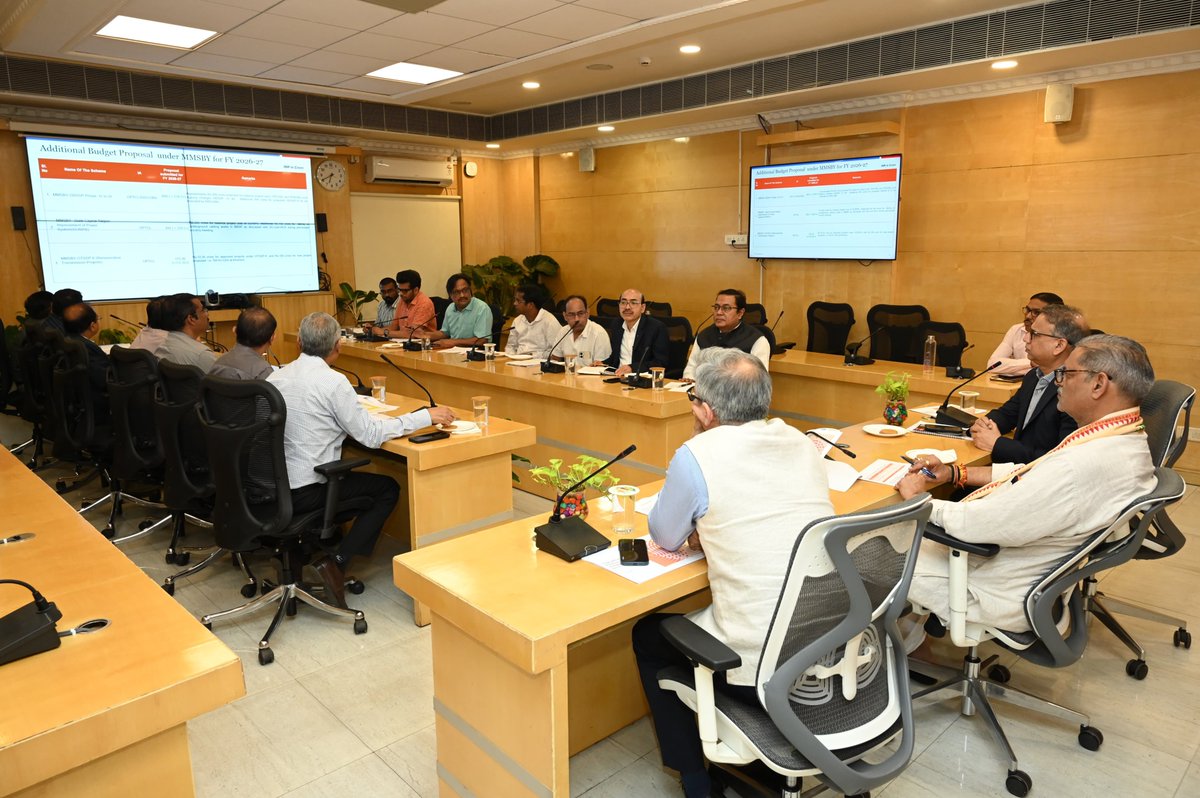
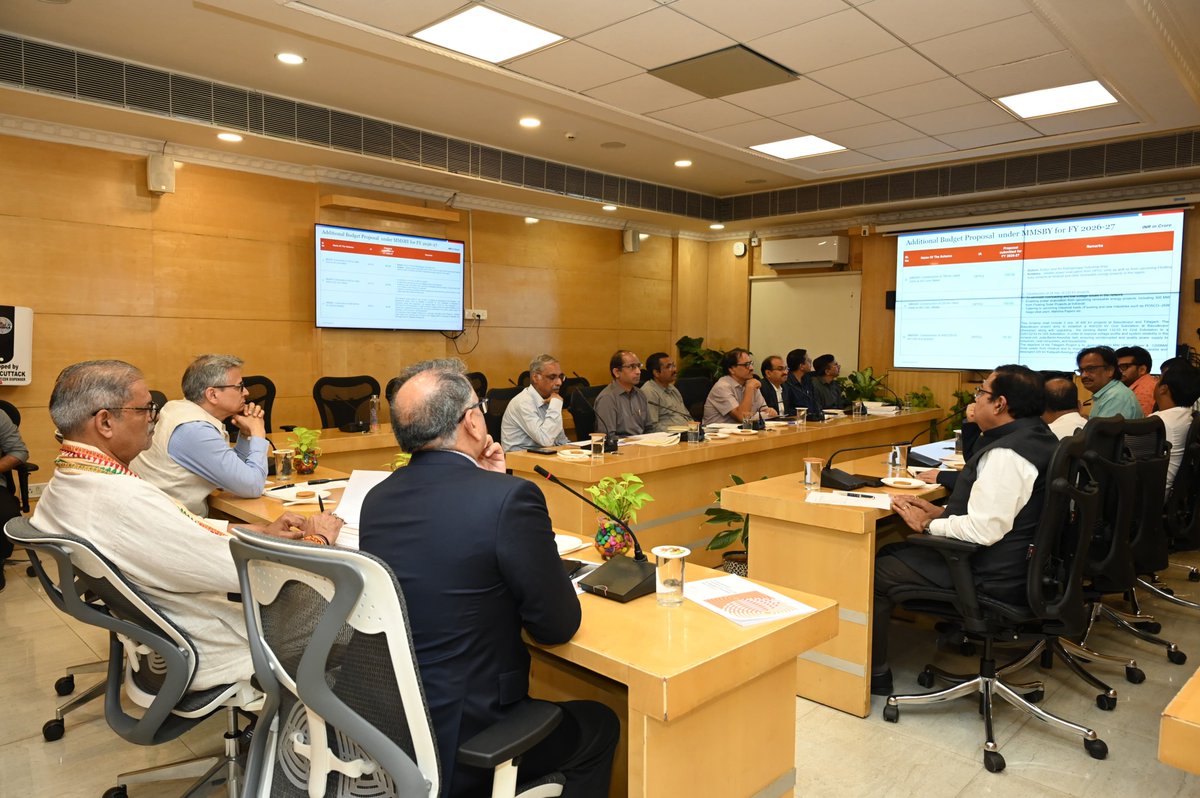
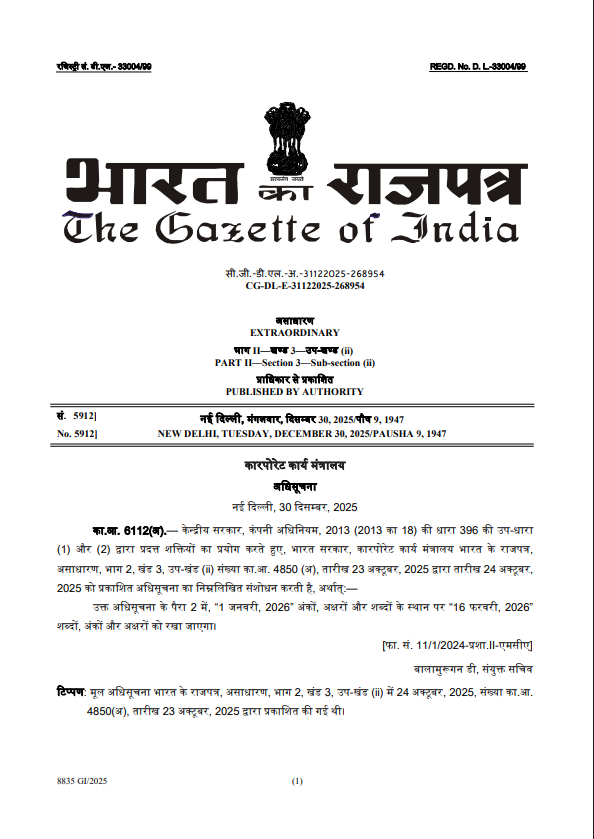
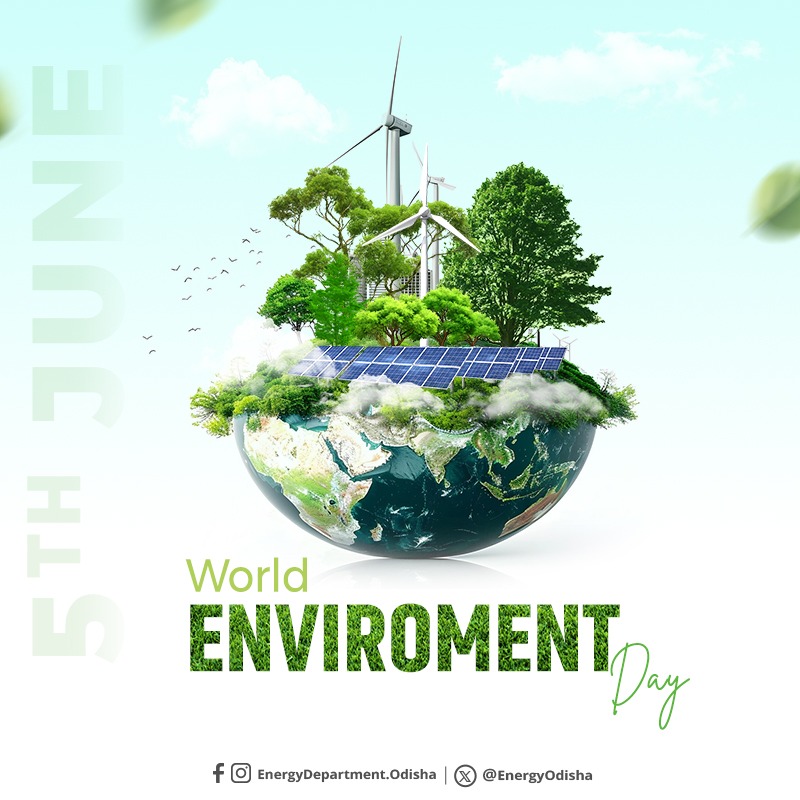
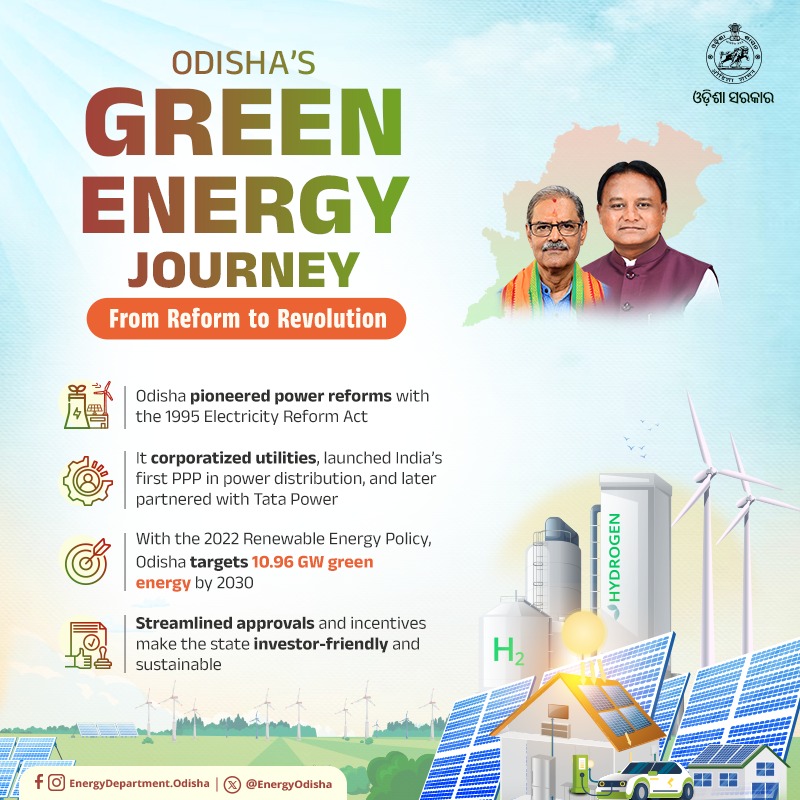
A sustainable future begins with clean energy and responsible choices. As we celebrate World Environment Day, the Energy Department reaffirms its commitment to accelerating renewable energy adoption and building a greener, cleaner #Odisha for generations to come.
#WorldEnvironmentDay #RenewableEnergy #GreenOdisha #SustainableFuture
On the 165th birth anniversary of Gurudev #RabindranathTagore, we pay heartfelt tributes to the timeless poet, philosopher and Nobel Laureate whose words continue to inspire generations with the spirit of humanity, harmony and enlightenment.
His vision for a progressive and compassionate society remains a guiding light for the nation.
#Odisha is charting a decisive path towards a secure and future-ready energy ecosystem built on foresight, partnerships, and sustainability.
From long-term resource planning aligned with 2036 and 2047 goals to strategic power export agreements, every step reinforces energy reliability.
With GRIDCO driving strong domestic and global partnerships and focused investments in green hydrogen, renewable energy, and storage, Odisha is positioning itself as a national leader in the energy transition.
#PoweringOdisha #EnergySecurity #GreenTransition #FutureReadyOdisha #SustainableEnergy
#Odisha’s power sector transformation continues to set new benchmarks. From pioneering reforms in electricity distribution to accelerating renewable energy adoption, the state is advancing towards a 10.96 GW green energy target by 2030.
#GreenEnergy#ViksitOdisha
#Odisha is leading India’s #CleanEnergy transition with an ambitious mission to achieve 10.96 GW of renewable capacity by 2030. Through a robust policy framework, single-buyer model, and seamless Single Window Clearance portal, the State has already facilitated over 1,000 MW of captive generation.
With land pooling, tax waivers, and duty concessions under the Odisha Renewable Energy Policy 2022, the State is enabling large-scale green investments and ensuring reliable, affordable, and sustainable power for all.
#GreenOdisha #EnergyTransition #RenewableEnergy #SustainableGrowth
Glimpses from the Odisha Renewable Energy Investor Conclave 2026, where the State secured ₹67,000 crore in investment commitments to generate 6.8 GW of clean energy.
MoUs signed for major renewable, pumped storage and green hydrogen projects mark a significant step towards strengthening the State’s green energy ecosystem and accelerating sustainable growth.
#RenewableEnergy #GreenOdisha
🚨 Key PAN Rule Changes (Draft Income-Tax Rules, 2026 | India 🇮🇳)
🟡 1) Housing (HRA Rules)
• Bengaluru, Hyderabad, Pune & Ahmedabad added to metro cities list for HRA benefits
🟡 2) Cash Transactions
• PAN not required for cash deposits/withdrawals below ₹10 lakh in a financial year
• Earlier rule: PAN required for cash deposits above ₹50,000 per day
🟡 3) Hotel, Event & Lifestyle Spending
• PAN required for hotel / banquet / restaurant bills above ₹1 lakh
• Earlier threshold: ₹50,000
🟡 4) Jewellery Purchases
• PAN mandatory for jewellery purchases above ₹10 lakh
🟡 5) Motor Vehicle Purchase
• PAN required for vehicle purchases above ₹5 lakh
• Applies to cars and two-wheelers
• Earlier: PAN required for all cars, regardless of price
🟡 6) Property Transactions
• PAN required for purchase, sale, gift, or joint development of property above ₹20 lakh
• Earlier threshold: ₹10 lakh
🟡 7) Insurance Accounts
• PAN mandatory for any account-based relationship with insurance companies
• Earlier: PAN needed only if annual premium exceeded ₹50,000
🟡 8) Salary & Allowances
• Company car up to 1600cc → ₹8,000/month tax-free
• Company car above 1600cc → ₹10,000/month tax-free
🟡 9) Digital Payments
• CBDC (Digital Rupee) recognised as an electronic payment method
✔️ Less PAN compliance for small transactions
✔️ Better tracking of high-value spending
✔️ Direct impact on tax filing, property & lifestyle purchases
⚠️ These are DRAFT rules under the Income-tax Act, 2025.
Final rules expected before April 1, 2026.
🚨GSTN Breaking
BIG changes in GSTR-3B from Jan-2026
1. Interest calculation changed (Rule 88B benefit): -
➡️From Jan-2026 onwards, GST portal will compute interest in Table 5.1 of GSTR-3B by giving credit for the minimum cash balance in Electronic Cash Ledger (ECL) from due date till actual payment.
👉 Relief for taxpayers who had balance lying idle.
2. New Interest Formula: -
📌 Interest =
(Net Tax Liability – Minimum Cash Balance in ECL)
× (Delay days / 365) × Applicable rate
➡️This aligns with proviso to Section 50 of CGST Act.
3. Auto-computed interest = minimum payable: -
⚠️ Interest auto-populated in GSTR-3B will be:
❌ Not editable downward
✅ Can be edited upward if actual liability is higher
👉 Self-assessment responsibility still on taxpayer.
4. Auto-population starts Feb-2026: -
➡️Interest for delayed Jan-2026 return will be auto-populated in Feb-2026 GSTR-3B.
➡️Plan your cash flow accordingly.
5. Tax Liability Breakup Table – Now Auto-filled: -
➡️From Jan-2026, GST portal will auto-populate Tax Liability Breakup Table based on:
📄 Invoice dates in
GSTR-1 / GSTR-1A / IFF
(for past period supplies paid in current GSTR-3B)
6. Important clarification: -
🔹 Auto-populated figures are suggestive only
🔹 Taxpayer can increase values upward based on own records
📍Path:
Login → GSTR-3B → Table 6.1 → Tax Liability Breakup
7. Major ITC cross-utilisation update: -
➡️Once IGST ITC is fully exhausted, portal will allow payment of IGST liability using CGST & SGST ITC in ANY order.
👉 More flexibility = better working capital management.
8. Interest recovery through GSTR-10: -
➡️For cancelled GST registrations:
➡️If last GSTR-3B is filed late, interest will be levied & collected via GSTR-10 (Final Return).
9. Why this matters?: -
✔️ Fair interest calculation
✔️ Reduced litigation
✔️ Better system-driven compliance
✔️ Alignment with law & court rulings
🔖 GST Tip:
Auto-population ≠ Final liability.
Always reconcile + self-assess before filing.
Surprise as Two Senior 1994-Batch Odisha IPS Officers Miss Out on DGP Promotions
It came as a surprise in official and policing circles that two senior 1994-batch Odisha cadre IPS officers--Sanjeeb Panda and Yeshwant Jethwa--were not promoted to the rank of Director General of Police (DGP) when the State Government cleared promotions for 16 other IPS officers.
What has added to the surprise is the fact that 1994-batch officers have already been elevated to the DGP rank in several other states. In Telangana, for instance, IPS officers of the 1994 batch have been promoted to the DGP level since August 2024, as per official notifications, setting a precedent followed elsewhere.
Both officers currently hold crucial and sensitive assignments in Odisha.
@panda_sanjeeb, who is serving as Additional Director General in charge of anti-Maoist operations, has handled some of the most challenging internal security responsibilities in the state. Earlier, as Police Commissioner, he played a key role in maintaining law and order and managing complex policing situations, earning a reputation for firm and effective leadership.
Yeshwant Jethwa, presently the Director of Vigilance, has a distinguished career marked by exposure at both state and national levels. He earlier served as Additional DGP (Law and Order) and was Inspector General in the Special Protection Group (SPG) attached to the PMO between 2015 and 2020, a role that required the highest standards of professionalism and trust.
Given their seniority, experience, and track record, the exclusion of Sri Panda and Sri Jethwa from the current round of DGP promotions has sparked quiet discussions within the administrative and police establishment.
#Odisha