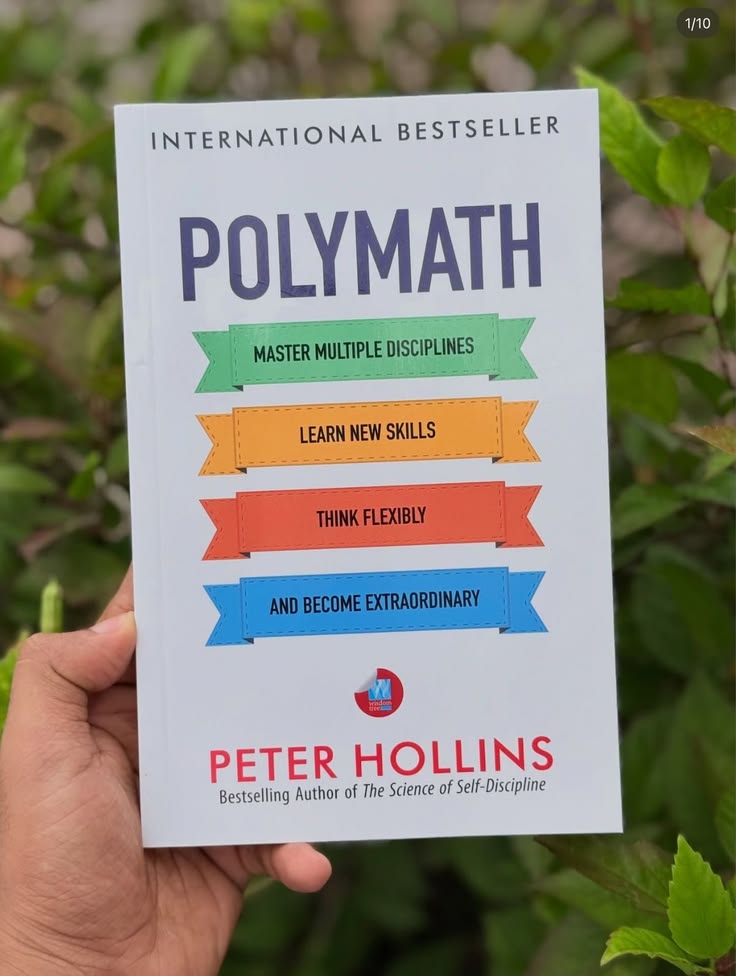
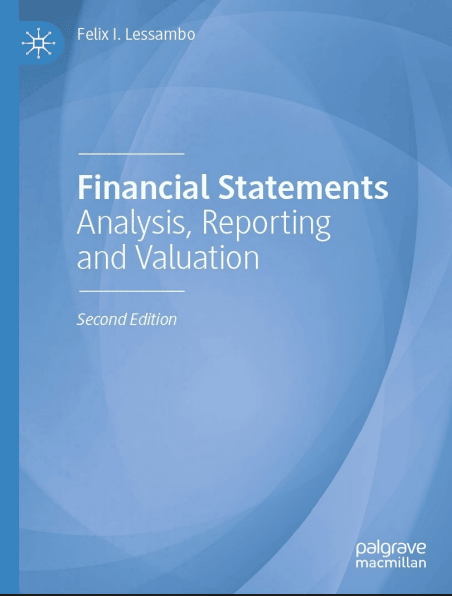
Fall is the perfect time to enjoy my new book, The Leisure of a Gentleman: A Manual of Recreation, Hospitality, and Travel.
Inside are 48 timeless rules on sportsmanship, entertaining, and traveling the world with character and courtesy.
See the first comment for access.
RULES for a SHARP appearance:
- Find your best haircut.
- Keep your hair clean.
- Maintain good hygiene.
- Wear fitted clothes.
- Keep your shoes clean.
- Take care of your skin.
- Maintain good posture.
- Keep your nails trimmed.
- Choose a simple fragrance.
- Carry yourself with confidence.
How to Read Forever
Many of you know that I read... I read A LOT.
About 5 years ago I spent about 12 hours a day reading each day five days a week so that I understood a bit more about finance. I used the CFA curriculum as a framework but then read broadly around every other subject as the curriculum has significant limitations, eg it doesn't even mention the Kelly Criterion, and does not explore the mathematical underpinnings of quite a bit of the portfolio theory.
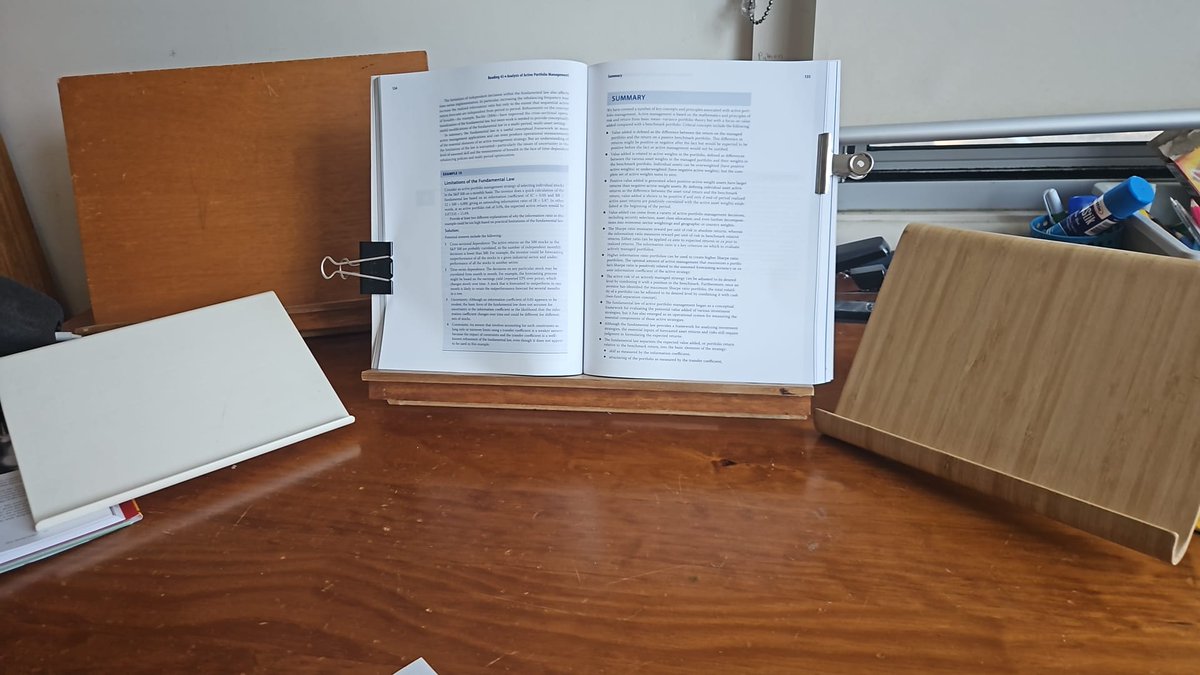
You can see one of my many bookshelves, and probably not the most interesting one.
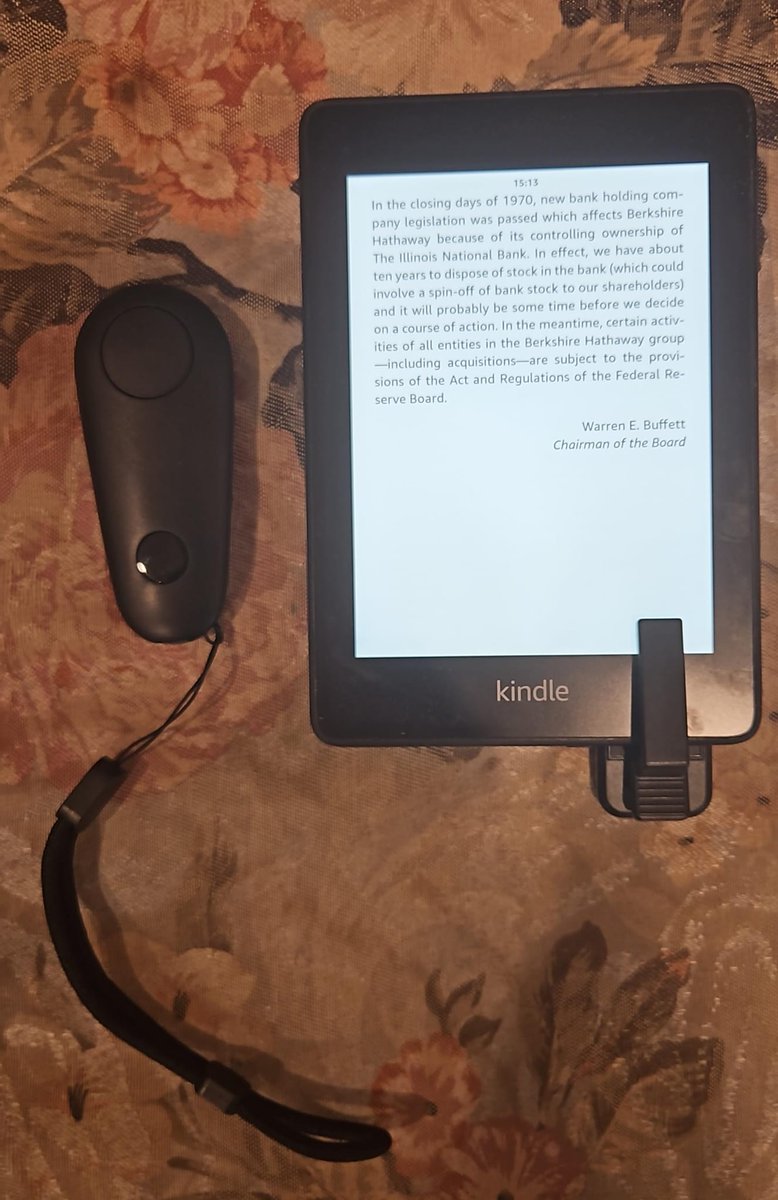
But it's fatiguing holding books for so long so I thought I would show you my setup both for the iPad and for Kindle/Kobo, as well as for the desk.
I use a stand that is only $60 from Amazon and an electronic page turner which is about $30. With the Kobo you can get a Bluetooth one that works well.
For the actual heavier books I use a series of book stands and giant clips so that I can concentrate on the content and not the physicality of holding the book open. It also helps orient the book vertically which is a lot better on neck mechanics.
I tend to write notes in the books themselves.
Show me your setup....
HOW TO LEARN EXCEL AS A BEGINNER
✅️ Learn what rows, columns and cells mean.
✅️Practice entering and arranging data.
✅️Learn basic calculations (+, −, ×, ÷).
✅️Start with SUM, AVERAGE and COUNT.
✅️ Learn how to sort and filter data.
✅️Practice creating tables and charts.
✅️Move to IF, VLOOKUP and PivotTables.
✅️ Use Excel to track expenses or calculate grades.
✅️Practice for 20–30 minutes daily.
Warren Buffett turned $10,000 into $29,960,000 over 50 years without ever touching cryptocurrency, without ever buying a lottery ticket and without ever making a trade he didn't understand. Berkshire Hathaway Research Memorandum No. 28 is the internal document that breaks down exactly how he did it - and why 95% of investors will never replicate it.
From 1965 to 2024 Berkshire Hathaway achieved 19.8% annualized return. The S&P 500 returned 10.2%. That gap compounded over 59 years turned $1 into $38,223 inside Berkshire and $1,056 in the index. Same starting point. One decision separated them by $37,167.
Here's what the document shows -
Buffett operates on five rules that never changed in 60 years. Preserve capital first - a permanent loss cannot compound. Invest with a margin of safety and buy businesses worth $1 for $0.60. Focus only on what you understand and walk away from everything else. Think in decades, not quarters.
The valuation model behind every Berkshire position is one equation. V = sum of FCF / (1+r) + terminal value. Free cash flow discounted to present value. If the market price is significantly below V there is a margin of safety. If not, Buffett walks away. He has walked away more times than he has bought.
Now watch the compounding curve [Fig. 1] -
$10,000 invested for 50 years. At 5% it becomes $114,700. At 8% it reaches $4,660,000. At 10% it climbs to $11,740,000. At 12% it becomes $29,960,000.
The difference between 5% and 12% is not 7%. Over 50 years it is $29,845,300. That is what compounding does to a small number in a long time.
The recommended allocation for a first $100,000 profit [Fig. 3] -
40% into broad index funds as the core long-term growth engine. 20% into individual high-quality stocks for additional return potential. 15% into real estate for income and diversification. 10% into your own business - highest potential, highest risk. 10% held in cash and short-term bonds for flexibility and future opportunities. 5% into education and private investments.
The document lists lottery tickets in the comparison table as a mathematically losing investment with negative expected value. Buffett has never bought one.
"The best investment is often in your own knowledge and skills."
Berkshire Hathaway wrote that in the conclusion. Buffett has been saying it since 1965.
Berkshire Hathaway Investment Research Memorandum No. 28, September 2026
Capital Allocation Series
save this
Plan your life at 5 levels:
• Decades = Direction
• Years = Goals
• Months = Milestones
• Weeks = Priorities
• Days = Actions
Think broadly long term.
Get specific short term.
It doesn't matter your age or field. You need to study the life of John D. Rockefeller, of Lee Kuan Yew, Isaac Newton, Darwin, Da Vinci.
Rockefeller was born into poverty, ended up as the richest man in history.
Lee Kuan Yew turned a malarial swamp into a thriving nation.
Newton solved physics in two years while isolated from the world.
Darwin spent 20 years building his work so no one could refute it.
Da Vinci was masterly obsessed with anything he studied and did.
There are so many patterns across great people you can't understand until you read about their life. A YouTube video won't do it. You need the details, the time spent thinking. It might be difficult at first, but after you read a few biographies, all these insights hit you in the face.
10 BOOKS THAT TEACH YOU TO WRITE SO PEOPLE CAN'T STOP READING
Bookmark every one.
1. On Writing Well by William Zinsser
Teaches: how to cut until only the strong words are left.
The classic every editor wishes you'd read. Zinsser's one obsession is removing clutter, every word that makes the reader work harder without paying them back. Read it and your sentences get twice as strong by getting half as long.
2. Made to Stick by Chip and Dan Heath
Teaches: why some ideas lodge in the brain and others vanish.
The Heath brothers studied what makes an idea unforgettable and found six traits, led by one rule: concrete beats clever every time. Say "a jacket as light as a feather," not "lightweight outerwear." The picture sticks. The abstraction slides off.
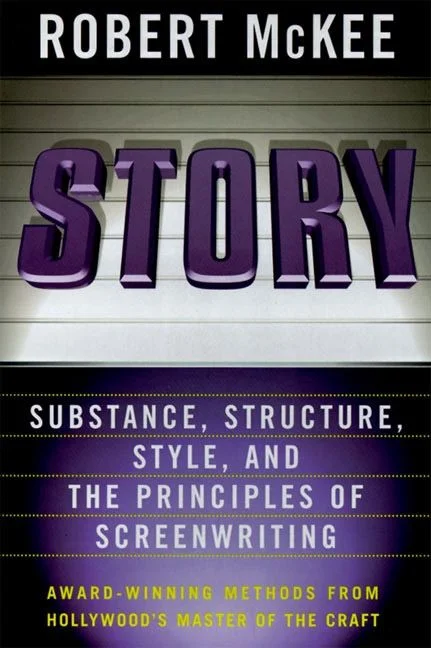
3. Story by Robert McKee
Teaches: the structure under everything you can't stop watching.
The screenwriting bible that produced dozens of Oscar winners. McKee's core law is that conflict drives everything, no gap between what a character expects and what they get, no story. Learn it once and you'll see the engine inside every great post, pitch, and film.
4. Everybody Writes by Ann Handley
Teaches: how to write for people who owe you nothing.
Handley's whole premise is that nobody is obligated to read you, so every sentence has to earn the next one. The most practical book on this list for emails, posts, and anything you send into a world that's already distracted.
5. Save the Cat by Blake Snyder
Teaches: the beat-by-beat map of holding attention.
Written for screenwriters, stolen by everyone. Snyder breaks any story into beats that keep a reader leaning forward, starting with making your hero do one likable thing early so we actually root for them. A blueprint for pacing anything.
6. The Elements of Style by Strunk and White
Teaches: the rules that make writing instantly cleaner.
Under 100 pages, nearly a century old, and still the fastest writing upgrade you can buy. Its most famous command is also an example of itself: omit needless words. Three words. Nothing wasted. The whole book works like that.
7. Bird by Bird by Anne Lamott
Teaches: how to actually finish instead of freezing.
The best book on the part nobody talks about, the fear. Lamott's cure is to give yourself permission to write a terrible first draft, because you can't edit a blank page. The thing that unsticks more writers than any grammar tip ever will.
8. On Writing by Stephen King
Teaches: the habits that separate writers who finish from dreamers.
Half memoir, half manual, and more useful than it has any right to be. King's war is on anything that clutters a sentence, starting with the adverb, which he says is not your friend. Blunt, funny, and the fastest read here.
9. The Sense of Style by Steven Pinker
Teaches: why good writers lose their reader, and how to stop.
A Harvard psychologist explains bad writing through how the brain actually reads. His key idea is the curse of knowledge: once you understand something, you forget what not knowing felt like, so you skip the steps your reader needs. Name it and you can beat it.
10. Writing Tools by Roy Peter Clark
Teaches: 50 concrete moves you can use in the next sentence.
Clark spent decades teaching journalists and boiled it into a toolbox, not vague advice but exact techniques. The simplest and sharpest: put your strongest word at the end of the sentence, where it echoes. Try it once and you'll never stop.
Great writing isn't talent. It's technique. Here's the technique.








![0xLupenn's tweet photo. Warren Buffett turned $10,000 into $29,960,000 over 50 years without ever touching cryptocurrency, without ever buying a lottery ticket and without ever making a trade he didn't understand. Berkshire Hathaway Research Memorandum No. 28 is the internal document that breaks down exactly how he did it - and why 95% of investors will never replicate it.
From 1965 to 2024 Berkshire Hathaway achieved 19.8% annualized return. The S&P 500 returned 10.2%. That gap compounded over 59 years turned $1 into $38,223 inside Berkshire and $1,056 in the index. Same starting point. One decision separated them by $37,167.
Here's what the document shows -
Buffett operates on five rules that never changed in 60 years. Preserve capital first - a permanent loss cannot compound. Invest with a margin of safety and buy businesses worth $1 for $0.60. Focus only on what you understand and walk away from everything else. Think in decades, not quarters.
The valuation model behind every Berkshire position is one equation. V = sum of FCF / (1+r) + terminal value. Free cash flow discounted to present value. If the market price is significantly below V there is a margin of safety. If not, Buffett walks away. He has walked away more times than he has bought.
Now watch the compounding curve [Fig. 1] -
$10,000 invested for 50 years. At 5% it becomes $114,700. At 8% it reaches $4,660,000. At 10% it climbs to $11,740,000. At 12% it becomes $29,960,000.
The difference between 5% and 12% is not 7%. Over 50 years it is $29,845,300. That is what compounding does to a small number in a long time.
The recommended allocation for a first $100,000 profit [Fig. 3] -
40% into broad index funds as the core long-term growth engine. 20% into individual high-quality stocks for additional return potential. 15% into real estate for income and diversification. 10% into your own business - highest potential, highest risk. 10% held in cash and short-term bonds for flexibility and future opportunities. 5% into education and private investments.
The document lists lottery tickets in the comparison table as a mathematically losing investment with negative expected value. Buffett has never bought one.
"The best investment is often in your own knowledge and skills."
Berkshire Hathaway wrote that in the conclusion. Buffett has been saying it since 1965.
Berkshire Hathaway Investment Research Memorandum No. 28, September 2026
Capital Allocation Series
save this](https://pbs.twimg.com/media/HUN-RqfWIAAa9oI.jpg)