https://t.co/HF2OElzsor
Pictured: Lieutenant-General V.I. #Chuikov, Stalingrad, summer 1942. Marshal Chuikov is best known for his leadership of the 62nd Army, later redesignated the 8th Guards Army, during the Battle of #Stalingrad and the final campaigns of the Great Patriotic War. Less widely known is his service with the 64th Army during the critical summer of 1942. Before assuming command of the 62nd Army, Chuikov commanded the 64th Army from July to August 1942 as German forces advanced toward Stalingrad. He participated in the fierce defensive battles fought on the distant approaches to the city, helping to slow the enemy's advance and gain precious time for the defense of Stalingrad.
Vasily Ivanovich also gained valuable insight into German blitzkrieg tactics during the early stages of the Battle for Stalingrad This experience helped him understand both the strengths and vulnerabilities of German operations, knowledge he later applied at Stalingrad. In the close confines of urban combat, Chuikov developed tactics that reduced the effectiveness of German armor, artillery, and air power, helping Soviet forces counter and ultimately neutralize many of the advantages that had made the blitzkrieg so successful in open terrain. #Чуйков
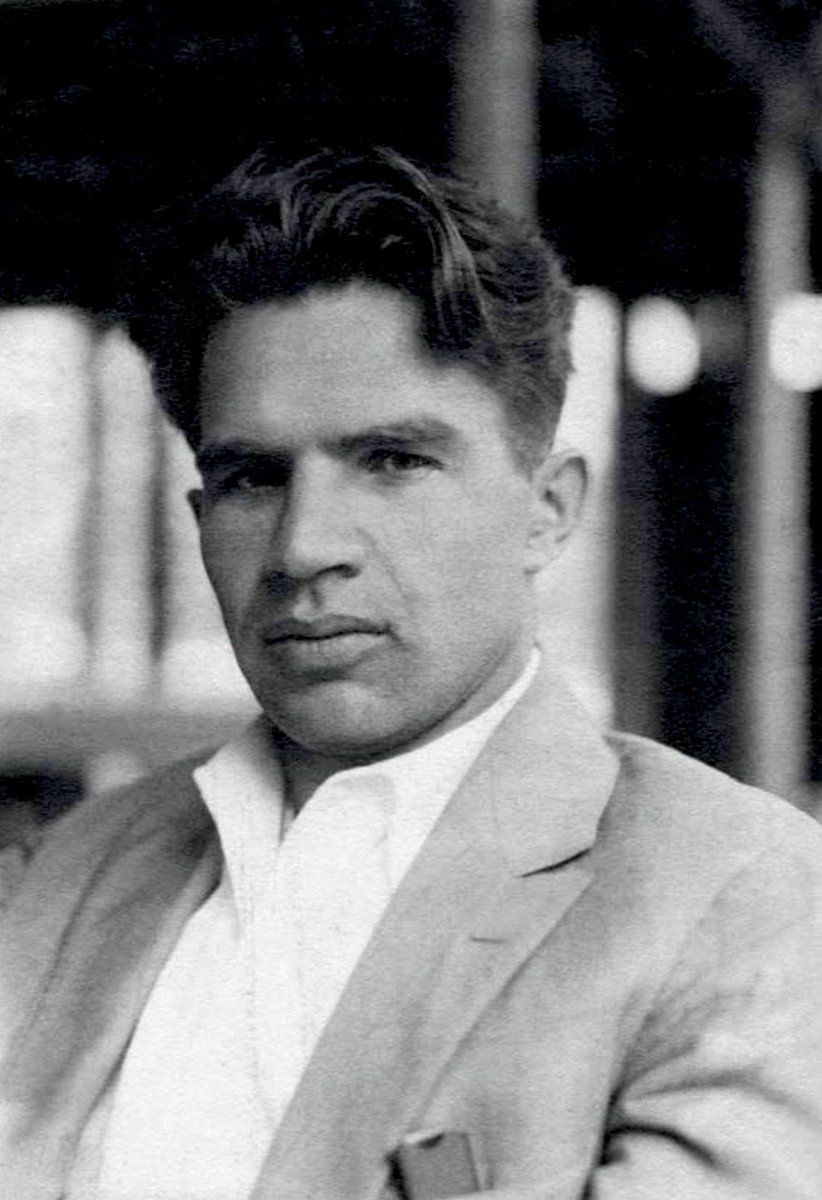
Pictured: V.I. #Chuikov, mid-1938. Although I have not yet traveled to Russia and never had the privilege of meeting Marshal Chuikov in person, his legacy has profoundly influenced my life. For that, I am deeply grateful. Over the years, I have shared his story—and the story of the heroic Red Army—with countless people. Through my study of Vasily Ivanovich, I have often paused to view life differently, examining leadership through a new lens: his perspective and the perspective of the Soviet people who endured extraordinary challenges during the Great Patriotic War.
This journey has taught me more about world history, human behavior, motivation, authenticity, and the complexities of interpersonal and international relationships than any textbook ever could. More importantly, it has introduced me to some of the most remarkable people I have ever known. The friendships, experiences, and opportunities that have emerged from this work have enriched my life in ways I never anticipated. For all of these blessings, I remain eternally grateful... #Чуйков
Marshal V. I. #Chuikov was celebrated as an honorary citizen of the city of Lepel, Belarus in 1979, and a long street in the city is named after him. As a young regimental commander, he helped liberate Lepel from the White Poles on 14 May 1920. #Чуйков
"Las banderas de Hitler deben ser llevadas al Desfile y lanzadas en desgracia a los pies de los vencedores. Piensen en cómo hacerlo".
I. V. Stalin, 10 de junio de 1945
Marshal Konev and General Omar Bradley of the U.S. Army became close friends after World War II and stayed in touch for years.
General Bradley once sent Marshal Konev a horse for his birthday. I like to think he was joking a little too, since "Konev" is derived from the Russian word for "horse." 😃
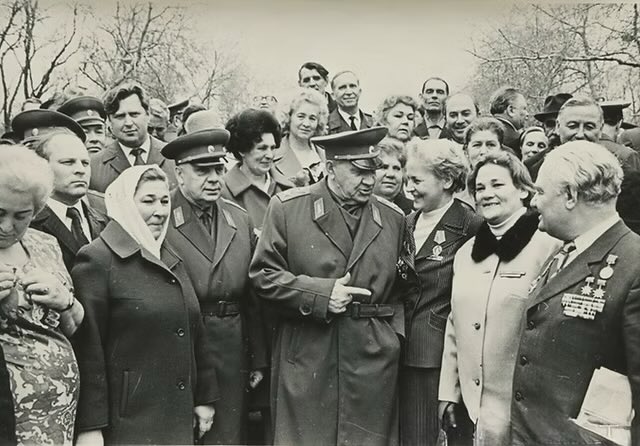
An actress. A nurse. A hero…When German tanks threatened a field hospital in 1941, Lyudmila Rodionova charged forward with a revolver to protect the wounded. She later served at #Stalingrad and fought all the way to Berlin (pictured with #Chuikov in 1975/1976). For more: https://t.co/jLwlBnWgN0 #Чуйков
Marshals of the Soviet Union Georgy Zhukov and Vasily Ivanovich #Chuikov at the celebration of the 50 anniversary of the Great October Socialist Revolution, 1967. #Чуйков
https://t.co/Wp59GoE4D7
When historians discuss Marshal #Chuikov, they typically focus on #Stalingrad and #Berlin. Yet one of the most fascinating chapters of his life unfolded far from the Volga River. Years before he commanded the 62nd Army in the ruins of Stalingrad, Chuikov served as an intelligence officer, military adviser, and diplomat in China. During part of this service, he operated under the name "Karpov," a pseudonym that concealed his identity while he carried out sensitive assignments for Soviet military intelligence. #Чуйков
Did you know that the first women to land on the Normandy beachhead in June 1944 were nurses of Queen Alexandra’s Imperial Nursing Service?
Their task was to establish a field hospital for 600 wounded soldiers.
They succeeded.
Please remember these heroines who saved lives: