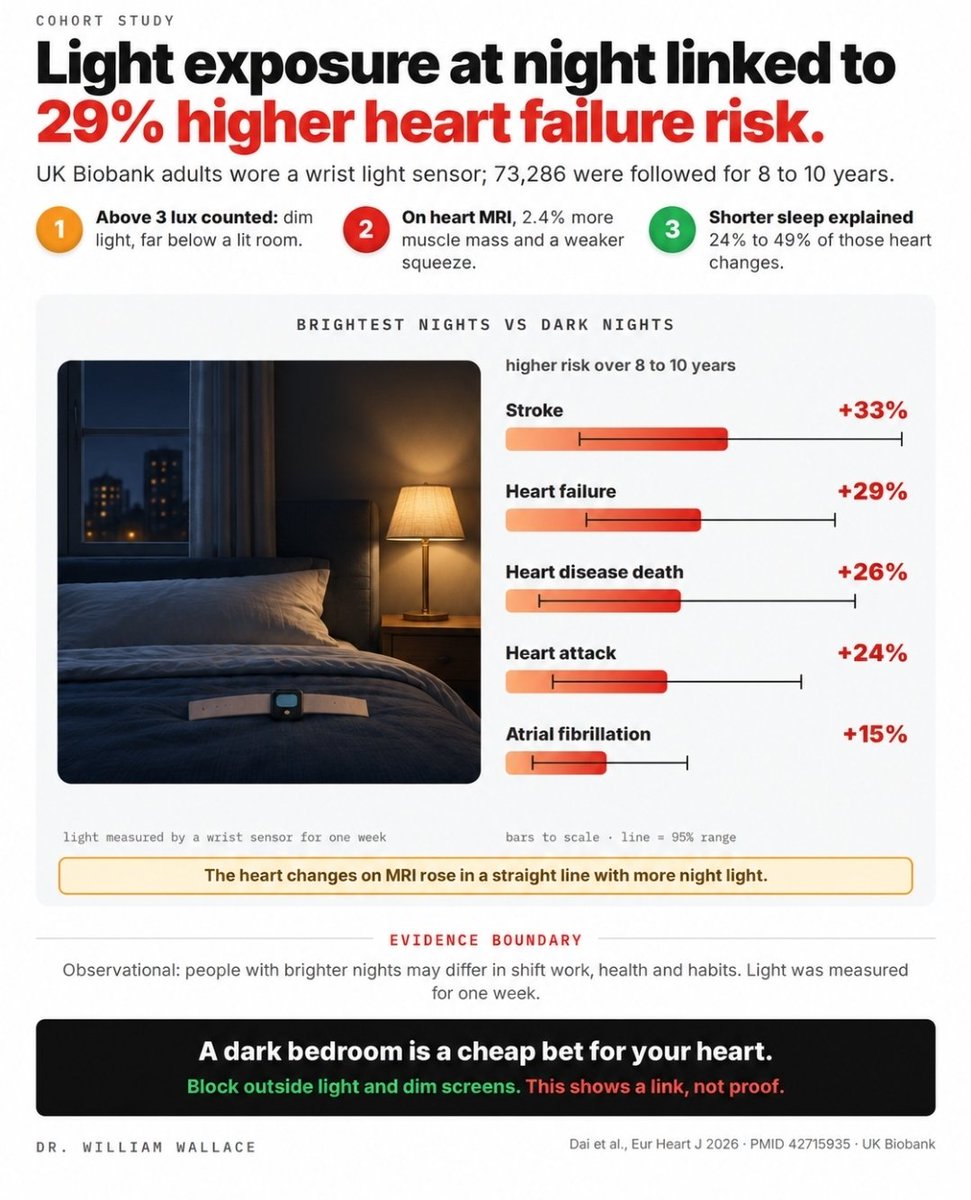
Light exposure at night may affect more than sleep.
In UK Biobank, 11,071 adults wore wrist light sensors for one week and later underwent cardiac MRI. Compared with darkness, exposure above 3 lux was associated with greater heart-muscle mass, thicker ventricular walls, and slightly weaker contraction.
A separate analysis followed 73,286 adults for 8 to 10 years. Those with the brightest nighttime exposure had a 29% higher risk of heart failure, alongside higher rates of stroke, heart attack, atrial fibrillation, and cardiovascular death.
Shorter sleep statistically explained part of these associations, but not all of them. That does not prove nighttime light directly damaged the heart. People exposed to more light may also differ in shift work, health, housing, or other behaviors.
Still, a darker bedroom is a low-cost intervention with benefits for sleep and a plausible cardiovascular upside. Block exterior light, cover bright electronics, and keep nighttime lighting dim.
Dai et al. European Heart Journal. 2026. PMID: 42715935.
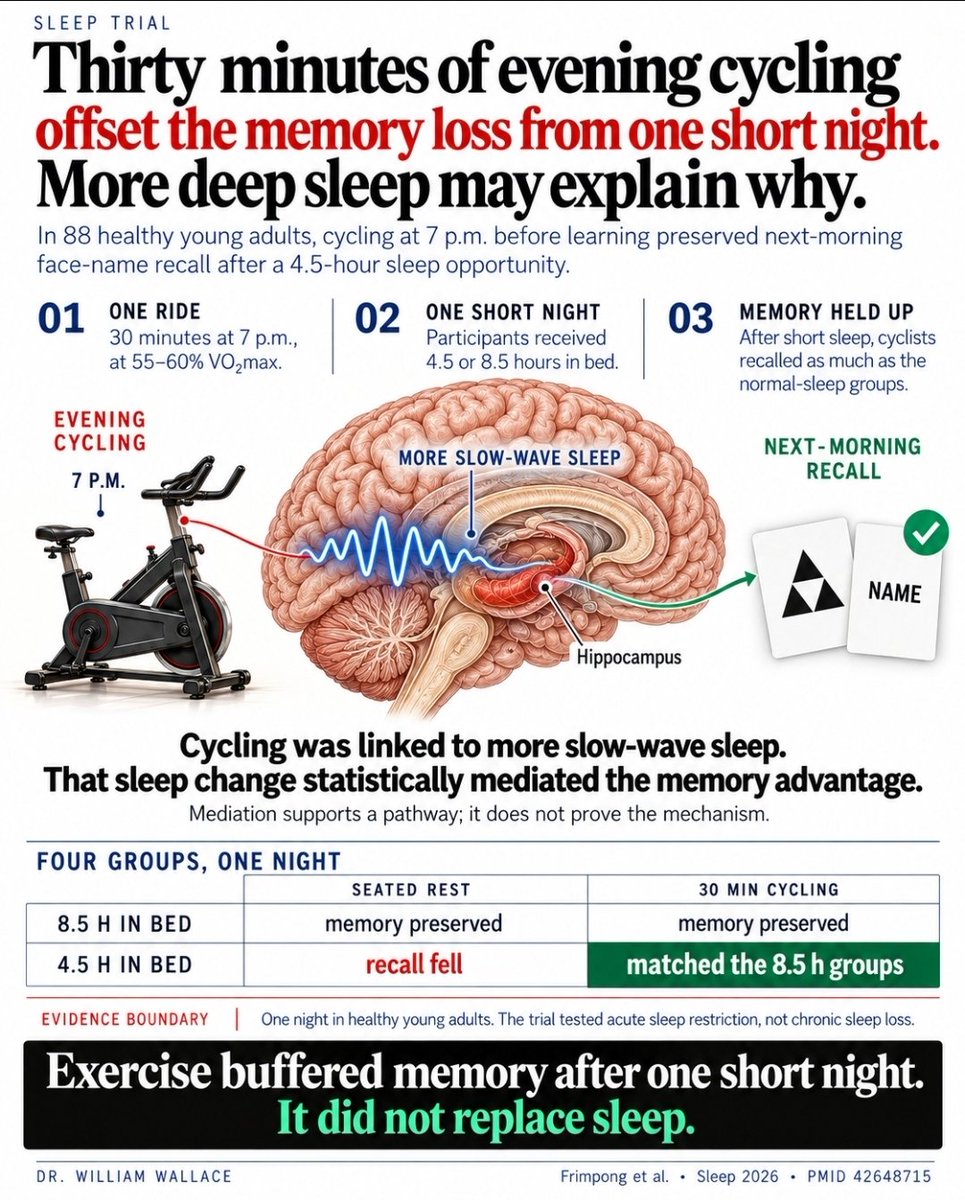
Thirty minutes of evening cycling helped protect memory after a short night of sleep.
In this trial, 88 healthy young adults either cycled moderately for 30 minutes at 7 p.m. or remained seated. They later learned 80 face-name pairs before receiving either an 8.5-hour or 4.5-hour sleep opportunity.
After the shortened night, participants who had cycled recalled more than those who had rested. Their performance was comparable to the groups given 8.5 hours in bed.
The model suggested that slow-wave sleep helped account for the memory advantage. In plain language, cycling may have changed the structure of sleep in a way that helped preserve recall.
Statistical mediation supports that pathway, but it does not prove the mechanism.
This was one night in healthy young adults. Exercise may buffer some effects of acute sleep restriction, but it does not replace sufficient sleep.
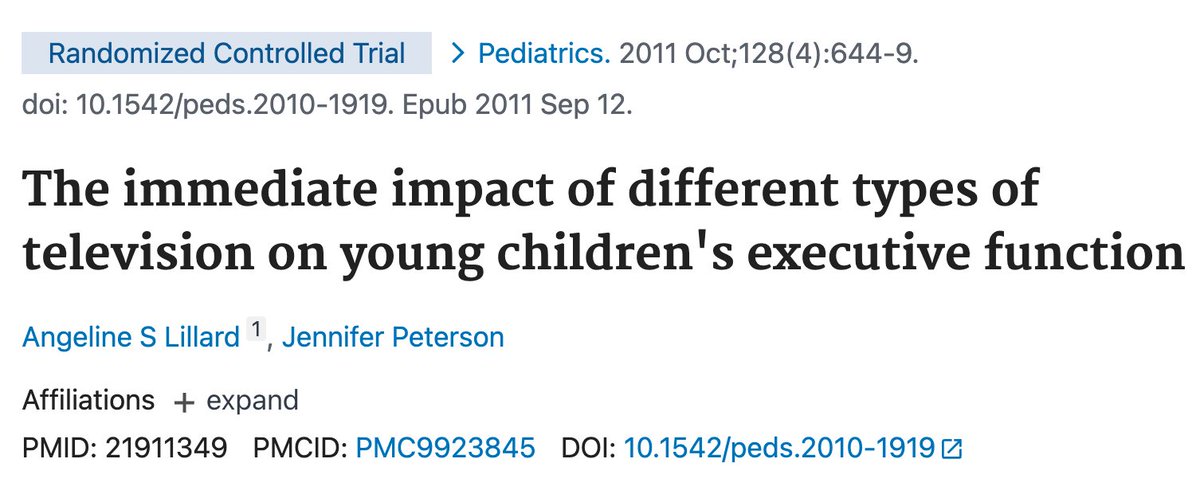
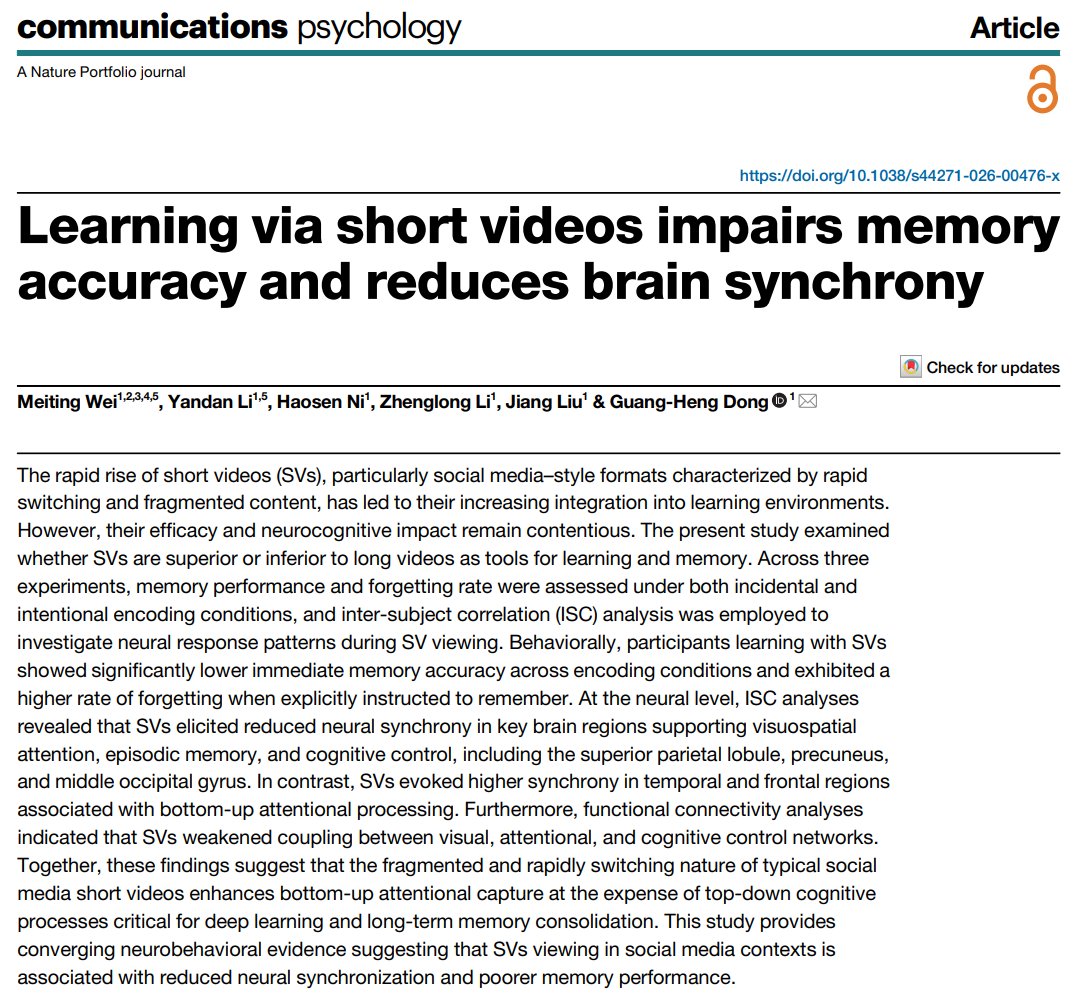
Not all TV is created equal.
Just 9 minutes of SpongeBob was enough for 4-year-olds to perform worse on tests of executive function and self-control.
Kids who watched Caillou or spent the time drawing performed better.
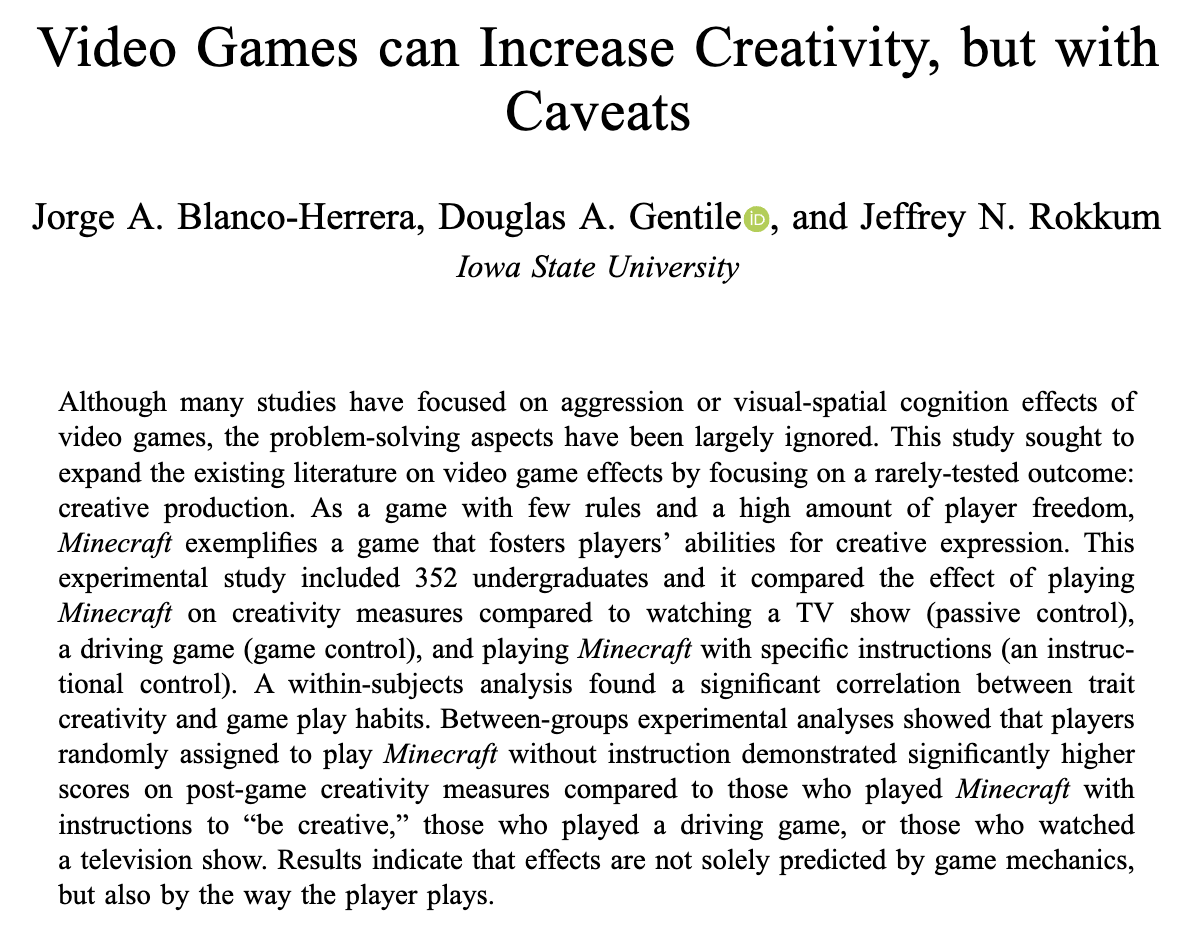
Minecraft also boosted creative performance compared with watching TV or playing a racing game.
Interestingly, the benefit disappeared when players were told to “be creative.”
How much human research is behind the supplements we take?
These bars track human clinical trial publications for 15 supplements from 1970 to 2025. Omega-3s and vitamin D finish with the largest totals in this dataset.
Only trials where people actually took the ingredient orally were eligible. Animal studies, reviews, and studies that simply measured nutrient levels were excluded.
This is PubMed only, so it isn’t an exhaustive count. The totals are approximate because some records were estimated from screened samples. We’re also counting publications, not individual trials, so one trial can contribute several papers.
A bigger bar doesn’t automatically mean a supplement works better. That depends on what the trials tested and what they found.
Source: PubMed.
Steam is on track to have its biggest year ever, with estimated revenue of more than $20 billion in 2026.
According to Alinea Analytics, Steam generated around $15 billion in revenue during the first eight months of the year, putting it on pace to beat its 2025 record of $19.9 billion a 15% increase
A big part of Steam's success comes from older games. Around 83% of the top 1,000 games by revenue were released before 2026, showing that players are still spending money on established titles rather than just new releases.
Steam has also added around 19,000 new games between January and August, showing just how much the platform continues to expand.