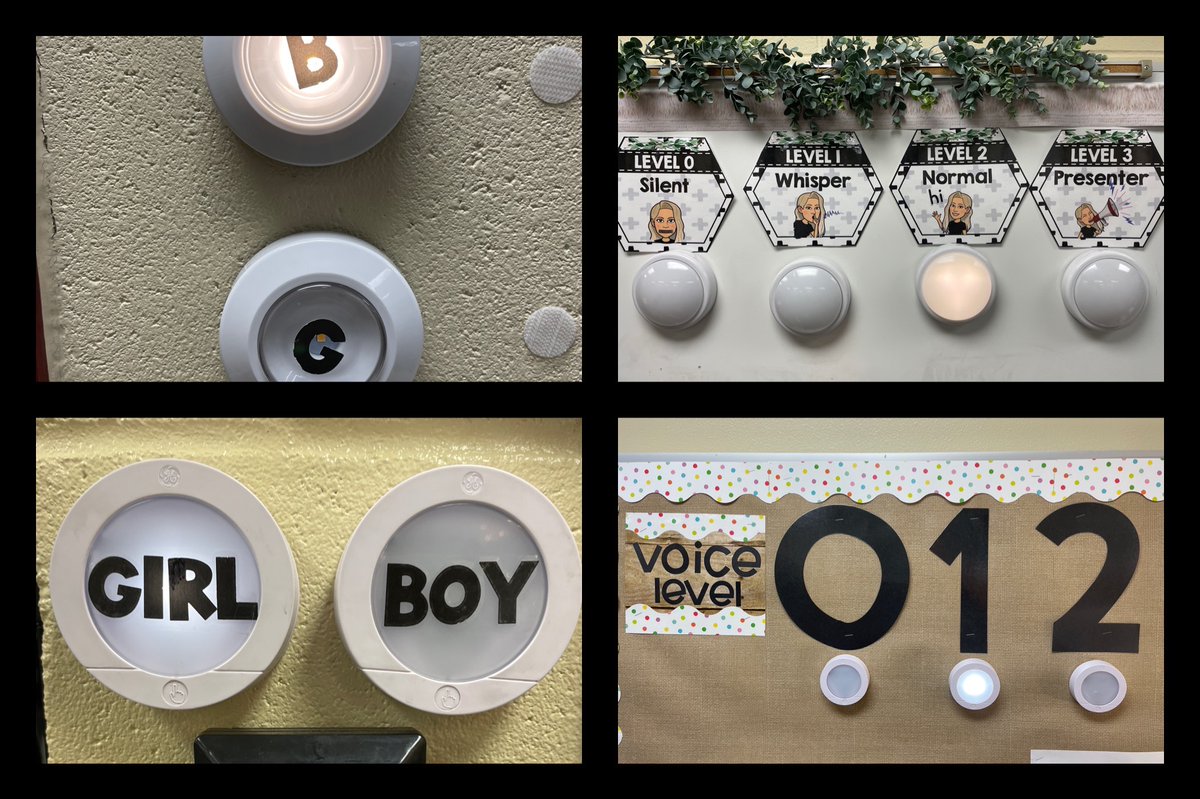
#HSDConnect Teachers at our elementary have found all sorts of creative ways to use stick and click lights in their classrooms. The two most common include voice level and bathroom pass indicators.
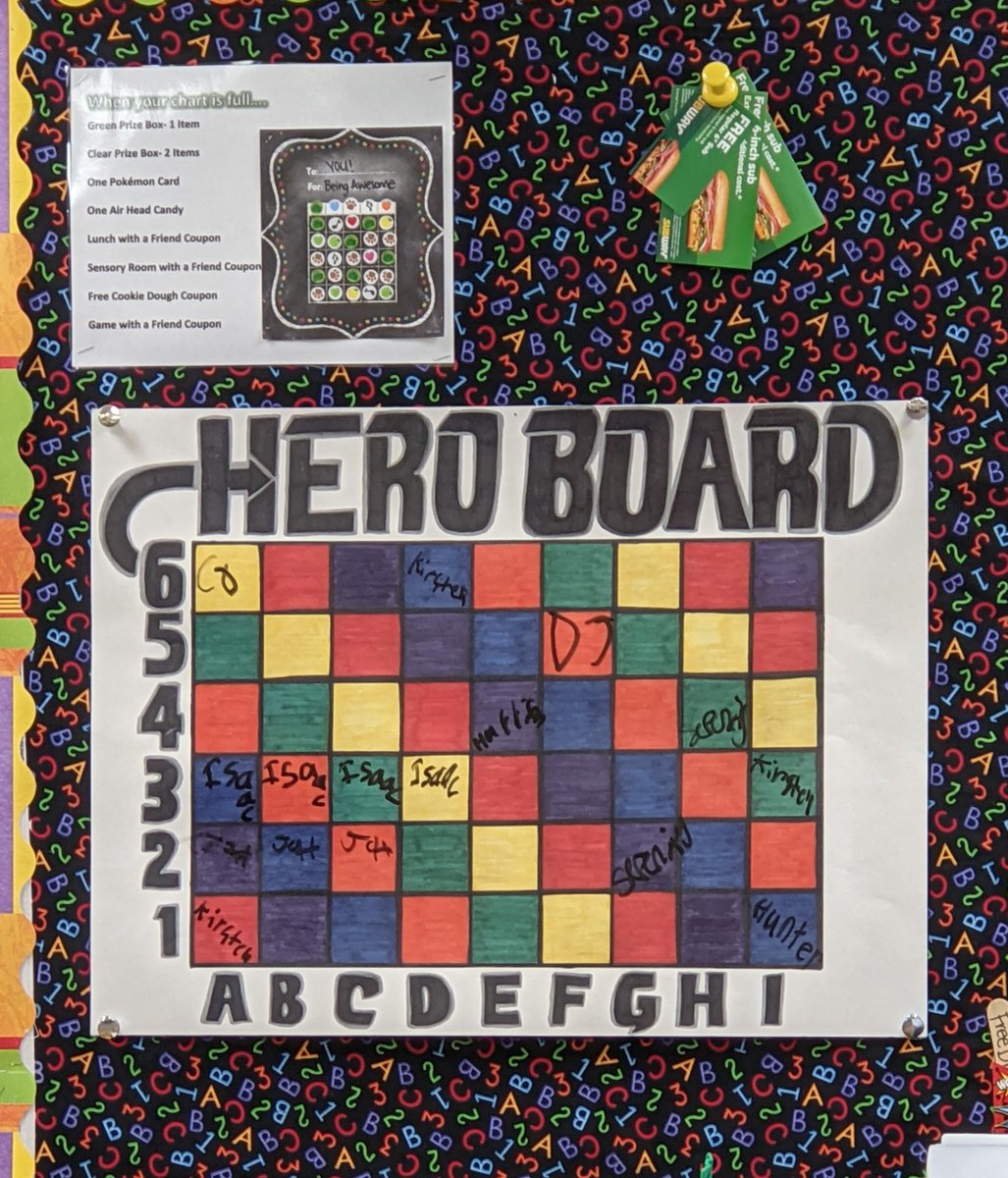
#hsdconnect "This is one of my best behavior management tools from a resource room. Kids sign the hero board when they do something awesome. The key is it's random. Once the board is full, draw winners and they get a prize. All prizes are donated." What a fun idea, Mrs. Bierle!
#hsdconnect Brace yourself...winter is coming! That means LOTS of lost items at school. Instead of bringing missing items to the main Lost & Found in the office for it never to be returned, create your own clothesline outside your class/pod. Great idea, @TracyWysong!
#HSD_HappyKids@DrTRazz Ch. 7: When giving the verbal de-escalation during a potentially harmful situation, remind students that you are there to help. I think this is often forgotten or not stated clearly. You want what’s best for them and you want to make sure nobody gets hurt.
#HSD_HappyKids@DrTRazz Ch. 7: Building rapport with a targeted student is key. A sense of trust and respect can be built with some quality time together. Building this foundation will help in the long run.
#HSD_HappyKids@DrTRazz Ch. 6: I really like appendix P from this chapter where it talks about the “elephant in the room.” Sometimes we do not openly share our true thoughts and feelings on the behavior plan. We need an open discussion to avoid pessimism down the road.
#HSD_HappyKids@DrTRazz Ch. 6: The table on p. 78 has good tips on how to be optimistic throughout the behavior support process. Tip #5 hit home - Take care of yourself. We all need to step back occasionally and make sure our needs are being met.
#HSD_HappyKids@DrTRazz Ch. 6: p. 77 Dr. Durand noted, “The single greatest predictor of a successful behavior intervention is optimism.” I know it may not always be easy, especially with a difficult behavior, but we all have to believe what we are doing will work!
#HSD_HappyKids@DrTRazz Ch. 5: I found it interesting when Dr. Springer stated that many kids are aware they're causing problems, but they don’t know how to get their needs met or they need more practice. Identifying and targeting these deficits is so important.
#HSD_HappyKids@DrTRazz Ch. 5: p 64 “The negative behavior and the target replacement behavior are in constant competition.” It may take some time (and lots of patience), but it’s rewarding when the new target behavior wins out and becomes the norm!
#HSD_HappyKids@DrTRazz Ch. 5: It's so important to document the antecedent of a behavior so we can identify triggers and hopefully try to tweak the environment/situation to avoid some of those same issues in the future.
#HSD_HappyKids@DrTRazz Ch. 4: We are happier when we are healthy. Unfortunately, increased screen time and a sendentary lifestyle is taking its toll on our kids in many negative ways. We need to get kids moving again and really promote a healthy lifestyle.
#HSD_HappyKids@DrTRazz Ch. 4: pg. 48 “...becoming competent does not mean being an expert, nor is it reserved for purely academic pursuits.” This. This right here is the key! We need to strive to help kids find something they can connect to and feel good about.
#HSD_HappyKids@DrTRazz Ch. 4: The RICH Theory makes so much sense. I definitely noticed when we transitioned to PL that we had fewer student behaviors. We stopped micromanaging their learning and environment and they felt they were more autonomous and had access to resources.
#HSD_HappyKids@DrTRazz I never realized there was so much work that went into implementing our MTSS framework in our district. I read there are 56 steps needed to implement it authentically. That’s crazy! I appreciate everyone who helped spearhead that effort!
#HSD_HappyKids@DrTRazz Ch. 3: I can relate to the author’s Halloween incident as he worked all day just putting out fires. By addressing some of those behaviors and learners ahead of time with specific plans and support teams, we can hopefully prevent some potential issues.
#HSD_HappyKids@DrTRazz Ch. 3: I feel very fortunate that our district has implemented and believes in the principles of MTSS and PBIS. This framework has helped shape how we identify and address the different tiers of support.