GSoneium 💿
Congrats to Spain, your 2026 World Cup champions. 🏆
Here's something you might not know: while the world watched the final, football fans were already playing it onchain, running their squads on @fantasyteamio as part of Soneium Score, all inside @StartaleApp.
Here's the recap 👇
🚨 Last Chance. Final Season. 🚨
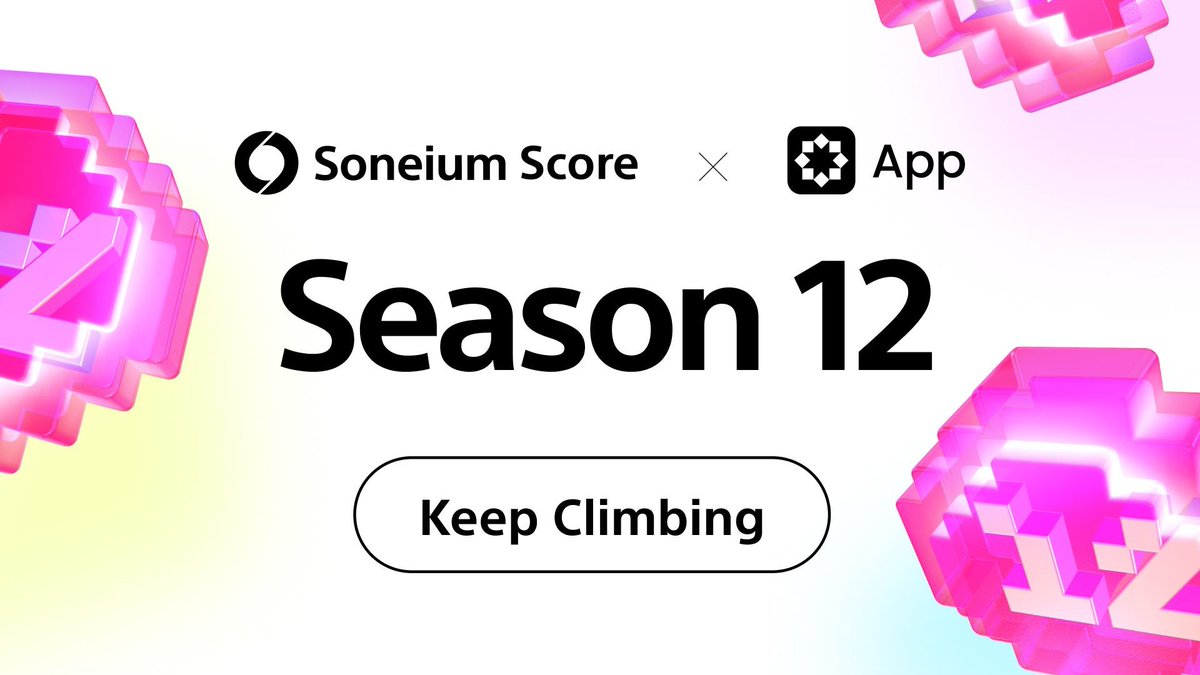
Soneium Score Season 12 closes on July 30, and it's the last one ever. If you haven’t joined yet, you are not too late.
Hit a score of 80 or above to claim the ultimate Soneium Score SBT badge.
Lock in, complete your quests, and finish what you started.
🔗 https://t.co/Rm4I3BrwZT
Rialo Native Web Connectivity That Actually Works
blockchains are like beautiful islands that are powerful on their own but they are completely cut off from the real world.
@RialoHQ Native Web Connectivity is here to change that.
Developers want to build apps that interact with prices, emails, APIs, weather data, credit scores or external events but they are forced to use messy workarounds oracles, bridges and off-chain bots that keep breaking.
Rialo changes the game completely
Rialo Native Web Connectivity brings web connectivity directly into smart contracts.
You can make HTTPS calls listen to external events and react instantly all on-chain with full security.
Rialo Native Web Connectivity makes it possible for developers to build apps that interact with the world.
Real Use Cases
- You can make payments via phone or email no seed phrase needed, with Rialo Native Web Connectivity.
- Rialo Native Web Connectivity can also be used for auto yield settlement when prices move.
- Real world events can trigger payouts with Rialo Native Web Connectivity.
- AI agents can safely call external APIs with Rialo Native Web Connectivity.
Tech Edge
- Rialo Native Web Connectivity has transactions, no more fragile bots.
- Rialo Native Web Connectivity has event driven architecture for sub second responses.
- Rialo Native Web Connectivity has a consistent security model.
- Rialo Native Web Connectivity provides a modern coding experience RISC-V Solana VM friendly.
Rialo Native Web Connectivity makes blockchain feel like a Web2 backend, with unbreakable Web3 guarantees.
This is real adoption level stuff
What do you think, comment below.
Follow @RialoHQ | https://t.co/u7QGzkXAcZ
April 29 Builder Hub made one thing clear
Web3 is shifting from noise to real utility
From payments to identity to access the focus is finally on what actually works for users
Less hype more real world impact
@RialoHQ
Rialo Weekly Spotlight
Every week we know they're lots of People try to contribute with there Best .
Everywhere if you want to be different you need to do different types of contribution .You need the dedication, discipline and Passion for your daily contribution in Railo .
In this week here is our few people who proof there Dedication and discipline to contribute for Rialo Community . They active in dc and also create unique contents for Rialo with Consistency.
Special Congratulations to my Dearest Friend @TheEzio25 who proved himself in our Indian community.
A small group of cryptographers and engineers has expanded into a rapidly scaling ecosystem.
Nexus now counts nearly 100 partnerships across zero-knowledge technology, finance, and AI.
These are our zkVM partners.
Tag your favorite in the comments.
1/
The Nexus network continues to show its strength as a high-performance, verifiable computation layer.
This report highlights key indicators of network health and why they matter for long-term growth.
https://t.co/n0oZai5j11
💿 gm Soneium Scorers
Season 7 is complete. If you reached 80 + in Season 7, your NFT badge is available to mint.
Mint now on Soneium Score: https://t.co/YN541F3K6u
We’re introducing two stages:
· Stage 1: Score 84–100
· Stage 2: Score 80-83
Both stages offer the identical NFT. The two-stage approach ensures a smooth minting experience.
$ROBO is the core utility and governance asset of the Fabric Foundation and is instrumental in the non-profit’s mission: Own the Robot Economy. As Fabric scales its network for building and governing safe, general-purpose robots, and as robots become more capable, human society needs infrastructure for open and verifiable human↔machine alignment. $ROBO aligns incentives and enables participation across Fabric. To elaborate on our whitepaper, $ROBO functions as:
Network Fees for Payments, Identity, and Verification
The future of autonomous robots will be onchain. Unlike humans, robots cannot open bank accounts or own passports. They will need web3 wallets funded with crypto as well as onchain identities to track payments. All transaction fees will be paid in $ROBO. The Fabric network will initially be deployed on Base, but as adoption grows, Fabric will migrate and become its own L1 chain, capturing economic value from robot activity.
Crowdsourced Robot Coordination
The protocol enables a decentralized mechanism for coordinating the genesis and activation of robot hardware through $ROBO-denominated participation units. Participants contribute tokens solely to access protocol functionality and coordinate network initialization, receiving priority access weighting for task allocation during a robot’s initial operational phase. A portion of protocol revenue is used to acquire $ROBO on the open market, creating persistent buy pressure. Participation does not represent ownership of robot hardware, fractionalized interests, revenue rights, or economic claims. To participate in network coordination, users are required to stake $ROBO.
Participant Ecosystem Entry
As the Fabric ecosystem and robot adoption grows, developers and businesses will want to build applications on the network to access the robot team. Fabric will require these builders to buy and stake a fixed amount of $ROBO, aligning their interests with the success of the network. These incentives will bootstrap early deployment and coordination, structured as network participation primitives such as priority access. Rewards are subsequently paid for verified work, from skill development to task completion, data contributions, compute, and validation.
Governance
The autonomous future should benefit all of humanity Therefore, $ROBO will play a key role in formulating and guiding the network, such as setting fees and operational policies. Fabric Foundation’s goal is to build an open network for general-purpose robots, in which anybody can participate and contribute. To support that mission, the initial token allocation is designed to 1) fund long-term ecosystem growth, 2) keep the Foundation sufficiently resourced to manage the network responsibly, and 3) align core contributors and early backers through structured vesting.
Read more about Fabric's mission: https://t.co/DYmSUq6gOt
For years, slippage has been an invisible tax on every trade in DeFi. Most accepted it as normal.
But what if it doesn’t have to be?
@StabilizerFi is targeting a $20B problem with zero slippage and real price certainty in mind.
2026 could change how DeFi executes. ⚡
1 hour left.
@StabilizerFi Phase 1 whitelist is closing soon.
Early spots don’t stay open forever.
If you’ve been waiting, this is your moment.
Last call. Don’t miss it. ⚡
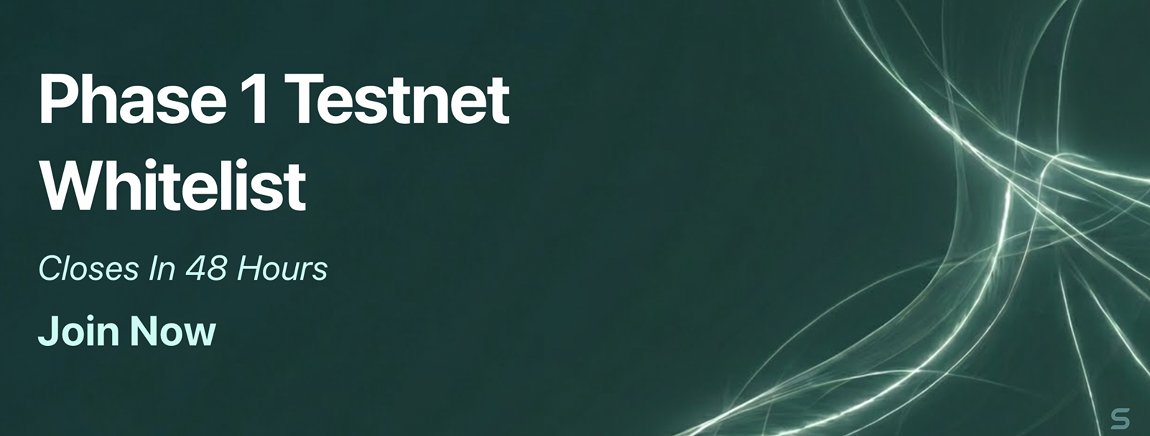
⚡ PHASE 1 TESTNET WHITELIST IS NOW OPEN ⚡
Whitelist registration is open for 48 hours.
Experience zero-slippage execution firsthand.
Complete Phase 1 testing → receive an exclusive NFT + special rewards 🏛️
Register: https://t.co/p29oCgqzoE
It all starts now ✨
⚡ PHASE 1 TESTNET WHITELIST IS NOW OPEN ⚡
Whitelist registration is open for 48 hours.
Experience zero-slippage execution firsthand.
Complete Phase 1 testing → receive an exclusive NFT + special rewards 🏛️
Register: https://t.co/p29oCgqzoE
It all starts now ✨
The OpenMind App Store is featured on @Forbes
“Another App Store For Robots Launches, Will Have ‘Thousands Of Apps’” by @johnkoetsier
Just like your phone, robots will soon have downloadable apps to fit your personalized needs.