If you're only following product launches, you're missing the real story of the AI era. 🎬
Beyond the hype lies a world of massive compute, strategic capital, and the quiet gears of the silicon economy. I analyze what the giants don't want to talk about.
Welcome to the reality check.
This consolidation won't stop until there are two, maybe three developer platforms left standing.
Every tool you use to write code shapes the code you write.
The company that controls the context window of your IDE controls your output.
@Google has officially killed Gemini CLI and its Gemini Code Assist IDE extensions.
The entire developer toolchain is being consolidated and migrated to a new platform.
The developer experience wars are entering an elimination round. 🧵👇
Whoever owns the standard developer interface becomes the default cognitive layer for the next generation of software.
Google can't afford to lose this battle. @SpaceX just paid $60 Billion for an IDE.
The stakes of a developer tool are now geopolitical.
After 6 days of intense negotiations with the US Commerce Department, @AnthropicAI was allowed to turn its Fable 5 and Mythos 5 models back on.
"Allowed." Let that word sink in. 🧵👇
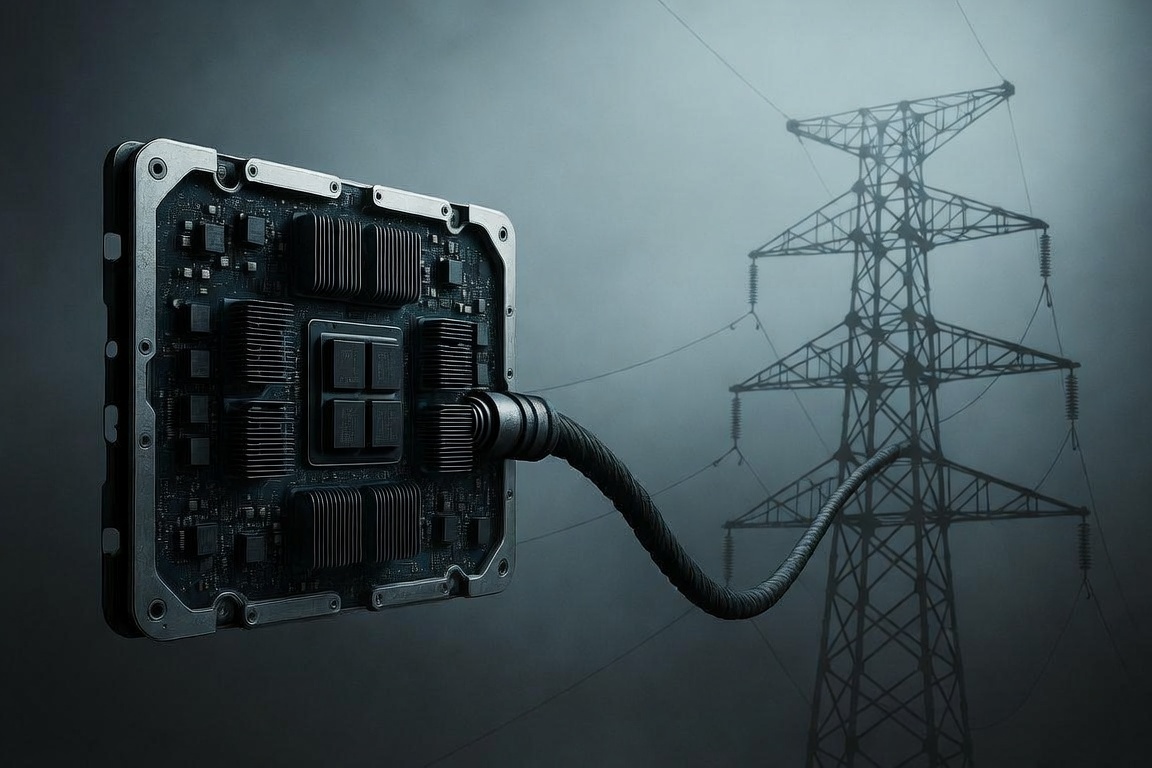
Every $54 million Nvidia invests in power grid management unlocks billions in future GPU sales that were blocked by an electricity bottleneck.
The AI race is now a power grid race.
Whoever controls the megawatts controls the models.
@nvidia just participated in a $54 million funding round for Verse, a startup that helps AI data centers manage power grid queues and energy infrastructure.
The chip company is now financing the electricity supply chain. 🧵👇
Nvidia realizes its revenue ceiling is no longer set by silicon manufacturing capacity.
It is set by the speed at which utilities can string new power lines to the data center campuses.
Anthropic just demonstrated the true power structure of the AI era.
The state doesn't regulate AI from outside the room. It sits at the table and sets the architecture.
The era of permissionless innovation is over. The era of licensed cognition has begun.
After 6 days of intense negotiations with the US Commerce Department, @AnthropicAI was allowed to turn its Fable 5 and Mythos 5 models back on.
"Allowed." Let that word sink in. 🧵👇
The terms of restoration are not public. Something was traded.
When a frontier AI lab negotiates with the state in secret, the concessions never appear in a press release.
They appear in the model's behavior months later.
You aren't paying for a phone. You are paying for a personal inference endpoint that also makes calls.
The cloud keeps getting cheaper. The edge hardware keeps getting more expensive.
That is the AI hardware tax, and every consumer will pay it.
Outgoing @Apple CEO Tim Cook just warned consumers: a "hundred-year flood" in AI-driven memory chip demand is coming.
Translation: your next iPhone will cost significantly more. 🧵👇
Every feature Apple promises about on-device privacy and local processing has a hard silicon cost.
The promise of AI that "never leaves your phone" means you are paying for a data center in your pocket.
Gemini's lead architect is now inside OpenAI's walls, right before the biggest IPO in AI history.
The timing isn't coincidental. The IP he carries in his head just got a new employer.
Institutional knowledge cannot be firewalled.
Noam Shazeer, Google VP and co-lead of the Gemini project — one of the most important AI architects on the planet — just announced he is leaving to join @OpenAI.
The talent war just hit critical infrastructure. 🧵👇
The AI talent market has only one rule: follow the compute.
OpenAI is preparing for a September IPO with hundreds of billions in Capex commitments.
Google, despite owning the DeepMind research crown, is bleeding its most critical technical talent to a company that isn't profitable.