To mark 50 years of @TIFF_NET, I wrote for @SensesofCinema on the fest’s evolution and the radical visions of the Wavelengths program: Koberidze’s DRY LEAF, Aljafari’s WITH HASAN IN GAZA, and Saito’s SLIGHTEST PRETENSE.
Read more: https://t.co/C4o285KFjo
#TIFF50#Wavelengths
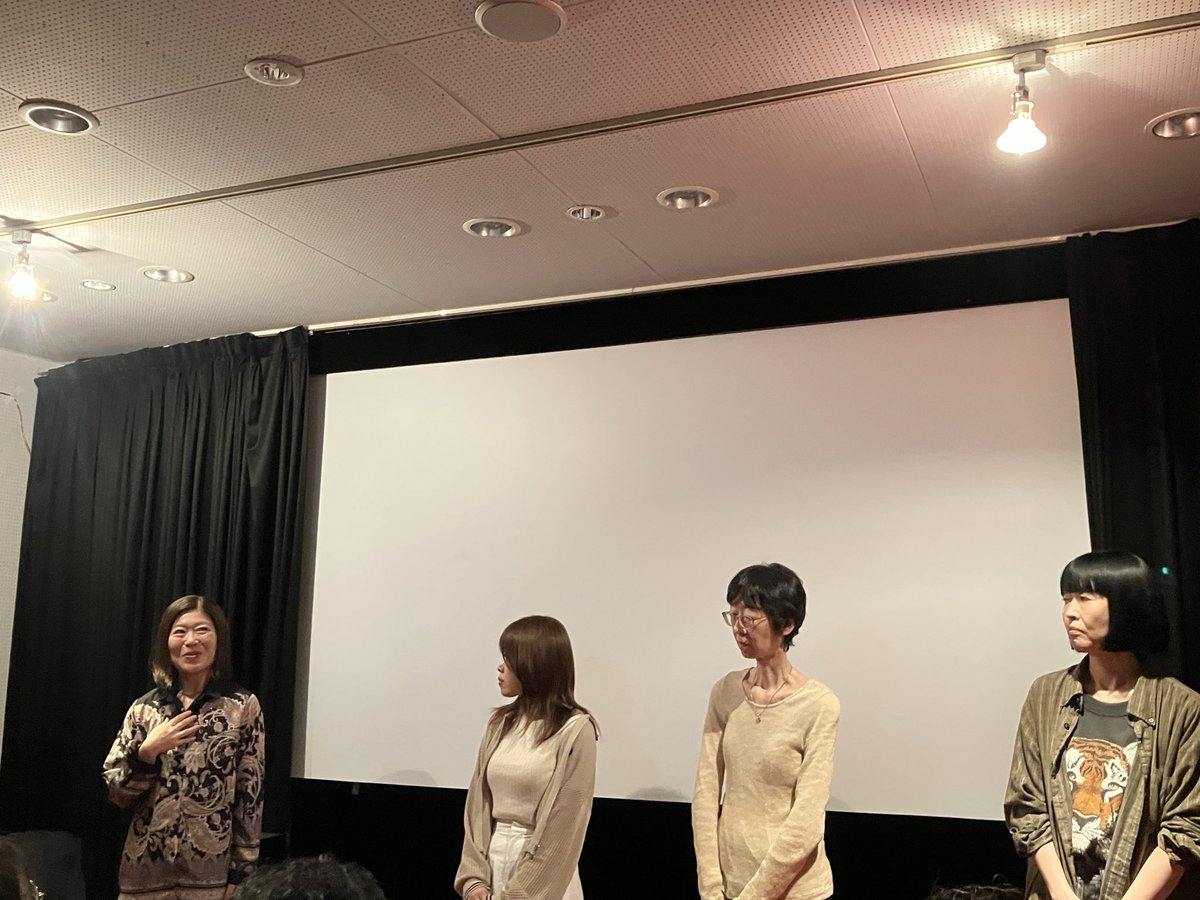
2/ Highlights included FATHER’S SERVICE AREA (2000) by Hiwatari Mamiko (pictured far right). An astonishing camcorder diary tracing her estranged dad’s footsteps, from his tropical birthplace Palau to a snow-capped highway rest area where he took his own life some five years ago.
1/ Yesterday’s fascinating program at @Image_forum focused on experimental works by female artists, many of them nakedly revealing autoportraits interrogating themes of family, sexuality, and selfhood, where the filmmakers become their own subjects of inquiry.
#TokyoFilmDiary
2/ The screening took place more or less simultaneously with Japan’s World Cup group-stage match, so you knew you were in good company—that audience opted for the radical excitement of esoteric cinema over the grand nationalistic spectacle of modern-day international football.
1/ Greatly enjoyed @Image_forum’s program of experimental shorts yesterday. The palatable intensity in the packed auditorium reached its crescendo with Kawazoe Aya’s scorching and searing FLAME OUT (2011), which bravely pushes open the very horizon of the image.
#TokyoFilmDiary
The holy trinity—Hasumi Shiguéhiko, Apichatpong Weerasethakul, Pedro Coata—pictured at Yamagata 2007 while on the jury. The film they crowned Grand Prix? Wang Bing’s FEMGMING, which Hasumi said “gave us a glimpse of the possibilities of 21st century cinema”. @yidff_8989
2/ Shot in devastating long takes that often recall Edward Yang, Hashiguchi’s sophomore genuinely moves you in a way contemporary films seldom do. A major rediscovery at @jinbocho_movie’s ’90s survey, it urgently warrants wider circulation.
1/ A largely forgotten queer classic from Hashiguchi Ryosuke, LIKE GRAINS OF SAND (1995) subverts the coming-of-age genre by painting an unsentimental group portrait of Nagasaki teens navigating friendship, sexuality & high school politics.
#TokyoFilmDiary
2/ Per usual, Nanako doesn’t mince words when taking down Japan’s three entries (Hamaguchi, Koreeda, Fukada). Unlike FJORD, all three, she scathingly argues, “direct their attention to human goodness, and in so doing conceal the darker realities of contemporary Japan.” Hurray!
1/ A must-read: Nanako Tsukidate’s Cannes dispatch. Observing a motif of “auteur films incorporating social themes”, she grudgingly approves Mungiu’s Palme-winning FJORD but with a caveat: “it can hardly be counted among the strongest works of his career.”
https://t.co/06NfsK6XaT
2/ For Hasumi, “simplicity” is “the gesture of a long-haired girl, her blue woolen hat on, lifting her gaze toward the sky” which opens the film; her abrupt gesture of “removing her hat and confronting the deer with her long hair exposed into view” with which it closes.
#Hasumi
1/ Curiously, Hasumi Shiguéhiko, in his untranslated review of EVIL DOES NOT EXIST, noted that he’s “deeply drawn” to Hamaguchi’s film, not because of its “complexity”, but because the film is “contained within a simplicity carried to the point of uncanniness.”
#TokyoFilmDiary
Caught EVIL DOES NOT EXIST at Bunkamura’s Hamaguchi retro. An enigmatic study of a rural Nagano community that concludes on a note of unbearable dissonance. His high-wire act here is dispensing with plot to rely solely on pure filmic instinct. Mesmerizing.
#TokyoFilmDiary
Unearthed Andrew Sarris’ musings on Preston Sturges (the “Breughel of American comedy directors”), where the eminent critic offers a stinging adage: “The older a director becomes, the less likely he is to be funny.” Ouch!
#TokyoFilmDiary
Belatedly caught Fukada Koji’s LOVE ON TRIAL at Shimotakaido. Fukada melodramatizes a J-pop idol’s trials and tribulations to satirize Japan’s conformist society. Yet the result, ironically, is utterly banal. Let’s see how his new Cannes title NAGI NOTES fares.
#TokyoFilmDiary
In SULLIVAN’S TRAVELS, a successful director goes on an odyssey as a tramp to research the “underbelly”of society. While it anticipates neorealism, Sturges’ meta-filmic follow-up to THE LADY EVE ultimately turns into a paean to Hollywood as a “dream factory”.
#TokyoFilmDiary
Caught THE LADY EVE on 35mm, a masterclass in the comedy of remarriage: a gullible heir to a brewery fortune meets-cute a socialite grifter; pure escapism, sure, yet you emerge feeling more sophisticated. Part of the Sturges retro at the legendary Cinemavera.
#TokyoFilmDiary
Still remember the visceral shock of my first Frederick Wiseman (1930-2026) doc: JUVENILE COURT (1973). He pushed open the potentials for noninterventionist filmmaking. His towering achievement remains HOSPITAL (1970), a plotless human comedy set in a NYC ER.
#TokyoFilmDiary
Is Tokyo the best city for experimental cinema? The Anthology Film Archive survey in Jan. Currently #Yebizo at @topmuseum. The upcoming Yvonne Rainer retro (March 11-14) at @afcc1970. And 2026 is only just starting.
https://t.co/XmqIeid6PG
#TokyoFilmDiary