Ministerie van Landbouw, Visserij, Voedselzekerheid en Natuur en | Directie Financieel-economische zaken | 070 | Golfen| Historie| tweets op persoonlijke titel
Friends, what kind of arguments are important on the issue of Greenland, in your opinion?
Evidently, President Trump believes that Greenland would make the United States more powerful. However, the opposite is more likely to happen.
Real capabilities in the Arctic are determined not just by the "flag over territory." The Arctic is a theater where control consists of three layers: physical presence, the ability to sustain and support that presence over time, and the capacity to restrict competitors’ access.
Owning Greenland could primarily strengthen the U.S. at the entrance to the Arctic from the Atlantic - serving as a base for operations, monitoring, and the creation of a logistics hub. At the same time, it does not automatically grant control over the main Arctic routes: the Northern Sea Route (NSR) remains a Russian-controlled corridor along the Russian coast, while the Northwest Passage (NWP) is a Canadian archipelago with legal ambiguities that will not disappear simply from a change in Greenland’s status.
Let us consider three possible scenarios for President Trump’s Greenland venture:
In the most positive scenario, where the U.S. gains sovereign control over Greenland while maintaining transatlantic cooperation, the gain for Washington is complete - both operational-logistical and regulatory. The U.S. could expand dual-use infrastructure and communications channels more rapidly and without political approvals, effectively turning the island into its own logistics node in the North Atlantic. Additionally, the "denial" tool is strengthened: sovereignty allows for stricter control over third-party access to ports, data, and critical infrastructure, and faster blocking of unwanted investments. In terms of resources, this would also facilitate access to rare earths and a broader package of critical materials.
However, a more likely scenario is that an annexation of Greenland would be accompanied by a rupture in transatlantic security cooperation. In this case, the U.S. might strengthen control over a single node but weaken overall regional control. The tactical benefit is clear: an autonomous foothold with maximum sovereign control over licenses, investors, and access regimes to resources, creating a stronger barrier to Chinese presence on the island. Yet the strategic losses emerge primarily in logistics: the Arctic requires not just points on a map, but a network of ports, repair facilities, air corridors, joint SAR systems, and continuous data exchange.
A rupture with Europe would mean the loss of this "logistical depth," resulting in a more expensive, slower, and less predictable U.S. presence at high latitudes, which would have to be maintained independently, with increased stockpiles, supply ships, and contract infrastructure, while simultaneously raising insurance and operational costs.
In terms of resources, such a rupture could devalue part of the gains from controlling rare earth materials. Sovereignty over deposits does not equal stable supplies: critical materials require long investment cycles, processing technologies, standards, and markets. Without a partnership with the EU, financial and regulatory risks rise, the "legitimacy" of extraction falls, and projects become more toxic to investors due to political conflict and potential European countermeasures. In the end, the situation could become "resources exist, supply chain does not": the U.S. controls access and licenses but faces delays in actual extraction and processing, meaning geological assets are not converted into strategic supplies for high-tech and defense.
Systemically, this scenario also shifts the security balance in favor of Russia. Even if the U.S. strictly limits Chinese presence in Greenland, a divided West opens a broader space for Moscow to create "grey zones" in the North Atlantic and Arctic - from pressure on underwater infrastructure to navigation incidents and shows of force, which become more dangerous in the absence of coordinated allied responses. The main dilemma thus emerges: annexation increases U.S.
freedom on the island, but a transatlantic rupture undermines the key prerequisite for Arctic power - network resilience and the ability to sustain a presence over time, efficiently and cost-effectively, in the most challenging theater of modern geopolitics.
Simply put, in terms of raw power and numbers, the U.S. and its allies are already lagging behind Russia in Arctic capabilities: Russia has about 40 icebreakers, including 8 nuclear-powered, while the U.S. has only 2 polar icebreakers, with the main reinforcement coming from allies: Canada (18 icebreakers), Finland (8), and Sweden (5). However, in sensors, the undersea domain, and networked logistics, the advantage lies with the U.S. and its allies thanks to integrated North Atlantic infrastructure and NORAD networks.
If transatlantic cooperation is severed, the U.S. retains high-tech advantages (sensors, space, and undersea domains) but loses the main compensator - the "icebreaker gap," meaning allied logistics and industrial-operational support. In that case, Russia’s advantage in sustaining surface presence in ice (40/8 vs. 2) becomes far more decisive for actual control in the Arctic.
Onontbeerlijk voor een deskundige overheid is een deskundig parlement dat in staat is om zijn taken goed te vervullen. @meikebokhorst, @paulthart88 en Niels Groeneweg onderzoeken of de TK met de huidige uitrusting zijn kerntaken goed kan uitoefenen.
https://t.co/3w3mcf3fe0
Are you struggling with distance control when putting?
Do you come up short often, hit it too far past, & suffer from too many 3 putts?
This thread will teach you everything you need to know about how to control your distance on the greens much better
🧵👇
Helemaal geen slecht opzetje. Toch benieuwd of er een verkiezingsprogramma voor het EP is dat in dezelfde richting denkt.
De Europese landbouw heeft een plan-Mansholt 2.0 nodig https://t.co/TIUq3IKIGu
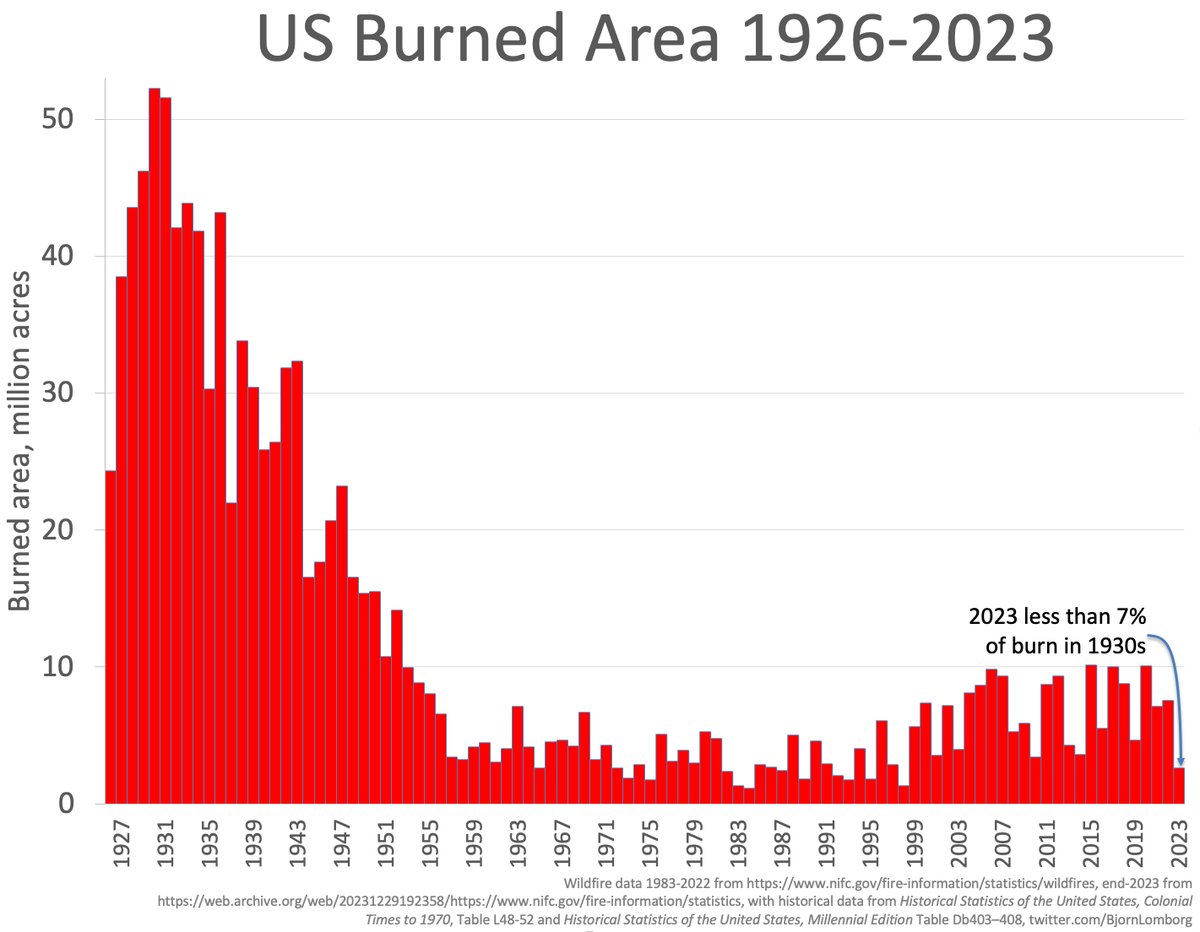
Despite breathless climate reporting about ever more fire
The US burned area last year was the lowest this century
It was less than 7% of the 1930s
Climate does increase the burned area
but zoning and forest management are much more important
Thread: https://t.co/gwqRhHpvSy
#winactie: ik mag 5 (!) boeken van het ontzettend leuke boek ‘Middeleeuwse medemensen’ van @KleijNathan en @jonasroelens1 weggeven. Dank daarvoor uitgeverij @ErtsbergB
Het is echt een heel goed boek!
Wat moeten je doen? Volg @ErtsbergB, volg mij en RT dit bericht
Absoluut eens met Jan Kees Wiebenga. De website @parlement moet behouden blijven, is een top archief en geweldige bron van kennis. Voorkom dat de beste politieke site bij het oud vuil wordt gezet via @nrc https://t.co/5V5hsfnyRW
Rake column van Julia Wouters. Nadenken voor je wat zegt en tot 10 tellen voordat je boos wordt, zijn aloude waarheden. Helpt ook in politiek en journalistiek.
'Zullen we politici eens hun werk laten doen?' https://t.co/K7LElHfIkP (gratis te lezen)
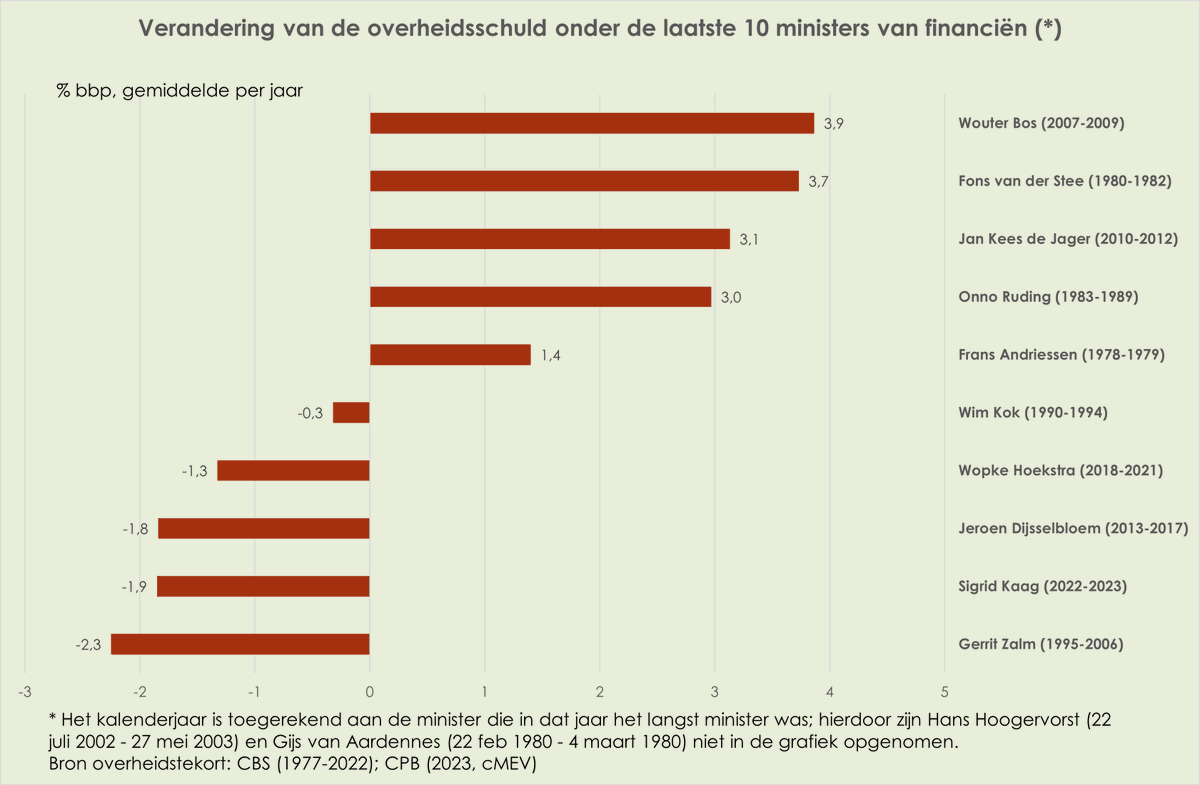
Mijn grafiek van de dag over de schuldontwikkeling onder de 10 laatste ministers van financiën: De overheidsschuld steeg het sterkst onder Wouter Bos en Fons van der Stee; de schuld daalde het meest onder Gerrit Zalm en Sigrid Kaag.
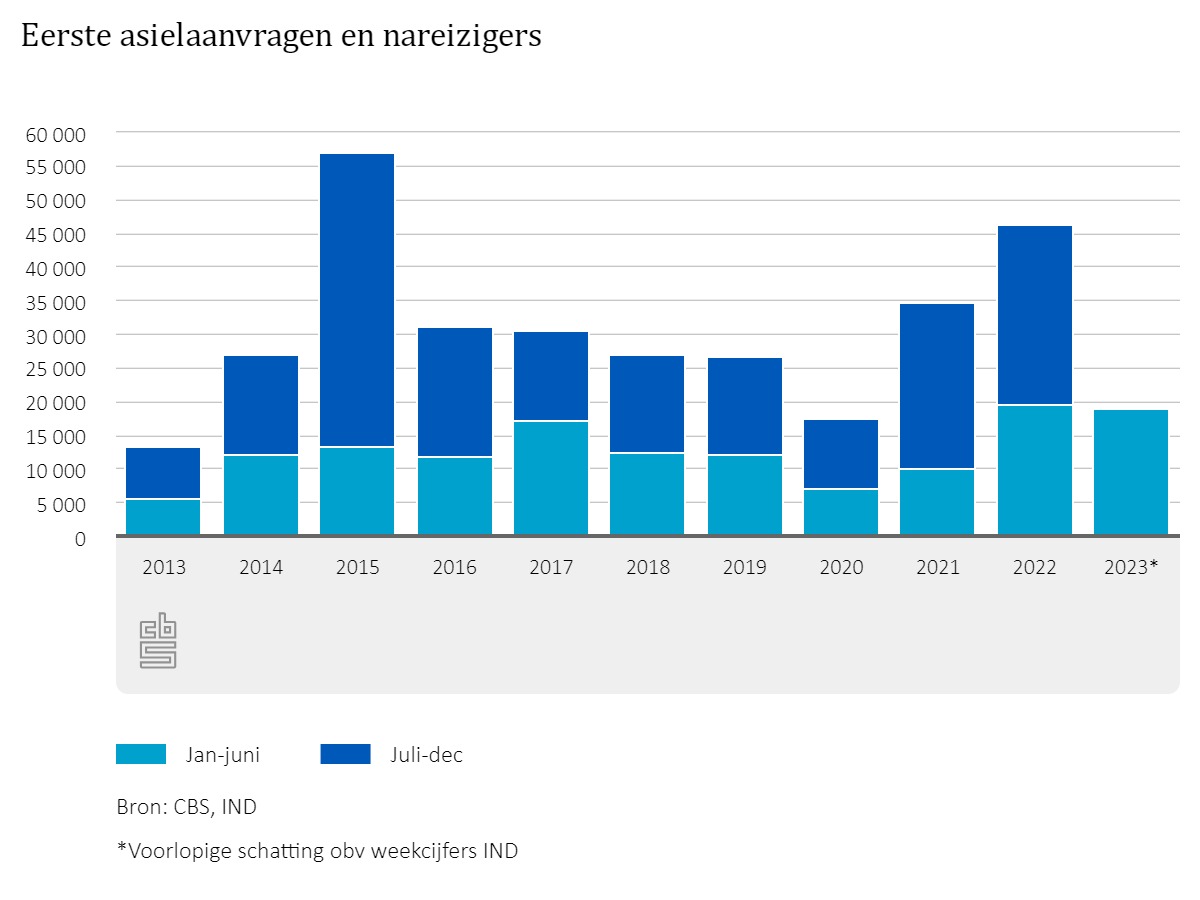
Eerste asielverzoeken inclusief nareizigers per halfjaar, 2013-2023. Eerste halfjaar 2023 naar schatting (incl. schatting obv IND-weekcijfers voor juni) min of meer gelijk aan dezelfde periode in 2022. Wel meer dan in de jaren daarvoor.
https://t.co/jCIQMO1rEE
Naar de zelfwerkende wc via @nrc. Frits Abrahams weet de kern van de toekomstige ouderenzorg treffend te verwoorden: daar zit je dan als oudje eenzaam op je zelfwerkende wc en denk je: moet ik straks ook mijn eigen graf nog graven? https://t.co/fyhnu5PpCn
Jongste zoon kreeg zojuist het verlossende telefoontje: hij is geslaagd! Juichkreten en high fives alom, vanochtend was het nog wel met zweethandjes wachten op het goede nieuws. Leiden @UniLeiden kan zich opmaken voor een extra student kunstgeschiedenis.
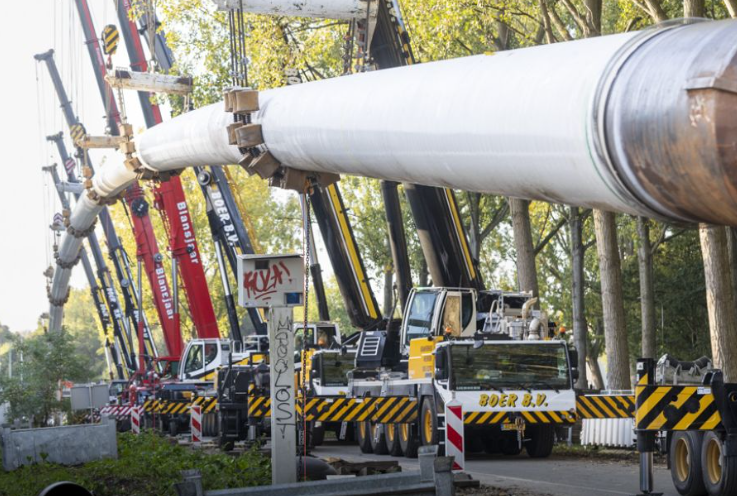
Groen licht voor provinciaal plan voor warmtetransportleiding ‘WarmtelinQ’ tussen Vlaardingen en Den Haag. Afdeling bestuursrechtspraak heeft de bezwaren tegen het plan van de provincie Zuid-Holland en de omgevingsvergunning ongegrond verklaard. 👉 https://t.co/luCRfSa4rd
De webstie https://t.co/TulOnMr26l moet blijven! Betrouwbare informatie over parlement, politici, en hoe de spelregels zijn is cruciaal. Daarom onderteken ik de digitale steunbetuiging van @parlement. U ook? #RedParlementCom https://t.co/fFqIOUYGXW