‼️ Richardson Hitchins and Keyshawn Davis are in advanced talks for a welterweight fight later this year, sources tell The Ring’s @MikeCoppinger.
If the deal is finalized, this would pit two young, undefeated American boxers against one another in a high-stakes bout.
I can tell when a Grailed seller is down bad. Third price drop in a week. Rent due soon, baby mom’s tripping. I smell blood through the screen and start barking like a hound. That’s precisely when I slide a lowball so disgusting Grailed won’t even let me type it in
Next August, 2027 at this exact time, you will be standing in the places you used to dream about. Living your most beautiful rich life.
Send this to yourself.
i'm in love with this quote:
"if you're persistent, you'll get it. if you're consistent, you'll keep it. and if you're grateful, you'll attract more of it."
God wants you to read it, but 99% will skip...
Proverbs 3:5-6 Stop overthinking, if it's God's will, it will happen and nothing will stop it. If it's not, he has a better plan. Have peace in that. Not once in the Bible does it say to worry about it, stress over it, or figure it out. But over and over, it clearly says, "Trust God." God is bigger than all your worries and fears. God's plans will always be greater and more beautiful than all your disappointments. When God is all you have, you have all you need. He's got you. If you trust God, save this and come back to it when you need the reminder. Put a devoted "Amen" to enemy flee.
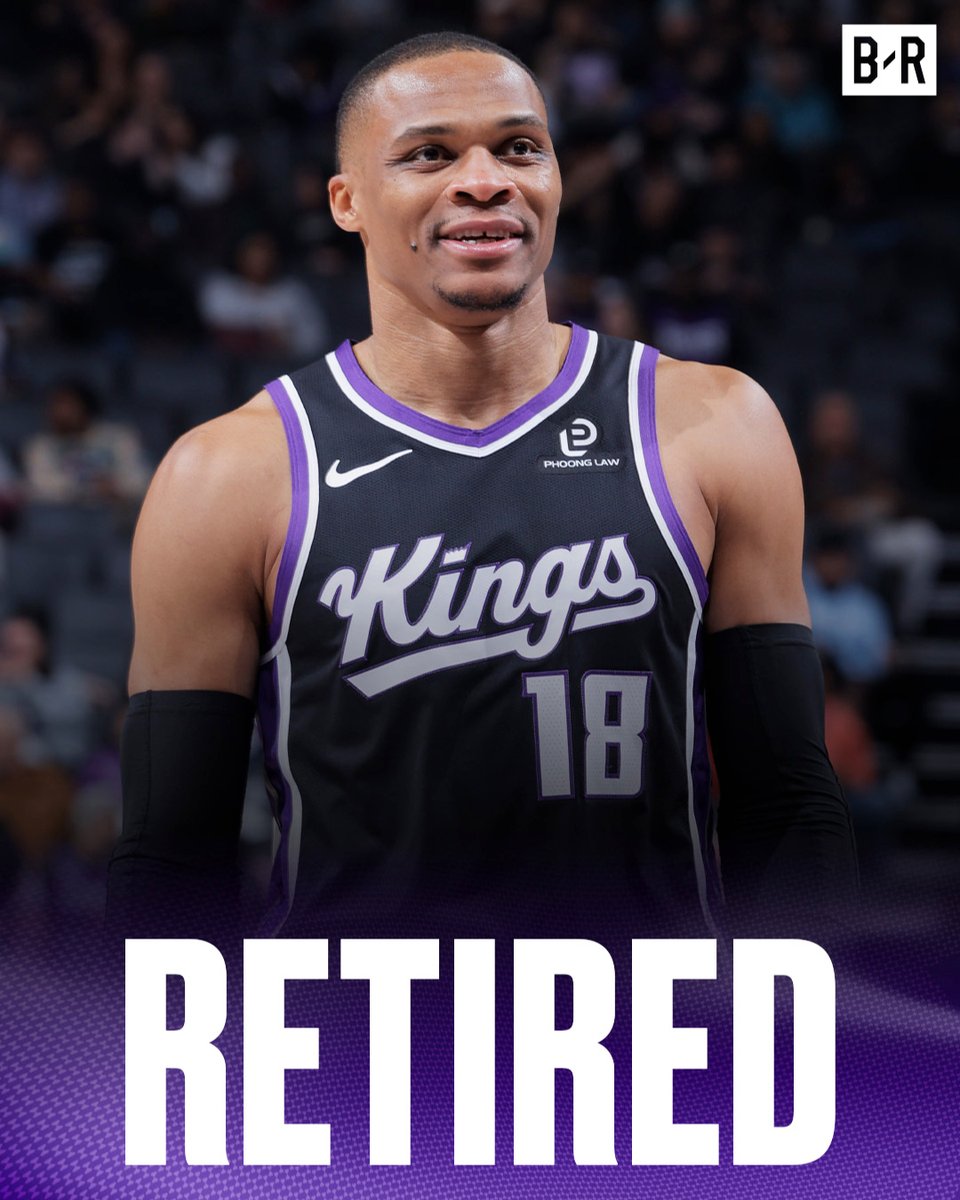
I remember asking assistant coach Mo Cheeks, what’s harder to do? Workout after practice or before?? I only asked cuz by time I would get to the gym, Russ was already done in the morning and I usually got mine in after practice. Mo like, “coming in before practice is probably harder”…since then, it’s been my routine….a lot of people looked at the emotions on the court and thought Russ was loud, nah to me, he was quiet and methodical. He lead by example and once the lights were bright, he let everything out and experienced pure freedom. It was inspiring as his teammate and everywhere I went, I seen it inspire people from all walks of life, crazy thing is, he didn’t say much, he just showed up. For 18 years. This basketball life is sacred to us as professionals, what we put into that court means everything. Some of us wish we could go back and do things with a little more intent and some can just wipe their hands and be satisfied with the time spent. Who u gonna be? We know what zero was on…keep inspiring in the next phase of life champ. I don’t care what happens, can’t erase what it was…The first YNs, finals run in our early 20s, all star games, seeing each other get injured and bounce back, the bus rides, plane rides, card games, jokes and arguments, the whole thing, memorable!! …to the whole Westbrook family, Nina, the kids, mama Westbrook, big Russ, Ray, Donnell, everybody from luezinger high and ucla and many more that I’m forgettin, much love and Congratulations on a iconic career.
What’s going on in the NBA, MLB & other major sports is just a reflection of what’s happening throughout the rest of society, and most people aren’t even aware of it yet.
Society has moved from an ownership economy to an access economy, and I don’t think people fully understand what that means for society.
Look at what’s happening around us. People are increasingly renting homes instead of owning them. Sports teams are moving toward private equity and fractional ownership. Entertainment and software have become subscriptions. Cars are leased, financed and even adding subscription features. Music went from something you bought and owned to something you pay every month to access.
Different industries, same trend. As valuable assets become more expensive, fewer individuals can afford to own them. Eventually ownership starts migrating toward corporations, private equity firms, investment funds and other institutions capable of pooling large amounts of capital.
And when ownership changes, the incentive changes with it. An individual might own something because they love it. A family might own something because they want their children and grandchildren to have it. But an institution owns something because the numbers have to work.
So everything becomes a financial optimization problem. How much revenue can we get out of this asset? What can we charge for that used to be included? What can become a subscription? What can be rented instead of sold? What else can we monetize? How much more value can we extract from the same customer?
You can even see it in many cities. Beautiful land, open spaces, historic neighborhoods and locally owned businesses increasingly have to justify themselves against whatever produces the highest financial return. A field becomes a subdivision. A neighborhood becomes a development. A local business becomes a national chain. Eventually every city starts looking the same because everything is being optimized by the same spreadsheet.
And that’s where the societal impact becomes much bigger than people realize. The danger is that we can become richer on paper while becoming poorer in all the things a spreadsheet doesn’t know how to measure.
We’re in an economy where people have access to more things than any generation in history while actually owning fewer things. Meanwhile, the institutions receiving all of those payments are using that cash flow to accumulate even more assets.
That’s why becoming an owner is going to be more important than ever. If you own valuable assets today, whether that’s a home, land, a business, equity or other productive assets, you need to think very carefully before giving them up.
Obviously not every asset is worth holding forever. Sometimes selling is the right decision. But the next 10-20 or 30 years will make ownership of genuinely scarce and productive assets nearly impossible for the average person, and eventually even for people with good incomes.
Because income and ownership are two different things. You can make $200,000 a year and still be competing against an institution managing billions of dollars. A good salary doesn’t necessarily give you the purchasing power to compete with pooled capital.
That will become one of the defining economic divides of the future. Not simply rich versus poor. Owners versus renters. People who own appreciating and productive assets versus people whose income is continuously being used to pay the people and institutions that do.
Everything could become more convenient, more efficient and more accessible while simultaneously becoming more financially optimized to extract every possible dollar from the consumer.
It’ll produce incredible returns for capital. But it won’t produce a better society. If you can become an owner, become one. And when you acquire something genuinely valuable, understand what you have before you give it up.
Because a time coming where buying it back will be significantly harder than selling it was.
Between this & the Lakers owner selling, I think we’re witnessing the end of the traditional sports owner.
For decades the model was become a billionaire, buy a team, keep it in the family for generations. That model is becoming mathematically impossible.
When franchises are worth $10B-$15B+, the pool of individuals who can actually afford to buy them becomes very small. And being “worth” $10 billion doesn’t mean you have $10 billion sitting around.
So what happens when sports franchises eventually become $20B, $30B or $50B assets? The next generation of owners won’t primarily be wealthy families.
It’ll be corporations, private equity and eventually more institutional and sovereign wealth. And that will fundamentally change sports as we know it.
A traditional owner could view a team as a legacy asset, accept down years, spend irrationally to win and pass the franchise to their children. They might overpay a coach, eat a bad contract, build an expensive facility, keep ticket prices lower than the market would bear or tolerate mediocre financial returns because winning a championship is personally valuable to them. The team is partly an investment, but it’s also their trophy, identity and legacy. Institutional capital views it as solely an investment.
Winning matters primarily to the extent that winning increases the value of the asset. That means return on capital, media rights, real estate, entertainment districts, global expansion, sponsorships and eventually an exit becomes very important.
Professional sports will become more valuable than ever but will also become much less connected to the ordinary fan.