🇮🇱🇰🇷Why I Named My Account “Koreans Stand with Israel”
Over the past week, several issues in South Korea have drawn attention around the world, and I’ve been incredibly grateful to see new followers from so many different countries discovering my account.
I’ve welcomed new friends from Europe, Asia, South America, and many other parts of the world, along with many more Korean followers.
To all of you, welcome. I’m truly glad you’re here!😊
Some of my new followers have asked me:
“Why did you name your account ‘Koreans Stand with Israel’?”
“Why would a Korean support Israel?”
Today, I want to share the story behind that name.
Earlier this year, I learned something about history that deeply shocked and moved me.
I discovered that Jewish servicemen fought for the freedom of South Korea during the Korean War.
The Korean War began in 1950 when North Korea invaded the South. The very existence of the Republic of Korea was at stake. Young men from countries around the world came to a distant land to defend freedom and democracy against communist aggression.
And among them were Jews.
More than 150,000 Jewish servicemen took part in the Korean War, and more than 1,500 gave their lives.
Many had already lived through the horrors of World War II and the Holocaust. Some had lost their families. Some had lost everything.
And yet, they chose to risk their lives once again for the freedom of people they had never met.
Some came to Korea only a few years after enduring the horrors of the Holocaust.
They could have simply rebuilt their lives and lived in peace.
Instead, they crossed the world once again and risked their lives for people they had never met.
When I first learned this, I was genuinely stunned.
“Jews fought for South Korea?”
I was overwhelmed with gratitude.
And one thought stayed with me:
“They fought for me before I was even born.”
They never knew my name.
They never knew what kind of life I would one day live, what dreams I would have, or what kind of person I would become.
They never knew that I would grow up believing in God and worshipping Him freely.
They simply fought for the next generation of Koreans they would never know.
And I am one of those people.
If South Korea had failed to preserve its freedom back then, the ordinary life I have today might never have existed.
The freedom to walk down the street,
to enjoy a good meal,
to speak my mind freely on the internet,
and to worship God freely—
none of these things should ever be taken for granted.
Someone once risked their youth, their future, and their life to protect them.
After learning this history, the way I saw Israel and the Jewish people changed forever.
Then, earlier this year, I experienced something else that shocked me.
Earlier this year, South Korean President Lee Jae-myung, who is influenced by the Chinese Communist Party, suddenly posted a message on X condemning Israel while quoting an Islamist extremist account known for spreading misinformation.
This did not seem like a coincidence to me. Islamist extremist groups and the Chinese Communist Party are connected behind the scenes and support one another when their interests align. It appeared to me that Lee Jae-myung had been influenced to help create a negative public narrative against Israel.
Koreans were deeply shocked.
“Why would our government suddenly attack Israel, one of South Korea’s longtime friends?”
Many Koreans began going directly to Israeli accounts to explain the Korean perspective and show their support.
I was one of them.
I left a comment on an Israeli account, explaining the situation from a Korean perspective and expressing my support.
That was when I received my first wave of antisemitic abuse.
People asked me:
“Why do you support Israel?”
I tried to explain the history between Korea and Israel, as well as the connections between North Korea and Palestinian militant groups and past terrorist attacks in South Korea.
But one of the responses I received was:
“I’ll kill you just like those civilians who were killed by terrorism carried out by North Korean and Palestinian militant groups.”
I was completely stunned.
But that experience led me to look more closely at Israeli accounts.
And what I saw shocked me all over again.
I saw ordinary Israelis sharing their daily lives,
beautiful scenes from Israel,
stories about their families and food,
and small pieces of good news from their country—
only to be met with waves of hatred and abuse.
I also began seeing videos and reports about antisemitic crimes and threats that Israeli accounts were sharing.
For the first time in my life, I was witnessing antisemitism with my own eyes.
Growing up in South Korea, I simply had very little opportunity to encounter this reality firsthand.
That was when I realized:
“There was a world I had known almost nothing about.”
And I began asking myself:
“What can I do?”
Recently, while I was praying, I felt a deep conviction in my heart that antisemitism had become dangerously severe and that Jewish people were facing a time of great danger.
I felt called to raise my voice in support of Israel.
There is one verse that has stayed in my heart:
“A friend loves at all times, and a brother is born for a time of adversity.”
— Proverbs 17:17
I support Israel because Israel and the Jewish people stood with us first.
Israel itself was a newly established nation, only two years old, and was facing tremendous difficulties of its own.
Yet during the Korean War, Israel provided South Korea with material aid, including rice and medical supplies, worth approximately $96,600 at the time.
I believe this, too, is an important part of our history that deserves to be remembered.
Because Jewish servicemen fought as part of the U.S., British Commonwealth, and other Allied forces, their stories were not widely recognized as part of the history of Korea’s defense.
I myself only discovered this moving history earlier this year.
And even today, many Koreans still do not know about it.
If even Koreans themselves know so little about this history, how many people around the world know about it?
Probably very few.
That is why I want to tell this story.
Especially now, when so many hateful accusations are being directed at Jewish people:
“You are greedy.”
“You are a group conspiring to control the world.”
“You are harming the entire world.”
I do not want to answer hatred with more hatred.
I want to answer it with history.
I want people to know that Jewish men once risked their lives for the people of South Korea and the generations that would come after them—people whose names they did not even know—and for freedom and democracy around the world.
They did not know us.
But they fought for us.
And I believe that now, when their descendants are going through another difficult and frightening time, we should not turn our backs on them.
So I ask myself:
“What can I give back to them?”
And I believe the answer is this:
“Now it is our turn to take their hand.”
Because they were the ones who reached out and took South Korea’s hand first.
I believe one of the deepest values in Korean culture is the belief that we should never forget a kindness we have received—and that, someday, we should repay it.
We do not easily forget a debt of gratitude.
Even when many years pass, we remember.
And someday, we try to repay it.
That is why I am writing this.
To remember the kindness we received decades ago.
And if Jewish people are once again going through one of the darkest periods of their lives, I want to stand beside them.
When antisemitism rises, I will raise my voice.
When people forget this history, I will tell it again.
And I will tell this story to the world.
“We remember that you fought for South Korea.”
So I will not change the name of this account.
Some people ask me:
“You post so much about Korea. Wouldn’t it make more sense to change your account name to something related to Korean news?”
No.
I will not change it.
Until when?
Until antisemitism disappears from this world, and until the stories of the Jewish servicemen who fought for the freedom of South Korea are known around the world.
Until the world remembers the footsteps they took toward Korea and the hand they reached out to us.
I will keep telling this story.
Because they gave their lives for the next generation of Koreans like me—people they would never meet, people who had not even been born when they made that sacrifice.
They never knew my name.
But now I know their story.
And I want to remember them.
I want to say to them:
“You were the ones who reached out and took South Korea’s hand first.”
“We have not forgotten that kindness.”
“Now it is our turn to take yours.”
The debt we incurred 76 years ago—it is time to repay it.
“A friend loves at all times, and a brother is born for a time of adversity.”
— Proverbs 17:17
We will remember.
And we will repay that debt of gratitude.
Koreans Stand with Israel. 🇰🇷🇮🇱
-
📷 Photo Captions
1. On January 8, 1951, Captain Oscar M. Kupschutz, a Jewish chaplain with the U.S. Eighth Army, kneels in prayer at the grave of a fallen Jewish serviceman at the UN Cemetery in Daegu.
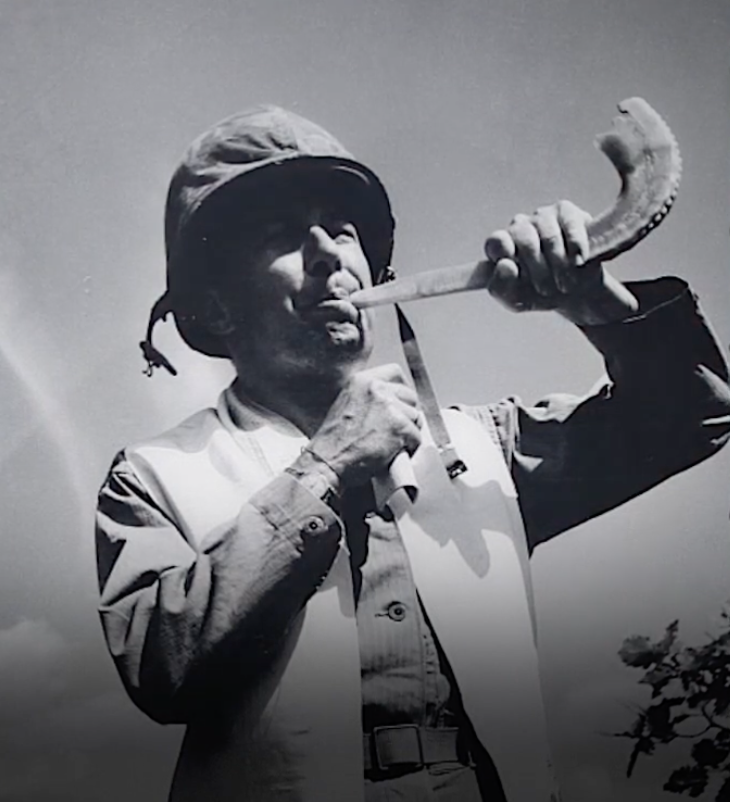
2. On August 10, 1952, Samuel Sobel, a Jewish chaplain from Hawaii serving with the U.S. Marine Corps 1st Division, blows the shofar during a Rosh Hashanah service held to celebrate the Jewish New Year during the Korean War.
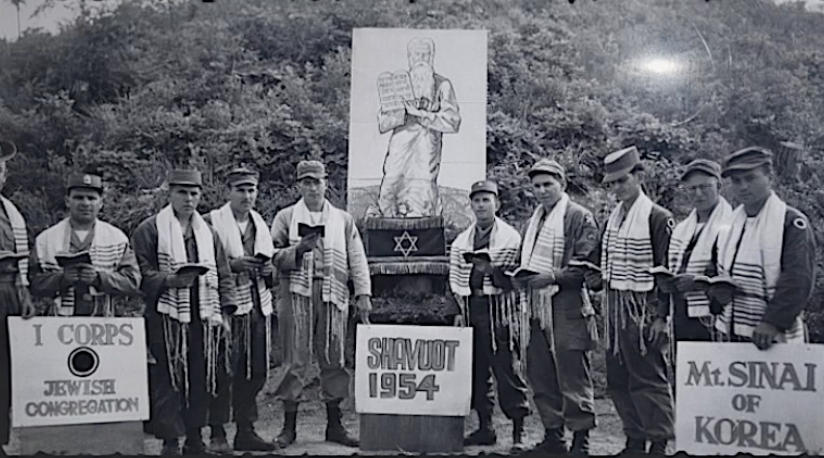
3. On May 29, 1954, Jewish American servicemen attend a Shavuot service at the site known as the “Sinai of Korea.” Although the war had ended in 1953, Jewish servicemen remained in Korea as part of the post-armistice forces, helping maintain the peace.
4. The headstone of Corporal M. Ritterband, a 26-year-old Jewish British soldier who now rests at the UN Memorial Cemetery in Busan after giving his life for Korea in 1951.
Women don’t confront men in the women’s bathroom because they are terrified they will be physically attacked if they speak up.
Thanks for proving the point.
Un hombre afgano compra a una niña de 10 años como su tercera esposa, tras asesinar a sus dos primeras esposas menores de edad por "deshonrar" a su familia musulmana al desobedecer y no complacer a su dueño.
Como su tercera esposa, la niña sufrió años de tortura, violación y abusos inimaginables hasta que finalmente logró escapar.
Esta espeluznante historia se presenta en el documental "Valía por 50 ovejas", que narra la valiente historia de Sabere y su lucha por la supervivencia en Afganistán antes de la llegada de los talibanes al poder.
La vida de las mujeres y las niñas ya era brutal bajo las normas islámicas. Desde la toma del poder por los talibanes y la imposición total de la estricta ley islámica, la situación ha empeorado infinitamente:
• Las niñas tienen prohibido el acceso a escuelas y universidades.
• Las mujeres son obligadas a cubrirse completamente y permanecen encerradas en sus casas.
• Los matrimonios infantiles, las palizas y los crímenes de honor se han disparado.
Esto no son "diferencias culturales".
Esto es opresión islámica sancionada por el Estado.
Sin embargo, el mundo permanece en gran medida en silencio.
Reconocer este horror implicaría admitir la verdad sobre el islam político: trata a las mujeres y niñas como propiedad, no como seres humanos.
Occidente sigue importando esta ideología mientras pretende que todas las culturas son iguales.
No lo son.
Compartan esta verdad.
El abuso sistemático de niñas bajo el islam debe ser denunciado, no ocultado tras la corrección política.
@LizaRosen0000
שגריר ישראל בגרמניה @Ron_Prosor ורעייתו הדס באו לבקר הבוקר את מפגינת היחיד למען ישראל קרולינה פרייסלר בבית חולים בברלין שם אושפזה לבדיקות בשל חשש לזעזוע מוח, בעקבות התקיפה שחוותה אמש בהפגנה פרו פלסטינית. התוקפת. בת 25, נעצרה לחקירה.
I've been a bit busy lately, so I haven't been able to post much, but I'll be back to posting again soon! 🥹
I've been working hard on getting a lot of things ready.
Yesterday, for the first time in my life, I met Iranians.
They told me they had fled the Islamic regime and now live in Israel. They said Israel is a safe place for them.
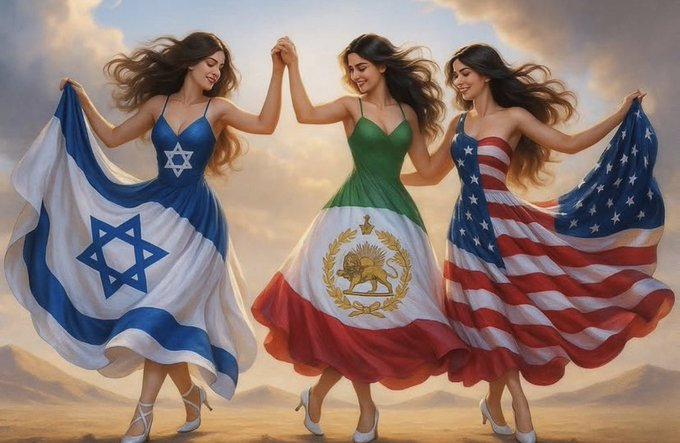
When I mentioned Reza Pahlavi, they said they truly love him. And when I told them how his father, the late Shah Mohammad Reza Pahlavi, sent support to Korea during the Korean War, an elderly Iranian man said he still remembers it.
I told them I would pray for them and for a free Iran.
And this week, Milad Armoun and Navid Najaran, two young men arrested during Iran's 2022 protests for freedom, were moved to solitary confinement at Ghezel Hesar Prison. Iran's Supreme Court has already upheld their death sentences, and many fear their execution is imminent.
I earnestly ask you to pray for these two men and for a free Iran. 🙏
🚨 ATERRADOR: En Sudán, bandas de musulmanes árabes y traficantes de esclavos tienen ahora el control y secuestran a cristianos sudaneses para someterlos a la esclavitud.
¿Dónde está la ONU? ¿Dónde están los defensores de Gaza y los supuestos derechos humanos? ¿Dónde está Greta?
"I believe the trend toward the 'full restoration of Korea–China relations,' which the leaders of both countries promised, has already become firmly established."
Translated from Lee Jae-myung's language, this means:
"I will cut ties with free democracies like the United States and Israel and turn pro-China. No, not just pro-China. I will completely sell Korea out to China."
<경주의 나비가 선전으로, 35년의 우정이 새로운 도약으로>
“경주의 나비가 선전으로 날아가 노래했으면 좋겠다.”
지난해 경주에서 나눴던 대화처럼, 선전 APEC에서 다시 시진핑 주석을 만났습니다. 벌써 세 번째 만남인 만큼, 양국 정상이 약속했던 ‘한중 관계 전면 복원’의 흐름이 어느새 공고히 자리 잡고 있다고 평가합니다.
오늘 회담에서 저와 시 주석은 지난 1년의 성과를 바탕으로, 양국 관계를 더욱 성숙한 ‘전략적 동반자 관계’로 도약시켜야 한다는 데 뜻을 모았습니다.
첫 번째 과제는 경제 협력입니다. 양국은 이번 회담을 통해 8년여에 걸쳐 이어져 온 ‘한중 FTA 서비스·투자 협상’을 타결했습니다. 이러한 성과를 토대로, 양국 간 수평적·호혜적 경제 협력을 더욱 발전시켜 나갈 것입니다.
두 번째 과제는 인적 교류입니다. 저는 ‘한중 인적교류 1,300만 시대’를 열어갈 수 있도록 함께 노력하고, 판다 도입과 문화・콘텐츠 교류 확대 등 한중 관계의 우호적 기반을 튼튼히 다져나가자고 제안했습니다. 이에 시 주석께서도 적극 공감의 뜻을 밝혀주셨습니다.
다시 한번 선전 APEC의 성공적 개최를 축하드리며, 환대해 주신 시진핑 주석과 중국 측 관계자 여러분께 감사 인사를 전합니다. 다가오는 ‘한중 수교 35주년’을 맞아, 양국 관계의 새로운 도약을 향해 함께 힘차게 나아갑시다.
庆州的蝴蝶飞至深圳,以35年友谊实现新飞跃
“希望庆州的蝴蝶飞到深圳,飞得更好,甚至会唱歌。”
正如我们去年在庆州所谈,今天在深圳APEC峰会与您再次相见。这是我们的第三次会晤,双方此前承诺的“推动两国关系全面恢复”的势头,如今已得到进一步巩固。
今天,我和习近平主席就以过去一年来取得的成果为基础,推动两国关系发展为更加成熟的“战略合作伙伴关系”达成一致意见。
首要课题是经济合作。双方通过本次会谈,完成了历时8年的韩中自贸区服务投资后续谈判。我们将以本次成果为基础,进一步推动两国经贸关系向互惠并水平合作的方向发展。
其次是人员往来。我提出了通过双方努力开启“人员往来1300万人次时代”,通过大熊猫合作以及扩大文化内容交流等夯实韩中关系的友好民意基础。习近平主席对此给予了高度赞同。
最后,再次祝贺深圳APEC峰会取得圆满成功,也感谢习近平主席和中方相关人员的盛情款待。值此明年韩中建交35周年即将到来之际,让我们携手奋进,推动韩中关系实现新飞跃。
کیان پیرفلک 9 ساله
آلین کاپشنر 9 ساله
شانی لوک 22 ساله
حنانه کیا 22 ساله
شاکد دهان 19 ساله
حمیدرضا روحی 19 ساله
این فقط 6 نام از فهرست بیپایان قربانیان تروریسم جمهوری اسلامی و تروریستهای تحت حمایت او است.
به یاد آنها🕯
A retired four-star who commanded US and Korean troops says Seoul's OPCON transfer timeline doesn't add up. A student group (not really "student", just anti-America activists)'s answer was a statement denouncing him.
That tells you how this debate works in Korea now. Nobody rebutted his argument. They attacked the man.
OPCON transfer was always supposed to be conditions-based:
Korea ready to lead, North Korea's threat under control.
Neither condition has changed. Pyongyang has tested six nuclear devices since 2006 and has never given one up.
So what changed is the calendar. Moving wartime command on a political schedule while the threat keeps growing is a gamble, and Korean and American troops are the ones who pay if it fails.
This week Seoul's president is in Shenzhen meeting Xi.
Brooks led Combined Forces Command from 2016 to 2018. Wartime OPCON would move out of that command.