Excited to be able to start sharing results from our @SuomenAkatemia funded #IschemiaKinetics and #AngioParadox projects that aim to clarify the pathomechanistic role of the microvasculature in Critical Limb Threatening Ischemia. Follow to learn more!
Persistent over-dilation of muscle microvasculature may be one reason causing chronic limb-threatening ischemia, recent research from @KorpisaloLab shows. In the future, this surprising finding may offer new avenues for screening and treatment. https://t.co/kD0CptXVBv
Alaraajan hapenpuute voi johtua myös hiussuonten liiallisesta laajenemisesta, osoittavat viimeaikaiset tutkimustulokset KYSistä ja Itä-Suomen yliopistosta. Yllättävät tulokset voivat edistää potilaiden seulontaa ja hoitoa. @KorpisaloLab@Pshyvinvointi https://t.co/eta17ba74i
@VaahtomeriLab What a perfect day of science, sun and discussions! Thank you Taija, Kari, Riikka, Pipsa, Sinem, Kati and everybody else at the Wihuri Research Institute for putting it all together!
In just a week MSc Galina Wirth will defend her PhD thesis on microvascular dynamics of post-ischemic muscle regeneration. Highly skilled experimentation and careful analysis of data revealing novel physiological understanding of microvascular function. Amazing work 👏
@ehj_ed@escardio@ESC_Journals More information about the role of the microvasculature in regulating post-ischemic muscle recovery and formation of chronic damage already available from my lab: https://t.co/1PvtCPQXmZ
Take a look for a better understanding of how the microvasculature affects muscle function.
@ehj_ed@ESC_Journals@escardio More information about the role of the microvasculature in regulating post-ischemic muscle recovery and formation of chronic damage already available also from https://t.co/1PvtCPQXmZ
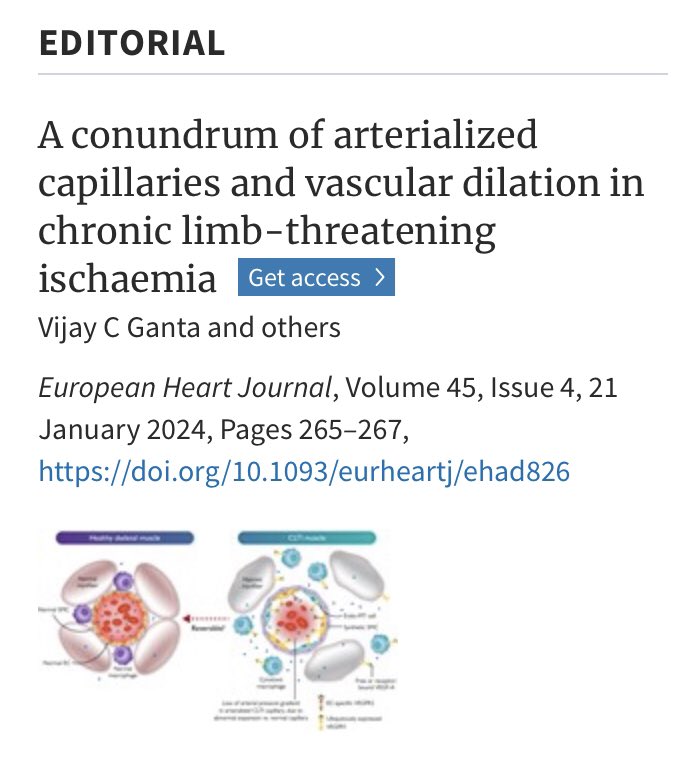
@ehj_ed@ESC_Journals@escardio Thank you Prof. Brian Annex and team from @UVABME for an editorial on our #EHJ paper https://t.co/9GbJ4SKCNN
We know the story is a bit complicated to grasp at once but we try to elaborate shortly!
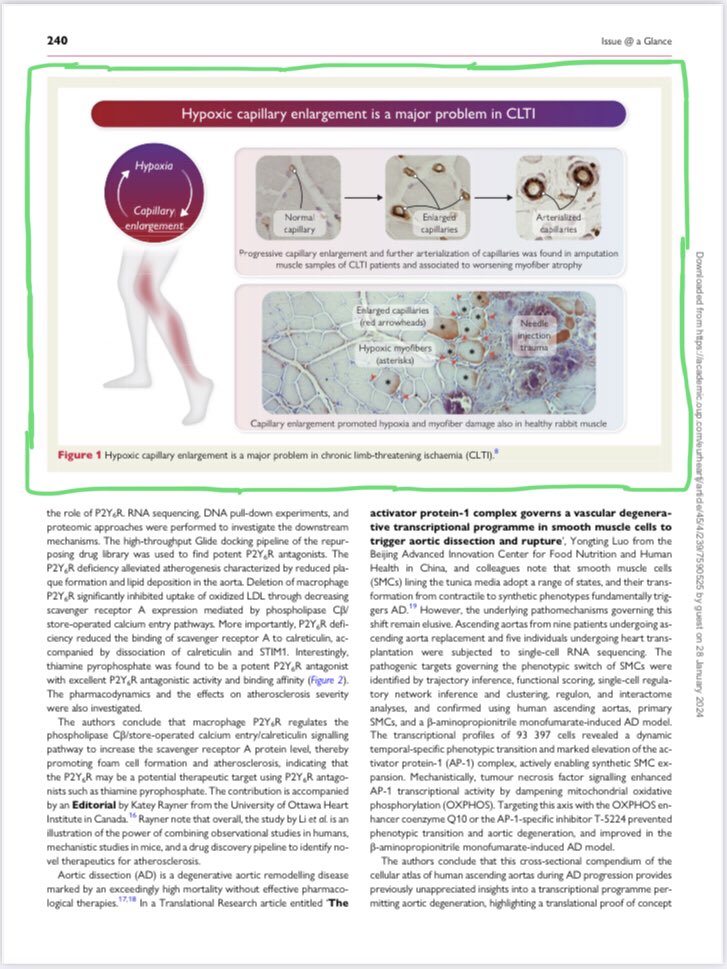
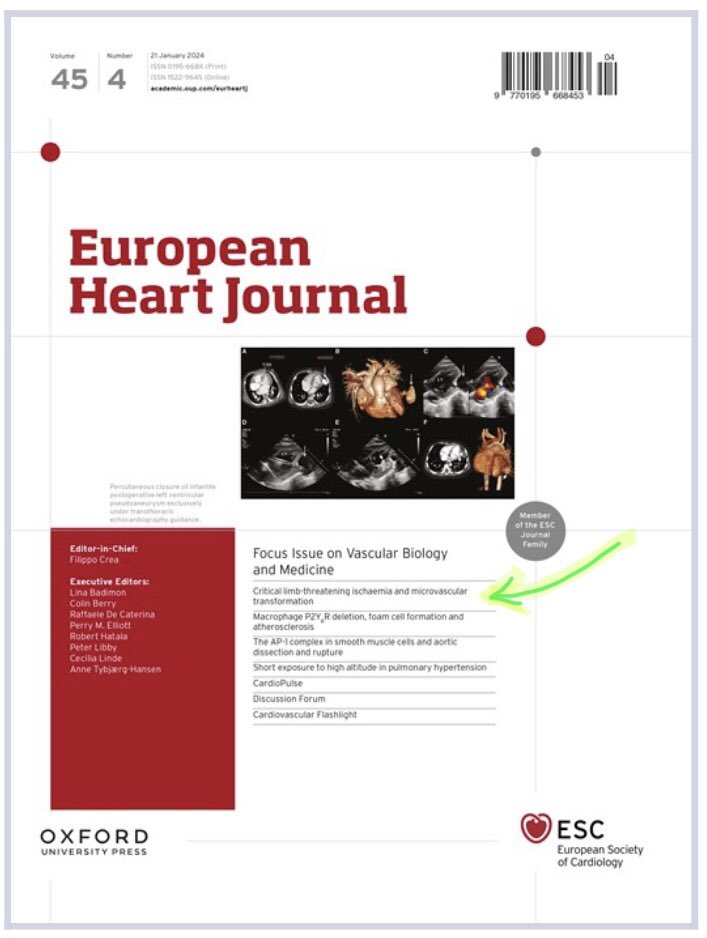
Our data on microvascular pathology of ischemic human skeletal muscle out now in print. Take a look at the ❤️issue of the European Heart Journal dedicated to vascular biology and medicine -my favourites!
https://t.co/9GbJ4SKCNN
EHJ issue 45 - 04 is out now:
Explore novel therapeutic targets for atherosclerosis, aortic dissection, peripheral artery disease, much more in this issue on vascular biology and medicine!
https://t.co/xiU6ZlrFO3
@escardio@ESC_Journals#EHJ#cardiotwitter
@SsJankauskas@HaoYin20 Disease pathomechanisms are always complex. The poor prognosis of CLTI patients should tell us that we do not yet know enough and our findings open a whole new avenue to look at the disease and try to understand more.
@HaoYin20@SsJankauskas And the point is: resolving the arterial blockages may not revert the capillary phenotype back to normal if the arterialization has gone too far! This we suspect based on previous gene therapy studies.
@HaoYin20@CircRes@jmarpino@ajpheartcirc@iScience_CP Don’t know 🤷♀️ Maybe this closing of the arterialized vessels that you show in your image is the next step of the arterialization process we described?!?!?
#MinäTutkin@SuomenAkatemia@Pshyvinvointi mikroverisuonten roolia kudoksen hapenpuutteen aiheuttajana valtimotukoksen jälkeen. Valtimotaudissa myös kudoksen mikroverisuonitus on vaurioitunut ja saattaa olla kykenemätön johtamaan happea kudoksiin vaikka verenkierto palautuisi.
”Ischemia” is just one possible reason causing ”tissue hypoxia” after an arterial occlusion! Take a look at our latest publication in the #EHJ👇 to understand why it might be good to encourge the concept of ”acute and chronic hypoxia” in clinical medicine. @escardio#esc23