The AI stack I’m exploring to build without paying for expensive APIs
One thing I’m learning while building with AI:
You don’t need an expensive stack to start.
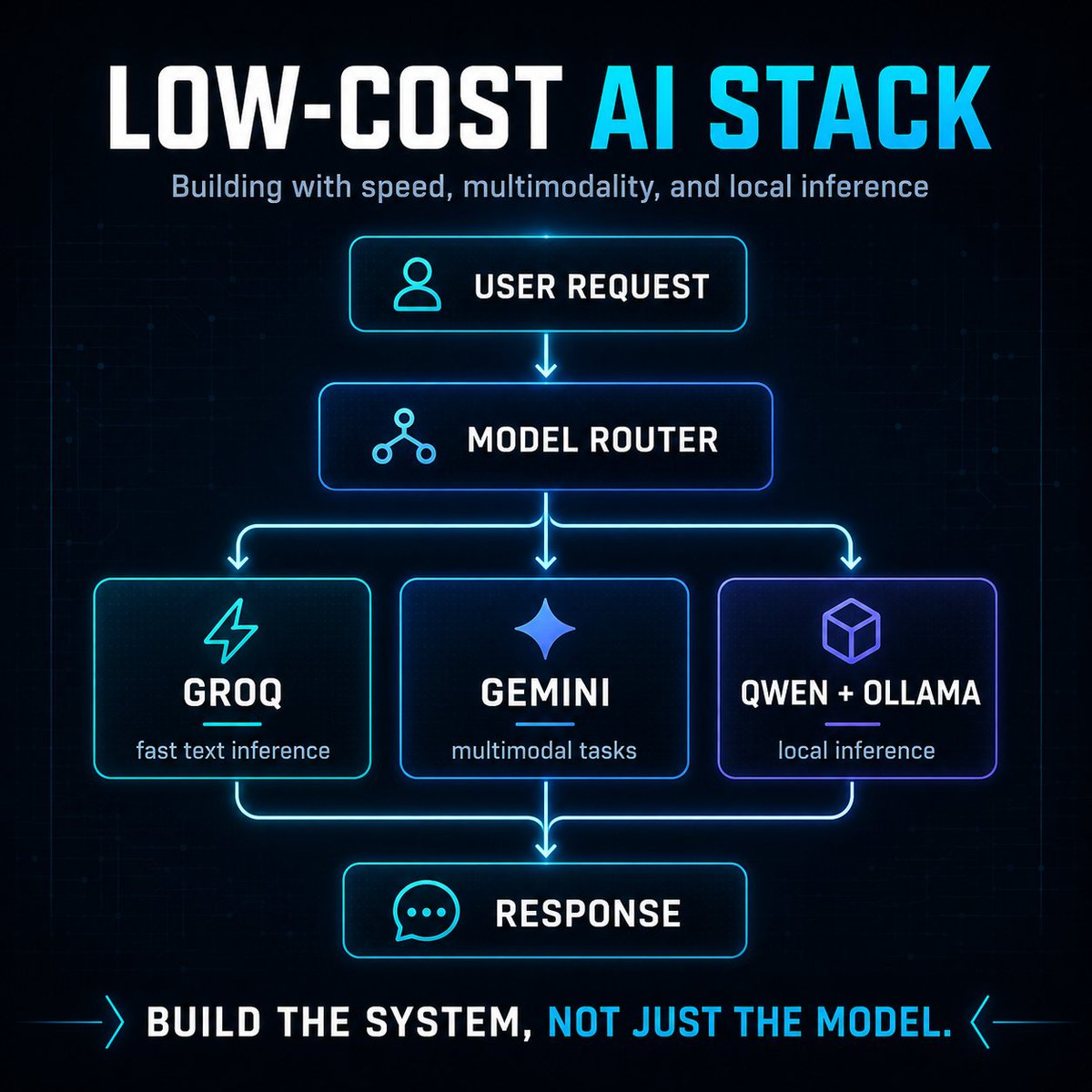
Right now I’m exploring a simple setup:
→ Groq — fast cloud inference for text
→ Gemini — multimodal tasks like images + text
→ Qwen + Ollama — local inference directly on my machine
Each option solves a different problem.
Groq is useful when speed matters.
Gemini makes multimodal features much easier to experiment with.
And running Qwen locally means no per-request cost, more privacy, and fewer worries about API quotas — but you pay for it with your own RAM, CPU/GPU and slower inference.
The interesting part isn’t choosing the “best model.”
It’s designing the system around their limitations.
For example:
Request → model router → Groq / Gemini / local Qwen → fallback
Then you can gradually add caching, rate-limit handling and fallback logic instead of depending completely on one provider.
That’s one idea I keep seeing while learning AI engineering:
The model is only one part of the product.
The system around the model matters just as much.
I’m still experimenting with this stack and documenting what works.
What free or low-cost AI tools are you currently building with?
The interesting part of Dorsey's setup isn't the tool. It's that someone with the resources to buy anything chose to build something that fits on one machine. That's a signal worth following.
Jack Dorsey released a free tool that runs his entire operation from a single laptop. Most people will read that and ask what the tool is. The better question is what kind of system design makes that possible.
This is the same tension I run into building local AI tools. The model is only one part of the product. The system around it, what it reads, what it writes, what it never touches, determines whether it's actually useful.
GoogleDeepMind @GoogleDeepMind
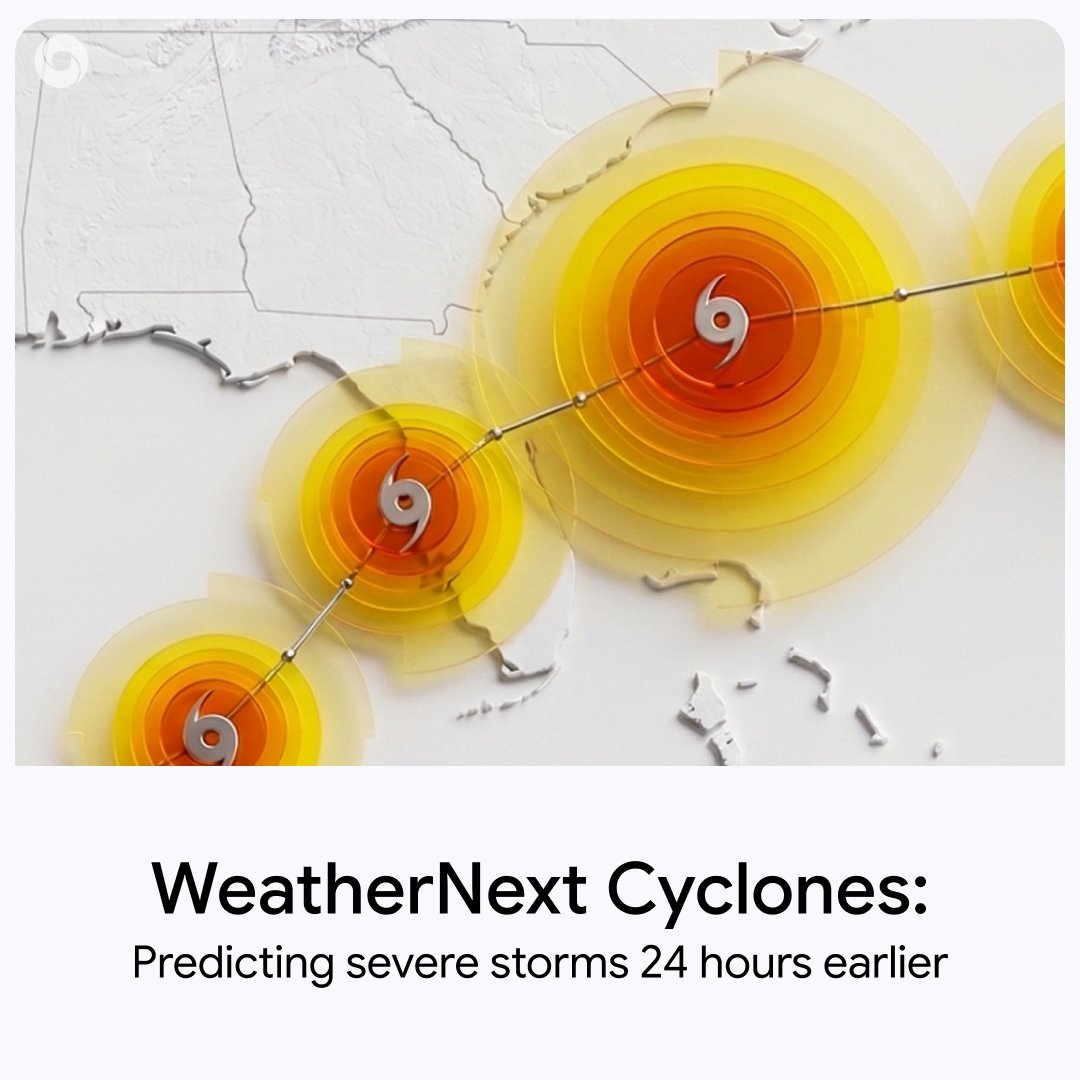
announced its WeatherNext AI model, which targets better cyclone forecasting. 🌪️ If the model lives up to its goals, it could give builders more reliable data for early‑warning apps and climate‑risk tools. Thoughts? 📷 #AI#ClimateTech#Meteorology
Predicting cyclones accurately can help save lives - and every hour of lead time counts.
Published in @Nature, our AI model WeatherNext achieves state-of-the-art accuracy in forecasting a storm’s track and intensity, giving us a critical extra 24 hours to prepare on average. 🧵
@DataChaz@TopviewAIhq The Ultra Annual plan flips the script on per‑second fees, turning AI video generation into a predictable subscription rather than a pay‑per‑undo model.
@0xShoopy That makes sense. Shifting the engineering mindset from 'writing text' to 'structuring token arrays' is a necessary leap for production reliability. Great takeaway, appreciate the insight.
@DevAdventur3s That’s exactly the bottleneck for ecosystem growth. Running a black-box MCP that requires local environment access is a massive risk.
Are you seeing any solid patterns for sandboxing third-party tools yet, or is everyone just running them natively for now?
@0xShoopy It makes debugging a nightmare if you aren't actively visualizing the tokens.
Have you found any reliable prompt patterns to mitigate this, or is forcing strict JSON schemas currently the best defense for tool calling?
@LuminaBench Exactly. A capable 27B running locally completely shifts how we can test AI features in standard Node/TypeScript environments. Less reliance on paid APIs during the build phase.
Do you expect it to be reliable enough for basic agentic routing, or mostly just standard text tasks?
@kardinall Running a 200B model locally on a Ryzen AI Max+ 395 mini‑PC is plausible but will need careful memory management and likely quantisation to be usable.
@icreatelife A strong hook in the first 3‑5 seconds—clear visual, bold claim, or quick motion—keeps viewers scrolling. Test variations and prioritize pacing to avoid early drop‑off.