There are 3 billion fewer birds in North America than there were in 1970.
This data is from a 2019 Science paper that combined 48 years of citizen-science bird counts with continent-wide weather radar tracking nighttime migration.
The losses are concentrated in the birds people see most often: grassland birds (down 53%, 700 million gone), forest birds (1 billion gone), and shorebirds (down 37%). Even common species (blackbirds, swallows, warblers) are vanishing.
Habitat loss is the biggest reason, but the rest of the list is short and largely fixable for the average person.
1. Pesticides killing the insects birds eat.
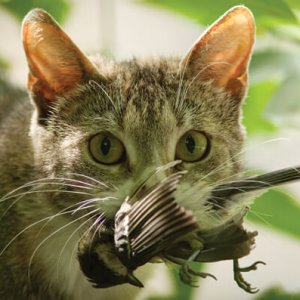
2. Outdoor cats kill an estimated 2.4 billion US birds annually.
3. Window collisions killing roughly a billion more. Lawn chemicals.
4. Light pollution disrupting migration.
What you can do, ranked by impact: keep cats indoors, treat your windows for bird strikes, plant native trees and shrubs, stop spraying pesticides, leave the leaves and seed heads through winter, and turn off outdoor lights at night during spring and fall migration.
No one person killed 3 billion birds, obviously, but your yard can be a part of the solution that rebuilds their numbers.
That fawn alone in the grass isn't abandoned.
Does leave their fawns hidden for up to 12 hours at a time. The doe has scent. The fawn does not. Staying away is how she keeps predators from finding it.
A still, quiet fawn is a healthy fawn. Don't touch it, move it, or try to feed it. Leave the area so the mother feels safe coming back. She'll return at dusk or dawn.
Only call a rehabber if the fawn is visibly injured, crying constantly for hours, or in the exact same spot after 24 hours.
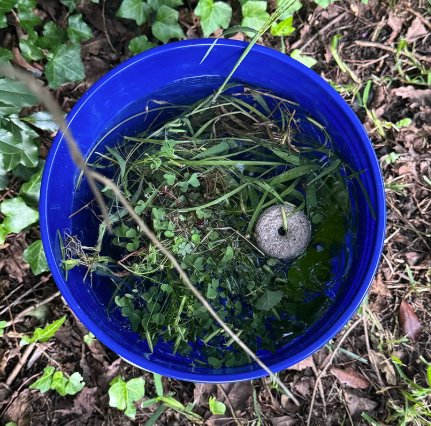
You can crash your yard's mosquito population without spraying a single chemical with a Mosquito Bucket of Doom.
Fill a 5-gallon bucket about two-thirds with water. Drop in a handful of grass clippings, leaves, or hay. Let it sit for a day, then drop in a Bti dunk (also called Bacillus thuringiensis israelensis, sold at any hardware store as "mosquito dunks," about $10 for six).
Mosquitoes are powerfully attracted to fermenting water and will lay their eggs in your bucket. Bti is a naturally occurring soil bacterium that produces a toxin that kills mosquito, blackfly, and fungus gnat larvae only.
This method doesn't harm bees, butterflies, fireflies, fish, frogs, birds, pets, or people. BTI dunks are EPA-approved for organic use and safe in animal water troughs and birdbaths.
One dunk lasts about 30 days. Top off the water as it evaporates. Cover with 1/2-in Mesh Hardware Cloth to prevent animals from getting trapped and put the bucket somewhere shady where pets and kids won't get into it.
The bucket becomes a mosquito magnet and a dead end. Compare that to fogging the entire yard with pyrethroids, which kills every insect in it, including the predators that eat mosquitoes.
Doug Tallamy's Homegrown National Park has been running the "Mosquito Bucket Challenge" since 2021. The more buckets in a neighborhood, the bigger the dent. One bucket per yard is a great start.
@giveashitnature Thank you. It took me 6 years to convert 13 acres of abused hayfields into native grasses and wildflowers. I use prescribed fire and light mowing to maintain the fields but still fight invasive species every year.
Don't buy butterfly bush. Plant butterfly weed instead.
Butterfly bush (Left) is native to China. It produces 40,000 seeds per flower spike with germination rates above 80%, and is now listed as invasive in over 25 states. It feeds adult butterflies nectar but is host to essentially no native caterpillars. You're feeding the adults and starving the babies.
Butterfly weed (Right) is a native milkweed. It hosts monarch caterpillars at every life stage and supports 100+ other native pollinators. It doesn't spread aggressively, fits in any sunny garden bed, and survives drought easily once established.
Planting non-native nectar plants without native host plants is what entomologists call an "ecological trap." It looks like a butterfly garden but it functions as a dead end.
@Coste83460Grace@giveashitnature Every little bit helps. I've had some success with the pollinators and other insects, song birds, and various little varmints like frogs & toads, various reptiles, and the smaller mammals like possum, coons, and rabbits. Fighting invasive species takes up most of my time now.
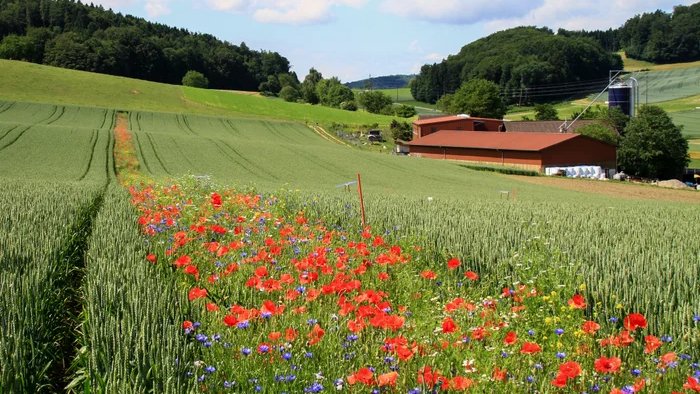
Farmers have figured out that the cheapest pesticide is a strip of flowers.
When you plant wildflowers through a crop field, not just around the edge but in strips running through the middle, you get ladybugs, lacewings, hoverflies, and parasitic wasps living in the field instead of visiting it.
They eat the aphids, the caterpillars, and the mites for free, all summer long.
In controlled trials, fields with tailored flower strips had leaf-beetle numbers 40 to 50% lower and crop damage cut by around 60%, enough to drop below the threshold where spraying was even considered worth it.
The flowers attract a standing army to our fields.
We spent decades engineering chemicals to kill the insects eating the crop, when the insects that eat those insects would have worked for the price of seed.
Wolf spiders aren't dangerous, they're afraid of you.
Their default response to a human is to sprint in the opposite direction. Bites only happen when one gets accidentally pressed against skin (sitting in a shoe, tucked under clothing, pinned by a glove).
Even then, the bite is comparable to other minor insect bites. Localized pain, redness, swelling for a couple days, then gone. No tissue damage. No necrosis.
They get confused with brown recluses constantly. Brown recluse venom can cause genuine damage, but wolf spider venom won't.
Meanwhile they're hunting cockroaches, ants, crickets, and beetles in your garden and basement. Free pest control with eight legs and excellent vision.
If you find one indoors, a cup and a piece of cardboard. Let it go in the yard so it can keep up the good work.
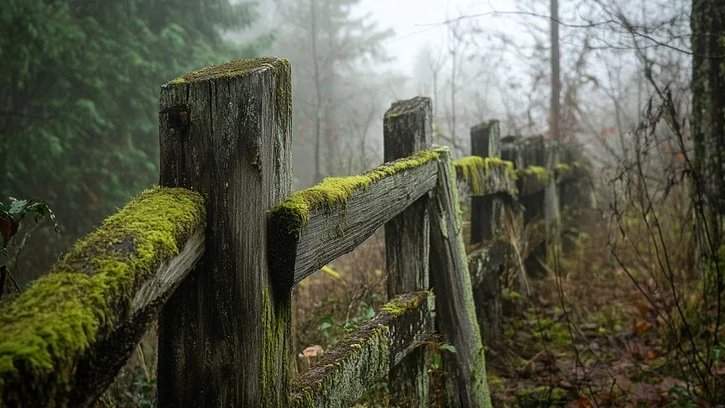
That little patch of moss on your fence or shady spot is doing work on a planetary scale.
Moss stores 6 billion tons of carbon globally. It pulls carbon out of the air, holds moisture, and supports tiny ecosystems.
So maybe stop spraying it with chemicals and power-washing it off.
Your moss is on the job, let it stick around.
@giveashitnature AND avoid nurseries that utilize neonic pesticides. You buy from them and you think you're helping pollinators but instead you're attracting them to flowers that kill them.
@giveashitnature They're fascinating and way too misunderstood. I don't particularly enjoy getting stung but it happens every summer and it's an unfortunate consequence of living with them.
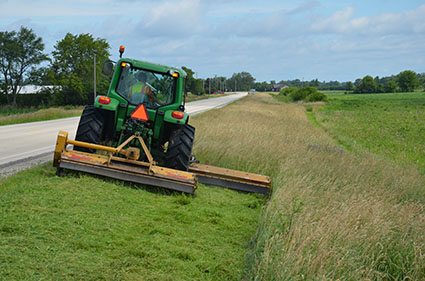
The county just mowed the roadside in June, and an entire generation of monarch caterpillars went with it.
In a lot of America, the strip of grass and wildflowers along rural roads is the last place milkweed still grows.
Farm fields got sprayed. Suburbs got paved. The roadside ditch is where ground-nesting bobolinks, meadowlarks, pheasants, and bumblebee queens raise their young because almost nothing else is left.
June and early July are peak nesting season. They are also when most counties run their mowers.
A pheasant nest in early July still has eggs in it 21% of the time. A monarch caterpillar in June is 11 days from becoming a butterfly. The mower doesn't know. The mower keeps going.
But there's a fix.
Counties that delay roadside mowing until after July 15, mow at higher cutting heights (8–12 inches), use flushing bars on equipment, and target only the visibility-critical edges instead of the entire shoulder have seen big results.
Iowa, Minnesota, and Washington have programs along these lines. Most states don't.
If you live in a county that mows everything in June, call your county supervisor. Ask for a mowing delay until late summer. Most rural counties have never heard the request and would consider it.
The roadside isn't a lawn. It's the last refuge for a lot of species we keep wondering why we don't see anymore.
@RightGoDeacs A right of passage every new turkey hunter experiences...the family, pets, neighbors, etc. are always annoyed. You have the perfect attitude. Good luck this season! I heard my first gobble this morning behind the house on a cloudy cool morning at that. It's getting close!