🎅🎄 Merry Christmas to @blacklung0x and the absolute legends behind this build!
While everyone else is chilling, eating and sleeping, these guys are in full BEAST MODE 🧠 grinding day / night, even through the holidays.
This level of dedication is RARE.
This is how real protocols are born. 💎
The moment @preminefun drops, the entire @solana ecosystem is gonna hit the brakes 🛑 timelines frozen, chats paused, brains ON as everyone starts taking notes ✍️from the @GODLsupply team!
No noise.
No excuses.
Just builders building.
God-tier work only. 🔥🚀
You don't need to go to college.
You need to sit down with Claude and learn to use it so well you can do the work of 40 people who refuse to master AI.
Then replace all of them. This is extremely doable.
The average millionaire is 61.
Not 19.
The average age of first time stock investors is 30.
Not 21.
The average age of a successful startup founder is 45.
Not 23.
The average major career pivot lands around 39.
Not 25.
Most successful businesses take 2-5 years to get traction.
Not 4 months.
You're not behind.
You have to risk millions to become a
billionaire
You have to risk tens of thousands to
become a millionaire
You have to risk $100 to make the
first $1,000 to start
So Journey to a billionaire starts from
Just $100. Now Find a way to make
your first $100 & start investing.
Something like a 250k to a 25m challenge.
Obviously I will utilize the power of leverage.
Just like people do in the real world to expand their real estate portfolio for example.
Better to use banks / houses money than your own, right? Right?
Un român deschide ședința Nasdaq alături de fondatorul Binance. Alex Odagiu conduce BNB Standard ($BNC)
Moment important pentru industria crypto și pentru România. Alex Odagiu, CEO-ul român al BNB Standard, a participat astăzi, 26 octombrie, la ceremonia de deschidere a bursei Nasdaq din New York, alături de Changpeng Zhao (CZ), fondatorul Binance.
BNB Standard ($BNC), companie listată pe Nasdaq, administrează cea mai mare rezervă corporativă de BNB dintre societățile tranzacționate public, deținând peste 515.000 de tokenuri, evaluate la aproximativ 383 de milioane de dolari.
Numit CEO pe 19 octombrie, Odagiu a lucrat anterior la Goldman Sachs și YZi Labs, fondul de investiții asociat ecosistemului Binance.
Compania vrea să treacă dincolo de simpla deținere a criptomonedei BNB, urmând să opereze un validator pe BNB Chain și să dezvolte activități care generează venituri direct din infrastructura blockchain.
Ceremonia marchează apropierea tot mai puternică dintre piețele financiare tradiționale și industria activelor digitale.
Urmărește @cryptoaici pentru cele mai importante știri din crypto, economie și piețele financiare.
this guy sent $73m in Bitcoin to the wrong person.
he later sent him a message on the blockchain, asking him to keep 10% ($7.3m) and send back the rest of the money ($66m).
would you do it?
The only people making money on 1,000X leverage are the people who profit from your liquidation. Do. Not. Do. It.
I think using anything above 15x is insane and offering anything over 50x should be a crime.
Papertrade - 1000x leverage
Ce modalitate de a sarbatori aniversarea celui mai mare eveniment de lichidare din istoria crypto daca nu cu lansarea unui dex ce ofera 1000x leverage si te plateste cand pierzi
Azi se lanseaza un nou dex cu un twist. Twistul e ca nu e perp cum suntem obisnuiti
In loc sa te conecteze la un order book propriu unde ordinele tale sunt potrivite cu ordinele altor traderi Papertrade iti permite sa tranzactionezi direct impotriva unui LP. ( liquidity pool)
Cum adica impotriva unui LP?
Protocolul inregistreaza tranzactia ta si calculeaza ulterior profitul sau pierderea pe baza pretului Bitcoin de pe Hyperliquid. Rezultatul este decontat direct intre tine si LP-ul protocolului.
Daca tu castigi 100 de dolari, LP-ul trebuie sa suporte acel castig. Daca pierzi 100 de dolari, pierderea ta contribuie la fondul din care vor putea fi platiti traderii castigatori.
Papertrade ofera zero slippage si zero spread pentru trader, la nivelul pretului de executie folosit de protocol
Aici ajungem la una dintre cele mai importante componente ale proiectului.
Majoritatea platformelor care ofera lichiditate pentru tranzactionare au nevoie de capital. Acesta poate proveni de la furnizori de lichiditate, market makeri, investitori sau chiar din capitalul propriu al platformei.
Papertrade vine cu alta abordare
LP-ul porneste de la zero si incearca sa-si construiasca lichiditatea din pierderile cumulate ale traderilor.
Sa presupunem ca trei traderi deschid pozitii:
Primul pierde 100 de dolari, al doilea pierde 200 de dolari, iar al treilea castiga 150 de dolari.
Inainte de comisioane si alte ajustari pierderile primilor doi contribuie cu 300 de dolari la LP, in timp ce profitul celui de-al treilea reprezinta o obligatie de plata de 150 de dolari.
Daca toate aceste rezultate sunt decontate, LP-ul ar avea un rezultat net pozitiv de 150 de dolari.
Pe scurt pierderile unor traderi pot finanta castigurile altora.
exemplul este simplificat. In practica, exista comisioane, reguli de decontare, pozitii deschise si posibilitatea ca LP-ul sa nu aiba suficienti bani disponibili pentru a plati imediat toate castigurile
Ce se intampla daca lp-ul nu are suficienti bani?
Partea neplatita e introdusa intr-un payout queue fifo (first in first out)
De ce ar continua cineva sa tranzactioneze daca LP-ul este aproape insolvent?
traderii care pierd bani primesc PAPER, iar rata de emitere a tokenului este mai mare atunci cand LP-ul se afla la niveluri mai mici.
Ideea este sa ofere un stimulent economic pentru participarea la protocol inclusiv atunci cand lichiditatea este redusa.
Pierderile contribuie la refacerea fondului si la achitarea platilor restante
Ce este PAPER si de ce exista acest token?
Functia sa centrala este de a oferi detinatorilor care il pun la staking dreptul la o parte din anumite venituri viitoare ale protocolului.
nu exista o pre-emisie de tokenuri pentru echipa, o alocare initiala pentru fondurile de investitii, un airdrop sau un program de vesting. Tokenurile sunt emise prin mecanismul de recompensare asociat pierderilor realizate de traderi.
Personal curiozitatea mea cea mai mare e daca e posibil sa construiasca un lp de la 0 din pierderi.
Va las link-ul sa treceti voi prin documentatie pentru ca am incercat sa o tin mai scurt cat sa starnesc o curiozitate si in nici un caz nu luati postarea asta ca un sfat sa mergeti sa tranzactionati pe papertrade fara sa intelegeti riscurile!
https://t.co/9L7Xhd1p1X
An #AI without access to a true random number generator (one that nobody can rig) is cooked.
Bookmark this tweet. Within a decade, you’ll see I was right.
This is the most requested article I've ever written.
I've never told the full story before because, frankly, I wasn't sure I wanted to be this vulnerable publicly. But after my post about mindset went viral yesterday, I decided it was time.
Maybe someone reading this is in a place right now where they need to hear it.
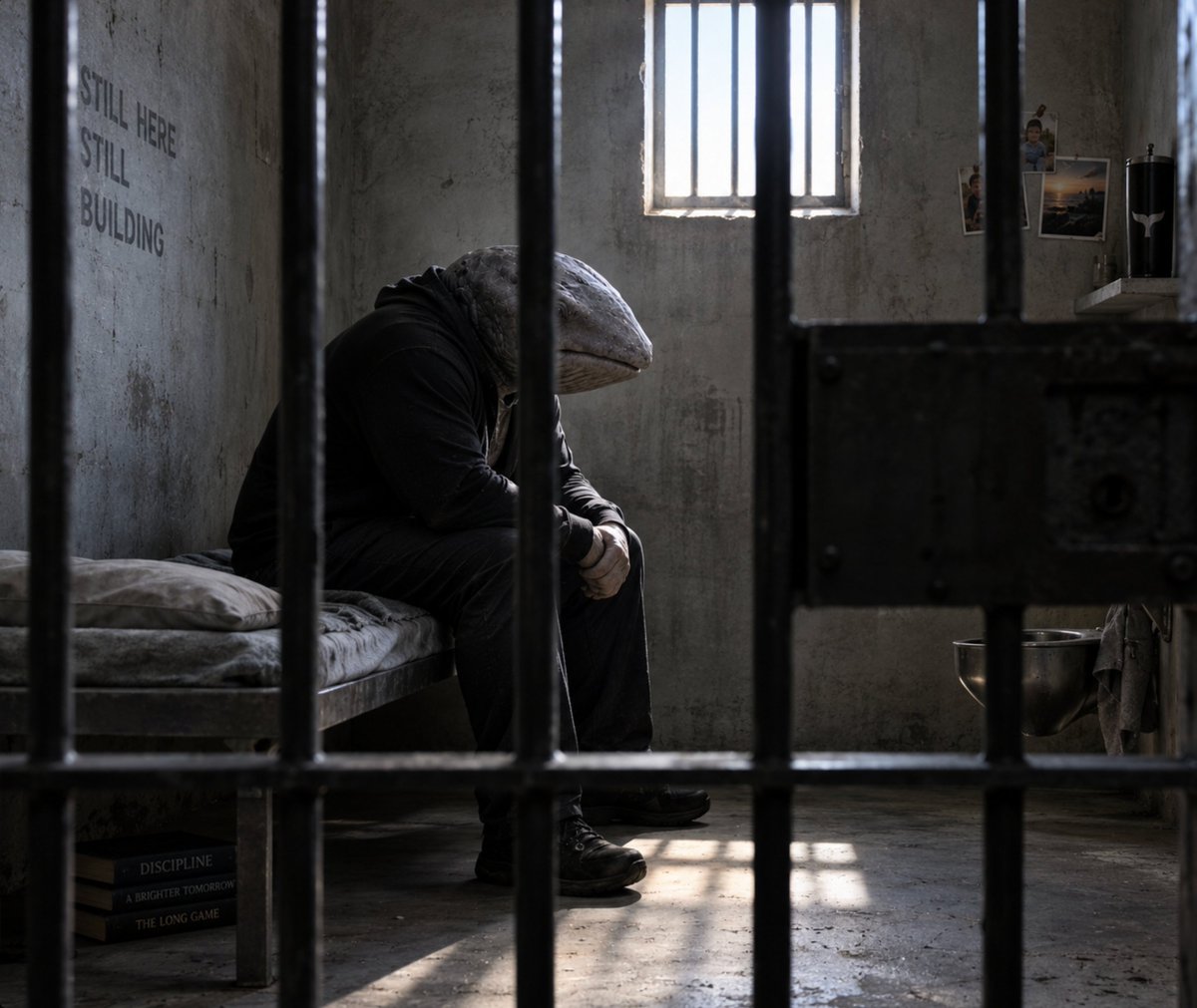
The White Whale - The Rags to Riches Story
My family was incredibly poor growing up.
There were multiple years where, without government and charitable assistance, we would have struggled to have enough food to eat.
But I've always had the entrepreneurial bug. At 19, I started experimenting with different business ideas, trying to figure out how to build something of my own.
In my early 20s, I also developed a passion for law enforcement and decided to pursue that as a secondary career.
I've always hated bullies and people who take advantage of others. Stemming from my own experiences with abuse in childhood, I found real fulfillment in being a voice for the voiceless and a defender of the defenseless.
I became disillusioned with that career fairly quickly after I began uncovering corruption inside my local agency. Even though I was good at the job, I decided that world wasn't for me.
Being young, naive, and lacking the wisdom that usually only comes with age, I became a very outspoken political activist.
Instead of quietly walking away, I started attacking that corruption directly and publicly. I didn't care that I was making powerful enemies.
At the same time, I had grown my existing business enough to provide me with a six-figure income. For a guy in his 20s, I was doing pretty damn well.
But I poured myself into my activism.
And naturally, backlash followed.
The law enforcement officers I was speaking out against began doing everything they could to silence me, including multiple attempts to manufacture criminal charges against me.
The young, dumber version of myself thought that as long as I hadn't done anything wrong, I had nothing to fear.
Their first few attempts to "get me" failed miserably.
That gave me a dangerous false sense of security.
I still had friends inside the law enforcement community - because no group of people is entirely good or entirely bad - who warned me.
Be careful.
They're coming for you.
Lay low.
Quit causing a scene.
I didn't listen.
Eventually, I was arrested on charges I maintain were completely false.
At first, the arrest itself didn't scare me. I knew what had happened. I knew I was innocent. I believed the facts would eventually win.
Instead, everything escalated.
I expected the case to get tossed out.
It didn't.
About a year into fighting it, I was given a horrible choice: plead guilty and serve two years in prison, or take the case to trial and risk eight years if I lost.
By then, I had seen witnesses in my defense intimidated against testifying for me. I saw how badly the deck was stacked against me. I no longer had any belief in the system, and that the side of right would prevail.
So I made one of the decisions I am least proud of in my life.
I pled guilty.
Not because I believed I was guilty.
Because I did the math.
Two years guaranteed versus the probability of eight.
And with that decision, I lost everything.
My business.
My possessions.
Even people I believed were friends, whom I had trusted to hold assets for me, ended up stealing them instead.
The first nine months of my two-year sentence were spent in solitary confinement for my own protection. During my first week inside, someone I had previously arrested recognized me. Having an affiliation with law enforcement is one of the most dangerous things a prisoner can carry.
If you've never spent a prolonged period of time inside a tiny room with nothing but your own mind for company, let me tell you:
It's a special kind of hell.
Eventually I was transferred to another facility where I could enter general population and get a job.
The pay was a whopping 65 cents an hour.
Living large, by prison standards.
But I was still incarcerated.
For a crime I didn't commit.
I knew that whenever those doors finally opened, I would walk out with nothing but the clothes on my back and whatever money I could save up.
So I became obsessed with one question:
How will I build my life back?
While I was incarcerated, I developed an idea for an e-commerce company in a product category I was passionate about.
I maintain that you'll never be successful if you cannot find a passion for what it is you do.
I would lie on my bunk staring at the ceiling, building the company in my head.
Marketing campaigns.
Branding.
Products.
Growth strategies.
When inspiration hit me, I'd grab my notepad and write it down.
While other inmates went to recreation, I often stayed behind because the dorm was finally quiet enough for me to think.
I wasn't just doing time.
I was planning my future. Planning my escape from what many would simply call destiny.
I saved almost everything I made from my prison job. I ate the terrible cafeteria food instead of blowing the money I earned on snacks and commissary.
When I was finally released, whatever money I had accumulated was loaded onto a prepaid debit card.
The balance was $263.
I had no home to call my own.
A friend offered me a couch to sleep on.
And the very first charge I made on that prepaid card?
GoDaddy.
I registered the domain name for the business I had spent all those months building inside my head.
The second charge was at a thrift store because I needed a couple sets of clothes.
I told my friend about the idea.
I told my parents.
I told anyone willing to listen.
A few people believed in me enough to give me a few hundred dollars extra to help get me started.
I went to work.
Using a borrowed computer, I built my e-commerce website.
I bought the components for my first products and assembled them myself right there at the computer desk.
I had no marketing budget, so I hustled.
Craigslist.
Message boards.
Anywhere I could post for free without immediately getting myself banned.
I learned how to hustle attention because hustling was the only thing I could afford.
Slowly, orders started coming in.
I took the profit from those first customers and bought more inventory.
Then more.
I kept repeating the cycle until the business had a couple thousand dollars in operating capital.
That's when I finally decided to try paid advertising.
My first budget for Google pay-per-click ads was $50.
I still remember how terrified I was to spend that money.
Fifty dollars doesn't sound like much when you have money.
When you don't?
It feels like a life or death gamble.
It was $50 I genuinely could not afford to lose.
But I spent it.
And then I repeated the same process over and over again.
Invest in myself.
Invest in the business.
Reinvest the profits.
Let the snowball grow.
Within one year of being released from prison, that company had reached $1 million in gross sales.
Years later, I remember watching an episode of Shark Tank. An entrepreneur told the Sharks he had gone from zero to $1 million in sales in a year.
They didn't believe him.
I was sitting on my couch thinking:
"I know it can happen. Because I did it."
Eventually the company moved out of the little apartment that wasn't even mine and into a two-car garage, where I hired my first employees.
And let me tell you, you haven't fully experienced entrepreneurship until you've had ten employees working across two shifts in a two-car garage.
Just saying...
That company - the business I designed while sitting inside prison with nothing to my name - ultimately became a large organization.
Over the years, it employed well over 1,000 people.
At its peak, the business was valued in the hundreds of millions of dollars.
And nearly 20 years after the ordeal began, I was eventually able to have my conviction reversed and clear my name.
I no longer have a criminal record.
Although I'll always contend that I was never a criminal in the first place.
So when I talk about the importance of mindset, I'm not repeating something I read in a self-help book.
I'm not telling you circumstances don't matter.
I'm telling you that circumstances don't get the final say in your life.
All I had was an idea, a borrowed computer, a willingness to work, and the absolute refusal to believe that the worst chapter of my life had to become how my story ended.
Let me say that again, a different way:
What I had was an absolute stubbornness and refusal to accept anything but eventual success.
That's the part of mindset people don't seem to get.
It isn't pretending life is easy.
It isn't standing in front of a mirror repeating affirmations.
It's looking at a situation that gives you every rational excuse to quit (or to not even try) and deciding:
I'm going to find a way.
You can't always control the hand you're dealt.
You can't even control where your personal starting line is.
But you can take control of where you finish.
A homeless ex-con with $263 and a borrowed laptop managed to change his stars.
So can you.
🫡 From the depths —
The White Whale 🐋
BREAKING: If Sam Bankman-Fried's FTX hadn't gone bankrupt, its portfolio would be worth approximately $206 billion today.
That includes a 1,500,000% gain on Cursor and 34,000% on Anthropic, making him one of the best investors of the decade.