Marina Abramović, born in Belgrade, Yugoslavia (now Serbia) in 1946, is a renowned performance artist known for her provocative and often controversial works. In her 1974 performance in Naples, Italy, Abramović explored the boundaries of human behavior and the power dynamics between the artist and the audience.
During the performance, titled "Rhythm 0," Abramović stood motionless for six hours while the audience was invited to use any of the 72 objects on a nearby table on her body. These objects ranged from harmless items like a feather and rose, to more dangerous ones such as a loaded gun and a razor blade.
As the performance progressed, the audience's behavior shifted from gentle and cautious to increasingly aggressive. Some participants cut her clothes and skin with the razor blade, while others pointed the loaded gun at her head. The performance reached its climax when one audience member aimed the gun at her neck and pulled the trigger, only to find that it was not loaded.
Abramović's "Rhythm 0" is considered a pivotal work in performance art, as it tested the limits of both the artist and the audience. It demonstrated the unpredictable nature of human behavior and the potential for cruelty when individuals are given the opportunity to act without consequences.
Oh Wowww! This is incredible!
The flames at the end 🔥
Footage recovered from a GoPro camera that survived being swallowed by lava during the 2016 #Kilauea eruption in #Hawaii
Via ABC News
Today, and every day, we're thankful for the heliosphere.
This giant bubble around the Sun and its planets is formed by the Sun's constant flow of charged particles. Our heliosphere acts as a giant shield, protecting us and the planets from galactic cosmic radiation. 🛡️
@Rainmaker1973 Gobekli Tepe, Turkey
Remarkably, the structures of the ancient site point to the evidence of the first settlements after humans transitioned from nomadic life.
Its oldest set of temples date back almost 12,000 years, even making them 7,000 years older than the pyramids of Giza.
Göbekli Tepe is an archaeological site located in the southeastern part of Turkey, near the city of Şanlıurfa. It is one of the most significant and enigmatic archaeological discoveries, challenging previous assumptions about the timeline of human civilization. Here are key points about Göbekli Tepe:
Discovery:
- Göbekli Tepe was first discovered in 1994 by German archaeologist Klaus Schmidt during a survey in the region.
Age:
- The site is estimated to date back to the Neolithic period, with the oldest structures believed to be around 12,000 years old. This predates other ancient sites such as Stonehenge and the Egyptian pyramids.
Structures:
- The site consists of multiple circular and oval-shaped structures, often referred to as "enclosures" or "temples." The structures are made of massive stone pillars, some of which are adorned with intricate carvings of animals and symbols.
Pillars and T-shaped Stones:
- The pillars at Göbekli Tepe are T-shaped, with some reaching over 16 feet (5 meters) in height and weighing several tons. The T-shaped stones are arranged in circles and possibly served a ritual or symbolic purpose.
Carvings and Reliefs:
- The pillars and stones feature elaborate carvings of animals, including wild boars, foxes, snakes, and various bird species. Some of the reliefs depict human-like figures.
Ceremonial and Ritual Significance:
- Göbekli Tepe is widely interpreted as a ceremonial or ritual site. The presence of T-shaped pillars, carvings, and the lack of evidence for permanent habitation suggest that it may have been a place for communal gatherings and rituals.
Agricultural Connection:
- The site challenges previous theories that agriculture led to the development of complex societies. Göbekli Tepe predates the advent of agriculture in the region, suggesting that complex social and religious activities may have driven the transition to settled life.
Burials:
- Some evidence of burial practices has been found at Göbekli Tepe, including the presence of human remains beneath some of the pillars.
World Heritage Site:
- Göbekli Tepe was designated a UNESCO World Heritage Site in 2018, recognizing its cultural significance and the insights it provides into early human history.
Göbekli Tepe has sparked considerable interest and debate among archaeologists, anthropologists, and historians. It has reshaped our understanding of the capacities of ancient societies and the evolution of complex human culture.
If you're old enough, you may recall that 20 years ago or more, you used to see many more dead insects on your car's windshield, while today you see almost none.
This is called the Windshield Phenomenon.
In the first years 2000s it became a commonplace observation among drivers that after a long drive, windshields no longer had to be cleaned of numerous insects.
It was basically born as a meme, but in 2016, naturalist John Acorn noted that the phenomenon had real and objective proofs.
Since 2017, major publications and media covered the topic of reductions in insect abundance over the last few decades and entomologists linked this withthe fact they no longer had to frequently clean their windshields.
It turned out that a meme was aware of a proved trend.
A 20-year study measured the number of dead insects on car windshields on two stretches of road in Denmark from 1997 until 2017. Adjusted for variables such as time of day, date, temperature, and wind speed, the research actually found an 80% decline in insects.
Several factors are thought to contribute to the declining insect populations.
The expansion of human settlements, agriculture, and infrastructure has led to the destruction and fragmentation of natural habitats, essential for insect survival and reproduction.
The widespread use of pesticides in agriculture and urban areas has had a devastating impact on insect populations, directly killing insects and indirectly harming their food sources.
Rising global temperatures and extreme weather events are disrupting insect life cycles and altering their habitats, leading to population declines and even extinctions.
Artificial light at night can disrupt insect navigation and foraging patterns, reducing their reproductive success and overall survival.
The introduction of non-native insect species can disrupt ecological balances and compete with native insects for resources, further contributing to their decline.
One can still consider the trend and the effect as anecdotal, but the studies conducted created a connection between the global redutction of insects species and what people of a certain age can actually confirm as something more than a simple perception.
The 2011 Tōhoku earthquake triggered a tsunami wave that reached heights of up to 40.5 meters, traveling at sea at a maximum speed of 700 km/h. This video shows its devastating speed and power
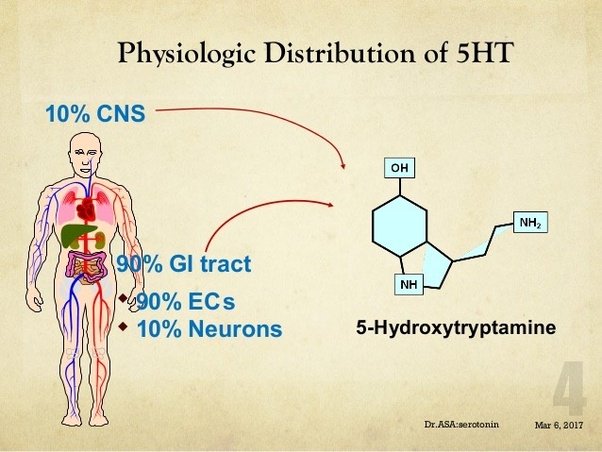
About 95% of serotonin is produced in the gastrointestinal tract which is lined with a hundred million neurons, that are influenced by bacteria. The inner workings of the digestive system don’t just help digest food, but also guide moods and emotions https://t.co/ozXCM2buWB