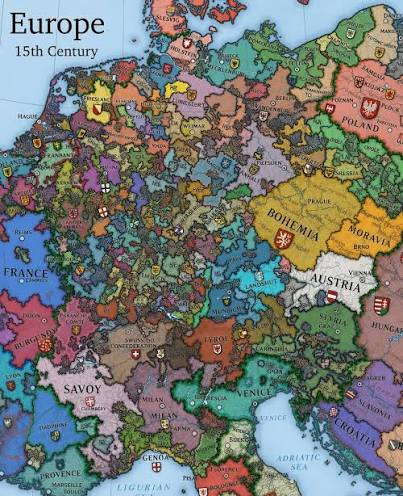
Nobody elected the European Commission, yet 27 commissioners sitting in Brussels write the rules that govern 450 million people's working hours, agricultural output, energy choices, and savings.
This structure is deliberate; Jean-Claude Juncker admitted it in 2015: "There can be no democratic choice against the European Treaties." Translate that, and it means your vote changes the furniture but never the architecture. National parliaments debate within a cage the Commission built.
The EU's regulatory burden costs European businesses an estimated 146 billion euros annually, according to the Commission's own impact assessments. Germany's industrial output fell 12 percent between 2022 and 2025 partly because Brussels energy policy made manufacturing uncompetitive against American and Chinese producers operating without those constraints. Meanwhile, the Common Agricultural Policy funnels 57 billion euros per year into subsidies that reward large landowners and price young farmers out of entry.
Prices coordinate information across millions of people better than any committee. When Brussels mandates energy price caps, timber quotas, or pharmaceutical approval timelines, it destroys the signals producers and consumers need to allocate resources correctly. Shortages follow. Then the Commission proposes new regulations to fix the shortages its previous regulations created.
The compounding is the point. Each intervention generates a visible failure, which bureaucrats cite as justification for the next intervention. Ludwig von Mises described this interventionist dynamic in 1929. Nearly a century later, Brussels runs the same playbook, and Europeans pay the higher prices it produces.
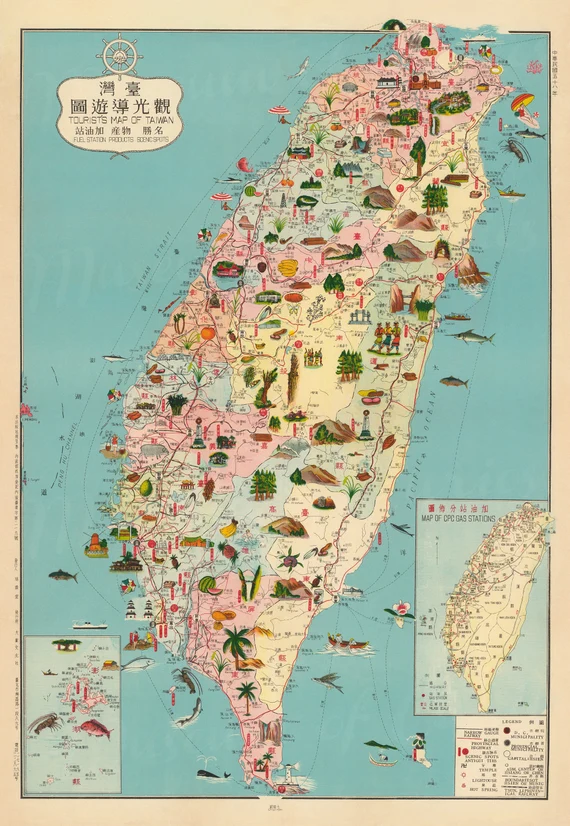
In 1949, roughly two million Kuomintang soldiers, officials, and civilians fled to Taiwan carrying almost nothing. Within thirty years, Taiwan posted GDP growth averaging close to 9 percent annually, built one of Asia's most competitive electronics industries, and gave ordinary workers real wage gains that mainland China, sealed under Mao Zedong's collectivism, would not match for decades. This contrast is a controlled experiment in political economy.
The refugees who landed on Taiwan had little choice but to produce. Chiang Kai-shek's government, chastened by losing the mainland, implemented a genuine land reform in 1953 that broke up absentee landlordism and handed title to the farmers who actually worked the soil. Secure property rights created the incentive to invest and improve. Farmers grew more because the harvest belonged to them, not to a committee in Beijing.
From the 1950s onward, Taiwan's planners (and they were imperfect, nobody denies that) kept currency relatively sound, maintained contract enforcement, and allowed private capital to accumulate. Small and medium enterprises multiplied without seeking permission from a central plan. By 1980, Taiwan's per capita income exceeded mainland China's by a factor of roughly fifteen. You cannot attribute that gap to geography, ethnicity, or culture; both populations share the same civilization.
Mainland China, meanwhile, destroyed capital through collectivization, killed somewhere between 15 and 55 million people in the Great Leap Forward famine of 1959 to 1961, and then wrecked whatever remained of voluntary exchange during the Cultural Revolution. Central planning actively consumes the human and physical capital required to produce anything at all.
Taiwan's prosperity emerged from treating property as inviolable, prices as information, and individuals as agents rather than resources to be allocated. The island proved that even desperate, stateless refugees accumulate wealth rapidly when government protects exchange rather than directing it.
Tientallen balsabomen voor de rotorbladen van één windturbine.
En naar schatting worden jaarlijks ruim een half miljoen balsabomen illegaal gekapt in het Amazonegebied.
Dát is de verborgen keerzijde van ‘groene’ energie: ontbossing en aantasting van beschermde regenwouden en inheemse gebieden om de groeiende vraag naar windturbinebladen te voeden.
🎥 Credits: @Electroversenet
Nieuwe belastingen, telkens weer. Terwijl de begroting nooit nog goed komt zonder #kerntakendebat. Debat dat nóóit gevoerd wordt. Van frigobons over Tom Waes-salarissen en hamstercoördinatoren tot jumpings. De dag dat we Griekenland zijn is dat debat onvermijdelijk. Alleen hebben we al wie werkt, onderneemt en spaart dan al lang weggejaagd of ontmoedigd. We hebben al een immense gelijkheid en herverdeling en bij elke begrotingsronde worden we iets meer USSR. Het klinkt altijd heel logisch maar rechts van het optimale omgekeerde U-verband tussen inspanning en beloning is het communisme al een paar keer gestorven. Als iemand voorbij dat optimum zit dan toont onze gini coëfficiënt dat wij het allicht zijn. Wie rijk wil en kan worden moet en zal hier niet zijn.
The time to decentralize is upon us!
Decentralization is the only political structure that actually disciplines government, and Switzerland's canton system proves it with 700 years of evidence.
Twenty-six cantons compete for residents and businesses. Appenzell Innerrhoden runs differently from Zurich, which runs differently from Geneva. When Basel raises taxes past the tolerance of its engineers and entrepreneurs, those people move to Zug, which has kept its corporate tax rate under 12%. Basel loses the revenue. The lesson writes itself.
Centralization is the villain. Every time a federal authority absorbs a decision that cantons once made, you lose the price signal. You lose the experiment. You lose the exit option. Brussels crushes this mechanism across the EU, which is why French farmers and German industrialists both scream at the same unresponsive bureaucracy with nowhere to go.
Competition between governments constrains Leviathan the way competition between businesses constrains monopoly pricing. Strip away that competition and governments do exactly what monopolists always do: extract maximum value from captive subjects while delivering minimum service.
The canton system works because it keeps power close to the people funding it and gives those people somewhere else to go.
Take power and responsibility out of the hands of bureaucrats thousands of kilometers away. Localize it to within manageable sections, and watch your area flourish.
Wat is dat met vrouwen aan de top? Rector Séverine Vermeire laat nota bene in een kathedraal de koran weerklinken, een godsdienst die het begrip tolerantie niet kent, een godsdienst in naam waarvan vrouwen onbarmhartig onderdrukt worden, met als afschrikwekkend ‘voorbeeld’ Afghanistan.
De eerste vrouwelijke aartsbisschop van Canterbury kende uitgerekend op de 25ste verjaardag van 11 september een onderscheiding toe aan een Pakistaanse moslimgeestelijke die deze aanslagen had toegejuicht. Op de foto van die ceremonie zie je vaag in de achtergrond een compleet in het zwart ingepakt wezen, de vrouw van de imam. Hoe lang wordt Diversiteit’ nog verward met ‘soumission’???
Onwaarschijnlijk dit. Decaan wijsbegeerte (!) stopt eerst de speech van professor Mortier omdat studenten boe roepen. Daarna biedt ze zelfs haar verontschuldigingen aan bij de boe-roepende studenten.
De speech was niet eens aanstootgevend. Waar gaan we heen als dit al niet meer mag? Doet denken aan de studentenprotesten onder Mao in de jaren 60. Professoren die toen wetenschap en ratio bepleitten, werden door opgehitste studenten opgehangen.
Ik kan echt niet begrijpen dat een decaan zich verontschuldigt voor een prikkelende speech. Woke is compleet doorgeslagen aan UGent. Als je dit ziet, weet je natuurlijk wat het resultaat zal zijn van het “onafhankelijk onderzoek” van De Sutter.
Deze universiteit moet echt bevrijd worden.
Het Agentschap Overheidspersoneel maakte een podcastreeks van welgeteld vier afleveringen, waarin Dalilla Hermans vier vrouwelijke leidinggevende ambtenaren interviewde.
Kostprijs voor belastingsbetaler: 49.000 euro. Geen kat die er naar luisterde. Nog minder katten die er iets aan hebben.
Uitgezonderd: het communicatiebureau dat de opdracht kreeg (zag er natuurlijk geen graten in). Dalila Hermans zelf (kan je moeilijk kwalijk nemen, maar natuurlijk ons kent ons). En de communicatiedienst van het agentschap, dat zijn "communicatiebudget" zo weer kon verantwoorden voor het volgende jaar.
Hoe kan dit blijven bestaan? Veel meer voorbeelden in ons dossier overheidscommunicatie-waanzin van @Project_Durf.
Tot voor enkele jaren was 9/11 een moment van reflectie over Islamitische terreur en de gevaren voor onze vrije samenleving. Nu maakte onder meer de openbare omroep er met @bsoenensvrt er een zeer akelig moment van om te herdenken "hoe slecht het Westen wel niet is". Bijna vanzelfsprekend dat we worden aangevallen. Oikofobie van ongekende treurigheid.
Jamestown nearly starved itself to death through a spreadsheet decision made in London. The Virginia Company established the colony in 1607 as a joint-stock venture, but crucially mandated that all food, land, and production flow into a common store, distributed equally regardless of individual contribution.
Then, the predictable result: by the winter of 1609-1610, roughly 500 colonists shrank to 60 survivors eating rats, leather, and each other.
Collectivized production destroys the price signal that tells producers what to make and how hard to work. Every bushel of corn John Smith grew belonged equally to the man who slept through harvest. This structured incentive to produce nothing masquerades as generosity.
Governor Thomas Dale fixed this in 1614. He allocated private plots. Output increased dramatically, immediately. Colonists who owned their yield guarded it, cultivated it, and traded it. Property rights attached effort to reward. The famine ended.
The Virginia Company's London directors could not know local conditions, soil quality, individual skill, or daily weather. No central administrator ever can. That knowledge lives dispersed across thousands of actors, readable only through prices and ownership. Strip those mechanisms and you get Jamestown's "starving time," every time, without exception, across every continent and every century that has tried the experiment since.
Over dit gigantische Spaanse protest tegen de migratieproblematiek in Ceuta vind je amper iets terug in onze klassieke media. Tegelijk krijgen reportages van linkse organisaties ter plaatse en verhalen waarbij kinderen worden ingezet als acteur uitgebreid aandacht.
De Standaard schoot opnieuw de hoofdvogel af, door te schrijven dat "de crisis in Ceuta snel in de kiem werd gesmoord". Je vraagt je af waar het fake news zit, als je zoiets schrijft.
Op een groeiend aantal thema’s is er een steeds grotere kloof tussen wat een aanzienlijk deel van de bevolking denkt en voelt, en welke standpunten en gebeurtenissen in klassieke media worden gebracht.
Die kloof is onhoudbaar.
Het te grote overheidsapparaat, en de daarmee verbonden complexiteit, haalt alle economische zuurstof uit het systeem. Wat we zelf doen, doen we overigens niet noodzakelijk beter. Snoeien om te bloeien.
Vandaag verschijnen opnieuw de PISA cijfers. Meting van cognitieve basisvaardigheden (wiskunde, leesvaardigheid, wetenschappen) in 91 landen. Technisch zeer goed onderzoek en ook de enige bron van data voor secundair onderwijs die evoluties sedert het jaar 2000 toelaat. Dus altijd een belangrijk moment in onderwijsland, elke 3 jaar. Voor de zevende keer op rij gaat Vlaanderen achteruit. Voor lezen en rekenen gaan we nu al meer dan 60 punten achteruit sedert 2003. Dit betekent: het duurt vandaag minstens 1,5 jaar langer (!) vooraleer de gemiddelde 15-jarige even goed rekent/leest als de gemiddelde 15-jarige in het jaar 2003. Dat is... gigantisch. Een 15-jarige kan dus nu wat toen een 13,5 jarige kon. Dat betekent dat je in de bevolking ca 4 IQ punten verloren bent. Terwijl de hersenen van onze kinderen echt niet minder aankunnen. Dit is dus een gevolg van onderwijs(praktijk/beleid). (1/x)
The Space Launch System costs $4.1 billion per launch. One launch.
NASA's own inspector general confirmed that number. Boeing builds the core stage. Northrop Grumman builds the solid rocket boosters. Aerojet Rocketdyne supplies the engines. Every one of those contracts flows to congressional districts where senators sit on the appropriations committees that fund NASA. Coincidence?
Congress mandated the SLS in 2010 because the cancellation of the Constellation program threatened to idle the same workforce and facilities that had built the Space Shuttle. Senators Richard Shelby and Bill Nelson wrote the requirement directly into the authorization bill. They protected Alabama and Florida jobs. The politics drove the rocket, not engineering logic.
SpaceX's Falcon Heavy lifts comparable payload for roughly $90 million. The SLS costs forty-five times more per flight. That gap destroys you as a taxpayer; you fund the difference without consent and without choice. No competitive bid. No market test. Boeing received cost-plus contracts, meaning every overrun simply became next year's invoice to the Treasury.
Ludwig von Mises identified the central problem: when bureaucracies spend other people's money on other people's projects, waste is the predictable outcome, not the aberration. Congress spent $23 billion developing the SLS before its first launch in November 2022. It launched twice total by mid-2026, with the third mission schedule slipping repeatedly.
The SLS is a constituency management program wearing a rocket as a costume.
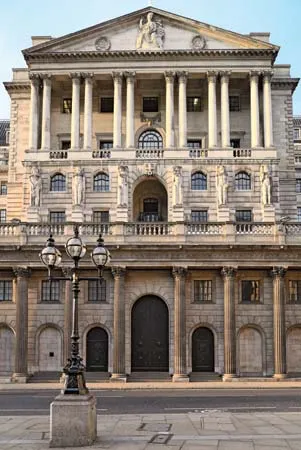
The Bank of England was born in 1694 to fund a war. William III needed £1.2 million to fight Louis XIV, Parliament wouldn't raise the taxes, and a group of London merchants solved the problem by creating money from nothing. That arrangement has never really ended.
The mechanics were straightforward. The merchants lent the Crown £1.2 million. In exchange, they received a royal charter permitting them to issue banknotes far in excess of their actual gold reserves. They created credit, lent it to the government, and charged 8% annual interest plus management fees. The government got its war. The bankers got a legally protected monopoly over English money. Naturally, inflation followed.
Murray Rothbard traced this exact model across three centuries of central banking history. The pattern never changes: crisis, emergency, currency expansion, wealth transfer from savers to the politically connected.
By 1720 the South Sea Company's collapse wiped out ordinary English investors who had trusted a financial system the Bank quietly backstopped and promoted. The Bank's founders, by contrast, had already cashed out.
1694 is not ancient history; the template is still running today. Every quantitative easing program, every emergency lending facility, every "temporary" credit expansion traces its intellectual and institutional lineage directly to Threadneedle Street in the reign of William III.
The wars changed. The monarchs changed. The creditors collecting interest on government debt kept their seats.
Carl Menger did what no economist before him had managed: he located value inside the human mind rather than inside the object being traded. Vienna, 1871. His Principles of Economics landed quietly, then detonated slowly across the discipline.
Before Menger, economists tortured themselves trying to explain why diamonds cost more than water when water keeps you alive. Menger dissolved the paradox in a sentence. Value is marginal and subjective. The tenth glass of water you drink today carries almost no value to you; the first glass you drink after three days without it carries everything. The object does not contain the value. You assign it, based on your circumstances, your preferences, your next most pressing want.
This wrecked the labor theory of value completely, clearing the ground for honest price analysis.
Prices, Menger showed, are not arbitrary signals or social constructs. They are compressed information about millions of individual valuations, each person acting on knowledge no central planner could ever collect. Bureaucrats in Brussels and Washington still haven't absorbed this. They control prices and watch shortages materialize on schedule, baffled every time.
Menger built the foundation. Everything built on it since has held.
🇷🇸 Novak Djokovic just reminded everyone what real backbone looks like.
In his new Amazon documentary he explains why he never took the COVID vaccine: he was healthy, already had natural immunity, and wasn’t a threat to anyone.
“It’s my freedom to choose what goes into my body. That fundamental right was taken from a lot of people.”
He lost Grand Slams and tournaments because he refused to bend.
Politicians tried to make an example out of him. He paid the price and never folded.
24 Grand Slam titles. All-time weeks at No. 1. And still the guy who put principle above everything.
They couldn’t break him. That’s a real champion.
Source: CNN / Writer: Sol
Grote denker David Van Reybrouck: “klimaat mag geen rechts-links thema zijn”.
Diezelfde grote denker: “zelfs als we CO2 reduceren tot een minimum is het nog niet genoeg, de economie moet eraan”.
Sjah. Klimaatalarmisme is voor linkse media en “denkers” een doordrukje van klassiek marxistisch discours. Geen enkele andere stem komt aan bod. Wie neemt dit nog ernstig, buiten de bubbel?