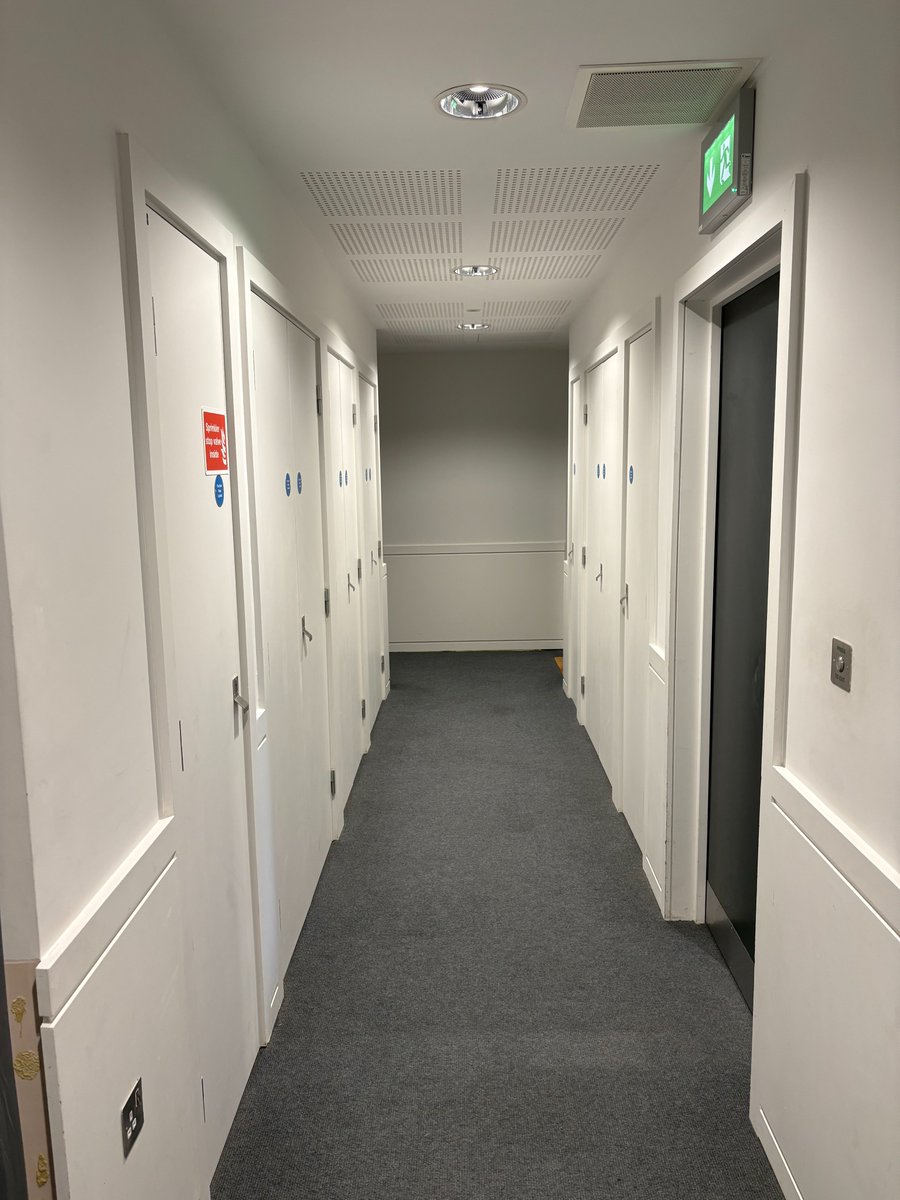
The second photo is from a "stunning" and "beautifully presented" new apartment building in London.
Backrooms (and similar films/shows like Severance) prove that the way we design most interiors is genuinely frightening and bad for our psychological health.
Grey carpets, grey chairs, plain walls, plain furniture, square ceiling tiles, and bright lights are not good for our humanity.
But what's strange is that these bland environments (and similar bland commercial/public spaces) are actually "better" from a certain point of view.
Everything here is supposedly "cheaper" than the alternatives and also better for maintenance (i.e. less work to maintain).
In other words, bland design is more "cost-effective", and because being "cost-effective" is what we value most... this is what we end up building everywhere, even though nobody particularly wants it.
If these places had warmer colours, maybe even some pattern, cornices, mouldings round the doors etc. then they would be more expensive, but they'd also be less damaging to our psychological health.
What makes people less stressed and less anxious is obviously better in the long-run, but it's harder to put on a spreadsheet and therefore it isn't usually factored in.
And so "more expensive" or "harder to maintain" aren't absolutes so much as expressions of priority; the initial cost of material is lower (e.g. standard pure white paint or standard LEDs) but the long-term cost to human joy, peace of mind, and happiness is way higher.
To put all of that another way: the only reason an aesthetic is disconcerting/frightening in films is because they're disconcerting/frightening in real life, and yet we keep using those aesthetics to design the world we're all actually living in!
“If people give it to us, we can give it back”
Bukayo Saka on the banter Arsenal received, and how the team can now respond as Premier League champions 🤩
Watch our interview with Bukayo Saka on the TNT Sports Football YouTube Channel 📺