Sat down with CriptoNoticias, one of LatAm’s largest crypto publications, on why stablecoins aren’t a crypto asset class:
“Most people don’t want a stablecoin. They want a dollar that moves globally, settles fast, runs 24 hours a day, and works natively on the internet.”
https://t.co/Mv0rBdeYGw
Bitcoin might be having a very bad week. The onchain dollar is having an incredible year.
Joined @CNBC's Fast Money this week to talk about why the short-term BTC rollercoaster is not indicative of the real long-term progress being made in building the next generation of financial infrastructure.
The biggest mental block when people use crypto and a bank account at the same time is keeping track of two separate balances. The money in each account moves on its own schedule, and to use either you have to think about which side it's on first.
That separation isn't a technical requirement. It's a leftover from crypto and banking growing up in different industries.
One of the things we built into @wefi_official from the start was an Onchain Banking Account that holds a single balance. 100 euros sits there as 100 euros and is recorded as a euro stablecoin on WeChain at the same time.
For most people this is where the distinction between crypto and banking starts to disappear and becomes part of how their money works.
"Why do you allow your bank one to three days to move money when the technology is there to move it in three seconds?" 💭
That's WeFi Co-Founder @Reeve_Collins, who also co-founded Tether, speaking at @consensus2026 Miami.
And it's a question worth sitting with.
The answer is not complicated.
It was never possible before. And regulation kept it that way.
That's changing now. 👏
Stablecoins are the same money, formatted to move on a system that actually works.
Three seconds, not three days.
🌎 Global access.
🤝 No gatekeeping.
🛜 Anyone with an internet connection.
WeFi is building the infrastructure that makes this real.
The rails that merge traditional banking and blockchain into one.
So fiat and stablecoins work together, seamlessly, in a single account.
The institutions are leaning in. The technology is here.
Get ready, the change is imminent. 👀
🧩 WeFi is piecing together the foundations for onchain finance.
Connecting users globally. Breaking down barriers.
Each piece of the WeFi infrastructure is designed to work together. ⚡️
Not to replace banking.
But to update the outdated rails.
DESERTGREENER ist ein fortschrittliches Meerwasserentsalzungssystem, das auf heliotropen Prinzipien basiert.
Es nutzt Sonnenenergie und innovative Spiegelsysteme, um Meerwasser zu verdampfen und anschließend zu rekondensieren, wodurch hochwertiges Destillat gewonnen wird.
Banking didn’t change overnight.
It evolved step by step, from paper agreements between merchants to institution-controlled systems.
But one constraint stayed constant: access to your money depends on an intermediary. This constraint becomes visible when access to financial services is restricted or revoked.
This isn’t a theoretical risk. It directly affects settlement, treasury access, and operational continuity.
At @wefi_official we develop the technology where access to financial services isn’t conditional on a single point of control.
Crypto's future depends on payments.
For most of its life, crypto has been sold through price movement. Prices surged, prices crashed, and each cycle promised that mass adoption was finally close. But this obsession with speculation kept the industry looking in the wrong direction for too long.
I just shared my thoughts in a new interview: the most meaningful growth isn't happening in speculation or price charts. It's happening where people actually move value in payments, in infrastructure, in the rails that nobody sees but everyone uses.
As I’ve been building WeFi, this shift kept showing up. The rails underneath matter more than the interface.
Here's why that matters for the next five years (and why most people are looking at the wrong charts):
Full interview: https://t.co/t3hNETnXvH
🎙️Part 2: Visa x WeFi Talks is LIVE
The story continues. And this time, it gets into the real-world impact of what we are building together.
The discussion features Alexandra Soroko, Growth Product & Partnerships at @Visa, and Michael Batuev, Head of Global Payments at WeFi.
Episode 2 goes deeper than infrastructure.
It tackles the questions that matter most right now:
• Does regulation help or slow adoption?
• What does stablecoin technology actually mean for ordinary people?
• Which geographies are moving fastest?
On regulation, the answer is clear.
Frameworks like MiCA in Europe and the Genius Act in the US are not obstacles. They are accelerators. Regulation creates confidence for traditional financial institutions to engage seriously with stablecoins, and that confidence is driving scale.
On real-world impact, the numbers speak for themselves.
$905 billion in remittances moves globally every year. Hundreds of millions of people are waiting days for money to settle.
Stablecoins change that equation, enabling near-instant settlement without the layers of intermediaries that add cost and delay to every transaction.
The conversation also covers where the biggest opportunities are emerging.
Emerging markets, where currencies are less stable and cross-border access is limited, stand to benefit most. But corporate use cases, from cash management to intercompany transfers, are also seeing significant growth. 📈
At WeFi, this is exactly what we are building toward.
Onchain banking that feels familiar but runs on rails built for a world that never stops moving. Cards, accounts, global payments, and real financial services, all powered by infrastructure designed to reward the people who use it.
➡️ Episode 2 is live now. And the story doesn’t stop here. There is more to come.
Why would an ecosystem rent its money when it can own its economy?
The next phase of stablecoins won’t be a few giants. It will be thousands of ecosystem-specific stablecoins.
Each backed by tokenized RWAs of their choice.
Each unlocking liquidity, yield, greater efficiency, control, and data analytics for that ecosystem.
Powered by STBL Money-as- a-Service.
Interoperable through USST - the universal money layer.
Explore more : https://t.co/uHuqWVVDGP
@Reeve_Collins
Oil is volatile again, markets are shaking, and traditional savings are under pressure.
Inflation eats savings away, but at the times of crisis, restrictions become another problem. Banks introduce limits, payments can get frozen, access to funds may become slower or selective. It doesn't matter how much money you have if you don't have the full freedom to use it.
Real freedom is having full control over your money — anytime, without limits.
This is a big motivation for @wefi_official. We’re building a system where your money is truly yours.
Stablecoins aren’t competing with traditional rails anymore - they are replacing them.
They deliver instant settlement, global liquidity, and programmable value - capabilities legacy finance simply cannot match.
With the latest SEC guidance bringing regulatory clarity - defining asset classes, recognizing stablecoins, and signaling that most crypto assets are not securities - the floodgates for institutional adoption are opening.
The uncertainty is gone. Ecosystem-specific stablecoins will lead this shift, unlocking seamless capital flow across markets, protocols, and geographies.
The lines between crypto and traditional finance will disappear. AI will orchestrate value at scale. And beneath it all, stablecoins and blockchain will power the system.
STBL is building that future.
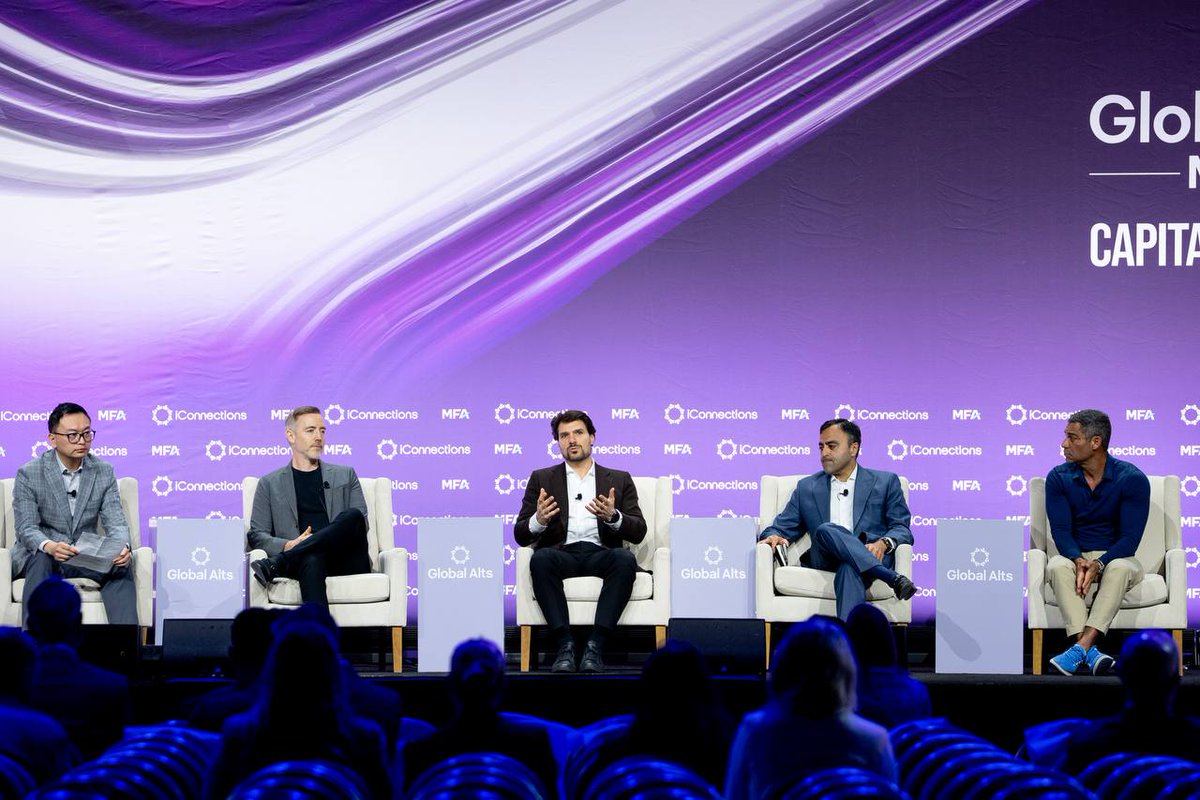
At #GlobalAltsMiami 2026, @Reeve_Collins, Co-Founder & Chairman of @stbl_official, @wefi_official, and @ReserveOne_, discussed how blockchain and digital assets are reshaping financial infrastructure — enabling faster, more accessible global transactions.
🎥 Watch the full session: https://t.co/hhajvHPt7U
#iConnections #DigitalAssets #Fintech #Blockchain #AlternativeInvestments @MFAupdates
WeFi Chairman and Co-Founder @Reeve_Collins took the stage at #GlobalAltsMiami 2026!
The panel is "The Digital Dollar Revolution: Stablecoins, RWAs, and the Future of Global Transactions"
“Digital money becomes embedded in real economic flows.” – Reeve Collins
At WeFi, we’re building the infrastructure that makes this shift possible: compliant on-chain DeFi powered by stablecoins for real-world adoption.
Full discussion is worth a listen: https://t.co/a7bXCTuwxD
The market may wobble, but the momentum of innovation cannot be stopped.
Never before has the ecosystem been this open - institutions are leaning in, regulatory alignment is building trust, and tokenization is set to unleash massive on-chain capital.
What matters now is infrastructure - are we ready to seize it?
STBL, through Money-As-A-Service, is making sure we are. By empowering ecosystems to mint their own stablecoins backed by tokenized RWAs of their choice, MAAS lets them own their liquidity, capture yield, stay compliant, and move from renting to owning their economy.
This is a monetary revolution, and STBL is the engine driving the next-generation financial ecosystem.