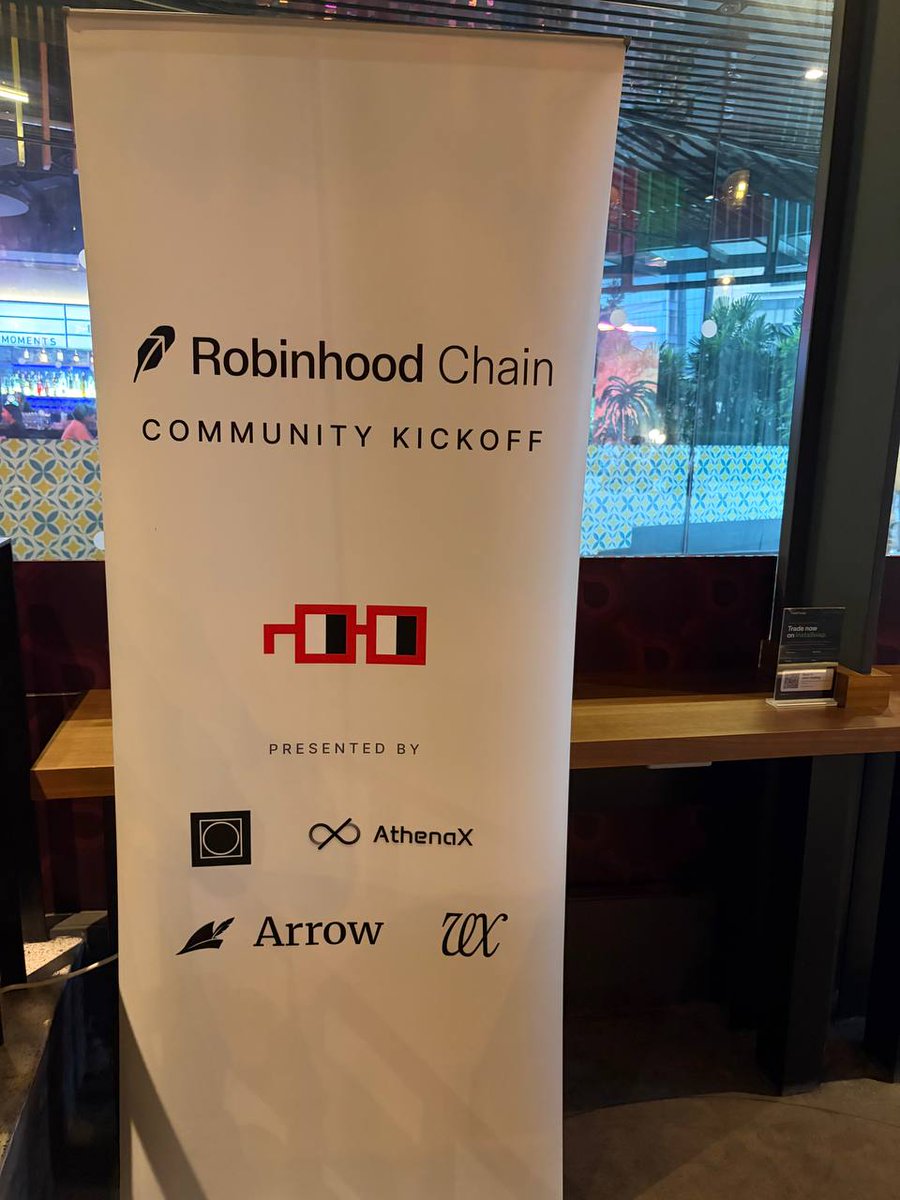
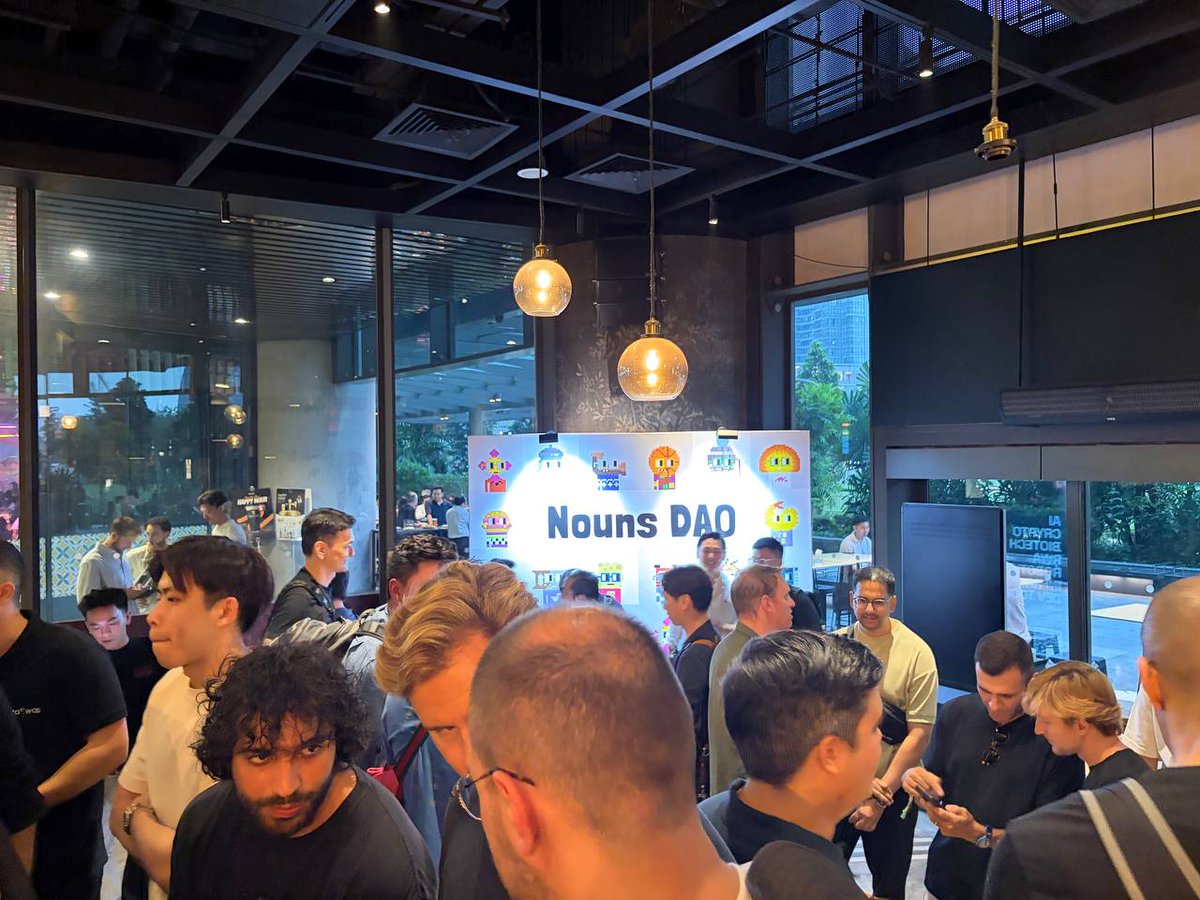
An absolute honor to be in Singapore and connect with a remarkable group of builders who share the same conviction and passion for building on Robinhood. Special shoutout to @nounsdao, @ArrowFinanceio, and @ProjectVEXai for bringing everyone together and putting on an incredible meetup. Grateful for the conversations and ideas, and even more excited for what we can build together from here!
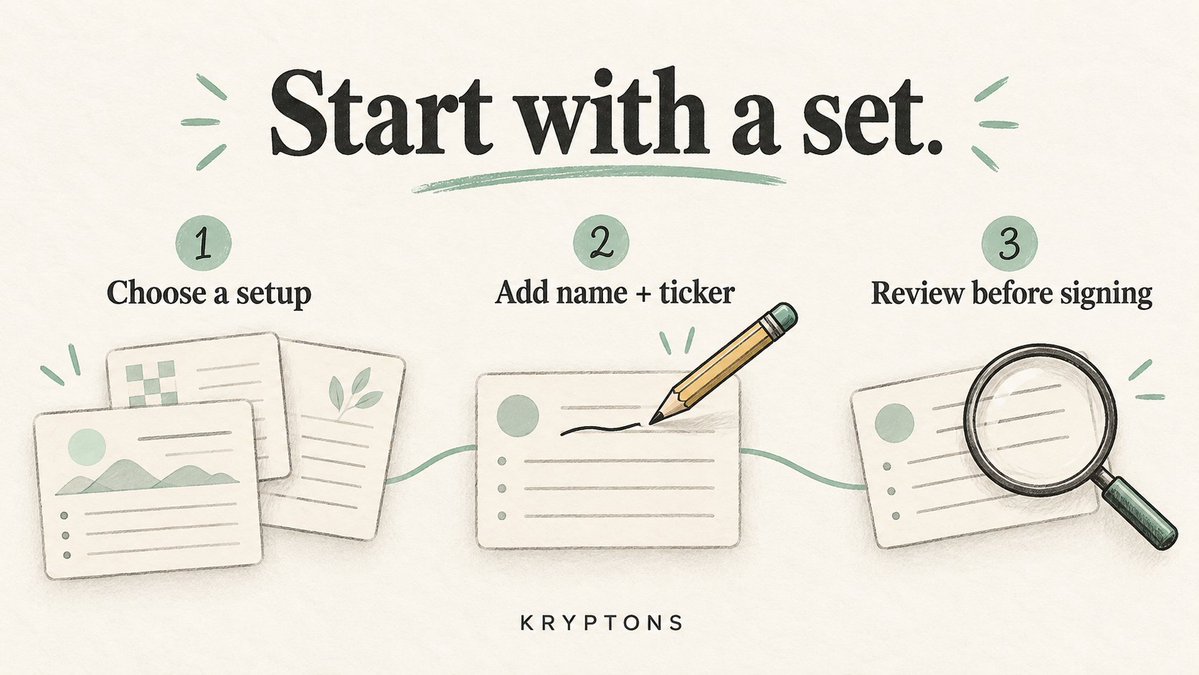
First launch? Start with a set.
Choose a ready-made fee-and-marks setup, add your coin’s name and ticker, then review the full specification.
Check what the marks become at graduation before signing.
Your launch starts with a design you can read.
Before buying, ask:
What applies now?
What disappears at graduation?
Where will the tax go afterward?
Kryptons shows the marks and their planned fusion on the coin's page.
Read both phases.
Your coin needs a rule. You get one sentence.
“No wallet can hold more than a set share.”
“A share of every trade goes to our treasury.”
“The wallet limit grows with trading volume.”
Which sentence would you build around?
A spike is not graduation.
Touching the threshold and falling back won't do it. The price must hold there for 15 seconds.
Then the marks fuse.
A moment on the chart and a change in the rules are different events.
Excited to be joining Arbitrum’s Founder House in Singapore next week to build alongside founders across the @arbitrum and @RobinhoodCrypto ecosystems!
At Kryptons, we’re building a protocol for programmable coins with composable onchain rules. Each coin is defined by a set of rules governing token distribution, wallet holding limits, and mechanics. Every rule is enforced at the smart contract level through the token contract and Uniswap v4 pool hooks, with fusion logic committed at launch and immutable thereafter. No discretionary changes from creators, just transparent, deterministic execution onchain.
Final call for founders 🗣️
Bring your app onchain at Founder House next week in Singapore with $300K in prizes and grants.
In collaboration with Robinhood Chain, see what’s in store for founders each day from October 23rd-25th.
Register today:
https://t.co/CiPUAk7Z16
“Where does the early-sell tax go?”
“Into buyback & burn.”
“And after graduation?”
“Into the last-buyer pot.”
That's Patience Pot. Fusion changes the destination, while the early-sell condition stays.
A name gives a coin an identity.
Rules give it a point of view.
Limit concentration. Fund a treasury. Route a share to holders. Define a transition at graduation.
Kryptons turns those choices into a design creators can launch.
At launch, the wallet limit has a job.
At graduation, Open Dividend removes it and doubles the holder distribution rate.
The coin continues with a different design.
Some rules are built for a phase.
One wallet holds more. Another has held longer.
Those are different inputs.
Graduated sell tax looks at the wallet's share of supply.
Diamond hands looks at holding time.
Which matters more to the coin you're designing?
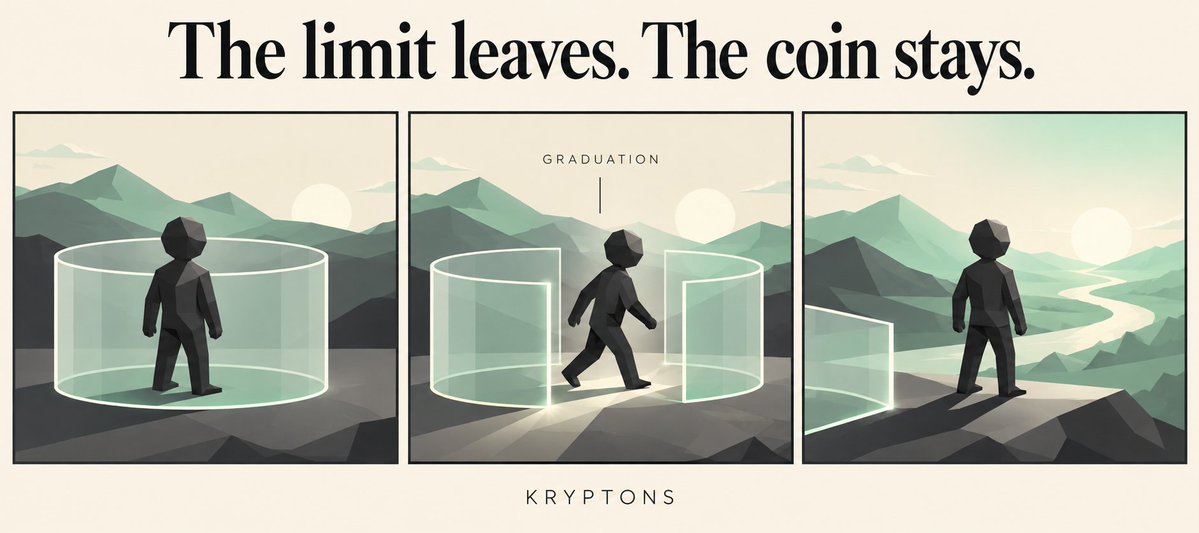
Graduation changes rules.
The token stays. The pool stays.
Selected marks fuse into their next behavior.
That's the architecture behind “Coins that fuse.”
Which rule belongs only at launch and which should stay?
A wallet cap might serve the opening. Holder distributions might define the next phase.
Open Dividend connects the two: the cap disappears at graduation, and the distribution rate doubles.
What would you keep?
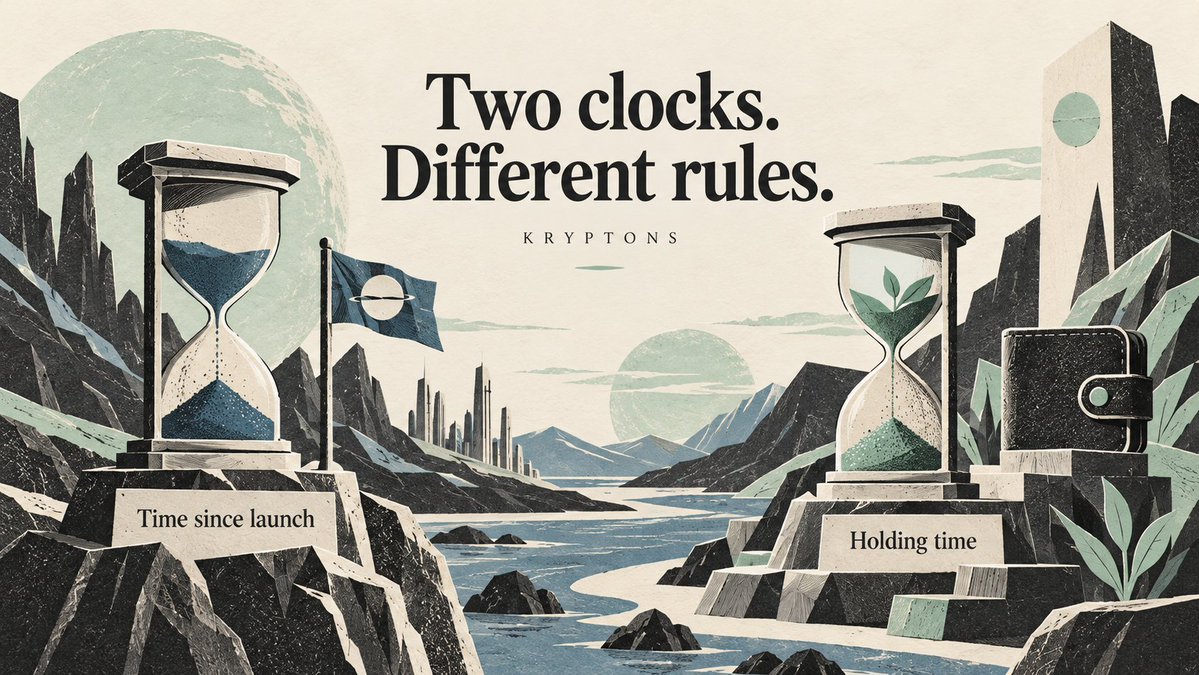
Two sell taxes. Two different clocks.
Launch sell tax fades with time since the coin launched.
Diamond hands decreases with how long a wallet has held.
A coin's age and a holder's patience are different inputs.
Try designing a coin before naming it.
Choose who can hold it, where trade contributions go, and what changes at graduation.
Then give that combination a name.
That's a different starting point for a launch.
A coin has reached its holder cap.
One wallet sells half its balance. Another sells everything.
Which opens a slot?
The second. Max holders counts wallets holding the coin not how much each wallet holds.
“Did the early-sell tax disappear?”
“No. It changed destination.”
“Where?”
“From buyback & burn to holders, after graduation.”
Diamond Dividend, explained without a whitepaper.
Graduation should change the design.
On $Kryptons, selected marks fuse: a launch limit can disappear, or a tax can start flowing to holders.
A milestone with consequences inside the code.
The buy window closes. Selling stays open.
That's Market hours: buys follow configured weekday hours, while sells remain outside that restriction.
Two sides of a trade can follow different rules.
Who should receive part of each trade?
Holders?
A community treasury?
Whoever meets a pot's condition?
Holder reflections, Tithe and pot marks offer different answers.
Designing a coin means designing the recipients, too.