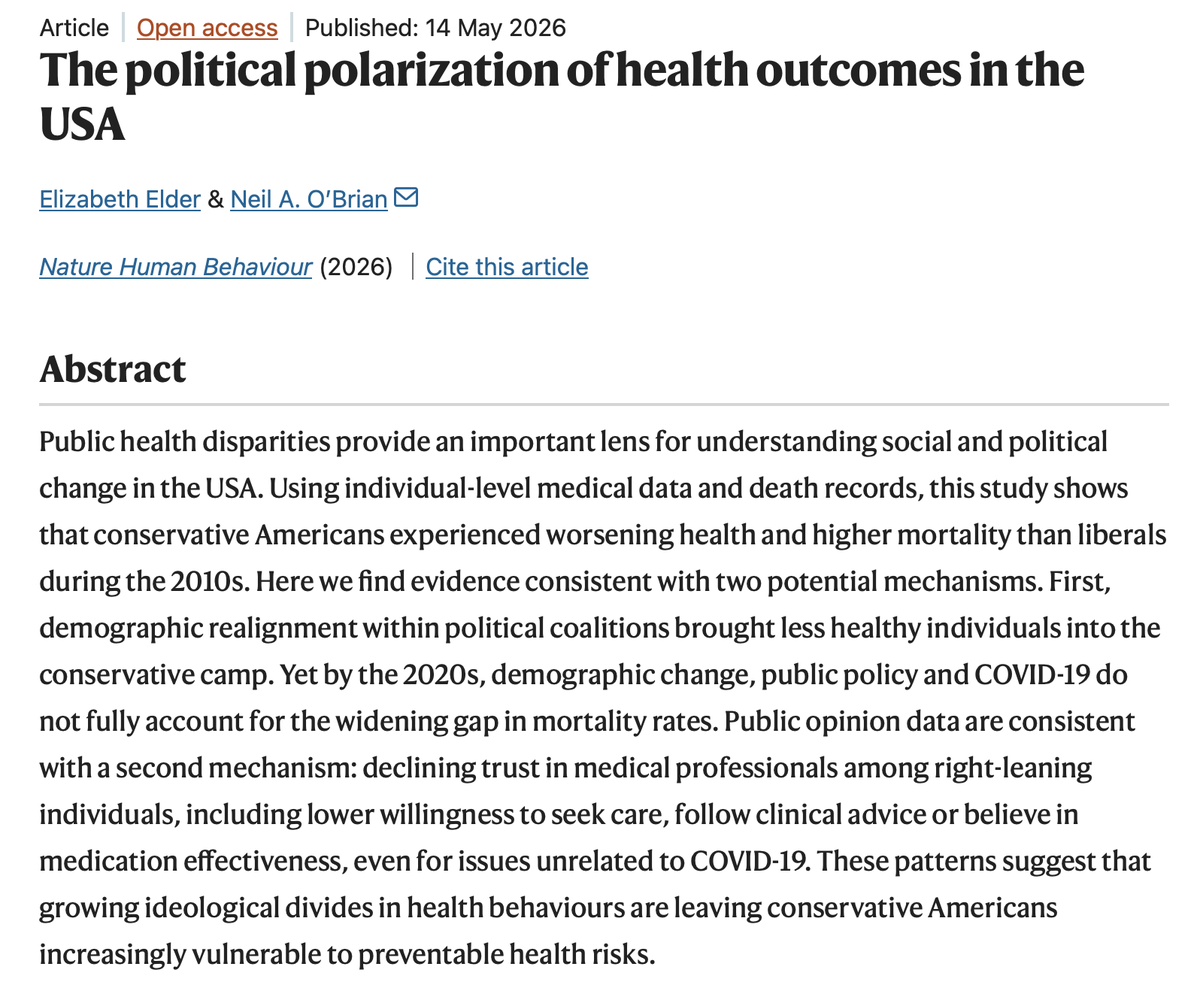
@Anterior658444 Claude code is very good but I don't think it "one shots" the process of building trust over the course of dozens of small interactions
The idea that area studies and statistics are substitutes and not complements is so tiresome. You know what requires language skills? Running a field experiment with a team. Or collaborating with a government agency to get data. How do you think these projects happen?
This is the end result of decades of ideological warfare against all area knowledge in political science, driving almost all of the comparitivists and regional experts out of the field and replacing them with bullshit math-iness.
2/
@chagai_weiss@maya_sen Yes. Ofc there exists bad and decontextualized quantitative research of the sort the OP describes, but my sense is that the discipline doesn't reward that stuff.
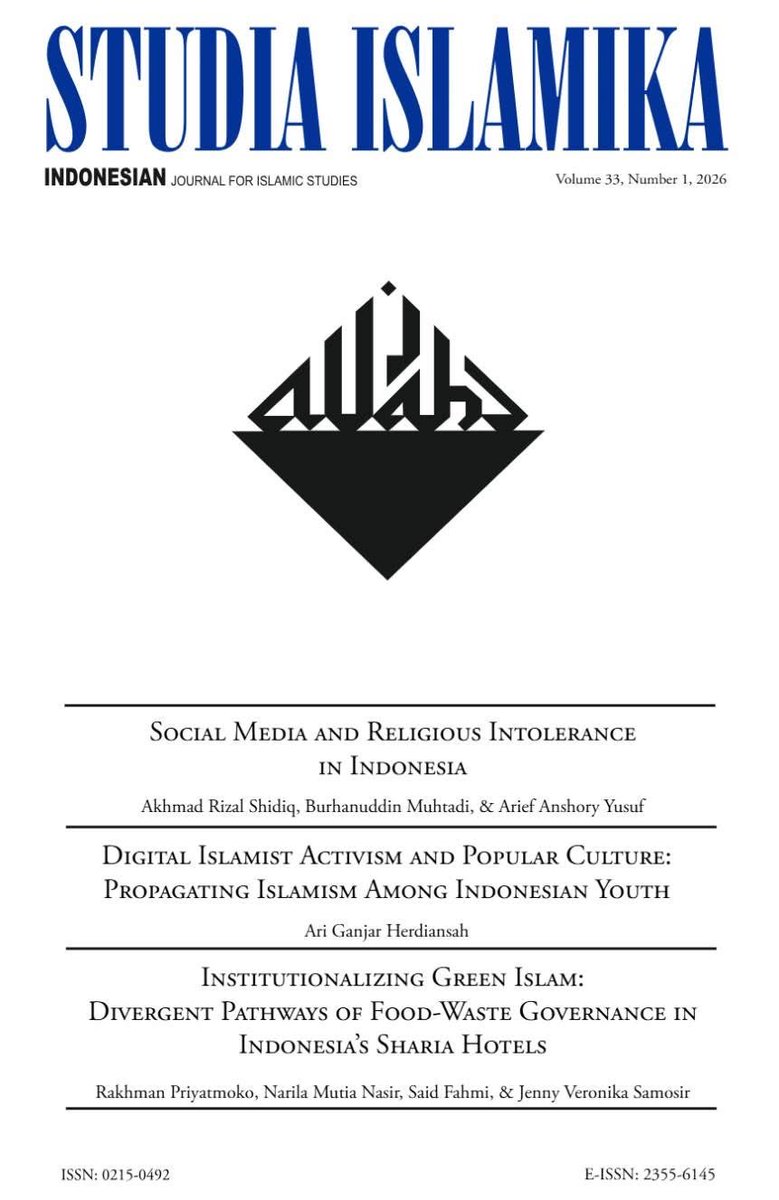
Akhirnya paper kami bersama Rizal Shidiq dan @anshory72 berlabuh di Jurnal Studia Islamika. Meski literatur sering mengklaim bahwa media sosial berperan pada peningkatan intoleransi warga, studi kami tidak menemukan bukti yang meyakinkan tentang hal itu.
Temuan kami menunjukkan bahwa peran media sosial dalam membentuk intoleransi agama di Indonesia sering kali dibesar-besarkan. Platform digital memang membuat ujaran intoleran tampak lebih ramai dan lebih terlihat, tetapi tidak selalu mengubah sikap dasar masyarakat.
Di Indonesia, intoleransi terhadap kelompok minoritas sudah berada pada baseline yang tinggi, sehingga media sosial punya ruang yang terbatas untuk “menggeser” sikap publik. Yang lebih menentukan justru ekologi sosial-politik di dunia nyata: norma lokal, sejarah hubungan antaragama, komposisi demografis, dan warisan politik keagamaan.
Meski demikian, media sosial bukan tidak penting. Ia memperkuat visibilitas intoleransi. Namun akar intoleransi tampaknya lebih dalam dari sekadar viral dan trending di media sosial. Sikap intoleran tampak lebih banyak tumbuh di luar layar.
Lebih jauh unduh gratis di link: https://t.co/3dKMJDLMA3
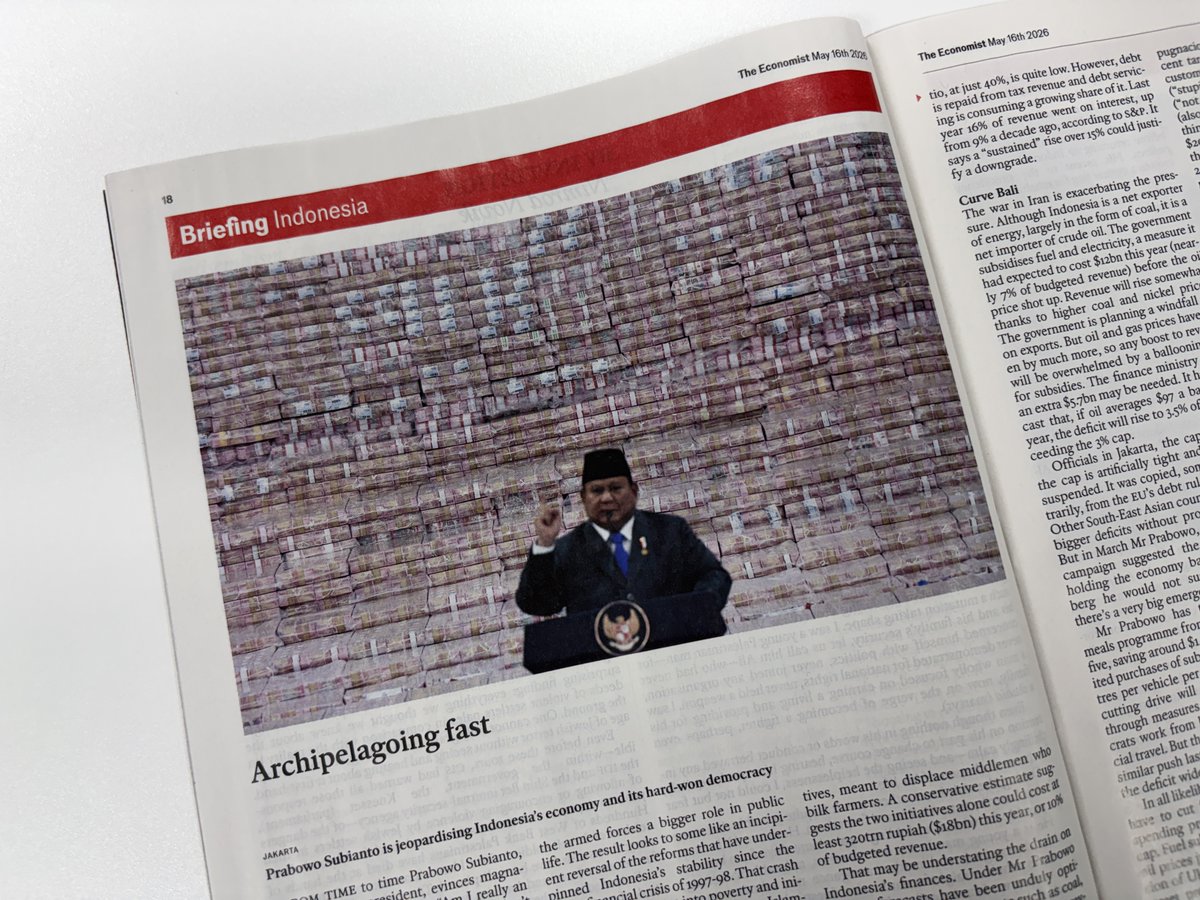
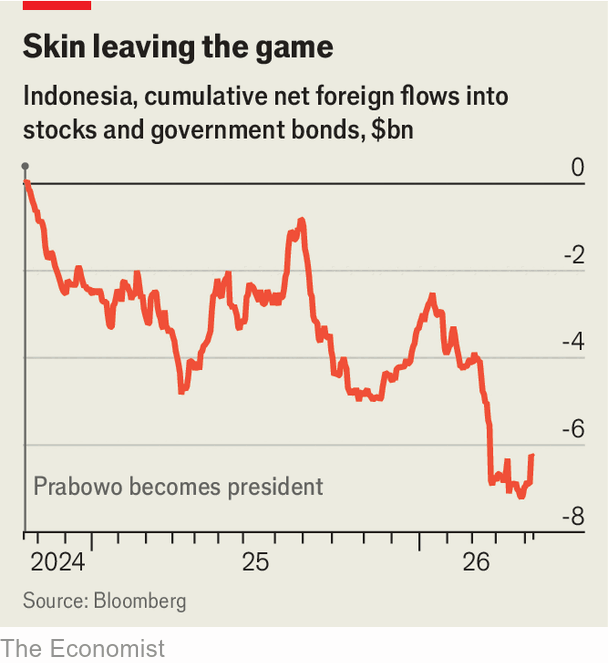
🧵 Prabowo Subianto is chipping away at the political and economic settlements that have been the foundation of Indonesia's hard-won stability since the Asian financial crisis.
In @TheEconomist's Briefing this week, @EthanYWu and I take in the first 18 months of his presidency.
In the digital age, when news spreads far and fast, Nicholas Kuipers explains, how the politics and policies of one locale may inflame citizens’ attitudes thousands of miles away, magnifying political differences and division.
https://t.co/HGqiGmTxEk
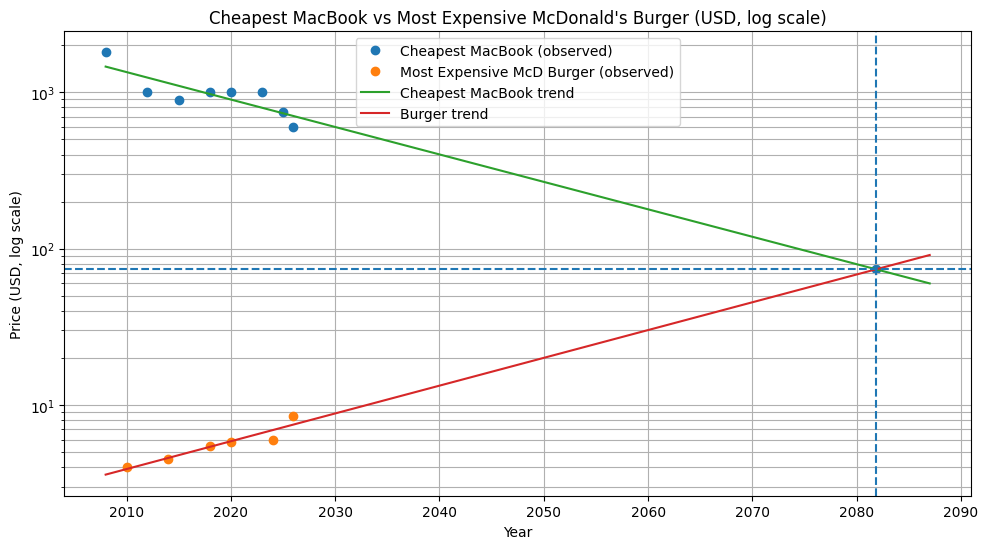
I've plotted the most expensive McDonald's burger and the least expensive MacBook over time. This analysis projects that the most expensive burger will be more expensive than the cheapest laptop as soon as 2081
massive congratulations Nick! @KuipersNicholas Bangga pernah punya staf di kantor yg sangat pintar. Nick sekarang mengajar di Princeton University. ini buku dari disertasinya yang terpilih sbg disertasi terbaik APSA yg sangat bergengsi. https://t.co/YOyr5AAr2E
States and Nations
This new @CUP_PoliSci book by @KuipersNicholas offers a fresh look at the relationship between state- and nation-building, a focus of discussion since the works by Stein Rokkan in the 1970s. It is a great read!
Open access: https://t.co/OPIpqFggb6