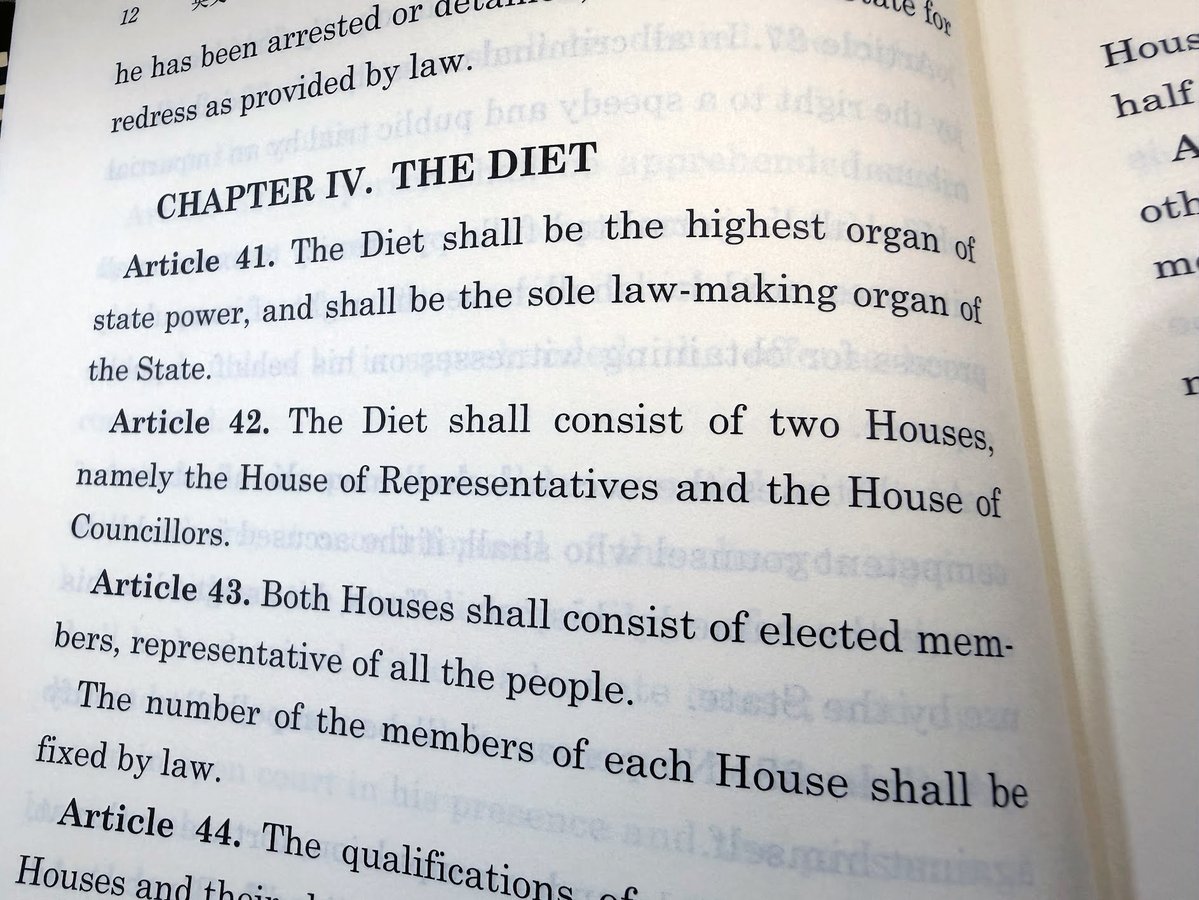
これまで「参議院」の英語表記は「House_of_Councillors」でしたが、このたび議運での申し合わせで「Senate」に改められ、「参議院議員」も「Senator」を用いることとなりました。諸外国でも上院はSenateが多く、Councillorだと評議員っぽくて、海外では国会の一院と思ってもらえない場面もあったようです。
赤松事務所でも、この夏から名刺の英語版をSenatorに変更します。
・・・なぜ今まで「House of Councillors」だったのかと言うと、憲法の英語訳がそうなっていたから。実に80年振りの変更となります。
“The Girls in the Windows,” photographed by Ormond Gigli in 1960. Possibly the most profitable photograph ever, it's made $12 million so far...
In the spring of 1960, fashion photographer Ormond Gigli learned that a brownstone across from his Manhattan studio was scheduled for demolition. Rather than let the opportunity pass, he organized one of the most ambitious fashion photographs ever attempted. He recruited 43 professional models, dressed each in a different colorful gown, positioned them in the building's windows, and coordinated the entire shoot with assistants, stylists, and neighbors. A Rolls-Royce and two models were placed at street level to complete the composition.
The photograph was taken in just a few minutes as the afternoon light reached the building. Although it appeared effortless, weeks of planning went into arranging every pose, dress, and window. The image became one of the defining photographs of 20th century fashion and has been reproduced in books, magazines, galleries, and fine art prints around the world.
The original building at 327 East 58th Street was demolished shortly after the photograph was taken, making the image the last visual record of the structure in its iconic form.
In 2013, Ormond Gigli reunited many of the surviving models, more than 50 years after the photograph was made, recreating the gathering to celebrate one of photography's most enduring images.
#drthehistories
In 1945 the USS Indianapolis secretly delivered the parts for the atomic bomb that would hit Hiroshima.
Days later, mission done, a Japanese submarine put two torpedoes into her. She sank in 12 minutes.
Nearly 900 men made it off the ship alive and into the open ocean. Then it got worse.
No one knew they were missing. Three separate Navy stations picked up the distress signals and every one of them ignored it. One officer thought it was a Japanese trap. Another had ordered not to be disturbed.
So the men floated. For almost five days. No food, no fresh water, burning by day and freezing at night. Some drank seawater and went insane. And the whole time, the sharks were circling and feeding. It is considered the worst shark attack in human history.
When rescue finally came by accident, only 316 of the nearly 1,200 crew were still alive.
The Navy needed someone to blame for the disaster. They chose Captain Charles McVay, one of the men who survived it. He became the only U.S. captain in the entire war to be court-martialed for losing his ship to the enemy.
At his trial the Navy did something almost unheard of. They brought in the Japanese commander who sank the ship to testify against him. Instead, the enemy captain told the court that zigzagging would have made no difference and that McVay did nothing wrong.
They convicted him anyway.
For years afterward McVay got hate mail from the families of the dead. Some sent letters every Christmas telling him he murdered their sons. In 1968 he walked onto his front lawn and shot himself, holding a toy sailor he had kept since he was a boy.
Case closed. For fifty years.
Then in 1996 an 11-year-old named Hunter Scott watched Jaws with his dad and got hooked on the 30 second speech about the Indianapolis. He made it his sixth grade history project.
He tracked down and interviewed nearly 150 survivors. He dug through more than 800 documents. And buried in there he found what the Navy had left out, including that they knew enemy subs were operating right on the ship's route and never warned McVay.
A kid's school project turned into a national story. It reached Congress. In 2000 lawmakers passed a resolution clearing McVay's name and President Clinton signed it. The Navy officially cleared his record in 2001.
The captain the Navy spent decades blaming was finally exonerated by a sixth grader.
Hunter Scott grew up and became a naval flight officer.