This video is a call for help.
My mum is battling with stroke, and it is slowly taking her life. She needs urgent medical funds to stay alive, and I cannot do this alone anymore. Please, if you have it in your heart to help or retweet this to someone who can, I beg of you 🤲🏻🙏
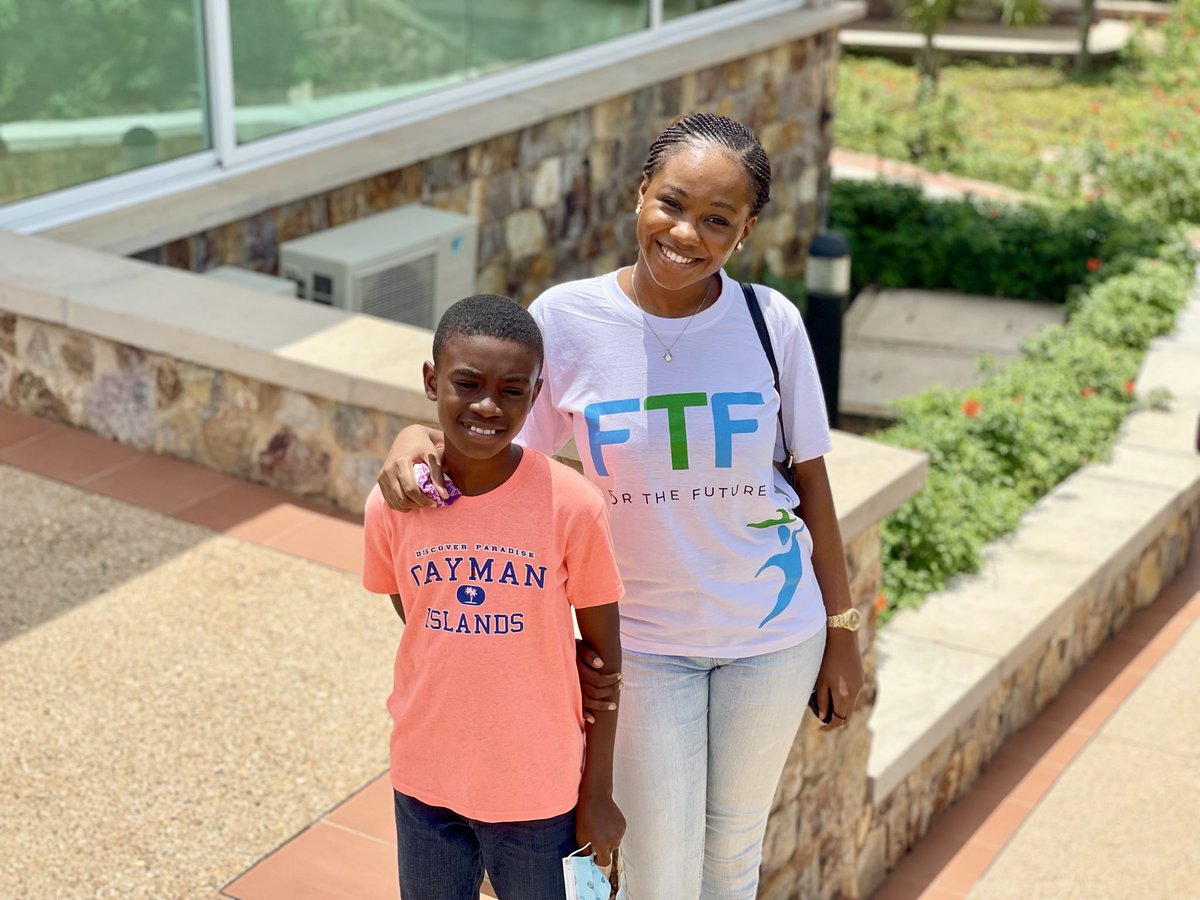
In 2021, I met a little boy in Darkuman who was making toy cars out of pieces of wood.
I remember looking at him and thinking, “This child is gifted.”
But behind that gift was a painful story.
Prince Kojo was being raised by a single mother who was struggling to make ends meet. He had very little support and was enduring abuse at the hands of his stepfather. Like many children born into difficult circumstances, he had talent, dreams, and potential, but not the opportunities he needed to thrive.
By the grace of God, we took him under our care at @FTFGhana, supported his education, secured a scholarship for him to study Robotics at Asustem Robotics, and helped put him on the right path to gain admission to a TVET school, where he started studying Auto Mechanics last year.
Today, Prince Kojo is beginning a sponsored automotive training programme at the West African Vehicle Academy in Accra during his school vacation.
Sometimes I look at his journey and wonder what would have happened if nobody had stopped to care.
How many brilliant children are out there right now, full of potential but trapped by circumstances they did not choose?
Prince Kojo’s story reminds me that talent is everywhere, but opportunity is not.
And sometimes, all it takes to change a child’s life forever is one person deciding to believe in them.
Who knows what is next for him? Maybe one day he will build his own automobile company. Maybe he will design vehicles that transform the industry, or perhaps he will start his own toy car manufacturing company.
What I do know is this: his story is only just beginning.
And I could not be more proud of him. ❤️
Mercy is when you can't even explain how you're surviving, but you are. You don't have it all figured out, but each day, God sends help right when you need it. Hallelujah.
Isaiah 65:24
I will answer them before they even call to me. While they are still talking about their needs, I will go ahead and answer their prayers!
There is a prophetic word for you as we round up the month of May this week !!!
Your point is, you’re enforcing already existing legislations and not a Bill. But as someone with legal knowledge and a legislator too, you definitely know and the courts have cemented into public knowledge that existing legislation can be wrong and can be criticized.
NPP v IGP. The IGP was enforcing existing legislation (Public Order Act) to restrict people from embarking on demonstrations without his permit. Supreme Court struck down those provisions.
Mensima v Ag. Existing L.I stated that one must be part of a cooperative society to be granted a license to be a local distiller. Court struck down that provision.
Martin Kpebu v Ag. Existing legislation that’s the Criminal Procedure Act stated that one cannot be granted bail for certain severe offenses. The Supreme Court over fifty years later struck down that provision.
When your response is that you’re just enforcing an existing legislation, any citizen of Ghana who is adversely affected by that legislation can bring an action to strike it down as breaching the constitution or administrative power.
Even in the case of Ghana Independent Broadcasters Association v NMC, the court struck down existing regulations that sought to censor and restrict the broadcasting content of independent broadcasters.
Infact common sense makes it clear that only existing legislations can be problematic.
In the case of Amanda Odoi v Ag as well as Richard Sky v Ag the court held it is not Bills but existing legislation that can be questioned by citizens in the public interest.
Ghanaians have a right to question, critique and even challenge existing legislation in court. They don’t have to be IT experts to challenge a law you think only affects IT experts.
The law potentially affects every prospective IT specialist and every single Ghanaian who will utilize those services because we will pay the extra costs when these license costs and restrictions are imposed on them, because WE are the final consumers.
Administrative fairness under the Wednesbury case principle mandates that the administrative body will be REASONABLE if it considers all that it ought to take into consideration.
On one hand you were fighting exorbitant DSTV prices for the “people” because it benefited your mandate. On the other hand you’re now imposing exorbitant fees on the same people you’re going to release as coders and such costs will be transferred to every Ghanaian.
The former government did not impose such fees under the existing law because it would’ve been unreasonable and harsh to do so.
You’re known for many things but you’re not known for passing and enforcing unreasonable laws or?
The NITA Bill is still a draft. It has not passed Parliament. That means there is still time. But if it passes as written, it will be one of the most damaging things Ghana has done to its own tech sector. Here is why this is personal for me:
The fictional distinction created by your post, which is a strawman invented to make your argument sound way more persuasive than it is, is that the complaint is about conduct not already backed by law.
"Backed by law” is used so vaguely that it hides so much.
1. The existence of a parent law that permits NITA to regulate and license matters relating to information technology under Act 771 is not in doubt.
2. However, the existence of the substantive authority to do does not cover how the doing is done.
3. The current complaint from the tech community is that the manner of implementing the substantive authority is procedurally exclusionary, suppressive, onerous, and, by extension, an unconstitutional violation of people’s right to create and make economic returns from that creativity.
4. The clouding of the conversation with generic allusions and red herrings is chiefly an attempt to use technicalities to defeat genuine concerns.
Come back to the real and important issue. Does the manner in which you are enforcing the law violate creative rights or economically exploit them through licensure fees that are not only excessive but effectively an unconstitutional encroachment of economic rights?
I barely do this but I beg any Ghanaian to read the following write up by Chris-Vincent Agyapong. Bookmark, share etc cos wtf 😳
1/4
“Ghana's NITA Bill 2025: How a Government That Cannot Fix Potholes Wants to Certify Your Keyboard Strokes
There is a particular brand of Ghanaian governance that operates on a simple, well-rehearsed logic: identify the one sector in which ordinary young people, without connections, without family money, without a politician uncle are actually building something for themselves, and then erect a magnificent bureaucratic tollbooth right in the middle of it.
The National Information Technology Authority Bill, 2025 currently making its way through Ghana's legislative machinery with the quiet confidence of a document probably written by a majority of people who have never debugged a line of code in their lives is precisely that tollbooth. It is, in its 105 sections and accompanying Schedule, one of the most breathtaking exercises in regulatory overreach this country has produced in recent memory. And given our regulatory track record, that is genuinely saying something.
The ICT sector is the one industry where a boy from Ashaiman, or, like my friend from Pulima, Aliu Wahab, with a second-hand laptop and a YouTube tutorial, can compete with someone whose father went to Achimota. It is the one space where talent, not tribe; skill, not surname; output, not old-boy network, still carries meaningful weight. It is, bluntly, the only functioning meritocracy left in Ghana's economic life.
And our government, with the NITA Bill 2025 has decided that this is precisely the sector that requires the most elaborate regulatory architecture since the tale of Moses coming down from Sinai with the Ten Commandments.
The Absurdity of Section 46: Certifying Everyone, Everywhere, Always
Let us begin with what is, without competition, the most extraordinary provision in this bill. Section 46(1) states, in plain and unambiguous terms:
"A person shall not be appointed as an ICT professional in a public or private institution unless that person is certified by the Authority."
Read that again. Public or private.
This is not a provision that limits itself to government systems handling national security data. This is not a narrow carve-out for critical infrastructure. This is a provision that means the software developer at a startup in Osu, the data analyst at a logistics firm in Tema, the web designer freelancing from her bedroom in Kumasi, all of them, every single one must first obtain certification from a government authority before they can lawfully be employed.
Who dreamed this up? Under what theory of governance does it make sense for the government of Ghana which cannot consistently process a DVLA licence within six months, which spent years and hundreds of millions on a national identification system that still cannot talk to the health insurance database to position itself as the certifying gatekeeper for an entire profession across the entire economy?
And here is the delicious irony that the framers of this bill seem constitutionally incapable of perceiving: the government's own ICT record is the single most compelling argument against giving it certification authority over anyone. You do not hand the keys of the wine cellar to the person who has been drinking the wine.
Politicians: The One Profession That Needs Certification Most, and Gets It Least
Since we are on the subject of certification, let us pause to consider who in this country is not required to demonstrate any competence whatsoever before being handed consequential power over millions of lives.
Continued below
Thanks for the encouragement & retweets ✅.
I’ve been up since dawn lying on my back, asking God where my help will come from 🙏😔. HE is my refuge; in Him I trust.
Help me reach $88.8k:
https://t.co/nBV7z3ExiD
Telecel :0502776169
John Bredu Peasah
Act Num: 1044000008414