On Friday, the Minister for Trade, Agribusiness and Industry, Elizabeth Ofosu-Adjare, and the CEO of the Ghana Export Promotion Authority (GEPA), Francis Kwarteng Arthur, received the Chief of Staff, Julius Debrah, at the Black Star Square for the ongoing Ghana Export and Made in Ghana Fair (GEXPO 2026).
#3NewsGH #TV3GH
Over the weekend, management of the Ministry of Foreign Affairs held a two-day retreat at the Ministry here in Accra to review our efforts in 2025 and set out our collective Agenda for 2026.
It was a most fulfilling and strategic use of our Saturday and Sunday; we are absolutely confident of meeting our ambitious targets.
We remain committed to serve Ghanaians better in 2026 as we work closer and smarter with our international partners in the best interest of Ghana.
For God and Country 🇬🇭 🙏🏾
Evaluating the Macroeconomic Effects of the Ghana Gold Board (GOLDBOD)
A Technical Report Presented to GoldBod
by
Prof. Festus Ebo Turkson
(Department of Economics, Univ. of Ghana)
Peter Junior Dotse
(Department of Economics, Univ. of Ghana)
Prof. Agyapomaa Gyeke-Dako
(Department of Finance, UGBS, Univ. of Ghana)
Dated, 4th January 2026
Executive Summary
Purpose
This report evaluates the macroeconomic impact of the Ghana Gold Board (GoldBod) using conservative assumptions and verifiable data. It compares quantifiable benefits—particularly from reduced gold smuggling and non-debt foreign exchange (FX) inflows—with the reported trading losses of the Bank of Ghana (BoG).
Key Findings
1. GoldBod Significantly Reduced Gold Smuggling
• Recorded artisanal and small-scale mining (ASM) gold exports increased from 63.6 tons in 2024 to 103.0 tons in 2025.
• The incremental 39.4 tons is plausibly gold previously lost to smuggling that has now been formalised.
• Valued conservatively at US$96.5 million per ton, this represents US$3.8 billion in additional FX entering the formal system.
2. Formalisation Benefits Far Exceed BoG’s Reported Loss
• The IMF reported a BoG trading loss of US$214 million (≈ GHS 2.4 billion).
• A direct comparison shows:
o Benefit–Cost Ratio ≈ 18:1
• In break-even terms:
o Formalising just 2.2 tons of gold would offset the reported loss.
o Complete formalisation is about 18 times this threshold.
3. Large Financing Savings from Non-Debt FX Inflows
• GoldBod-enabled ASM exports in 2025 amounted to US$10.8 billion.
• If Ghana had borrowed externally to mobilise equivalent FX, annual interest costs would have been:
o Between US$756 million – US$1.08 billion (at 7–10% borrowing rates).
• Focusing only on the plausible reduction in smuggling:
o Avoided annual interest costs are between US$266–380 million.
• These are recurring annual benefits, not one-off gains.
4. Broader Macroeconomic Gains
GoldBod-supported FX inflows contributed to:
• Higher international reserves (≈ US$11–12 billion),
• Exchange-rate stabilisation and appreciation relative to IMF budget assumptions,
• Lower domestic cost of external debt service (≈ GHS 6.2 billion),
• Reduced import bill (Jan-Oct 2025) valuation (≈ GHS 50.6 billion),
• Disinflation, through reduced exchange-rate pass-through.
5. Why the BoG “Loss” Is Misunderstood
• Most of the reported BoG loss reflects accounting translation effects, not cash losses.
• Gold is purchased at near-retail exchange rates to prevent smuggling, but FX inflows must be booked at the lower interbank rate.
• The true economic cost (fees, purity losses, offtake discounts) is estimated at ~2.5% of gold value, far lower than headline loss figures.
GoldBod has delivered substantial, measurable macroeconomic benefits that exceed its narrow accounting costs. The programme converts illicit gold flows into formal FX, strengthens Ghana’s external position, reduces reliance on costly borrowing, and supports macroeconomic stability.
Key Policy Directions Going Forward
1. Sustain price competitiveness to prevent a return of smuggling.
2. Improve transparency by clearly separating accounting effects from economic costs in BoG reporting.
3. Gradually reduce policy costs as FX market conditions normalise.
4. Strengthen governance and oversight to ensure long-term credibility.
5. Manage transition risks carefully as GoldBod assumes fuller trading responsibility.
6. Sustain the FX stability through structural transformation, fiscal discipline, and enhanced law enforcement to minimise and deter smuggling.
7. Internalise the policy cost as a quasi-fiscal cost and treat it as a liability (expense for the government) and fund it annually in the budget
GoldBod should be regarded not as a profit-driven trading entity, but as a tool for macroeconomic stabilisation and formalisation. Based on available evidence, it serves as a high-return policy intervention
Today, we began a two-day retreat to align the activities of the agencies and the Ministry with the NDC manifesto, with the overarching goal of achieving President John Mahama’s Reset Agenda. Agencies and directorates took turns to present their activities for the previous year and their programmes for this year.
At the launch of the APL/GFA partnership yesterday where each Premier League club is to get GHC 1 million before the commencement of the 2025/26 season.
On 11th March, 2024, then Minority Leader, Hon. Cassiel Ato Forson (now Minister of Finance), raised concerns on the floor of parliament about the Akufo-Addo/ Bawumia government's refusal or failure or neglect to address the huge energy sector debt that it had accumulated.
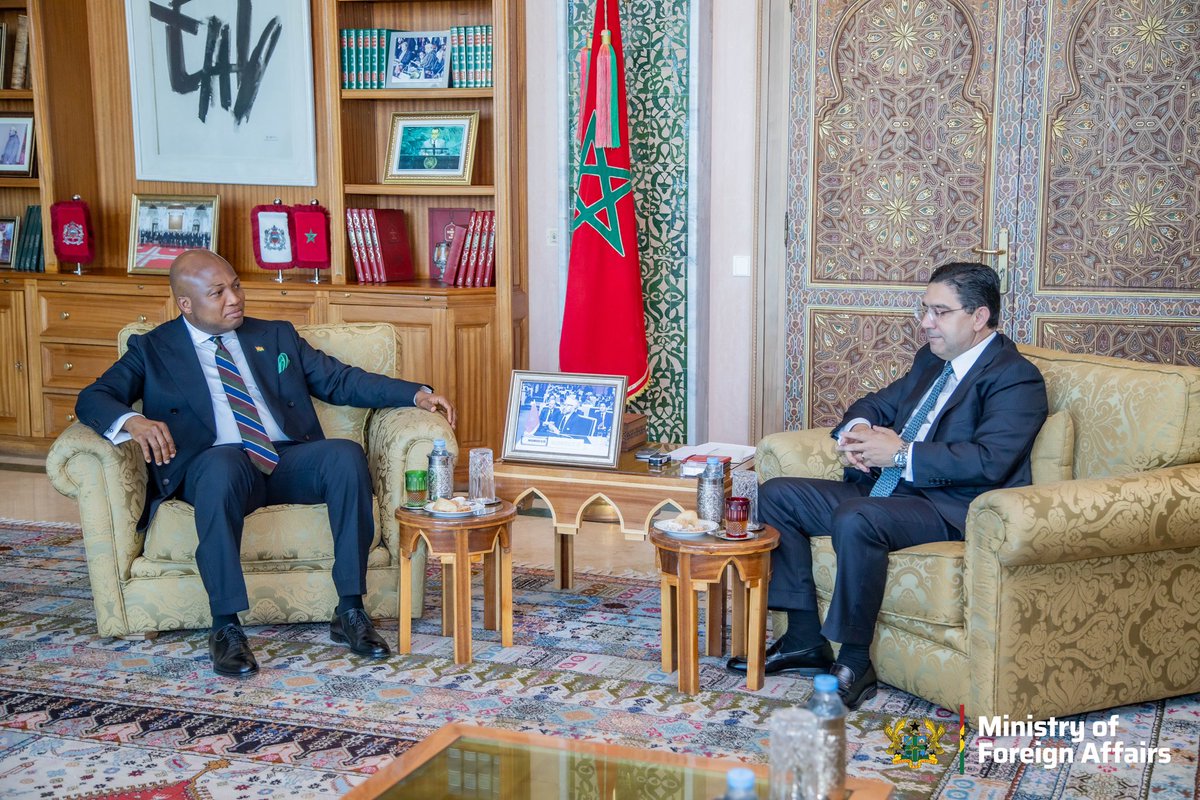
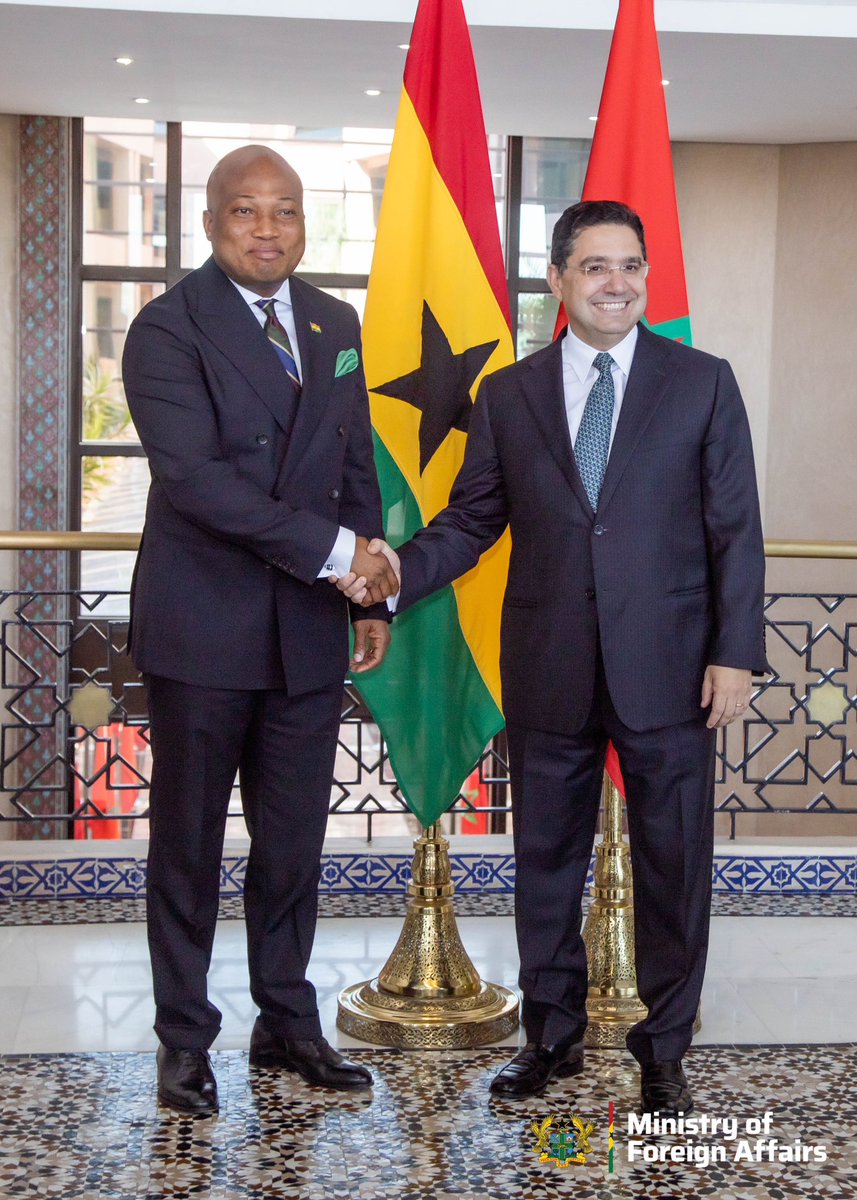
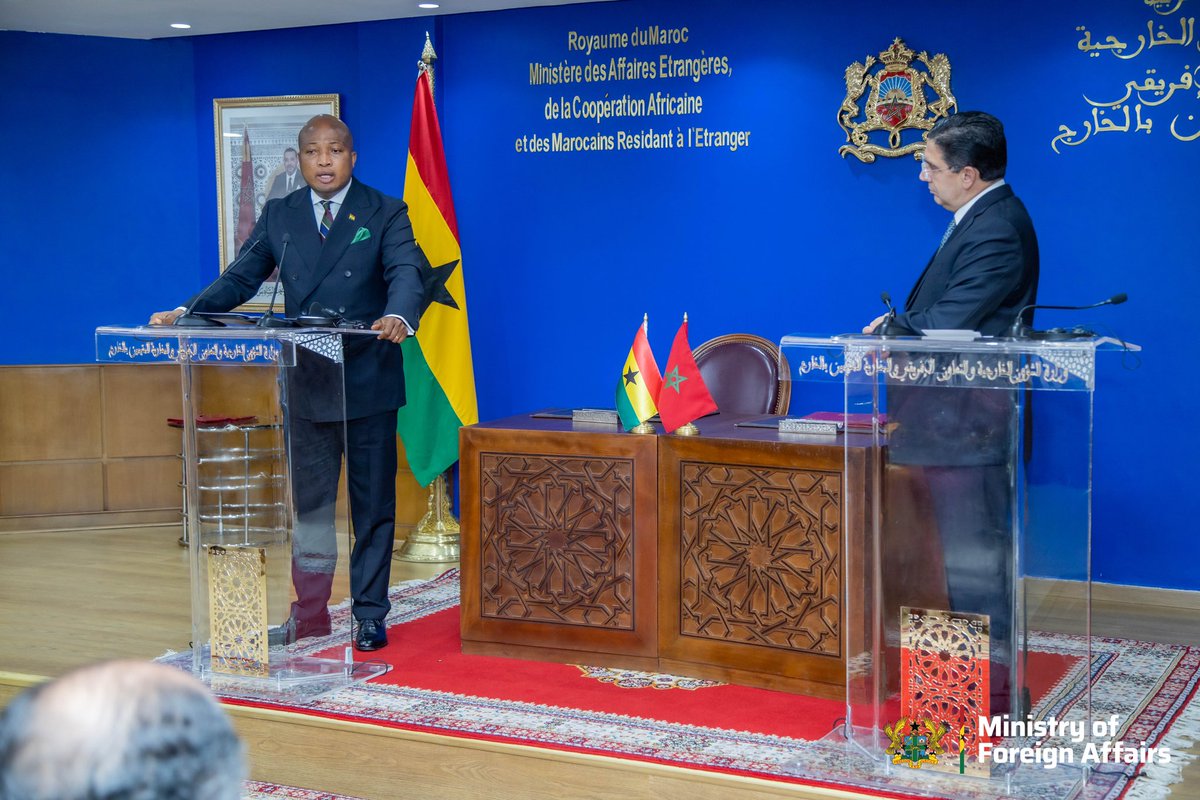
With immediate effect, Ghanaians will no longer require traditional visas to travel to Morocco.
An online authorization which will be granted within 24-hours without embassy appointments is all that’s needed.
This is one of the significant agreements reached yesterday with the Foreign Minister of Morocco, H.E. Nasser Bourita on my 2-day working visit.
With existing direct flights which would be increased following this new agreement, we expect this bilateral visa waiver policy to greatly facilitate trade, tourism and deepen people to people engagements between both countries.
The borders in Africa must not be allowed to divide us — they can be bridges of connectivity.
Diplomacy must make meaningful impact in the lives of the people we serve.
I wish all our Muslim brothers and sisters a happy Eid.