As citizens, we can chew gum and walk. We are fully capable of forming opinions and uniting with one another, regardless of our political affiliations. Any attempt to label citizens as being confined to the preconceived notions of the duopoly serves as a diversionary tactic.
Parliament passed the new Cocobod bill under a certificate of urgency. It continues the government’s pattern of passing problematic bills under a certificate of urgency without any proper consultations.
The Finance Committee justified the rush by pointing to the September pricing window. A sector that has been in crisis for decades suddenly could not wait a month or two for farmers and many other stakeholders to be heard.
Start with the price. The President promised farmers 70% of the world market price. The Bill says 70% of the gross FOB price realised by Cocobod for that crop season.
Those are not the same thing. The world market price is set in London and New York. The gross FOB price is what Cocobod actually realises on its own sales, most of which are forward contracts struck months before the season opens. When Cocobod sells forward at a bad moment, farmers wear it. When Cocobod under-delivers on contracts it has already sold and has to roll or buy back those positions, farmers wear that too. We have seen that recently. The Bill converts a promise indexed to the market into a promise indexed to Cocobod’s own trading performance.
Then the other 30%. Cocobod has not made a public case for why it needs that share. Where are the efficiencies from the reset agenda? The last published audited financial statements are from 2020/21. We are being asked to accept a permanent 30% deduction from farmer income on the word of an organisation that has not published its books on its own website in years, and the Bill does nothing to change that. It sets no publication deadline and attaches no penalty to non-publication.
Set the pricing mechanism against gold. ASM operators sell to the Goldbod at world market prices while much of the sector destroys our rivers and forests. We even sometimes give them bonuses. Cocoa farmers, who hold the trees that hold the soil, are taxed at 30% at source. If the state can pay world prices to one and not the other, that is a choice.
I also have issues with the Educational Trust Scheme. This is the Cocobod scholarship, back under a new name.
The Bill spends clause 4 building a wall against exactly this: no social, welfare or community programmes. Then clause 43 walks the scholarship straight back through the exception in clause 4.
The government already has No-Fee-Stress and Student Loan Plus. They are funded from general revenue and open to every Ghanaian, including farmers’ children.
If we have decided cocoa farmers are owed more, pay them more. Put it in the producer price. Money in a farmer’s hand at the buying centre is worth more than money routed through Cocobod’s discretion, operational efficiency and returned to a fraction of their children years later.
@koboateng Most of our policy heads hold their roles due to party loyalty rather than demonstrated expertise in their respective sectors, so unless the party provides a blueprint they are largely improvising.
@kwakuasanteb It would be nice if the NCCE had the capacity to help Ghanaians understand these proposals. The doupoly is preparing it’s poisonous narrative.
@Mike_Amanpene Never mind, this appears worse than the former proposal. I was under the impression the recommendation was to allow anyone who desires to run without party affiliations. But the powers that be have other ideas.
Am I getting this right? The president will nominate the candidates to stand in the DCE elections?
Is this their interpretation of recommendations to make the process non-partisan?
I dunno man. Seems like this only makes it easier for parties to curry favour with their bases.
This remains one point on which I disagree with the CRC. Considering how dissatisfied Ghanaians were with the former administration’s second term, asking us to tolerate that for another year—with a rubber-stamping parliament in tow—seems unreasonable.
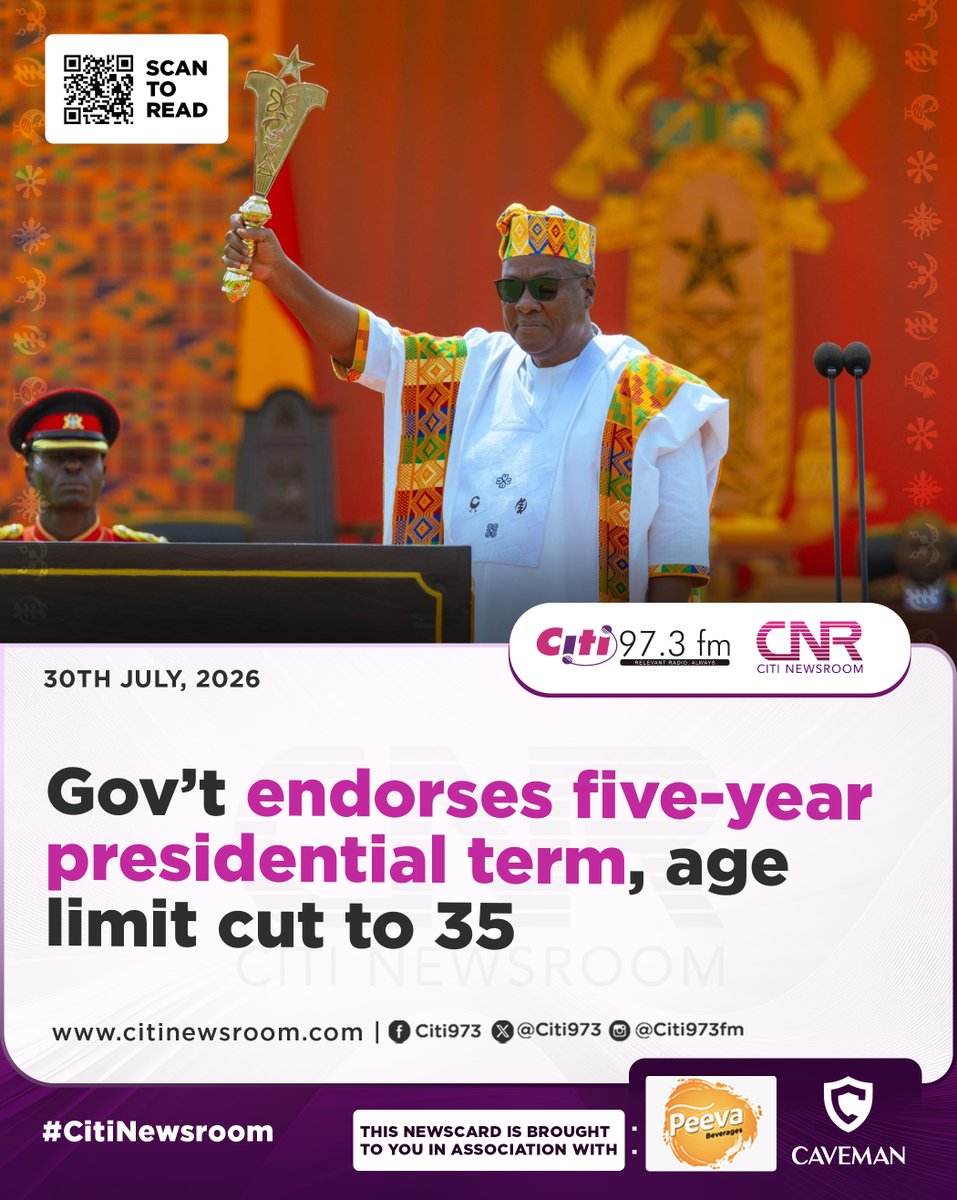
The government has accepted a key recommendation of the Constitutional Review Committee (CRC) to extend the tenure of the President and Parliament from four years to five years, Attorney General and Minister for Justice Dr Dominic Ayine has announced.
#CitiNewsroom#CitiFM #GhanaNews
More here: https://t.co/h4oM5Z4jjz
This is great, however assemblies should be given more autonomy on the use of the DACF allocations instead of the strict allocations they come with. How can I keep my elected DCE accountable when he’s handicapped on his finances.
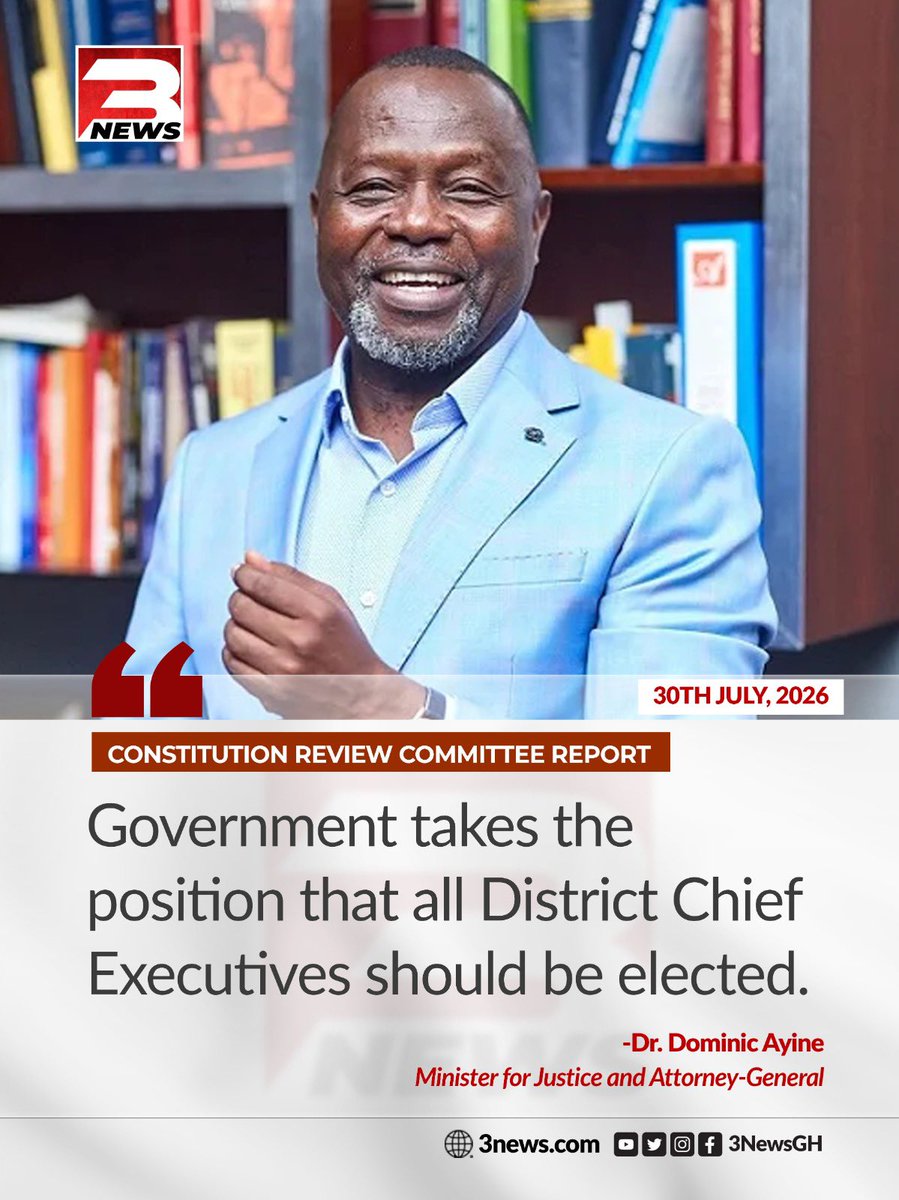
As part of proposed constitutional reforms, Minister for Justice and Attorney-General Dr. Dominic Ayine has announced that the government supports the position that all District Chief Executives (DCEs) should be elected rather than appointed.
#3NewsGH#TV3GH
The Supreme Court’s decision opening internal party elections to all registered members must be matched with stricter rules on campaign financing.
Parties and candidates should be required to disclose their sources of funding. Parties should publish audited financial statements. Candidates should publish the donations they receive. And there should be ceilings on what parties and candidates can spend on elections.
Without this, the ruling changes only the arithmetic of vote buying. Instead of courting a few thousand delegates, aspirants will need to court hundreds of thousands of members, and the money to do that has to come from somewhere. We already see vote buying in general elections. Widening the internal electorate without touching the financing rules simply raises the entry price and deepens the debt that successful candidates owe their financiers.