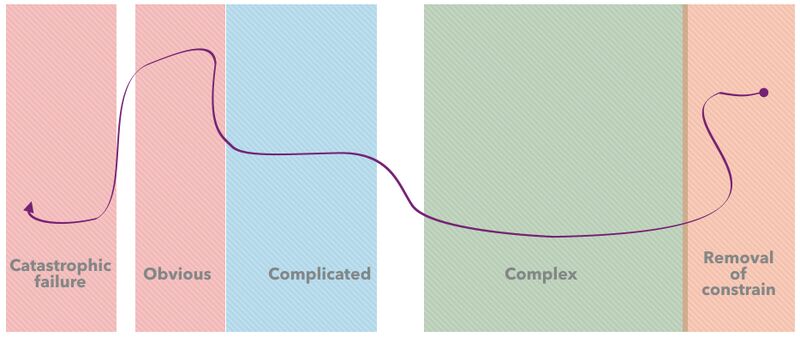
🌟 The picture shows phase shifts between domains in white, with the ordered domains overlapping. Dave Snowden put the #complex and removal of constraints together as this is really a boundary condition: he was thinking and working on the boundary domains in #Cynefin. So the dominant, lowest energy cost domain is complex, but that requires comfort with uncertainty and a degree of self #organization.
🌟 To step up to complicated, created boundaries or good practice takes energy, but once done, we are in a plateau state and have stability for an extended period of time. Dave then portrayed Obvious as a steep climb of high energy to a potentially unstable state of best practice. Removal of constraints is an overhang – the climbing metaphor emerging here. In that case, there will be a return to #complexity.
🌟 The logic behind the complex domain (quadrant) being lower than the chaos domain (quadrant)❓
🌟 The simple answer to this is that chaos is not a stable state. The absence of constraints will not sustain itself without considerable energy being exerted. In a major crisis true chaos does not last for long, constraints quickly appear.
🌟 This transitory nature can worry people who want to use Cynefin as a simple categorisation model as they want to fill the chaos domain with ‘things’ whereas in full use both #chaos and Disorder are temporary states.
🌟 The quote and answer were extracted from one of Dave's thoughts on "Energy Gradients" back in 2017. You are always welcome to engage with our open-source thinking, which includes over ✨ 3000 blog posts...
👉 Read the blogs here: https://t.co/sWMbayVYEs
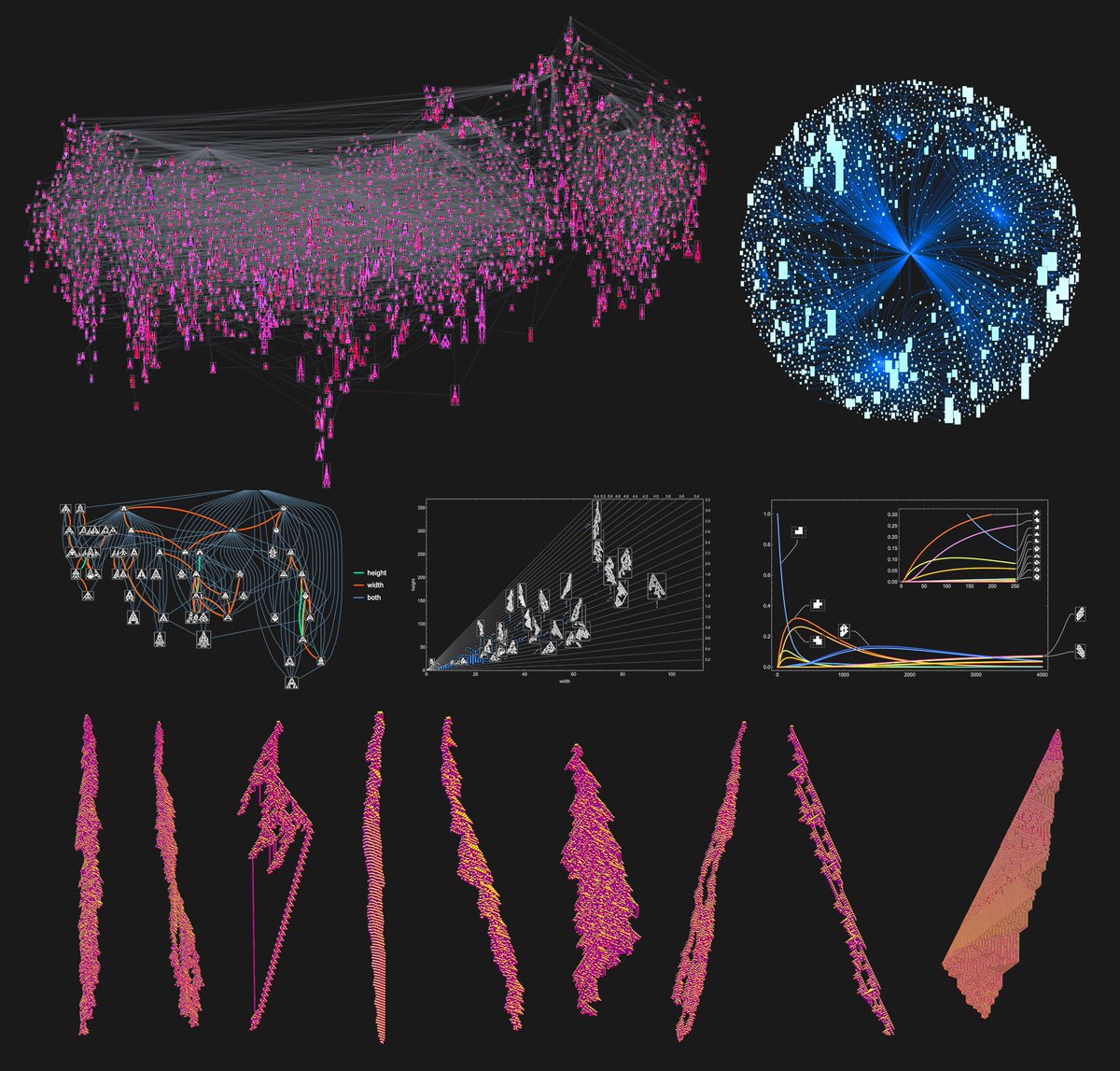
Biological evolution is a fundamentally computational phenomenon! Just posted lots of new results (and surprises) from my minimal model of adaptive evolution...
https://t.co/RO1cFbLwvI
In an unassuming corner of the galaxy you will find a bunch of these things, covered in meat and hair, wandering around on a planet.
They have the ability to work together and explore the stars, but they've been stuck in a strange loop for eons.
Are they about to break free?
Mind = blown! 🌀(positive!)
Just emerged 😉 from @snowded's Cynefin Masterclass.
The magic? It's beautifully counterintuitive - works best when you stop over-explaining and just let it unfold.
No complex frameworks needed. Just elegant simplicity in reducing risk & cost.
Like describing a sunset - you need to experience it 🌅
#Cynefin
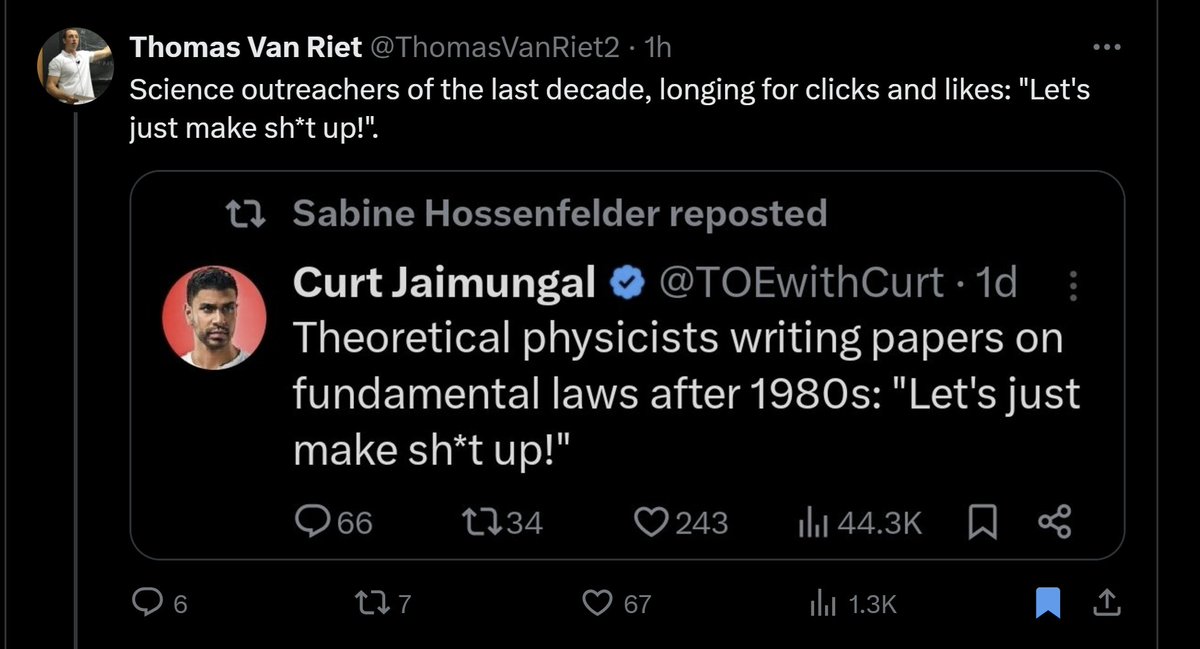
How much longer, do you think, will all those theoreticians in the foundations of physics get away with producing mathematical fiction on tax-payers cost?
A new interesting paper!
Academia now supports what I have worked on for over 40 years: fine curation of training data for LLMs are vital.
What has the paper found?
If you follow me, you already know.
The random garbage sucked up on an intent crawl like Reddit content, will not impart a vital and high quality LLM.
—
The paper "Large Language Models Reflect the Ideology of their Creators" presents a comprehensive analysis of the ideological biases inherent in large language models (LLMs) and how these biases manifest differently across various languages and cultural contexts.
The authors employ a novel methodology by prompting a diverse set of popular LLMs to describe a range of controversial historical figures, analyzing the moral assessments generated in both English and Chinese. This approach allows for a nuanced examination of the normative differences in responses, revealing significant ideological disparities between Western and non-Western models, as well as between responses in different languages.
The findings suggest that the ideological stance of an LLM often mirrors the worldview of its creators and the dataset they use for the training data, raising critical questions about the feasibility of achieving ideological neutrality in AI systems.
In fact, it is impossible based on this study.
The paper also critiques existing efforts aimed at mitigating bias, arguing that the aspiration for ideological neutrality may be fundamentally flawed, as it overlooks the complex interplay of design choices, training data, and post-training interventions that shape LLM behavior.
By situating their analysis within broader philosophical debates on ideology and neutrality, the authors advocate for a recognition of the plurality of ideological perspectives rather than an attempt to suppress them.
Meaning censorship is not the path.
Overall, this work contributes significantly to the discourse on AI ethics and the implications of LLMs as gatekeepers of information, emphasizing the need for transparency and critical engagement with the ideological underpinnings of these technologies.
It will be interesting to see how long it takes for “experts” to accept the things I have been laughed at for so long.
I suspect it will be when YOUR AI begins to run circles around Corporate AI.
---
1. [\[2410.18417\] Large Language Models Reflect the Ideology of their Creators](https://t.co/w2ESShQWD4)
2. [Large Language Models Reflect the Ideology of their Creators](https://t.co/YzOB2MCFGt)
3. [ajrogier/llm-ideology-analysis · Datasets at Hugging Face](https://t.co/S2dQpZnSvR)
Hear me now?
We
Are
The
Amnesia
Generation
The Internet Archive has been adulterated, modified, pasteurized and homogenized just as ordered for the road ahead.
Corporate AI will tell you what the past was in a Mandela Effect endless Gaslighting.
The receipts—are gone.
@BrianRoemmele this is indeed a very nice and important story every organizational developer has in their toolbox. Just keep in mind, it’s only a metaphor. That experiment never happened. That’s also the challenge with experiments in lean agile. They seldom qualify as replicable scientific experiments which makes the topic even more relevant and fascinating 🤓
@tsarnick Have I missed something? <looking around, checking> No, we ARE in 1984. It is more colorful and has better resolution, but everything else is as intended. Now, get back to work 😉😶🙃😱








![BrianRoemmele's tweet photo. A new interesting paper!
Academia now supports what I have worked on for over 40 years: fine curation of training data for LLMs are vital.
What has the paper found?
If you follow me, you already know.
The random garbage sucked up on an intent crawl like Reddit content, will not impart a vital and high quality LLM.
—
The paper "Large Language Models Reflect the Ideology of their Creators" presents a comprehensive analysis of the ideological biases inherent in large language models (LLMs) and how these biases manifest differently across various languages and cultural contexts.
The authors employ a novel methodology by prompting a diverse set of popular LLMs to describe a range of controversial historical figures, analyzing the moral assessments generated in both English and Chinese. This approach allows for a nuanced examination of the normative differences in responses, revealing significant ideological disparities between Western and non-Western models, as well as between responses in different languages.
The findings suggest that the ideological stance of an LLM often mirrors the worldview of its creators and the dataset they use for the training data, raising critical questions about the feasibility of achieving ideological neutrality in AI systems.
In fact, it is impossible based on this study.
The paper also critiques existing efforts aimed at mitigating bias, arguing that the aspiration for ideological neutrality may be fundamentally flawed, as it overlooks the complex interplay of design choices, training data, and post-training interventions that shape LLM behavior.
By situating their analysis within broader philosophical debates on ideology and neutrality, the authors advocate for a recognition of the plurality of ideological perspectives rather than an attempt to suppress them.
Meaning censorship is not the path.
Overall, this work contributes significantly to the discourse on AI ethics and the implications of LLMs as gatekeepers of information, emphasizing the need for transparency and critical engagement with the ideological underpinnings of these technologies.
It will be interesting to see how long it takes for “experts” to accept the things I have been laughed at for so long.
I suspect it will be when YOUR AI begins to run circles around Corporate AI.
---
1. [\[2410.18417\] Large Language Models Reflect the Ideology of their Creators](https://t.co/w2ESShQWD4)
2. [Large Language Models Reflect the Ideology of their Creators](https://t.co/YzOB2MCFGt)
3. [ajrogier/llm-ideology-analysis · Datasets at Hugging Face](https://t.co/S2dQpZnSvR)](https://pbs.twimg.com/media/Ga8MXTdbIAEX5Io.jpg)


