WWA and partners in the Lake Superior basin are one of these award recipients! The $1.45 million award will help communities suffering from the devastating effects of severe storms and climate change. This is the only project that was funded in Wisconsin!
https://t.co/7YgfSj1UeE
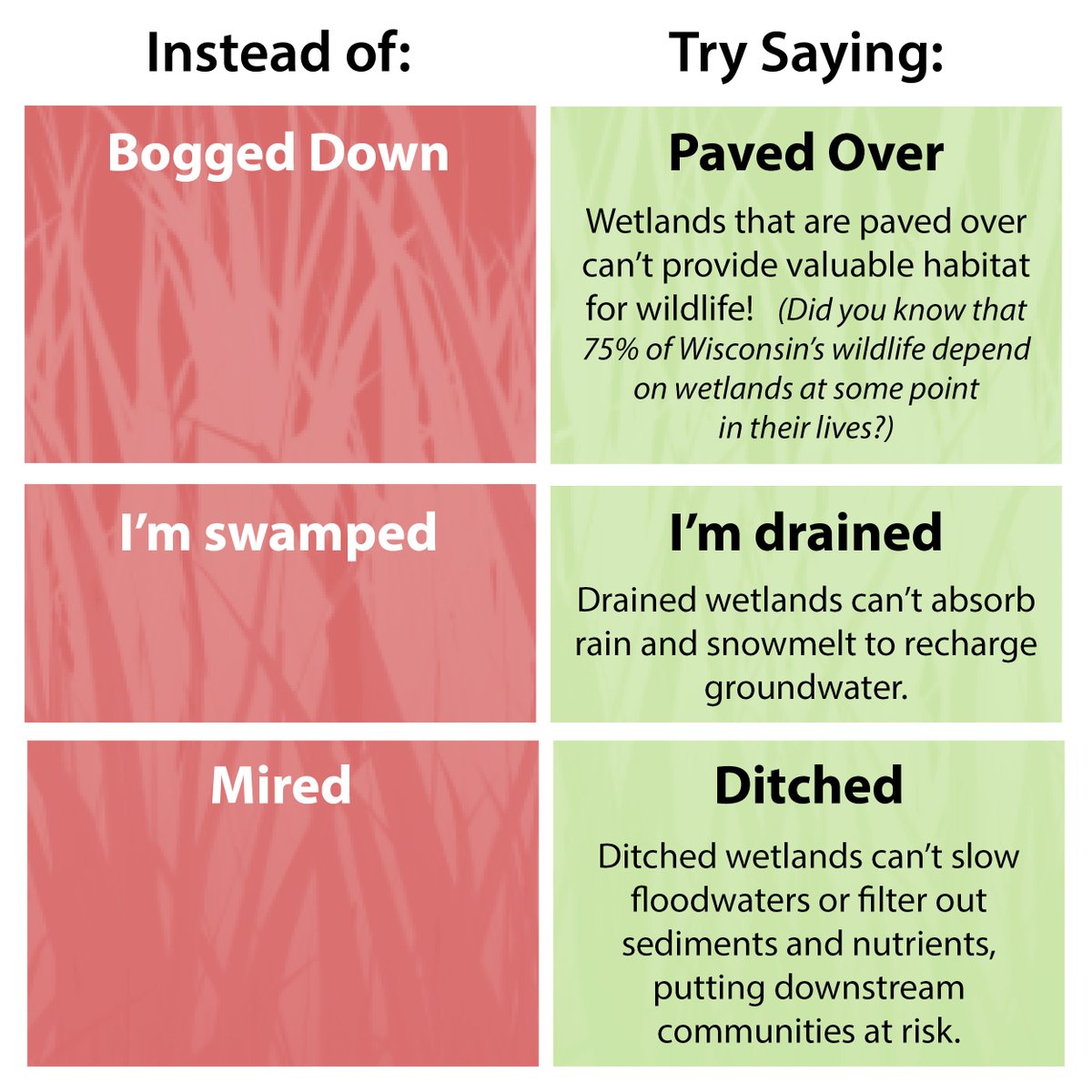
We've seen a version of this go around so we made our own! There is a long-standing + erroneous perception that wetlands are places to avoid, and it's perpetuated by some of the words we use. We invite you to replace them with these alternatives!
WWA's @KyleMagyera will join the Lake Superior Collaborative Symposium on Tues., Oct 10th to lead a special field trip! This is a follow-up to a popular work group at last spring's symposium. Learn more about the 3-day symposium and how to register here: https://t.co/mTHESnyKwA
(1/2) The Wisc. State Senate unanimously passed Senate Bill 222 to establish a Pre-Disaster Flood Resilience Grant! Thank you Wisconsin State Senators for taking action to help flood prone communities examine their flood vulnerabilities and restore wetlands to reduce flood risk!
The Lake Superior basin is an inherently flood-prone landscape. A large swath of clay soils known as the clay plain (shown here in brown) doesn’t absorb water very well—during intense storms and snowmelt, water runs off the landscape very rapidly, barreling downstream.
In the place “where food grows on the water,” the Bad River Tribe knows that if they care for their wetlands and their waters, the ecosystem will take care of them. https://t.co/tP0ZAFwt1o
For the Bad River Tribe, water is life. And protecting water means protecting the watersheds that provide water for their Reservation and people from top to bottom. Learn more and watch the full video here: https://t.co/wogslFYnRs
Great news! SB 222 (which would establish a pilot grant program focused on increasing flood resilience) is going to committee! We'll be testifying in favor to the Senate Committee on Rural Issues. Tune in to @WisconsinEye tomorrow at 10 am to watch: https://t.co/IP8VBD83xW
"We want to encourage natural flood management, allowing the land to capture, store, and slowly release runoff." #NFM#SlowTheFlow https://t.co/3BZvunR0OO
WWA's top legislative priorities are off to a great start for the 2023-2024 session! Representative Loren Oldenburg recently highlighted the Pre-Disaster Flood Resilience Grant bill in his legislative update: https://t.co/oJB19CiRZO
Happy American Wetlands Month! To celebrate, we’re releasing a new video every week showcasing how Tribes like @RedCliffTribe care for and protect wetlands for today and for future generations. Watch here: https://t.co/ORJgv115TG
Happening today! It's been a blur but the FEMA-funded Natural Flood Management Assessment is finally complete and approved by the Ashland County Board. Haz Mit Plan Addendum available at: https://t.co/QPyALOv4Cv
Tomorrow! Join us for a #WetlandCoffeeBreak featuring our very own @KyleMagyera! Hear more about our work to reduce flood risks by restoring the landscape’s natural ability to capture, store, infiltrate, & slowly release runoff: https://t.co/c48mh2W15f
THE FINAL OF THE #WetlandCup IS HERE! Who wins? BEAVER WETLANDS vs. SPHAGNUM MOSS. You decide! Vote for your winner below and make sure to give it a RT so we can get as many votes as possible!
It's incredible seeing the transition from degraded, single-thread streams into expansive beaver-engineered wetlands. And it only took a handful of #beavers to do this. Imagine what the continent and the rivers looked like prior to the Fur Trade, back when beavers were abundant!
Do you know a student interested in attending the Wetland Science Conference? Encourage them to apply for a Student Scholarship! Scholarships cover the cost of registration in exchange for a small amount of volunteering. Applications are due January 14th!
https://t.co/GQdjHO6t8b
Registration is NOW OPEN for the 2022 Wetland Science Conference!! 🌱🎉 Learn more about the conference and how to register here: https://t.co/0DthC0Cnbx
“The water we can collect before it hits those bigger tributaries is really important... the strategy is to slow and absorb that water before it impacts downstream.” https://t.co/ahqM66XaAy