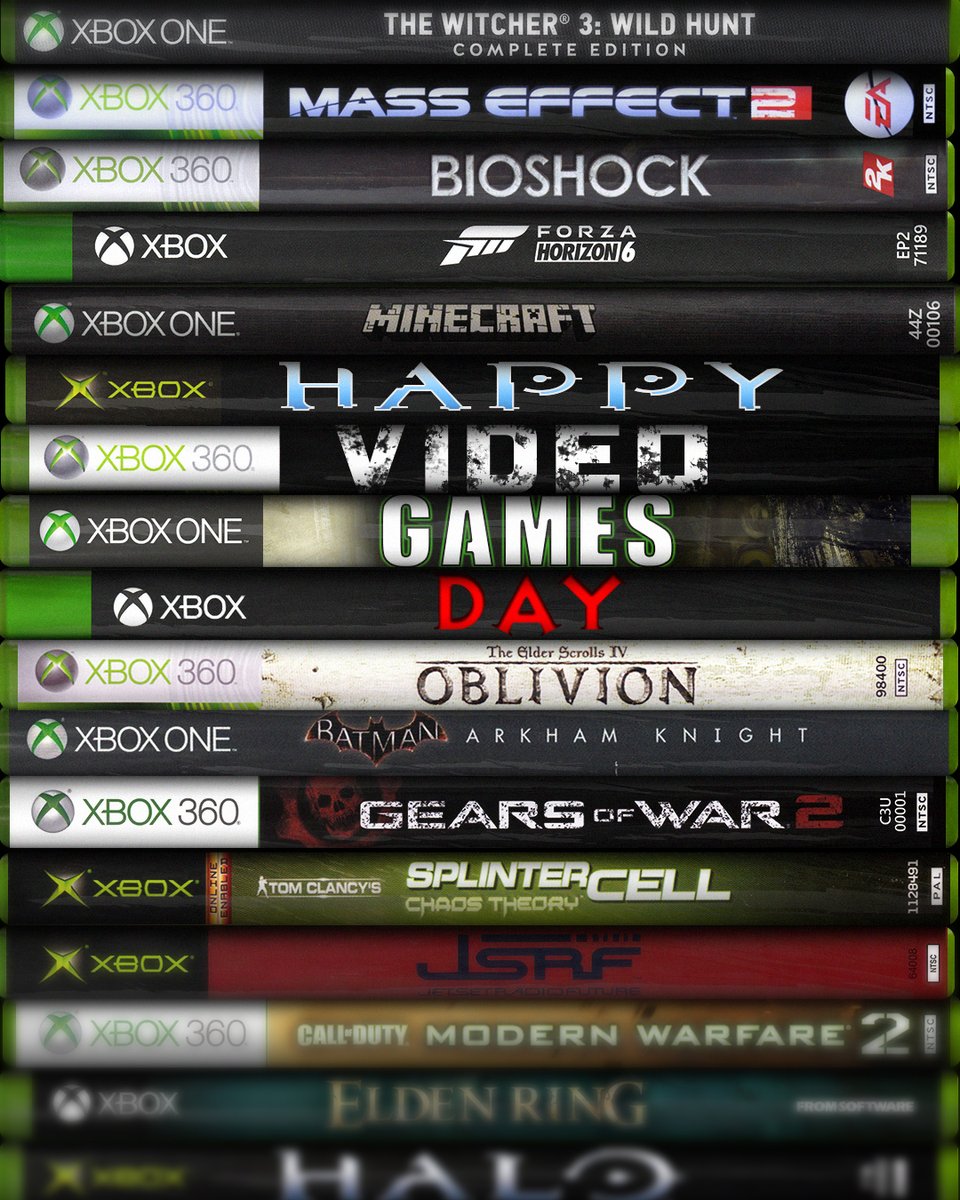
Your physical game library is more than a collection of discs. It holds years of memories and stories worth preserving. Starting next week, XBOX Insiders can unlock a digital entitlement for supported physical games. We’ll start with thousands of titles and add more as we can.
After careful consideration, we have made the difficult decision that Dying Light: The Beast will no longer be released on PlayStation 4 and Xbox One.
Dying Light: The Beast was built from the ground up to take full advantage of current-generation hardware. Its open world, advanced visuals, and fluid combat and traversal all depend on processing power and memory that previous-generation consoles simply cannot provide. As development progressed, it became clear that bringing the game to those platforms would require compromises that would prevent us from delivering the experience we set out to create.
This was not a matter of choosing to leave those platforms behind. Rather, it reflected the technical realities of development and our commitment to delivering the best possible experience.
We know many of you were looking forward to playing on PS4 or Xbox One, and we are truly sorry for the disappointment this causes. Anyone who was expecting to play on either platform will be eligible for a refund.
Thank you for your understanding and continued support.
It's been almost six months since the last update.
During this time, I've been refining the game's core systems and overall structure.
Drift Vale is still actively in development, and I'm currently working on a brand-new area with a stronger focus on speed and flow.
#gamedev
The Creator World Championship teams are ready!
⚡Meet the 72 streamers representing 12 regions in the first-ever Marvel Rivals Creator World Championship.
The fight for the $300,000 prize pool begins June 26. Watch live on Twitch and cheer for your region!
🏆 Group Stage: June 26
🔥 Grand Finals: June 28–29
📺 Live at https://t.co/SGk5YYoKfQ
God of War Laufey is the next mainline chapter in Santa Monica Studio's series.
First gameplay and story details of the newly announced PS5 action adventure: https://t.co/VTg1O9UNYX
❄️🏔️ WOOLHAVEN IS OUT NOW 🏔️❄️
Winter has come. A long-forgotten deity stirs beneath the ice.
✨Bigger than the base game at launch,
Woolhaven brings:
📜 New lore & regions
👹 New enemies & bosses
🐑 Followers, NPCs & decorations
🏠 A huge base expansion …and much more.
Video games will never be taken seriously as an art form because neither the industry nor the audience treats them as art, and the audience is the larger part of the problem. Games are treated as products to be made fast, sold loud, consumed, discarded, and replaced. That is why Call of Duty and FIFA sell in the billions, not because they endure, but because they are disposable and familiar.
This has nothing to do with graphical fidelity, art style, music, voice acting, or budget, even though players insist otherwise. For most people, “artistic merit” means how flashy, pretty, and expensive a game looks. Spectacle is mistaken for depth, and production value is confused with meaning.
Games are not built to be evergreen because the audience does not want evergreen. The people who revisit old titles, engage deeply with systems, or approach games patiently are a minority. Most want the new release, the hype cycle, and the spectacle, then move on as soon as something shinier appears. This is the same reason Avatar makes a billion dollars per film yet leaves almost no cultural footprint. Audiences want stimulation for a few hours, then the exit.
Art requires patience and trust, and games demand both. They ask players to learn systems, accept friction, and think. The audience rejects this. Anything slow, strange, or uncomfortable is dismissed as boring or pretentious, so risk is punished not just by publishers, but by players themselves.
Because of this, metrics replace meaning. Engagement time, retention, and monetisation become the measure of success, because that is what the audience rewards. Art asks what something is saying. Products ask how long you stayed logged in. Games suffer most here because their greatest strength, player agency, is treated as an inconvenience rather than an opportunity.
Legacy is impossible without permission to fail, and the audience does not allow failure. A bad novel does not kill literature. A bad film does not kill cinema. A bad game can kill a studio, because players demand perfection, constant novelty, and infinite support while rejecting experimentation.
So the ceiling stays low by choice. Not because games cannot be art, but because an audience trained on disposability, spectacle, and instant gratification will not tolerate sincerity, patience, or risk. What survives is not what lasts, but what sells loudly and disappears quietly.