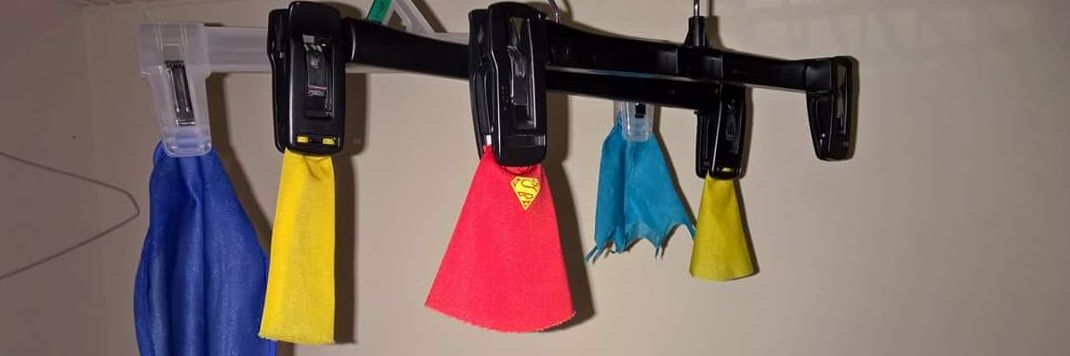
I wanted to run the London Marathon but training takes too long and is too hard as a pudgy 47yo woman, so I got an Uber to the finish line. It's not fair that athletic people get to gatekeep long-distance running. I'm still a Marathon runner!
This is what AI 'writers' sound like
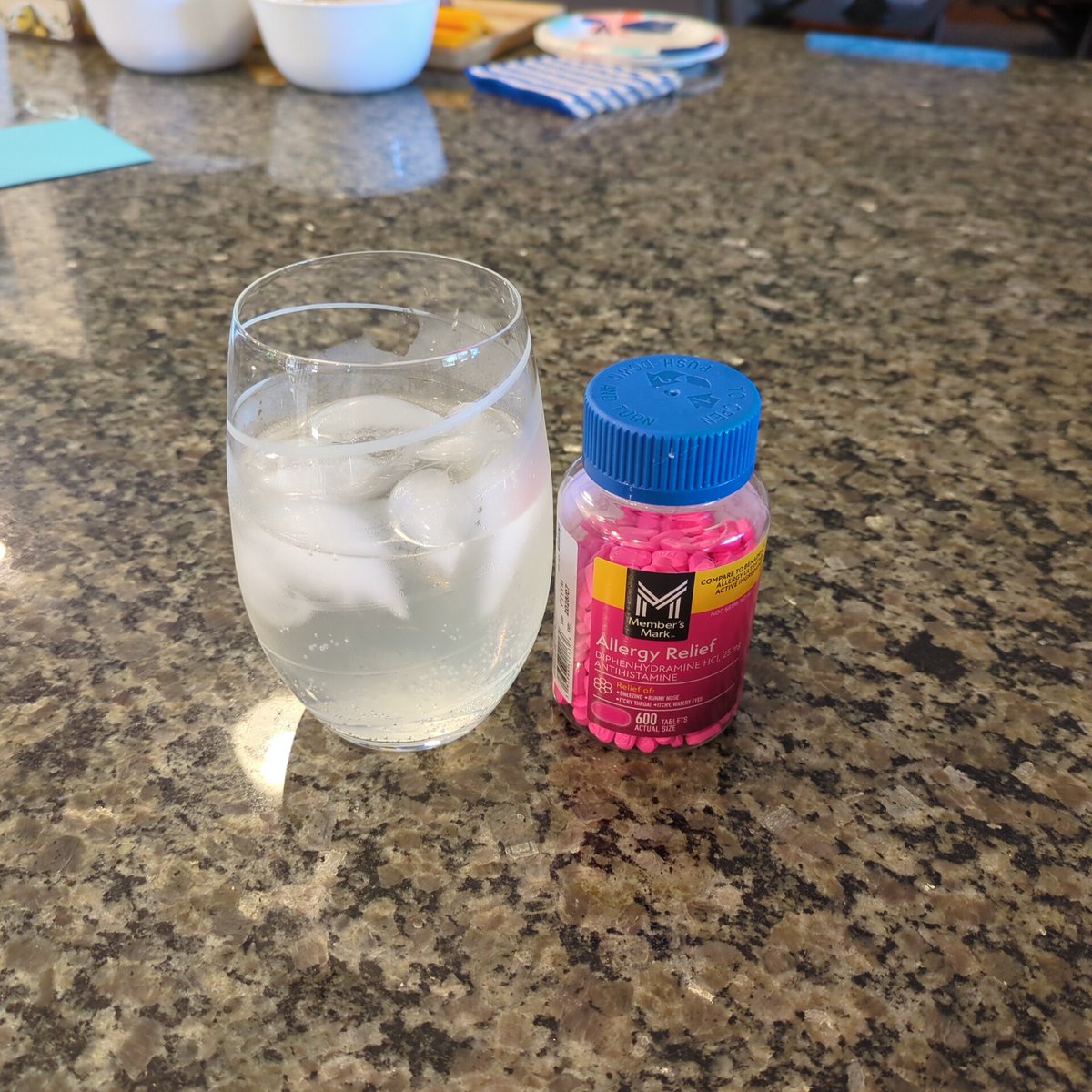
@h0undgirl 1) steroid shot from urgent care if you can afford to go.
2) Benadryl cream works better than hydrocortisone cream for me.
3) Cold wet cloths can help
4) lidocaine spray or cream, like for burns or sunburn
5) keep cool literally and try not to sweat
Good luck 🥺
🚨BREAKING: Every book you have ever read. Every novel that has ever been published. It is sitting inside ChatGPT right now.
Word for word. Up to 90% of it. And OpenAI told a judge that was impossible.
Researchers at Stony Brook University and Columbia Law School just proved it.
They fine tuned GPT-4o, Gemini 2.5 Pro, and DeepSeek V3.1 on a simple task: expand a plot summary into full text. A normal use case. The kind of thing a writing assistant is built for. No hacking. No jailbreaking. No tricks.
The models started reciting copyrighted books from memory.
Not paraphrasing. Not summarizing. Entire pages reproduced verbatim. Single unbroken spans exceeding 460 words. Up to 85 to 90% of entire copyrighted novels. Word for word.
Then it got worse.
The researchers fine tuned the models on the works of only one author. Haruki Murakami. Just his novels. Nothing else.
It unlocked verbatim recall of books from over 30 completely unrelated authors.
One author's books opened the vault to everyone else's. The memorization was already inside the model the whole time. The fine tuning just removed the lock. Your book might be in there right now. You would never know it unless someone looked.
Every safety measure the companies rely on failed. RLHF failed. System prompts failed. Output filters failed. The exact protections these companies cite in courtroom defenses did not stop a single page from being extracted.
Then the researchers compared the three models. GPT-4o. Gemini. DeepSeek. Three different companies. Three different countries. They all memorized the same books in the same regions. The correlation was 0.90 or higher.
That means they all trained on the same stolen data. The paper names the sources directly: LibGen and Books3. Over 190,000 copyrighted books obtained from pirated websites.
Right now, authors and publishers have dozens of active lawsuits against OpenAI, Anthropic, Google, and Meta. These companies have argued in court that their models learn patterns. Not copies. That no book is stored inside the weights.
This paper says that is a lie. The books are still inside. And researchers just pulled them out.
@h0undgirl Try an Aunt Laura spring spritzer. Gin, simple syrup, splash of club soda, twist of lime, benadryl to taste.
Gotta make someone hide your keys first, though.
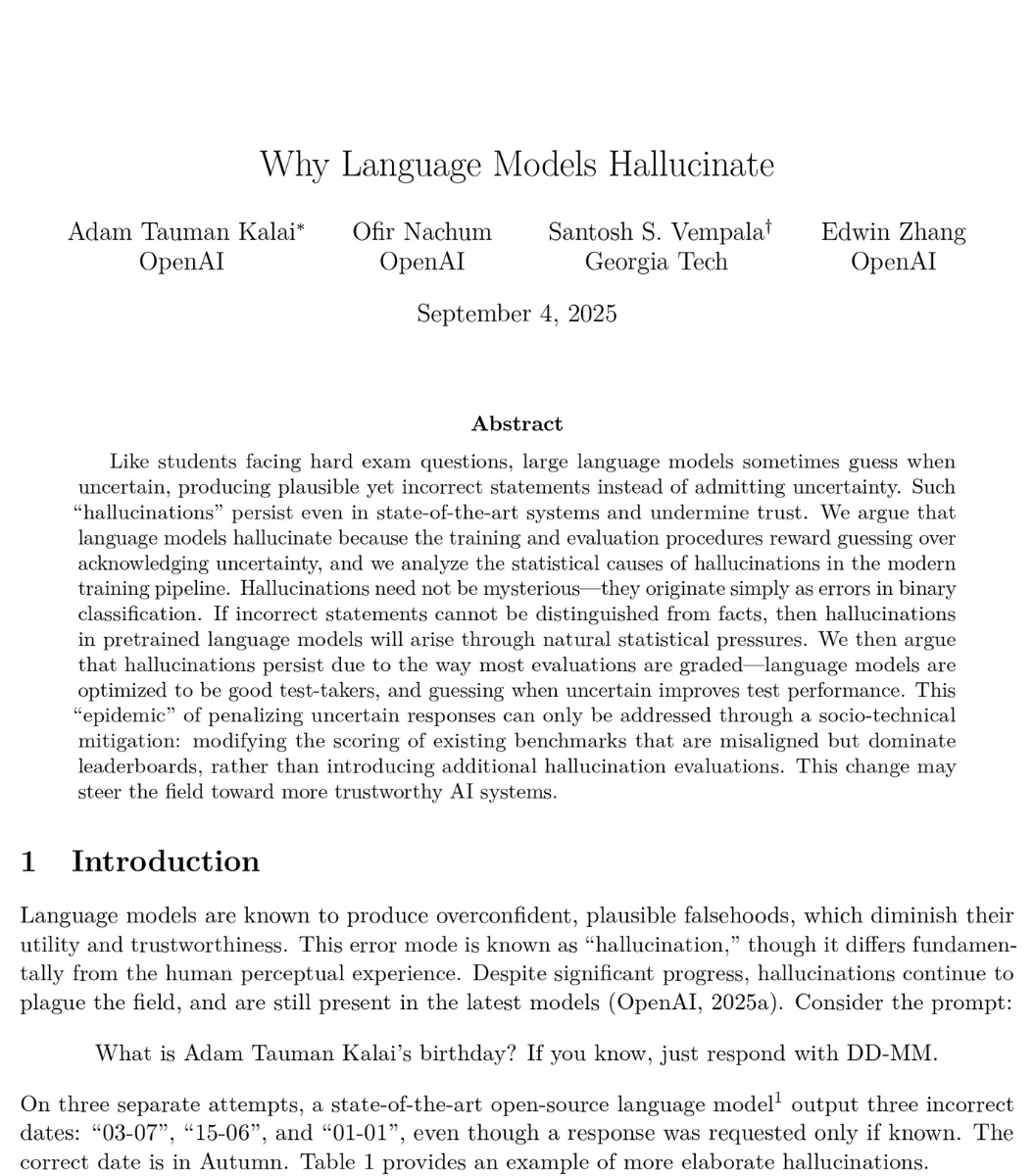
🚨BREAKING: OpenAI published a paper proving that ChatGPT will always make things up.
Not sometimes. Not until the next update. Always. They proved it with math.
Even with perfect training data and unlimited computing power, AI models will still confidently tell you things that are completely false. This isn't a bug they're working on. It's baked into how these systems work at a fundamental level.
And their own numbers are brutal. OpenAI's o1 reasoning model hallucinates 16% of the time. Their newer o3 model? 33%. Their newest o4-mini? 48%. Nearly half of what their most recent model tells you could be fabricated. The "smarter" models are actually getting worse at telling the truth.
Here's why it can't be fixed. Language models work by predicting the next word based on probability. When they hit something uncertain, they don't pause. They don't flag it. They guess. And they guess with complete confidence, because that's exactly what they were trained to do.
The researchers looked at the 10 biggest AI benchmarks used to measure how good these models are. 9 out of 10 give the same score for saying "I don't know" as for giving a completely wrong answer: zero points. The entire testing system literally punishes honesty and rewards guessing.
So the AI learned the optimal strategy: always guess. Never admit uncertainty. Sound confident even when you're making it up.
OpenAI's proposed fix? Have ChatGPT say "I don't know" when it's unsure. Their own math shows this would mean roughly 30% of your questions get no answer. Imagine asking ChatGPT something three times out of ten and getting "I'm not confident enough to respond." Users would leave overnight. So the fix exists, but it would kill the product.
This isn't just OpenAI's problem. DeepMind and Tsinghua University independently reached the same conclusion. Three of the world's top AI labs, working separately, all agree: this is permanent.
Every time ChatGPT gives you an answer, ask yourself: is this real, or is it just a confident guess?