We invite filmmakers & artists of all skill levels to celebrate Public Domain Day on January 24, 2024, by creating & uploading short films using materials from the public domain!
📆 Deadline: Jan 17, 2025
💰 First prize: $1,500
👉 Details: https://t.co/zBDJ1yO3M7
"We currently face a situation in which publishers are attempting to dictate how and when researchers can do that work, even when authors’ fair use rights to use and derive new understandings from scholarship clearly allow for such uses." https://t.co/W8EEJxe1yi @Auths_Alliance
Happening TODAY! Join this Open Copyright Education Advisory Network webinar today for its semi-annual litigation update, featuring our very own Yuanxiao Xu:
https://t.co/lgn8jsHIzL
Public Domain Day is less than a month away! What’s entering the US public domain in 2025? Here’s a sneak peek from Duke’s CSPD! https://t.co/r107A0qWyn
As you use recipes you found online this week in preparation for Thanksgiving, remember that doing so is protected by fair use! Re:Create is thankful for the fair use doctrine and its enhancement of creativity & innovation🦃🍂
Thanksgiving is right around the corner! From sweet potato casserole to mac and cheese -- you can find a version of your favorite recipe in the North Carolina Collection's cookbooks! Read more: https://t.co/OT4XvGqZfg
What's up with CDL after the Hachette Decision?
Join LCI and ASERL on Friday, 11/22 at 1pm ET for a discussion on the future of CDL.
📅Register here: https://t.co/0wJRuE7l4g
We are delighted to share that Authors Alliance and @SPARC_NA have released the first of four planned white papers addressing legal issues surrounding open access to scholarly publications under the 2022 OSTP memo (the “Nelson Memo”). The white papers are part of a larger project (described here) to support legal pathways to open access. This first paper discusses the “Federal Purpose License,” which is newly relevant to discussions of federal public access policies in light of the Nelson Memo.
Direct link to the whitepaper: https://t.co/Nq0znYea26
This is a link to supporting materials: https://t.co/GFs5JesYSC
More:
The FPL, found in 2 C.F.R. § 200.315(b), works like any other copyright licensing agreement between two parties. It is a voluntary agreement between author and agency that, as a condition of federal funding, the agency reserves a nonexclusive license to “reproduce, publish, or otherwise use the work for Federal purposes and to authorize others to do so.” The FPL was updated, effective October 1, to clarify that the reserved license specifically includes the right to deposit copyrighted works produced pursuant to a grant in agency-designated public access repositories.
With the OSTP memos instructing all agencies to make the results of federally-funded projects available to the public immediately upon publication, the FPL provides an elegant legal basis for doing so. Because the FPL is a signed, written, non-exclusive license that springs to life immediately when copyright in the works vest, it survives any future transfers of rights in the work. As a part of Uniform Guidance for all grant-making agencies, it provides consistency across federal grants, simplifying things for grant recipients, who have plenty of other things to worry about (it’s not entirely uniform, though, since some agencies have supplemented the FPL with License text of their own, expanding their rights under the License).
This protects both agencies and authors. Agencies must have permission in order to host and distribute works in their repositories. The FPL ensures that the agency has that authorization and that it continues even after publication rights have been subsequently assigned to a publisher. Meanwhile, authors are—or will be—required under their grant agreements to deposit their federally-funded peer-reviewed articles in the agency’s designated repository. The FPL ensures that, even if an author were to sign exclusive rights in a work to a publisher prior to complying with the deposit mandate, the author could still do so, despite no longer having any rights in the work herself.
The paper analyzes two ambiguous points in the FPL, namely, the scope of what rights agencies have as “Federal purposes” and what rights the agency may subsequently authorize for third parties. As there are no clear answers to these questions, the paper does not draw conclusions; it does, however, attempt to give some context and basis for how to interpret the FPL.
The next papers in this series will explore issues surrounding the legal authority underlying the public access policy, article versioning, and the policy’s interaction with institutional IP policies. Stay tuned for more!
"Previously, building a large-scale collection of film to carry out empirical analysis had largely not been possible in the United States due to copyright restrictions, including restrictions on circumventing digital locks"
We're glad that is no longer the case!
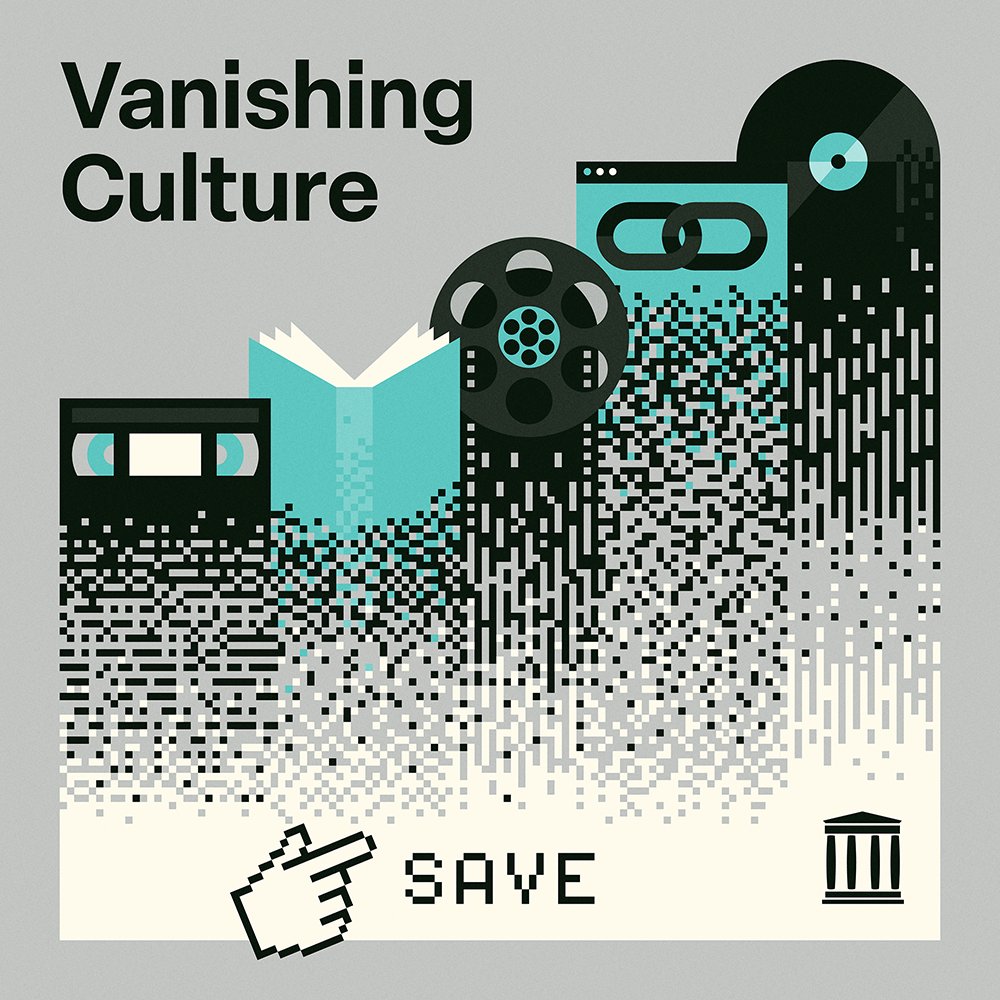
The Vanishing Culture report arrives today at a critical moment: While @internetarchive recovers from a cyberattack, it’s a reminder of how fragile our access to knowledge can be. Preserving culture & history requires resilience—and collective action.
🔗 https://t.co/IcGMa396TJ
We are super pleased to see that the Librarian of Congress and the Copyright Office accepted our petition to renew and expand (c) DMCA exemptions for text and data mining research!
More soon from us breaking down what the new rule means: https://t.co/RabGMybe8f
What's up with CDL after the Hachette Decision?
Join LCI and ASERL on Friday, 11/22 at 1pm ET for a discussion on the future of CDL.
📅Register here: https://t.co/0wJRuE7l4g
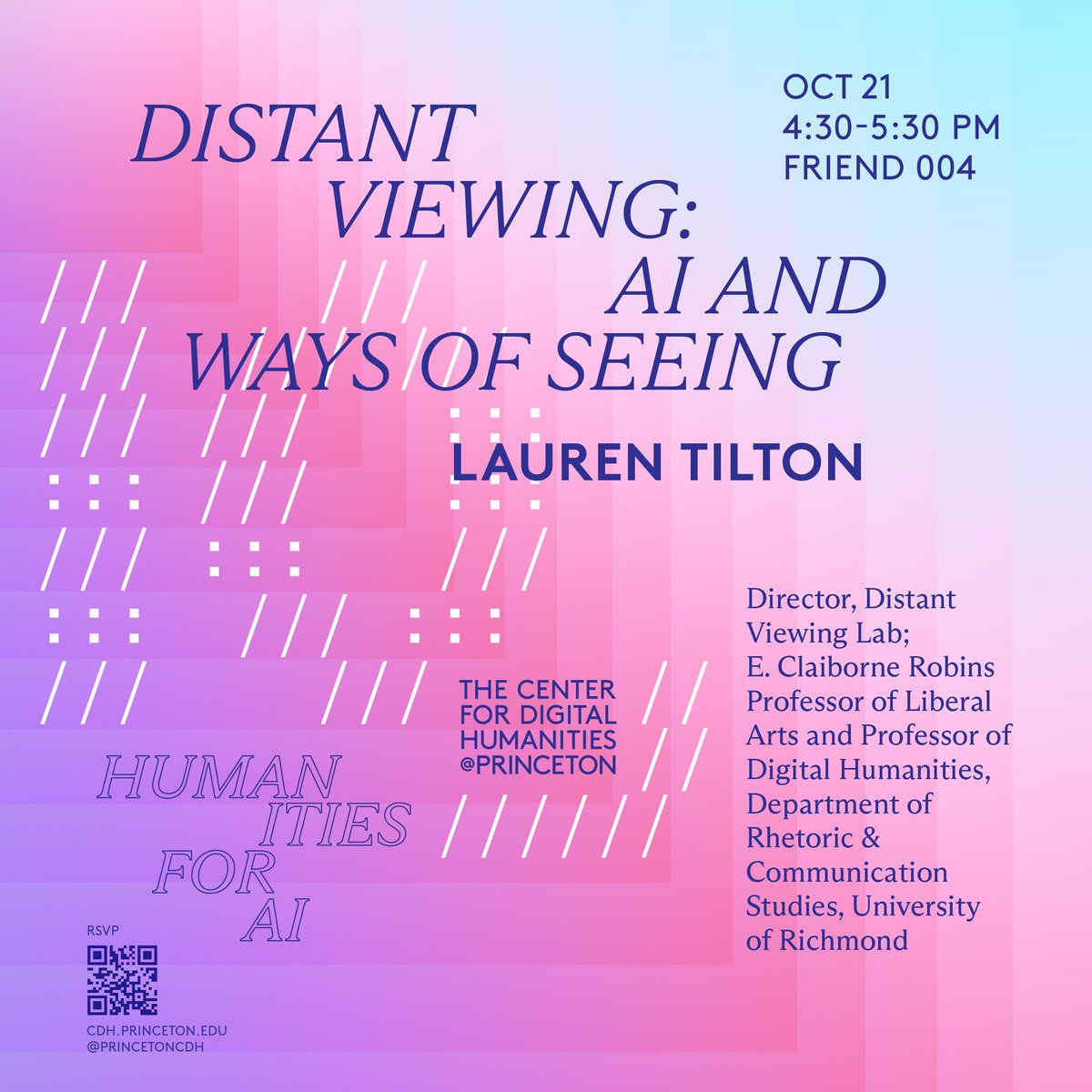
How do computers “view” images, and how can viewing with them inform our understanding of the past? Join us tomorrow 10/21 at @princeton for "Distant Viewing: AI and Ways of Seeing," with @nolauren (University of Richmond; @DistantViewing Lab). Info/RSVP: https://t.co/Rj8V7iw1FZ
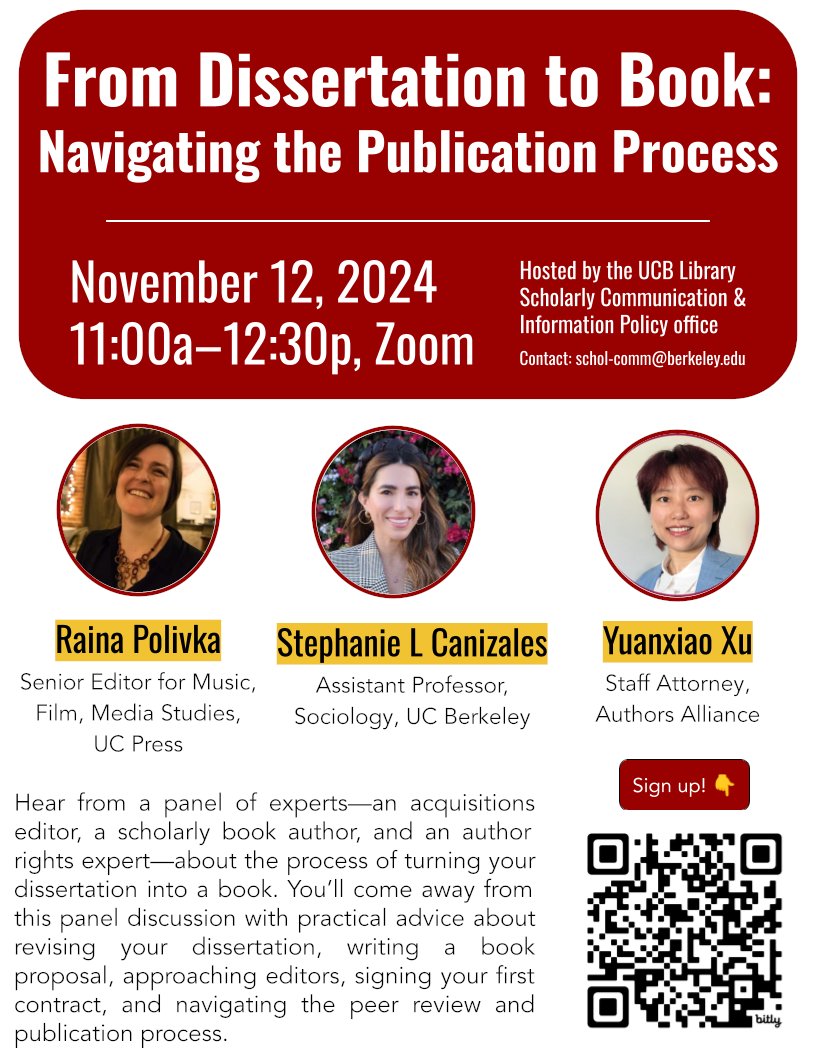
RSVP now for our upcoming panel discussion on how to publish a scholarly book. Hear on-the-ground advice from a UC Press editor, recent Berkeley author, and legal expert. Sign up: https://t.co/ZMgUX8c7bi @UCBerkeleyLib@ucpress@UCBerkeley@Auths_Alliance
EXCLUSIVE: Inside the $621 Million Legal Battle For the "Soul of the Internet"
Major record labels have sued the online library Internet Archive over thousands of old recordings, raising the question: Who owns the past?
Story:
Our hearts go out to everyone in Western North Carolina and those affected by the devastating impact of Hurricane Helene. The Libraries have resources for UNC System students, faculty, and staff who have been displaced from their home institutions. https://t.co/N8RQsnZlsx
Regional cookbooks are more than recipes—they're a window into our shared cultural traditions and histories. Preserving these practical guides ensures future generations can savor the stories of our past. 🍲📚 #VanishingCulture
Read more: https://t.co/u0AKX4CFHL
Join the Association of Southeastern Research Libraries (ASERL) & the Library Copyright Institute for a discussion on the recent Hachette v. Internet Archive decision and its impacts on Controlled Digital Lending and libraries.
📅 November 1 @ 1pm ET
🔗 https://t.co/fT3cmjFAMw