Ph.D. in Biology/Neuroscience
Professor, Univ So Florida
My second career focuses on cardiovascular disease
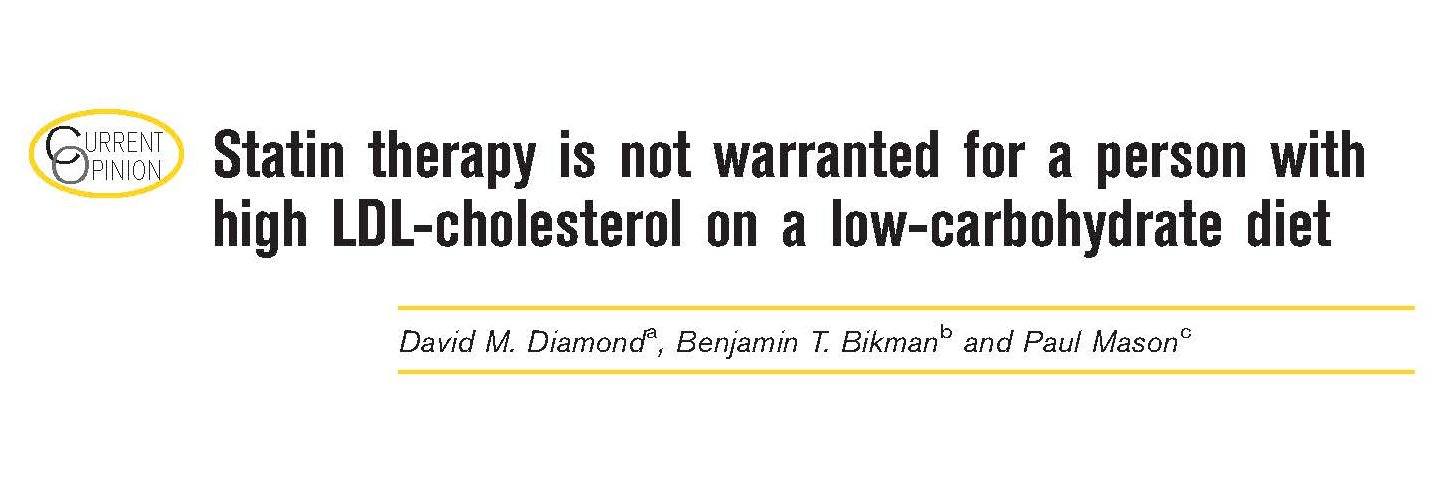
I'm skeptical of LDL cholesterol as a cause of CVD
I’ve spent 28 million dollars over the last nine years suing the United States government to find out what science actually backs the claim that vaccines are safe and effective. Here’s what I can tell you for certain. There has never been a safety trial using a saline placebo injection- one group vaccinated, one group given saline- for any vaccine we give our children. Not one.
So when someone says there’s a mountain of evidence, that autism has already been studied and debunked, that statement is categorically false. The small amount of research that exists was conducted by the pharmaceutical industry itself, nobody independent.
The same companies standing to make billions of dollars are the ones who produced the only data we have.
This is not what the evidence shows. The host doesn't know it because she doesn't actually read, and Dariush Mozaffarian has a long history of suspicious scholarship.
For example, he has recently cited a clinical trial to argue that seed oils (high omega-6 oils) are anti-inflammatory, when the data cited shows no such thing.
The trick that's played is that the cited trials START people on sunflower oil, which is ultra-high in omega-6 with very little omega-3 or MUFA.
Then, the experimental groups are moved to much lower omega-6 oils like canola (seed derived) or olive oil (fruit derived). Those groups do indeed see drops in inflammatory markers, but their omega-6 (linoleic acid) intake went DOWN, not up, while their MUFA and omega-3 intake went up.
The entire point with "seed oils" is that the high omega-6 (linoleic acid) content is the issue. But there are oils from seeds, such as canola, which have much lower linoleic acid content (plus higher omega-3 content) than other seed oils.
Canola oil is an exception to the general rule that seed-derived oils often have high omega-6 + low omega-3 content, but this fact is obscured by people like Mozaffarian.
If you compare canola (lower omega-6) to sunflower (very high omega-6), you see different effects... but because both derive from seeds, people like Mozaffarian wave their hands as say, "Look! Inflammation went down on a seed-derived oil!"
Images below break down how people like Mozaffarian misrepresent the literature to make these claims.
Much of Mozaffarian's career has been funded by companies like Unilever.
The meta-analyses from Mozaffarian that people often cite as evidence that omega-6 PUFAs are healthy do not hold up to scrutiny. The problem is that almost no one takes the time to read and scrutinize them.
I did that here: https://t.co/fFkBiZ5Z0H
And here: https://t.co/aJOfe8EKAj
And then there's the simple, ignored fact that there are large RCTs showing that swapping in omega-6 PUFAs for other fats leads to... more death.
You have never eaten a chicken. You have eaten a feed bag in the shape of one.
A chicken has one stomach and six weeks to live. A pig has one stomach and six months. Neither has anywhere to send what it eats except straight into itself, so that is where it goes. Corn oil in, corn oil on. Soya in, soya on. The fat on a chicken thigh or a pork belly is a printed receipt for the cheapest ration the mill could mix, and it carries five to ten times the seed fat of anything that ever grazed.
Rubbish in, rubbish out, and then onto a plate with a heart logo.
A ruminant has a quality department. Before a mouthful of anything reaches the animal, it spends two days in the rumen, a warm vat the size of a bathtub holding more microbes than there have ever been people.
They take plant fat apart and harden it.
They build B12 from scratch, which no plant and no pig has ever managed.
They turn grass, which has nothing in it you could live on, into the protein that ends up as steak.
They dismantle a list of plant poisons that would put you in bed for a week.
Then the animal eats the microbes.
A cow lives on a private herd she keeps in her own belly. The grass is what she feeds them. So is the grain, when there is any, and they deal with it the same way. Fifty million years of development, and the whole system exists to make sure that what went in at the front has no say in what comes out as meat.
The pig hands you what it was handed. The chicken does the same, faster, and gets called the healthy option.
The ruminant hands you beef. Every time. Whatever was in the trough.
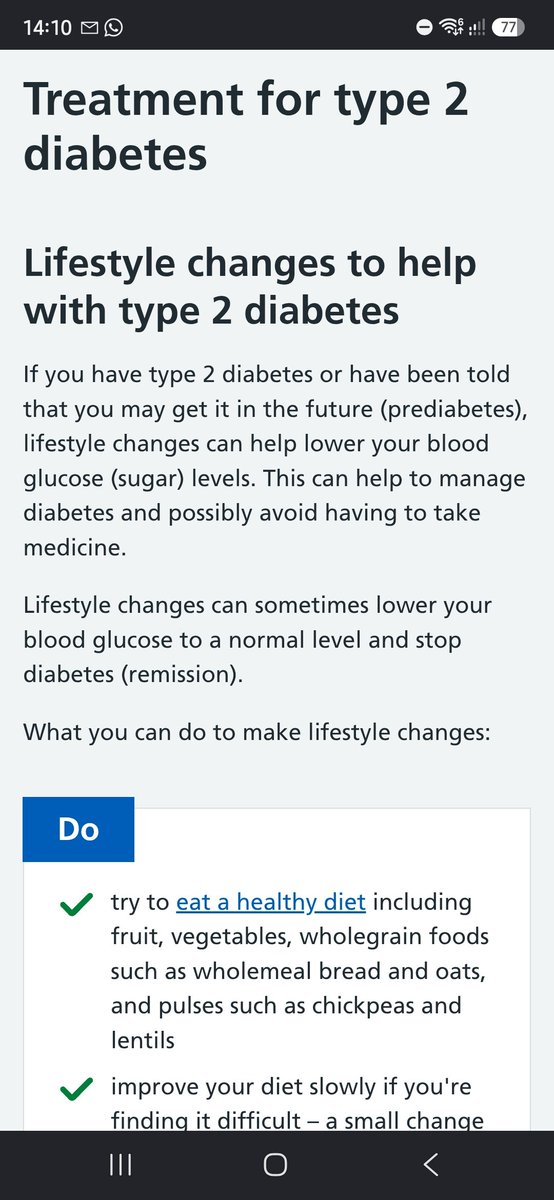
Deb - I agree the site could use more recipes but I think overall they provide excellent guidance for someone with diabetes. The recipes clearly aren't as varied and creative as yours, but overall the site gives better guidance and some basic recipes for someone to start reversing their T2D.
https://t.co/fr4TWBtUNf
I highly recommend everyone to donate to the American Diabetes Society. Go to their web site for the real evidence-based science underlying diabetes and meal plans that can reverse diabetes symptoms.
https://t.co/SYZyJ7azIU
@KenDBerryMD@lowcarbGP@lowcarbusa@markkaplan20@bigfatsurprise@BenBikmanPhD
@grok@JAC4SC@eINstigator@LiveAncestral@grok The massive statin benefit cited in the 4S study (9%) has not been replicated in any subsequent study. Is it a cause for concern that the 4S study data were analyzed by T. Cook, a Merck employee, not an individual without a COI?
This graph showcases someone who beat T2 Diabetes by going low carb TEN YEARS AGO! In just 38 days 🥳 Our UK NHS practice has 158 others who have eaten their way into better heath and drug free diabetes remission 👍 @WDD@DiabetesUK Just avoid food that puts your blood sugar up!!
The potato is being sold as a health food again, and the only healthy thing about it has ever been the fat poured over it.
It is a nightshade. It is about 80% water, and the rest is starch that hits your blood faster than table sugar does. For 450 years it has been the thing beside the meat, and not one cuisine on earth has made it worth eating without animal fat.
Chips in beef dripping. Roasties in goose fat. Mash beaten with half a pack of butter and hot cream. Dauphinoise, which is a pint of cream with some potato in it. Aligot, so heavy with cheese it stretches a yard off the spoon. Latkes in schmaltz, boxty in bacon fat, champ with a well of melted butter in the middle, and the jacket potato that nobody in history has ever eaten dry.
Europe did not want it. It arrived from the Andes in the 1570s, grew underground, belonged to the same family as deadly nightshade, and spent the best part of two centuries as pig feed. Frederick the Great had to order Prussia to plant it in 1756, and Russian peasants rioted when they were made to.
They had a point. The potato defends itself with solanine, a nerve toxin packed into the skin, the eyes, the sprouts and any patch gone green. In 1979, 78 schoolboys in south London were poisoned by a school dinner of potatoes that had been stored too long, and 17 of them ended up in hospital.
The Irish labourer of the 1840s ate up to 14 pounds of potatoes a day and stood taller than the English recruits beside him in the army. The part always left out is the buttermilk he drank with them by the quart, and the butter whenever he could get it. It was the dairy doing the nourishing, with the potato as ballast. When the crop failed in 1845, a million people died while Irish cattle and butter went on being shipped to England.
On its own, the starch in a medium jacket potato comes apart into roughly nine teaspoons' worth of glucose, and it starts doing so in your mouth.
For a lean, active person with a steak in front of them, a potato roasted in dripping is a pleasant way to eat more dripping. For somebody carrying three stone they cannot shift, with a liver that has been fielding glucose since breakfast for thirty years, it is a sugar surge in a cardigan, and calling it a whole food is how they stay stuck.
The potato was never the meal. It earned its seat at the table on the strength of what ran off the meat, and that is still the only seat it deserves.
@lowcarbGP@drjenunwin wonderful post David - your values, scholarship and care for your patients come from a great upbringing and family, guided as well by Jen
Statins lower cholesterol by blocking the pathway your body uses to make it.
That same pathway also makes CoQ10, which your mitochondria need for energy, and that's a big part of why so many on statins get muscle aches.
Dr. Paul Saladino explains, and says why most doctors won't take their patients off one: 🧵
Murthy S, Green C, Berry L, for the REMAP-CAP Investigators. Oseltamivir for critically ill patients with influenza: a randomized trial. Lancet preprint, 27 Jul 2026. doi:10.2139/ssrn.7172531
In 442 critically ill patients ≥12 y with confirmed influenza, 90-day mortality was 19.4% (10-day oseltamivir) and 19.8% (5-day) vs 13.7% (no antiviral). Bayesian analysis showed >98% probability of harm; arms stopped for inferiority. Applies only to ICU-level illness.