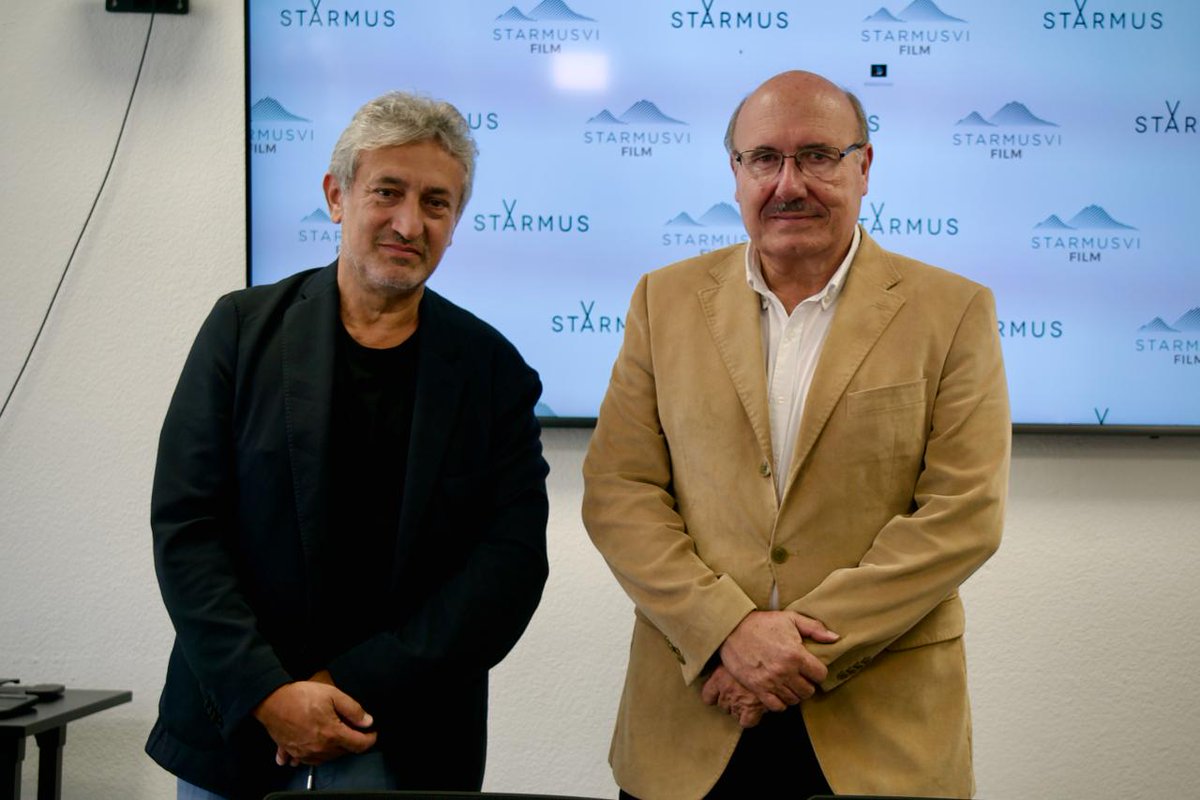
The list of contributed talks for the ICE-9 is already out!
https://t.co/o45e3HIIg8
It was very hard to choose from the whopping 129 top-quality submissions received!
Whether you got an oral or a poster presentation, do not delay registering and booking your accommodation.
ONE YEAR UNTIL THE SHIFT2025!🤩🧬🧪✨️🌞🔋⚡️13-17th October 2025 @ULL Tenerife, Canary Islands, Spain. Up to 42 univ./16 countries🌍🌎🌏already confirmed
Stay tuned 🌐 https://t.co/2C9NWgoezi
ABSTRACT SUBMISSION 📝 OPEN (deadline 30th May 2025) see👉🏻
https://t.co/zB75bOMzZ9
Ya somos más de 7600 cajalianos. Gracias a todos.
Puedes retuitear esta hermosa imagen de Cajal, y no sabemos si te dará suerte, pero seguramente ayude a que se apunte más gente a esta comunidad de amigos de la neurociencia y de las cosas útiles, verdaderas y bellas.
The #NobelPrizeinPhysics2024 for Hopfield & Hinton rewards plagiarism and incorrect attribution in computer science. It's mostly about Amari's "Hopfield network" and the "Boltzmann Machine."
1. The Lenz-Ising recurrent architecture with neuron-like elements was published in 1925 [L20][I24][I25]. In 1972, Shun-Ichi Amari made it adaptive such that it could learn to associate input patterns with output patterns by changing its connection weights [AMH1]. However, Amari is only briefly cited in the "Scientific Background to the Nobel Prize in Physics 2024." Unfortunately, Amari's net was later called the "Hopfield network." Hopfield republished it 10 years later [AMH2], without citing Amari, not even in later papers.
2. The related Boltzmann Machine paper by Ackley, Hinton, and Sejnowski (1985) [BM] was about learning internal representations in hidden units of neural networks (NNs) [S20]. It didn't cite the first working algorithm for deep learning of internal representations by Ivakhnenko & Lapa (Ukraine, 1965)[DEEP1-2][HIN]. It didn't cite Amari's separate work (1967-68)[GD1-2] on learning internal representations in deep NNs end-to-end through stochastic gradient descent (SGD). Not even the later surveys by the authors [S20][DL3][DLP] nor the "Scientific Background to the Nobel Prize in Physics 2024" mention these origins of deep learning. ([BM] also did not cite relevant prior work by Sherrington & Kirkpatrick [SK75] & Glauber [G63].)
3. The Nobel Committee also lauds Hinton et al.'s 2006 method for layer-wise pretraining of deep NNs (2006) [UN4]. However, this work neither cited the original layer-wise training of deep NNs by Ivakhnenko & Lapa (1965)[DEEP1-2] nor the original work on unsupervised pretraining of deep NNs (1991) [UN0-1][DLP].
4. The "Popular information" says: “At the end of the 1960s, some discouraging theoretical results caused many researchers to suspect that these neural networks would never be of any real use." However, deep learning research was obviously alive and kicking in the 1960s-70s, especially outside of the Anglosphere [DEEP1-2][GD1-3][CNN1][DL1-2][DLP][DLH].
5. Many additional cases of plagiarism and incorrect attribution can be found in the following reference [DLP], which also contains the other references above. One can start with Sec. 3:
[DLP] J. Schmidhuber (2023). How 3 Turing awardees republished key methods and ideas whose creators they failed to credit. Technical Report IDSIA-23-23, Swiss AI Lab IDSIA, 14 Dec 2023. https://t.co/Nz0fjc6kyx
See also the following reference [DLH] for a history of the field:
[DLH] J. Schmidhuber (2022). Annotated History of Modern AI and Deep Learning. Technical Report IDSIA-22-22, IDSIA, Lugano, Switzerland, 2022. Preprint arXiv:2212.11279. https://t.co/Ys0dw5hkF4 (This extends the 2015 award-winning survey https://t.co/7goTtI5Uwv)
Hopefully this is a sign than the Nobel prize committee will be taking a much broader view of what qualifies as important theoretical work in the future! But it seems slightly peculiar to start that trend with work that would be most naturally classified as computer science 7/7
Nuestra tecnología de estructuración 3D de fibras ópticas, considerada oficialmente como 'key innovation' por el Innovation Radar de la @EU_Commission
Este reconocimiento es ante todo importante para nuestra casa, la Universidad de La Laguna @ULL.
https://t.co/vDEeSCnp3L
Our technology for 3D structuring optical fibers, officially considered as a “key innovation” by the European Commission’s Innovation Radar.
This official EU recognition is foremost important for our house, Universidad de La Laguna.
https://t.co/vDEeSCnp3L
There is little time left to apply for the @ERC-funded PhD and postdoc positions in my new lab in beautiful Regensburg! Check out and RT please :) @jrRNAscientists
https://t.co/t40Knh57yq
Currently recruiting for an EPSRC DTP funded PhD student to start in Jan 2025 to work on the following Project : Advanced Surface Enhanced Spatially Offset Raman Spectroscopic Imaging for Deep Minimally Invasive Clinical Applications
See https://t.co/hUocC6OGHD for background
HISTORY OF PHYSICS
Marcel Grossmann & Albert Einstein
Marcel Grossmann studied mathematics at the Zurich Polytechnikum (today @ETH) was a good and close friend of Einstein.
Since Einstein did not attend class regularly and did not pay particularly close attention to some
1/
July is always the best month for research at the uni.
Students are gone, the spaces are silent and everything is relaxing. Attention to detail is gained.
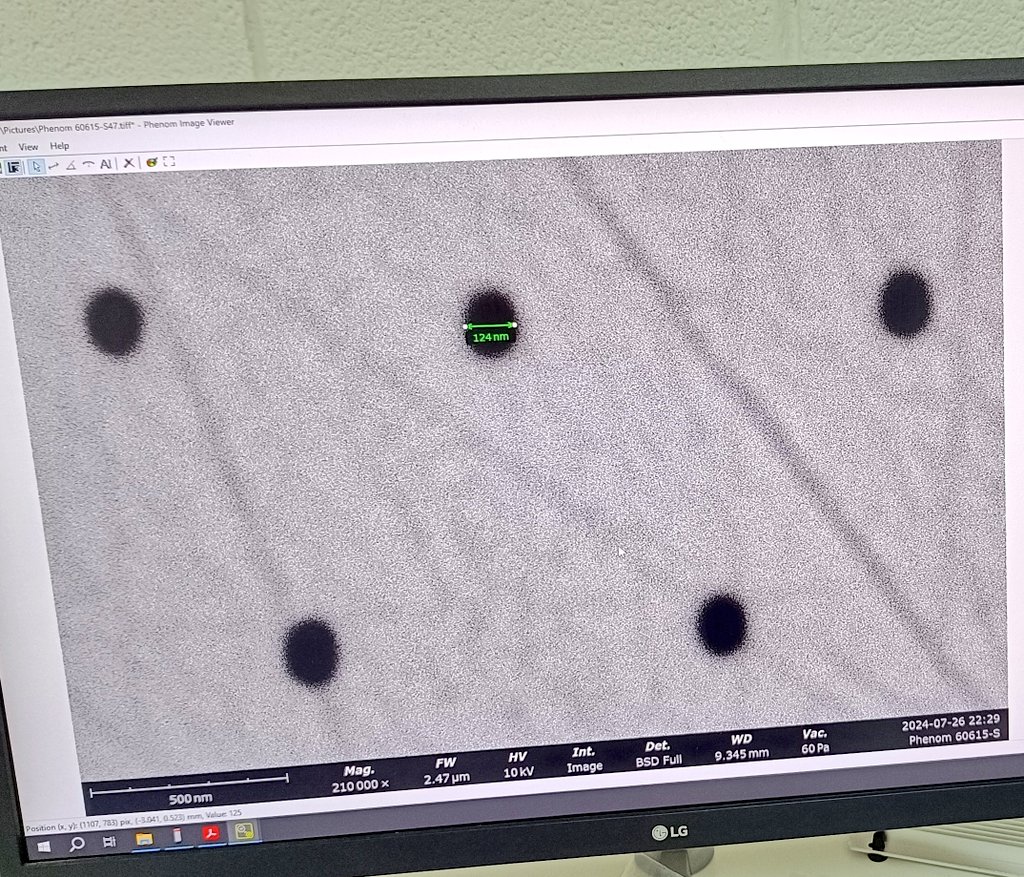
@LEAPlab_ULL: 3D nanostructuring solid state media for next generation photonics.