Fifteen years ago!
The publication of “A vulnerability Approach to the Definition of the Middle Class” (with Eduardo Ortiz-Juarez @eduardoortizj ) influenced deeply the way we measure the evolution of poverty, vulnerability, and middle class as a long-term indicator of policy success.
https://t.co/FKwhH7IxOC
Rethinking How We Measure the Middle Class:
Over the past two decades, Latin America has celebrated significant growth in its middle class. Yet a critical question persists: are we actually measuring what matters?
Traditional definitions used to rely on simple income thresholds—$2-13/day. The conceptual problem is fundamental: these measures conflate economic survival with economic security. A household earning $7/day may technically qualify as middle class, but remains vulnerable to poverty. One health shock, one job loss, and that family falls below the poverty line.
This flaw became evident, for example, during the 2008-2009 financial crisis. Using conventional metrics, the middle class actually expanded in Mexico and Peru—even as poverty increased. This counterintuitive result reveals a critical limitation: our measurement tools cannot distinguish between legitimate growth and households moving temporarily across arbitrary income cutoffs.
With Eduardo Ortiz-Juárez, we propose an alternative: defining the middle class through vulnerability to poverty. Using longitudinal panel data from Chile, Mexico, and Peru, we identified the income threshold where households face only a 10% probability of falling into poverty. That threshold—approximately $10/day PPP—represents the lower bound of genuine middle class status (this threshold has been updated to around 17 dlls PPP more recently)
This framework yields three critical insights: growth becomes credible and consistent with actual economic cycles; the vulnerable are clearly distinguished from the truly middle class; and policy intervention can be precisely targeted to where it matters most—that income gap where education, skills training, and labor formalization deliver highest returns.
Por fin alguien de acuerdo conmigo. Yero
Perdió Aguirre. Cómo lo perdió en 2002 y en 2010. Así como nunca ganó nada. Siempre he pensado que el mérito en la carrera de Javier Aguirre ha sido siempre lograr que la mediocridad resulte funcional. Y eso, tarde o temprano, se queda en simple mediocridad.
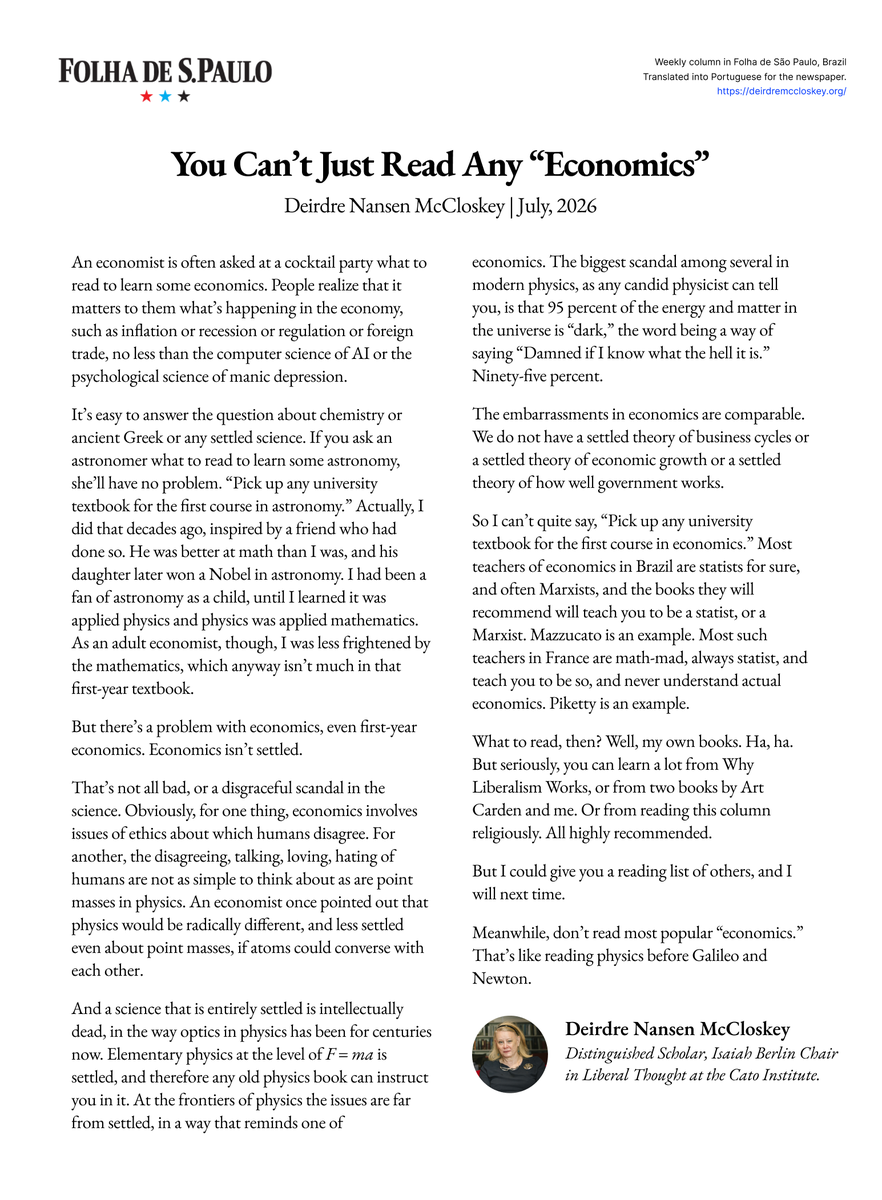
An economist is often asked at a cocktail party what to read to learn some economics.
It’s easy to answer the question about chemistry or ancient Greek or any settled science. If you ask an astronomer what to read to learn some astronomy, she’ll have no problem.
But there’s a problem with economics, even first-year economics. Economics isn’t settled.
My latest column for @folha
Climate inaction could become increasingly costly for The Gambia, with economic losses projected to rise from an average of 3.5% of GDP in the 2030s to 9.3% by 2050.
Climate change is also expected to slow poverty reduction, potentially increasing the poverty rate by 1.2 percentage points by mid-century due to floods, droughts, extreme heat, sea level rise, and land degradation.
The latest @WorldBankGroup Gambia Country Climate and Development Report shows that aligning climate action with national development priorities could reduce long-term GDP losses to around 2.6% by 2050.
It identifies four priorities for building resilience: climate-smart agriculture, protecting coastal and urban assets, strengthening energy, water, and transport systems, and safeguarding tourism and infrastructure-led growth.
I highly recommend this report to anyone interested in how climate resilience and development can advance together: https://t.co/Eb4URFrfSt
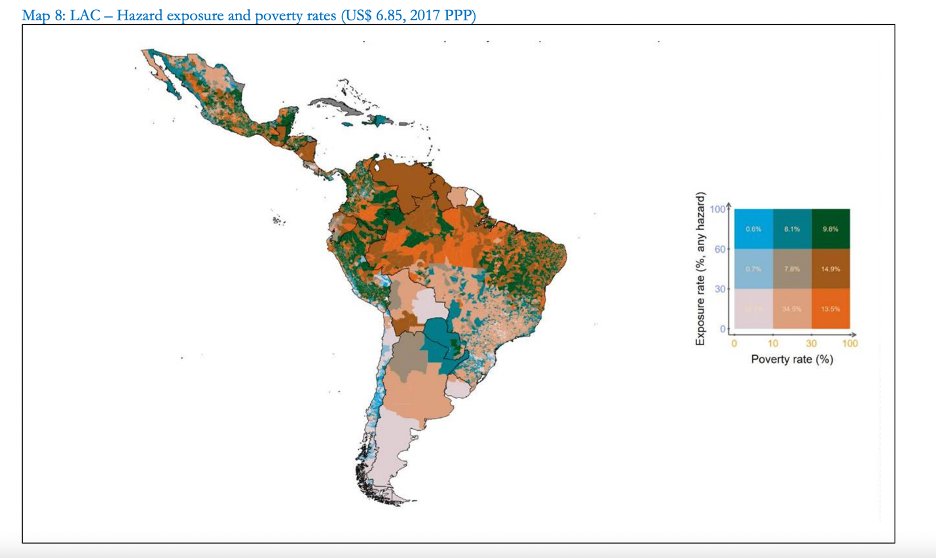
People living in #poverty across Latin America and the Caribbean are significantly more exposed to #climate hazards than the non-poor.
While 34% of the non-poor population is exposed to at least one major climate hazard, including droughts, hurricanes, heatwaves, floods, and landslides, that share rises to 44.6% among people living in poverty.
The challenge is even more acute in certain locations and for specific groups. Poor rural households, for example, face high exposure to droughts across every single country in the region.
This new @WorldBankGroup Policy Research Working Paper "Are the Poor More Exposed to Climate Hazards in Latin America?" by Ben J. Brunckhorst, Miki K. Doan, Alejandro de la Fuente, Samuel Freije-Rodríguez, Catalina García, and Minh C. Nguyen provides valuable evidence on how poverty and climate vulnerability overlap, helping identify where policy action is most urgently needed.
I highly recommend giving it a read: https://t.co/GPrdHB1bEO
In 2014, social protection programs in #Madagascar had just 25,000 beneficiaries in a single region.
Today, nearly 3.6 million people across all 23 regions are being reached. #Women represent nearly two-thirds of beneficiaries. Their empowerment is key to building stronger families and communities, and to driving real, lasting change.
These programs help women rebuild their lives after shocks and crises, strengthen their economic inclusion, invest in their education and health, and expand their role as community leaders.
In a context where women have often been excluded from decision-making, the Mother Leaders initiative has trained more than 20,000 women to become role models and pillars of resilience in their communities.
In this @WorldBankGroup blog Julia Rachel Ravelosoa and Zo Andrianjaka Tahiana Randrianatoandro remind us why supporting women today builds the foundation for future stronger generations: https://t.co/1Le2NvLtZB
Honored to have delivered the opening keynote at the IX Jornadas Corporativas of Fundación Microfinanzas BBVA (@FMBBVA), held in Panama City alongside leaders and senior executives from the six countries where the Foundation operates.
In my remarks, "The Latin America and the Caribbean's long road to prosperity," I shared the @WorldBankGroup's perspective on the region's current landscape: the historic progress made in reducing poverty, the challenges that remain in building a true middle-class society in LAC, and the pillars I see as essential to closing gaps and achieving sustained, productive development by 2030.
Latin America and the Caribbean has become a middle-income region, but not yet a middle-class society. The road to prosperity remains long, and it will require decisive domestic action alongside strong multilateral cooperation.
Thank you for the invitation and for the space for dialogue.
How should development targets be set? Ambitious targets can motivate policymakers, mobilize resources, and inspire innovation. However, tracking development also requires realistic goals.
@divwadhwa, @nishant_yonzan, Daniel Gerszon, Umar Serajuddin, and Rossana Tatulli offer a method to set targets that models the typical path of development for an indicator and calculates how long it usually takes to move between any two development stages based on past experiences around the world.
The authors have created an interactive tool: a package in R that allows anyone to create development targets at various levels of ambition using their own data.
Read this @WorldBankGroup blog and explore it: https://t.co/FnRvu1Rg06
Among vulnerable #women in Nigeria, having a family member employed in any occupation is associated with significantly better labor market outcomes: 0.776 higher log-odds of being in paid work, two additional hours worked per week, and US$2 more in weekly earnings.
Gender gaps in employment and income are not driven solely by differences in human capital or constraints such as childcare and transportation. Limited access to social networks and social capital is another important barrier to women’s economic participation.
These findings suggest that programs targeting groups rather than individuals may help strengthen women’s social capital, ultimately improving skills development, employment opportunities, agency, and overall empowerment.
Nono Ayivi-Guedehoussou, @SahayAbhilasha, Maria Emilia Cucagna, and Mansi Sharma provide compelling evidence on this issue in a @WorldBankGroup Policy Research Working Paper well worth reading: https://t.co/zziFpuiRJh
Global security needs to be rooted in the stability and growth of the most vulnerable countries.
However, precisely when some of the root causes of fragility are intensifying, official development assistance is shrinking, returning in 2027 to 2020 levels.
The @WorldBankGroup International Development Association (IDA) helps bridge this gap, leveraging every dollar of donor contribution up to four times through its triple-A credit rating and access to capital markets. So far, it has helped nearly 200 million people in fragile countries access health, education, and livelihood services.
Preventing a crisis can be up to 103 times cheaper than responding to one, and IDA points precisely in that direction.
Read this blog by Akihiko Nishio to learn more about this critical matter: https://t.co/81LfJPG8Ei
When social assistance is delivered in conflict settings, does it reach those who need it most?
Using data from the Central African Republic, a new @WorldBankGroup Policy Research Working Paper by Jonathan Lain and Johannes Hoogeveen finds that social assistance is often directed based on displacement status rather than poverty levels.
Internally displaced persons living in camps are significantly more likely to receive assistance than households outside camps, even when the latter are substantially poorer. As a result, some of the most vulnerable households are excluded from support.
The paper suggests that targeting assistance based on monetary welfare could better protect poor households and reduce the depth and severity of poverty.
This could involve identifying the poorest households within camps, adjusting assistance over time to promote self-reliance, and strengthening efforts to reach vulnerable households outside camps as well.
Important reading for anyone working on social protection in fragile and conflict-affected contexts: https://t.co/7RPBRiAb4U
Bangladesh has achieved substantial progress in education expansion in recent decades, reaching near-universal primary enrollment, improved gender parity, and expanded access to secondary and tertiary education.
A new @WorldBankGroup Policy Research Working Paper by Sergio Olivieri, Giovanni Razzu, and Ayago Wambile traces cohorts born between the 1950s and 1990s and finds three things:
-Educational expansion has increasingly reached children of less-educated parents;
-No urban premium in intergenerational mobility exists as rural areas have kept pace;
-The gender gap closed in the 1990s cohort, driven mainly by accelerated gains among men in urban areas.
However, expanding educational access has not been enough. Social norms, limited childcare, mobility restrictions, and safety concerns continue to prevent education from fully translating into economic opportunity, particularly for women.
I recommend this paper to gain insights on mobility patterns that in many aspects differ from broader South Asian trends: https://t.co/vINd3boIKr
Grateful to the Asociación de Economía del Ecuador (@aso_econ_ec1) and to @UDLAEcuador for the invitation to deliver today's keynote at the IV Annual Congress, in Quito.
The conversation with Ecuador's economics community was a reminder of why this work matters.
We shared data, debated ideas, and sat with uncomfortable realities: at current rates of progress, extreme poverty will not be eradicated for decades. One in five people globally remain highly vulnerable to climate shocks from which they would struggle to recover. Job quality, a key pathway out of poverty, is deteriorating in much of Latin America and the Caribbean, including Ecuador.
But we also talked about what can be done: multidimensional measurement that drives integrated policy, growth that reaches the bottom of the distribution, and the kind of coalitions, between elites, citizens, and international actors, that have historically made reform possible.
Thank you to the organizing committee for creating space for this kind of exchange and to all the students and researchers who engaged so thoughtfully.
In emerging economies, an estimated 50%–70% of self-employment income goes undeclared for #tax purposes, while the evasion rate among salaried employees is typically below 10%.
The result is a stark case of horizontal #inequity: two individuals with identical earnings can end up paying very different amounts in taxes.
Drawing on data from 25 developing countries, a new The @WorldBankGroup Policy Research Working Paper finds that self-employed workers in the top income decile pay, on average, 6 percentage points less in taxes than comparable employees.
By limiting public revenues, tax evasion can constrain investments that support #poverty reduction and inclusive growth, while also fueling resistance to tax reforms that improve vertical equity but worsen horizontal equity. Addressing distributional concerns requires credible improvements in enforcement, transparency, and administrative capacity.
Read the full paper to learn why reducing tax evasion is essential for building fairer and more sustainable tax systems: https://t.co/Vmdjgdbl9q
Inclusive institutions and social cohesion are essential for sustained development and #poverty reduction.
At the same time, development processes themselves can fuel tensions when growth is unevenly distributed across identity groups, or when policies systematically favor one group over another.
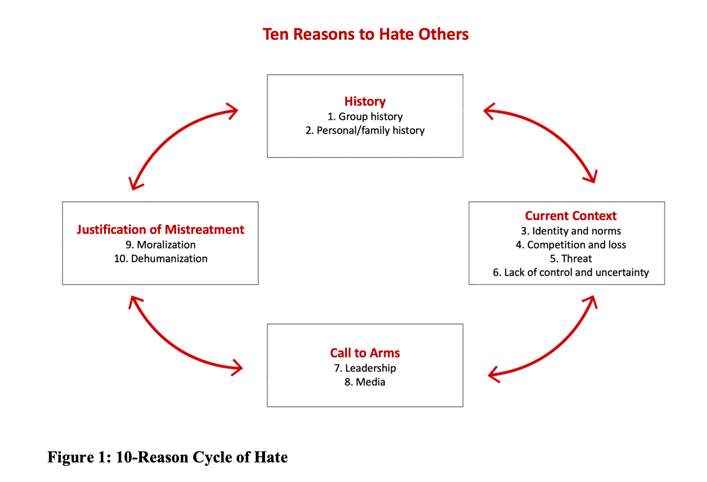
This @WorldBankGroup policy paper examines how intergroup hate can emerge and spread, and provides practical tools and conceptual frameworks not only to respond after tensions erupt, but also to anticipate, diagnose, and prevent them.
The analysis highlights an important development challenge: exclusion, inequality, and weak institutions can undermine both social stability and long-term development progress.
Read the full paper "The Cycle of Hate, and What We Can Do About It": https://t.co/p9nxPt2Bwf
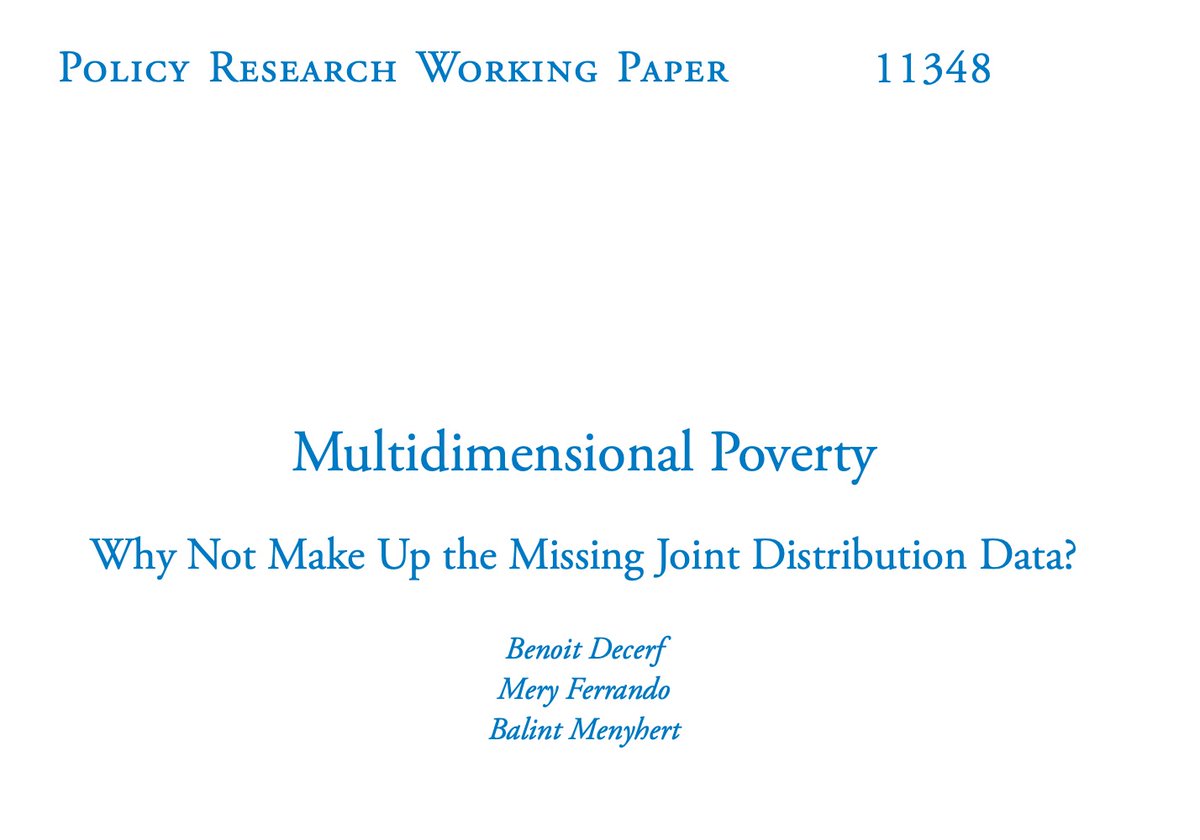
Monetary and multidimensional poverty are often collected in separate surveys, making it difficult to fully observe how these two forms of poverty overlap at the individual level.
To overcome this limitation and improve poverty understanding, a new @WorldBankGroup policy paper by Benoit Decerf, Mery Ferrando and Balint Menyhert proposes a simple method to estimate the missing information.
Using evidence from six developing countries, the paper finds that this approach consistently outperforms traditional single-survey methods, “mash-up” approaches combining multiple surveys, and even more complex imputation techniques.
Read the full policy paper for a deeper look at this innovative approach to measuring poverty: https://t.co/R4Q3n9AVuU
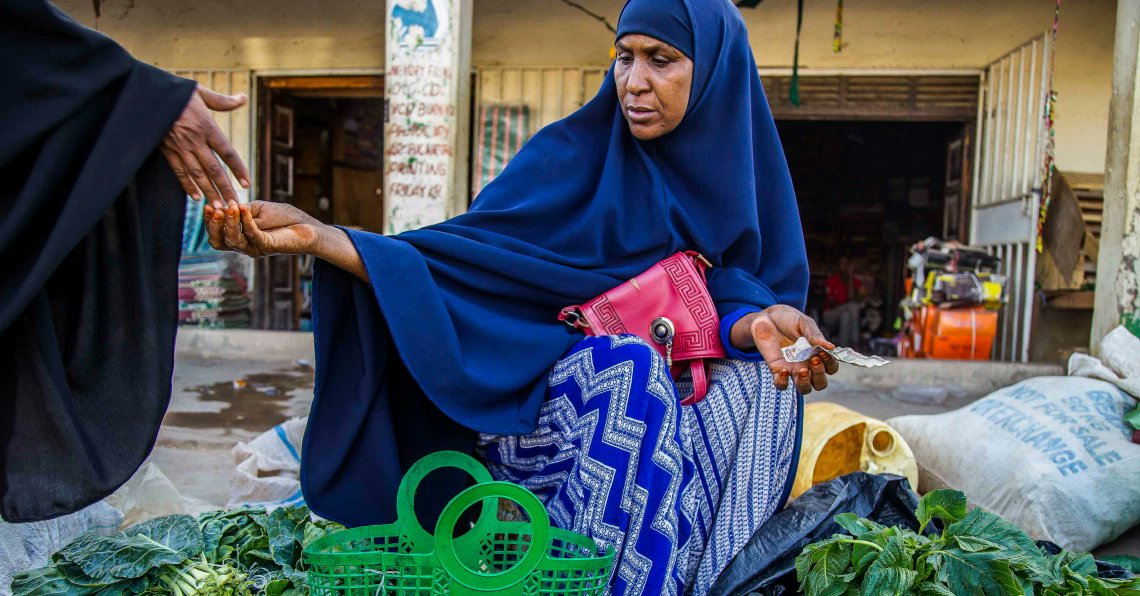
In 2025, the @WorldBankGroup and the Somali National Bureau of Statistics conducted a phone survey across urban, rural, and nomadic communities in Somalia.
The data revealed deep economic hardship: over 40% of households consider themselves poor.
While better-off families can absorb shocks and wait for job opportunities, poorer households are far more likely to rely on debt, charity, and assistance that often trap them in cycles of vulnerability and insecurity that persist even when employed.
Even under these conditions, the survey also highlights resilience, adaptability, and strong aspirations to improve livelihoods.
Expanding access to finance, skills, and markets will be essential to turning those aspirations into opportunity.
This @WorldBankGroup blog by Alastair Peter Francis Haynes and Alejandro de la Fuente shed light on a critical reality: how people in harsh contexts earn a living, what they aspire to, and what stands in their way.
Read the full analysis to explore the findings: https://t.co/UaW2Q5dV1I
How can governments track #poverty when crises hit but household surveys are years out of date?
Survey-to-survey imputation, which that trains on the most recent full survey and adds a short follow-up of 10–20 indicators, offers a near-real-time poverty estimate at a fraction of the cost. However, this approach can fail if the selected indicators do not change quickly enough to capture sudden welfare losses.
@noboyoshida, Yusaku Kawashima and Shinya Takamatsu argue that the key challenge may not be model sophistication, but the information models rely on. Linear regressions with fast-changing proxy variables consistently performed as well as, and sometimes better than, complex machine-learning alternatives.
The takeaway is simple: better and more timely data may matter more than increasingly sophisticated algorithms when monitoring poverty during crises.
Read the full @WorldBankGroup blog to explore this relevant evidence: https://t.co/Poh2B66zfu
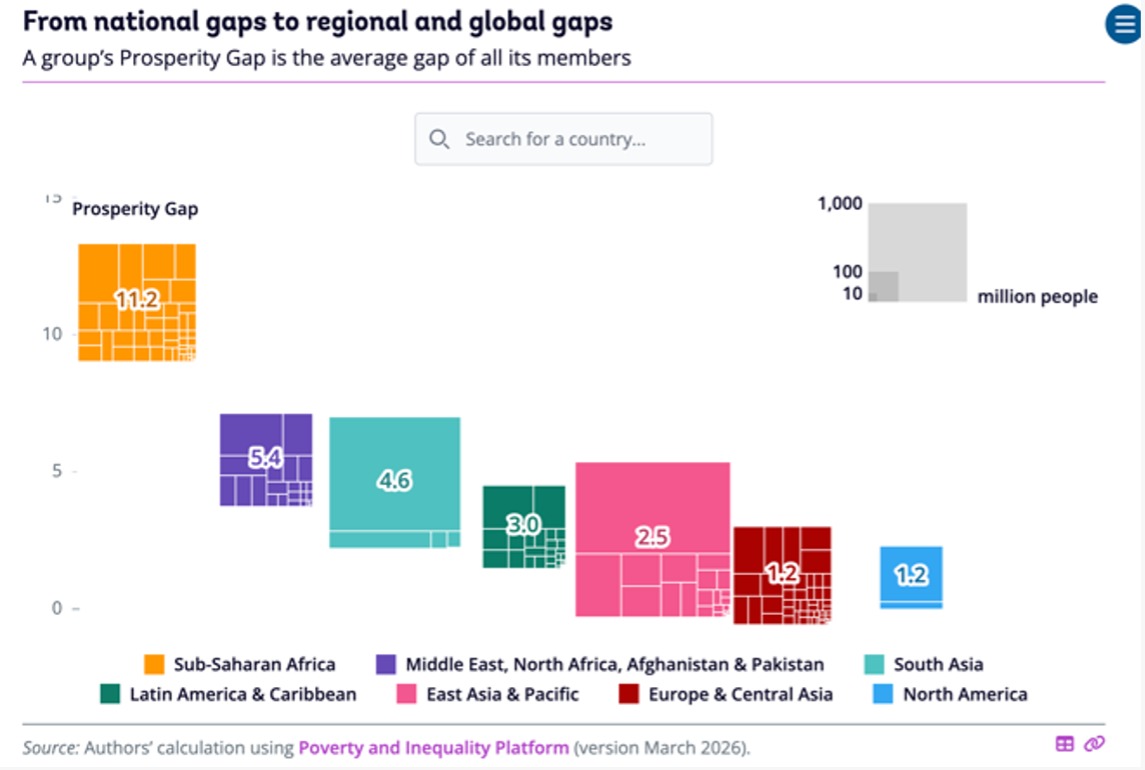
The Prosperity Gap is a metric that tracks both, economic progress and its distribution. It is the average factor by which individuals’ incomes must be multiplied to reach a global prosperity standard currently set at $28 per person per day, roughly the income level of economies transitioning into high-income status.
The disparities are striking: while most people in Europe & Central Asia and North America have already reached this threshold, in Latin America & the Caribbean incomes would need to increase about three 3 times, in South Asia and the Middle East, North Africa, Afghanistan & Pakistan, about five times, and in Sub-Saharan Africa, almost 11 times.
Explore the new interactive @WorldBankGroup Atlas of Global Development and dive deeper into global inequality trends: https://t.co/uS0shw7TBG