Biophysicist hiding amongst electrical engineers. Bid development coordinator at EEE Department, Imperial College London. Avid cook, half decent right back.
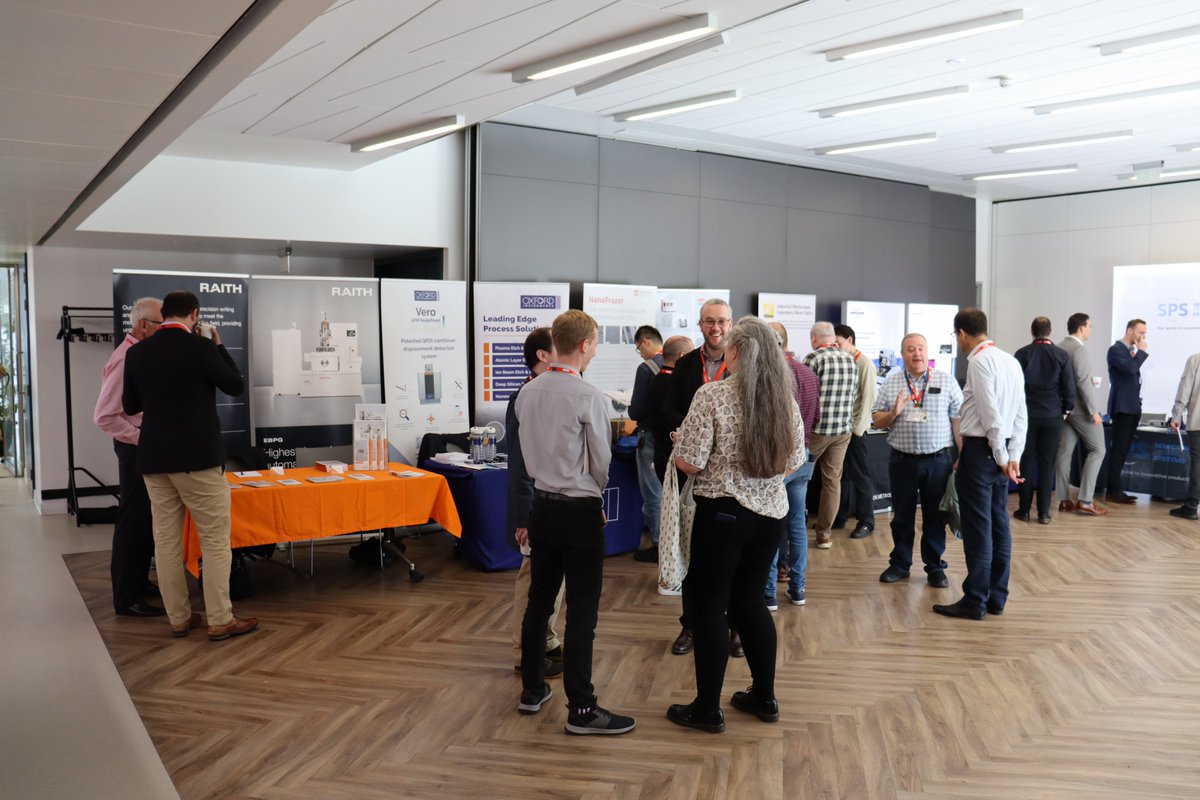
That's a wrap on the first @nanoFabUK Symposium! We would like to thank all the attendees and speakers who made it such a success, and the organisers and sponsors who made it all possible. We hope that you can join us for the 2nd @nanoFabUK Symposium @UofGlasgow in 2025.
Day 1 at the nanoFabUK Symposium was a great success and we continue today with sessions on user training, operations, and academia-industry interactions, as well as a range of industry talks.
The first nanoFabUK Symposium is open! We have a packed 3-day schedule at the National Graphene Institute in Manchester, with talks from Research Technical Professionals and Industry Representatives from up and down the UK, and beyond.
A big thank you to everybody in both the @BakalLabICR and @pgeorgiou_ic labs for their support in this project, as well as the public for their votes. We hope this image gave you a little sneak peak into our exciting research! @imperialeee@ImperialCBIT@ICR_London@LKeeble_IC
@imperialeee@ImperialCBIT This was a test with electrodes on a glass slide to see if they could trap DNA. The same design will go on the chip, but the process will need a bit of tweaking.
I feel proud to have been awarded associate fellowship of the higher education academy for my teaching @ImperialPhysics. Teaching has been wonderfully rewarding over my PhD and hopefully much more to come. Onwards and upwards! @AdvanceHE
Great time presenting SPACEMAN at the virtual #ISCAS2021 in Korea. Big thanks to @Sghoreish and @pgeorgiou_ic for their usual support. A step closer towards wireless electrochemical systems!
@IEEECAS@imperialeee@ImperialCBIT
Presentation here: https://t.co/2IfzBC0Ndk
It was great to introduce @ImperialCBIT 's combined pH-impedance sensing chip for DNA detection @IEEEISCAS 2021 this morning! By combining these 2 sensing methods in 1 pixel we aim to improve speed, dynamic range, and compression (1/3). https://t.co/5PFgOhuVAI
By leveraging the impedance sensing electrodes we can use electric fields to draw DNA closer to the chip surface, further improving speed and sensitivity. We hope to have this chip back with some results by the end of the year.
Great article! But ‘may’ isn’t the right word. Antibiotic resistant bacteria are being transmitted within communities in multiple countries within every WHO region. Hence the #AMR pandemic ‘is’ upon us. Time the global community understands this & acts https://t.co/EDngT2tIxA