I'm launching a pre-order campaign with @porchlightbooks! You can purchase a signed copy (with an originally designed bookplate) for 30% off until August 22, 2024.
See more details below!
Some reflections on leadership, why character matters, and my first thoughts about the Democracy Symposium at George Washington Presidential Library last weekend. Check out my latest Imperfect Union in your inbox or subscribe today!
https://t.co/UPwmKthvCd
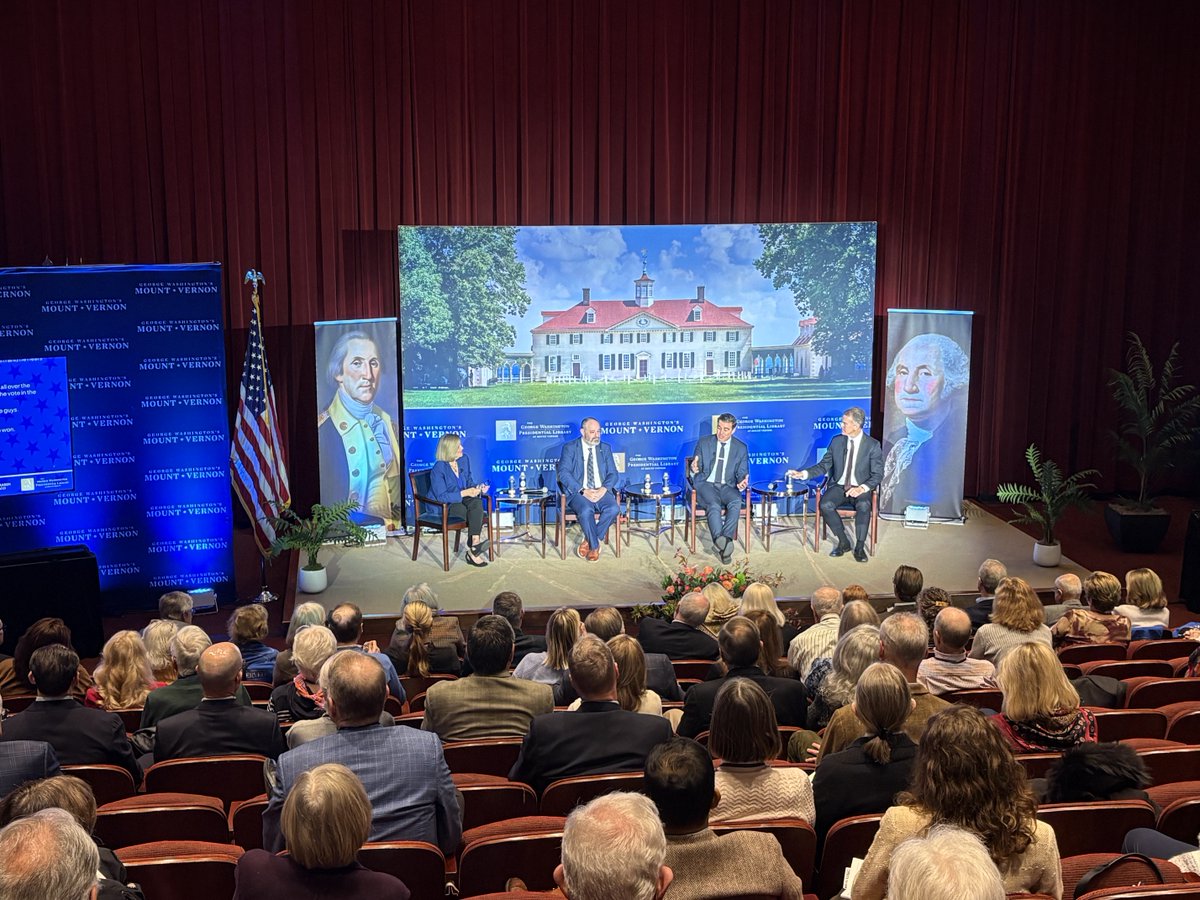
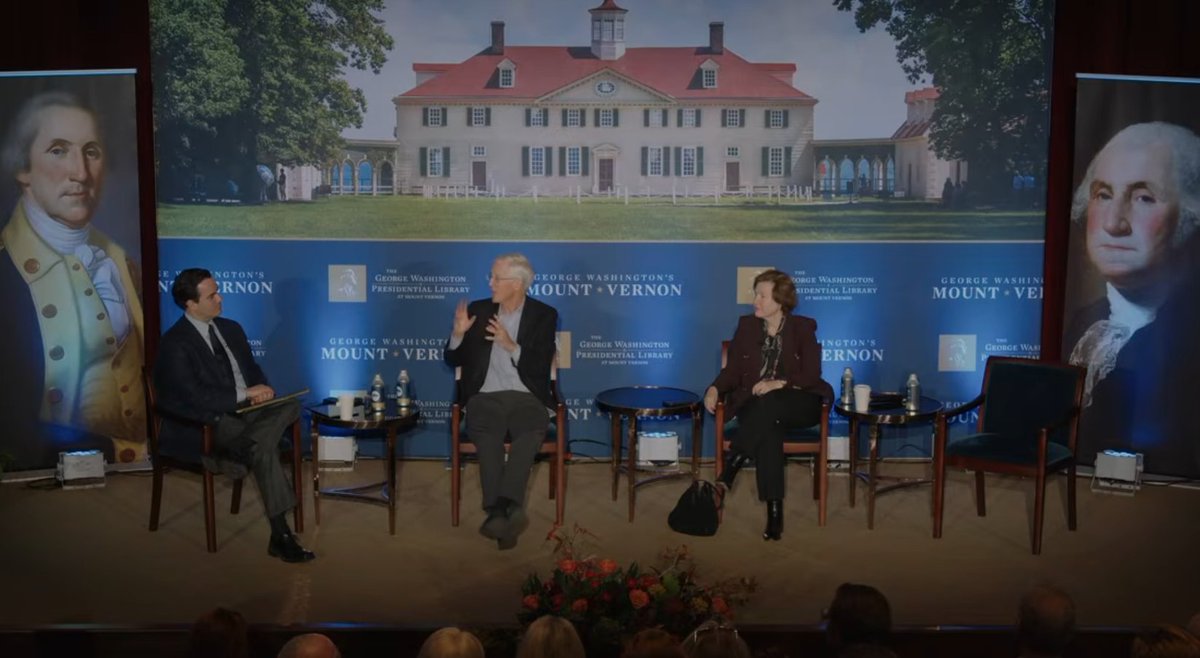
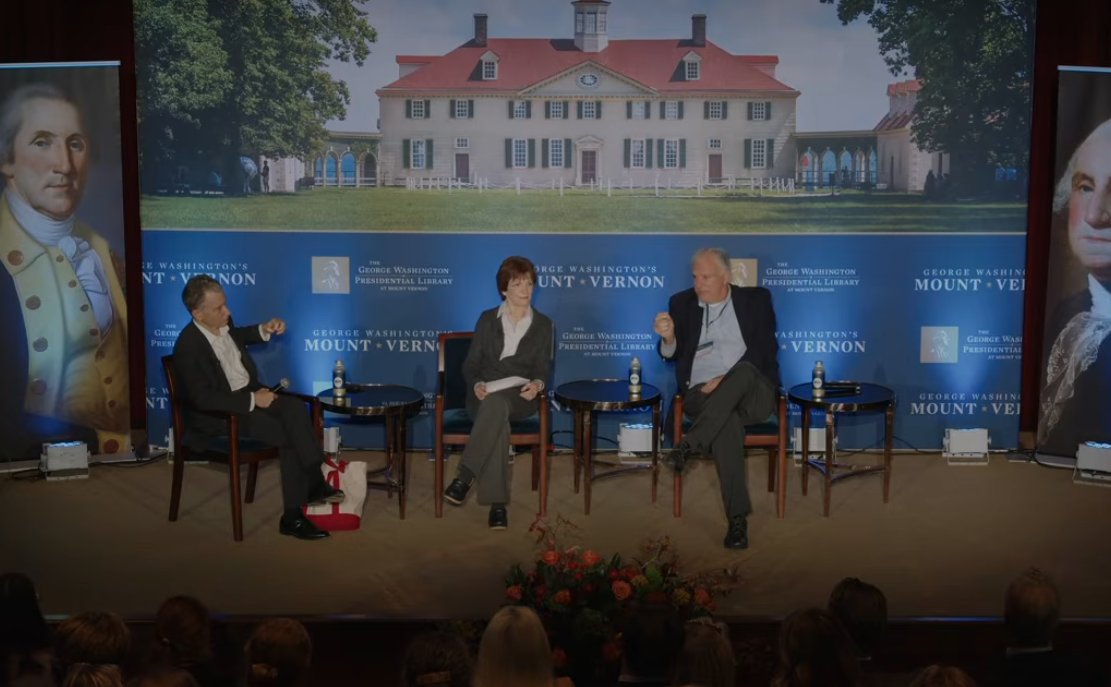
Last Friday, Major Garrett, the chief Washington correspondent for CBS News, interviewed former Indiana governor Mitch Daniels (@purduemitch) and me about our time in public service and our new memoirs during the 2026 George Washington symposium.
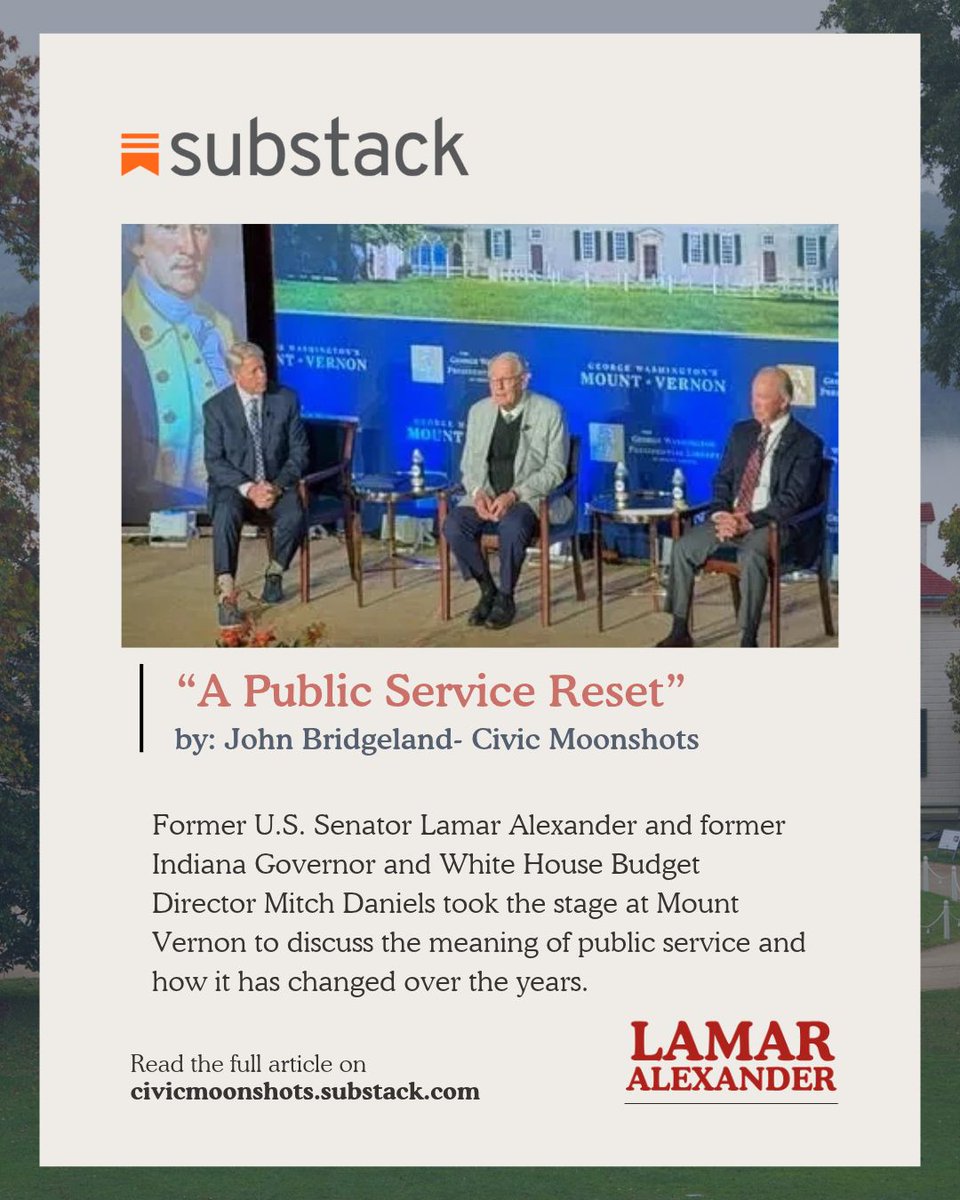
As John Bridgeland (@JohnMBridgeland), former director of the White House Domestic Policy Council and CEO of More Perfect, said of the event: “America needs a public service reset, and the Democracy Symposium that Douglas Bradburn (@DouglasBradburn) of George Washington’s Mount Vernon (@MountVernon) and Lindsay Chervinsky (@lmchervinsky) of George Washington Presidential Library organized and led was one of the most educational, engaging and inspiring programs in which I’ve ever participated.”
You can use this link to read John’s Substack article: https://t.co/SmSq0zLFbc
In THE EDUCATION OF A SENATOR: FROM JFK TO TRUMP, I paint portraits of the presidents I worked with, tell stories about what I saw behind the scenes, and recount the lessons I learned about American politics and our country’s future.
THE EDUCATION OF A SENATOR: FROM JFK TO TRUMP is out now from @PostHillPress.
You can use this link to order: https://t.co/T1quO5EVwp
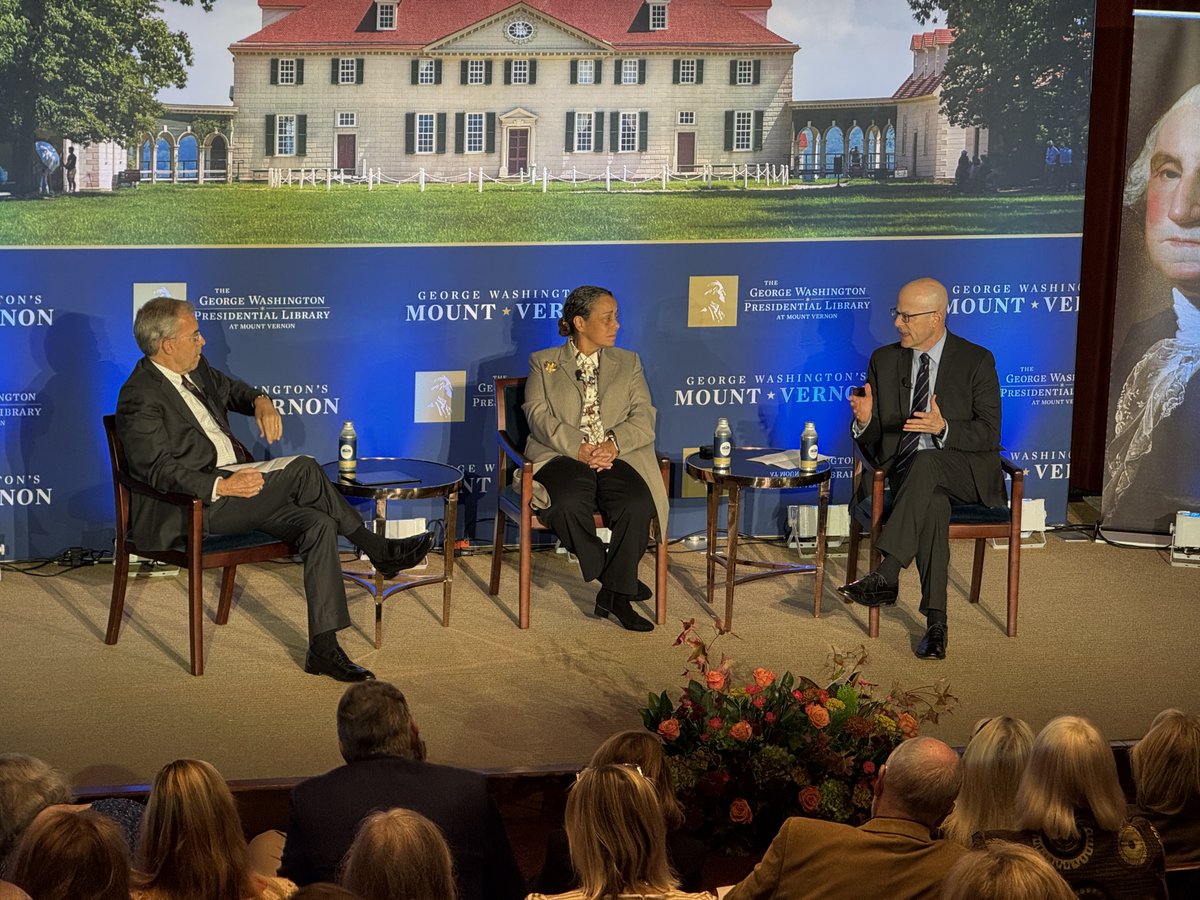
What can we learn from George Washington's foreign policy? The Miller Center's Eric Edelman and Eliot Cohen joined the 2026 George Washington Symposium for a conversation about the first president’s diplomacy, moderated by @lmchervinsky.
#USHistory
https://t.co/swn1GYp7DV
What connects the Marquis de Lafayette to George Washington’s famous crossing of the Delaware?
This fascinating map, depicting the critical New Jersey campaign, was likely used by Lafayette himself.
See it in person while it’s on display for a limited time, and learn more on our website! https://t.co/IIScSitBVs
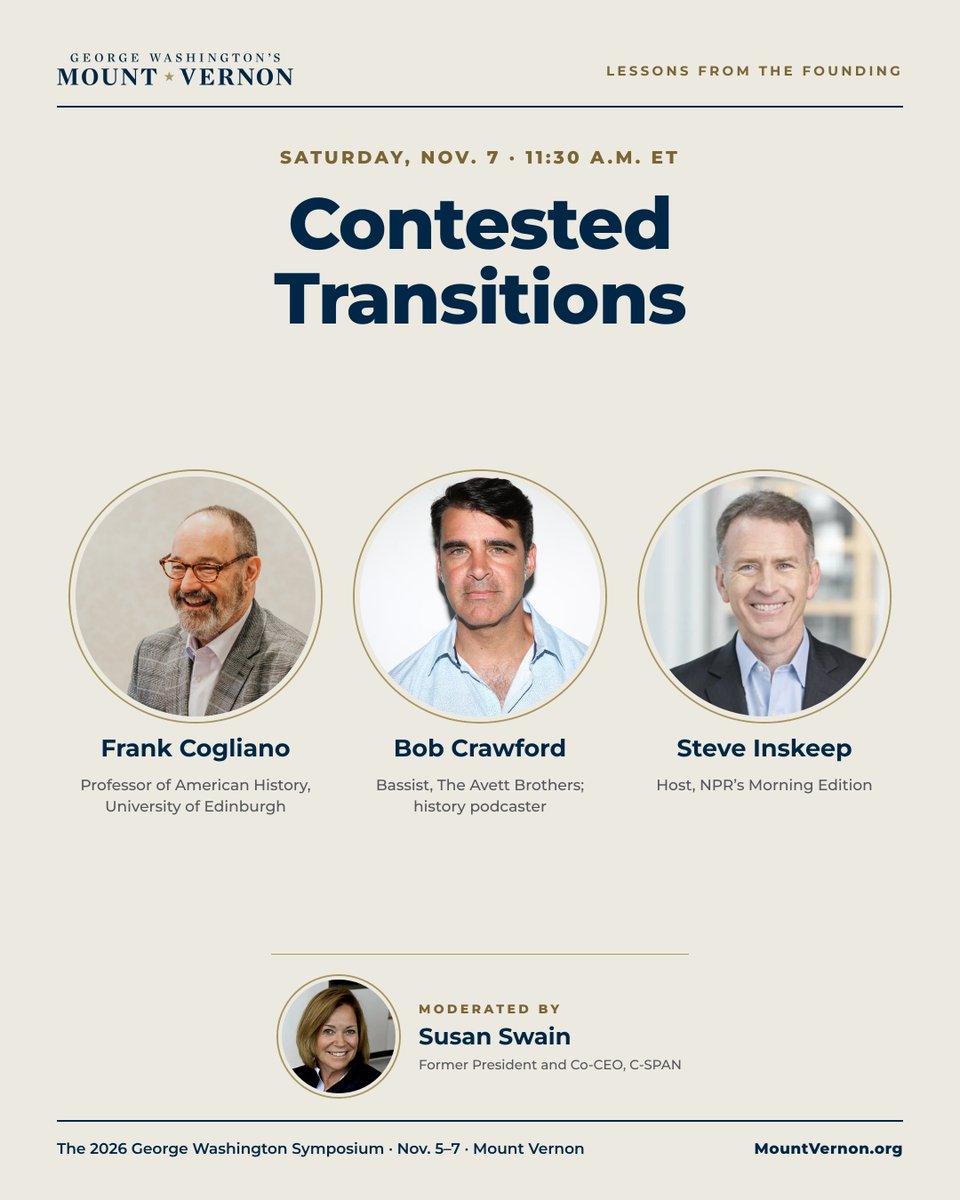
“One of the most important legacies of the 1800 election, and this is where Jefferson is right that it is a 'revolution,' is that there was a peaceful transfer of power from one political party to the next.” - Frank Cogliano
“Was there really a corrupt bargain? I don’t know … but the country perceived it that way. And not only did it doom [John Quincy] Adams’s one-term as president, it doomed Henry Clay who would run for president three times and never win. And you can kind of trace it back to that original sin of that ‘corrupt bargain’ with John Quincy Adams.” - Bob Crawford on the 1824 election
“This peaceful transfer [of power] is the secret of the whole thing. It is the most important thing. It is more important than whoever is president for the next four years … It is a great inheritance from the people who went through these difficult elections and came out on the other side.” - Steve Inskeep (@NPRinskeep)
#GWSymposium
Panel on Covering the Presidency, moderated by Robert Costa (@costareports)
“It’s the ultimate beat, obviously. The tricky part is that White House Correspondents, like the dog that catches the bus, they are confined into a little room. They often don’t have access. They’re interviewing each other. It can be very limited, it can be very confining. The trick is how to break out of that and how to work around the narrow funnel that the White House tries to put you in.” - Evan Thomas (@evanthomasbooks) on covering the presidency
“I think that for anybody who really wants to understand Washington [D.C.], spending a few years on Capitol Hill, before you sort of get sucked into the maw of our imperial presidency, is a great way to do it. Because I think you learn about how tactile power actually is and how much it’s made of relationships.” - Susan Glasser (@sbg1)
#GWSymposium
Panel on Presidential Transitions
“I wish every American could see what the West Wing looks like on the night of January 19th, because everybody is gone. Everything is gone. There are no books on the shelves … there are carpenters and painters furiously getting ready to have the West Wing look the way the new president wants it to look. And to me, it was almost a spiritual experience wandering around the West Wing on that night because democracy had done its work, an incumbent president was being abruptly removed, his entire team was gone, and I had a feeling of, ‘What a great thing our system is that permits this to happen peacefully and smoothly.’” - Joshua Bolten on the presidential transition of 1993
#GWSymposium
Panel on Religious Freedom with John Fea (@JohnFea1) and Mona Charen (@monacharen), moderated by Jeffrey Rosen (@RosenJeffrey)
“We have had many reasons to look back at the founders and think, ‘They missed a few things.’ But religious freedom—that they nailed. It is worth remembering that we are the very first country to formally separate church and state. It had never been done in history.” - Mona Charen
#GWSymposium
“In 1799, when George Washington died, the British Navy flew its flags at half mast in respect for the General. And I think it’s a sign that, as we’ve looked back this year on the 250th, it’s been a real moment to look forward as well … ours is a friendship that is vital, it’s deep, it’s enduring, and I’d say it’s consequential.” – British Ambassador Christian Turner (@CTurnerFCDO)
“I strongly believe that if the U.S. wants to be, and remain, the leader on artificial intelligence, you need the collaboration with Europe … that will be absolutely key. We should not be inward-looking; we shouldn’t be stuck in regulatory discussions. We really need to work together.” – French Ambassador Aurélien Lechevallier (@FrenchAmbUS)
“We’ve been celebrating the 250th anniversary of the American Revolution this entire year and the participation of all of us—the British, the French, the Spanish, and the Hispanics—in support of the 13 colonies.” – Spanish Ambassador Ángeles Moreno Bau (@AMorenoBau)
#GWSymposium
We kicked off today's panels with Doug Bradburn, Mount Vernon's president and CEO, and Lindsay M. Chervinsky, executive director of the George Washington Presidential Library. 🎤
“We came up with nine principles, values, or contributions that Washington made to the nation that are really central to what it means to be a republic,” Chervinsky explained. “So our thought for this program is to ground it in the history, ground it in Washington’s contributions, and bring together the best scholars, experts, and practitioners to discuss where we are today and then, critically, how do we harness the energy of this anniversary year to talk about what we do next?”
#GWSymposium
“If you want to help the largest number of people and be a part of helping our republic survive, you have to figure out a way to get yourself elected to something. That opportunity still exists today.” - former Tennessee Governor Lamar Alexander (@SenAlexander)
“You do a little reading, do a little reflecting, ask a lot of wise people, then you try to make the call that you think is right under the circumstances.” - former Indiana Governor Mitch Daniels (@purduemitch) on making difficult decisions as a public servant
#GWSymposium
Panel on Civil-Military Relations, moderated by historian Rick Atkinson
“Washington, that wonderful leader, gathers his officers up and goes to address them directly. He’s fantastic, he does this (pulls out glasses). ‘Forgive me, gentlemen, I have grown gray and almost blind in the service to my country.’ The officers who love this man start to weep … he convinced them, we are an army of the people. We do not use this army to overturn the government.” - Admiral Michelle Howard, Ret., on the Newburgh Address
“The rule of law and the strength of our institutions are things that I keep coming back to about why we are going to be okay. And I just fundamentally believe that you count out the United States of America at your peril.” - Brig. Gen. Ty Seidule, Ret. (@Ty_Seidule)
#GWSymposium
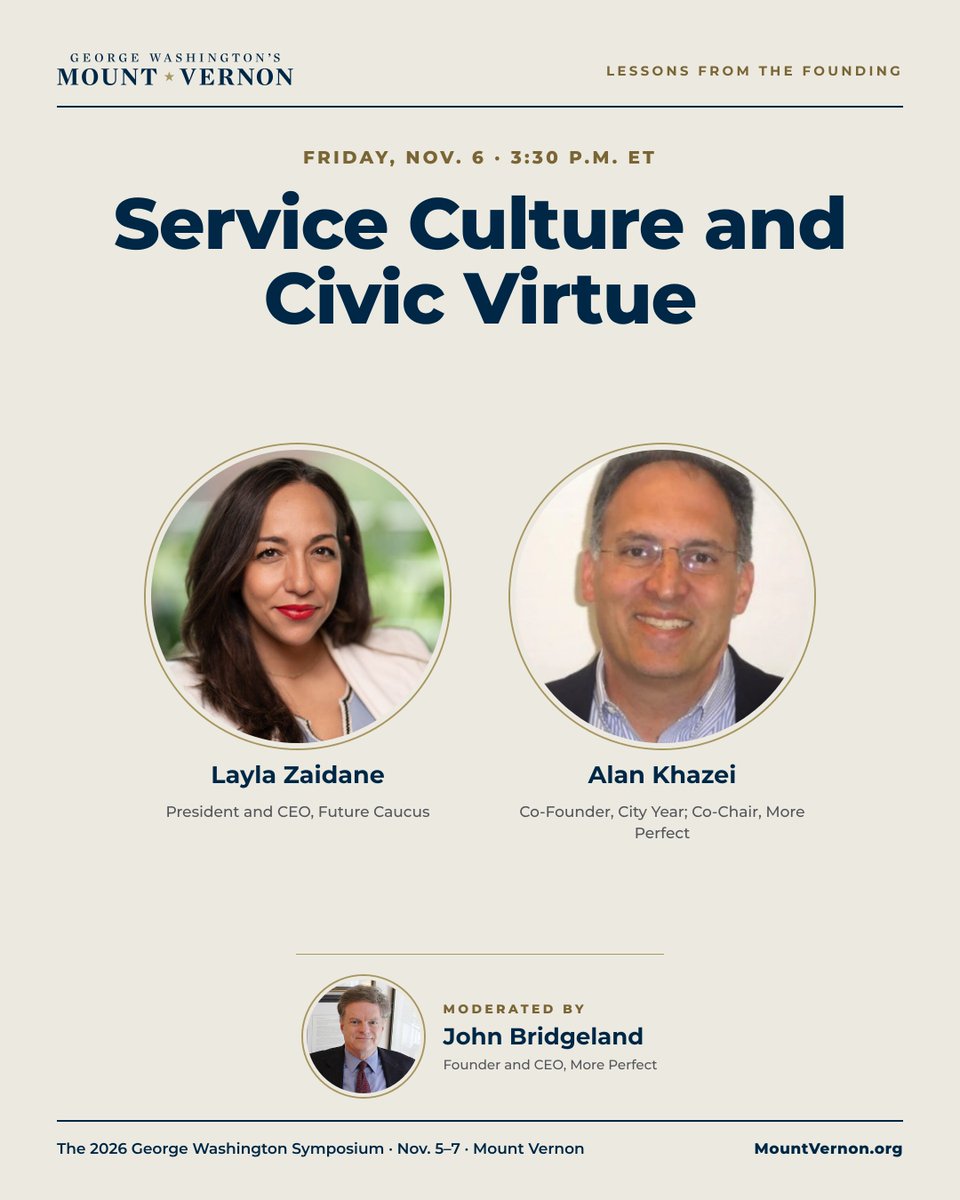
“We have a long tradition of civilian national service in this country. We’ve talked about George Washington’s extraordinary leadership as the general for the Continental Army, but without the citizen-soldiers who put down their pitchforks and picked up their muskets, there would not have been a revolution. So, the country really started with the spirit of citizen service.” - Alan Khazei (@AlanKhazei)
“We don’t have a lack of young people who want to change their communities. What we have, often, is too much friction between that desire to make change and the pathways they see to do it.” - Layla Zaidane (@layla_says)
#GWSymposium
Panel on Principles of Foreign Policy: a live recording of the “Shield of the Republic” podcast (@ShieldPod)
“There are so many things to say about Washington, but one of them is just his massive amount of common sense. And I think often there’s a temptation to try to frame foreign policy as some kind of esoteric craft when a large part of it is common sense, and actually simplicity, more than subtlety.” - Eliot Cohen (@EliotACohen)
“That is an under-appreciated quality in our presidents that we don’t value enough … the temperament of a decision-maker who understands that they don’t know everything, that they can’t know everything, and have enough self-confidence to be able to take a variety of expert opinion and weigh it out and make judgments.” - Ambassador Eric S. Edelman
#GWSymposium
We're excited this morning to kick off two days of panels from Mount Vernon at "Lessons from the Founding: The 2026 George Washington Symposium."
Through nine dynamic themes, and with more than 50 speakers, the symposium will connect the nation's founding principles with today's most pressing civic questions.
Follow along here over the next two days for a peek into thought-provoking moments, photos, and a look at some special objects from Mount Vernon’s collections. #GWSymposium
John Quincy Adams's life spanned much of the nation's first century. He witnessed the Battle of Bunker Hill as a child and lived long enough to become the first U.S. president to be photographed.
The executive director of @GWBooks (@lmchervinsky) reflects on what Adams's life reveals about the challenges of leadership in a young democracy in this short take from @RetroReport.
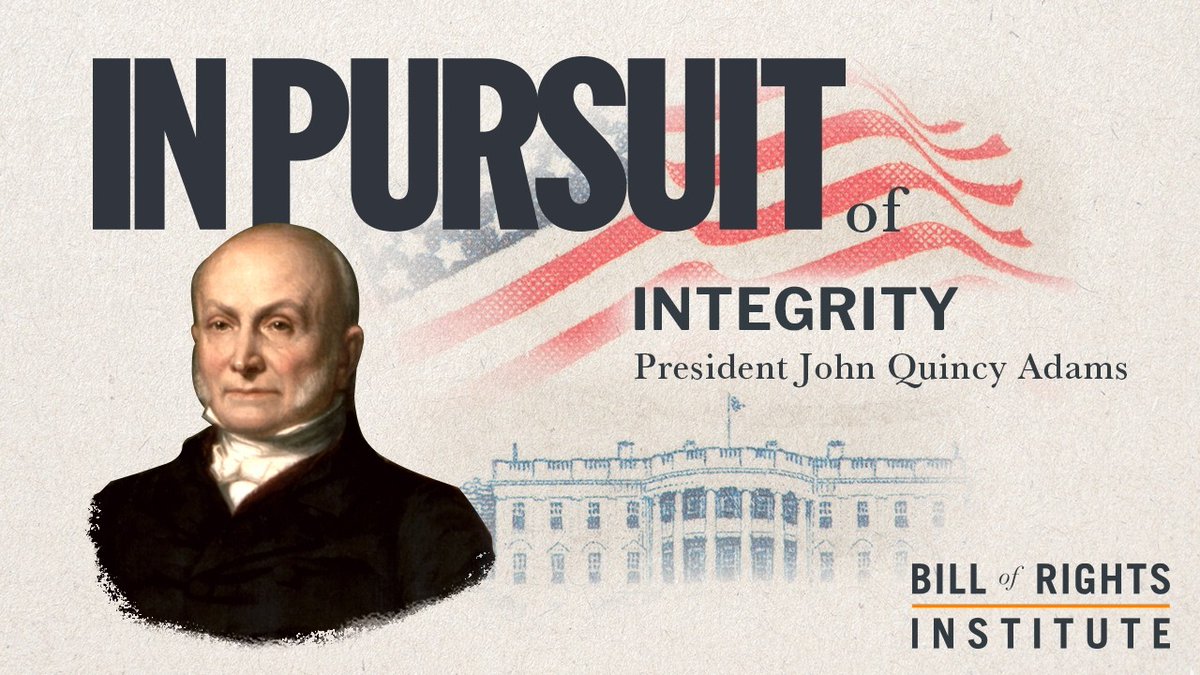
In Pursuit: Lessons of American Leadership, based on @InPursuitUSA by More Perfect, explores what presidents and first ladies can teach us about leadership, citizenship and public service. Watch the special today on @PBS platforms and Retro Report's website: https://t.co/wEQOmy74r1
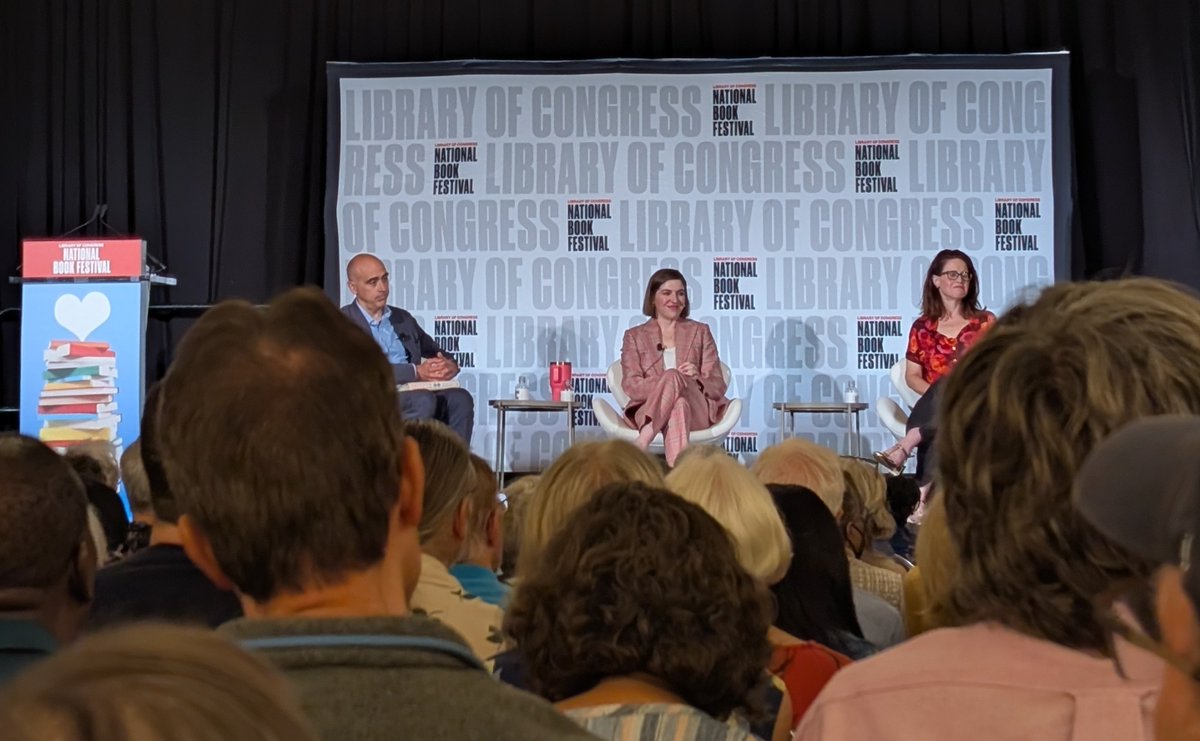
So enjoyed catching @lmchervinsky at the @librarycongress's National Book Festival! She discussed her essay from @AEI's "The American Revolution and America's Role in the World" in conversation with Sarah Pearsall on the Revolution as an unmistakably international phenomenon
1/ The executive director of @GWBooks, @lmchervinsky, shares how John Quincy Adams’ years as a diplomat shaped his influence on future presidents’ approach to foreign policy in this short by @RetroReport, based on @InPursuitUSA, for @PBS.
In Pursuit: Lessons of American Leadership is a new documentary special produced by @RetroReport, based on @InPursuitUSA by More Perfect. It brings the leadership lessons of American presidents and first ladies to life for America’s 250th anniversary.
Tune in Oct. 27 at 10/9c (check local listings) on @PBS to learn more: https://t.co/hKX9eCt6Cj
The Monroe Doctrine wasn't written by Monroe
JQA drafted it, 2 years after saying that America "goes not abroad, in search of monsters to destroy"
New free @InPursuitUSA video based on an essay by @lmchervinsky. Under 5 min, w/lesson for 6-12
https://t.co/oXzL68dAWJ
#sschat
George Washington was "extremely regimented in everything" he did in life, says historian @lmchervinsky.
"He was ambitious for his plantation, for his economic prospects. He was ambitious about his political career, his military career," she told @JudyWoodruff. "And that led to, sometimes, an element of control about what he did on a daily basis, what the enslaved population did on a daily basis, and what sort of records were kept to monitor all of that progress. So his farm records are almost immaculate."
Chervinsky spoke to Woodruff for PBS News' podcast, "In Pursuit of Happiness," about Washington's achievements, contradictions and enduring influence on the American presidency.
For the full episode: https://t.co/QJiNkDsIVP