Stacey King has passed away at 59 years old. A three-time NBA champion with the Chicago Bulls across eight NBA seasons after being the No. 6 pick in the 1989 draft, and a beloved broadcaster for the team in his post-playing career.
Guess we live in a context free world now? People just post stuff with zero info and few people ask for it while responding to it. This timeline sucks.
I grew up in the 80’s at early 90’s and to hear my fellow Gen X say “kids these days” statements is baffling to me. We grew up in one of the most violent, unhinged times in American history. Sure we were outside but everything outside was trying to either kill is or lock us up.
This is incredible from Dan Gilbert
But really not sure how the Pistons org lets this happen
Either way, LCA is going to be insane today for the Pistons
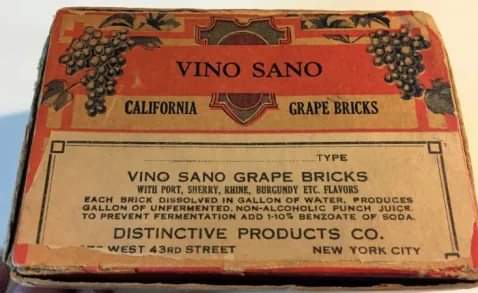
Rare brick that turned into Wine, saved the U.S. Wine Industry during Prohibition :
During chaotic days of Prohibition, wine producers, including those in the Inland Empire, were barred from producing most wine products. Some tried to keep their vineyards operating by offering a variety of legal products, such as grape juice and sacramental wines, but it was tough going.
The 3-inch by 4-inch grape bricks became popular in the late 1920s because federal laws did allow people to produce small amounts of wine for home use only. A grape brick is a dehydrated block of grape juice and pulp that was sold–quite legally–during Prohibition for people to make their own wine at home.
On the stained original box of the grape brick in the museum is the “warning” telling users NOT to use this to make alcohol. Beware, says the box, because the grape mixture in water will ferment in about 20 days. The box says if you wanted to “prevent fermentation, add 1/10 percent benzoate of soda.” There’s no evidence of a rush for benzoate of soda in those days. The box says the “juice” could also be used “for medicinal purposes,” though it advised checking with doctors first.
Informing consumers that using the grape brick for making alcohol was mostly illegal, the wording on the box also said the juice could be mixed with yeast and sugar to make different flavors, all with rather suggestive and familiar names: sherry, malaga, muscatel, rhine and burgundy, among others.
There were some reports that the grape brick didn’t make very good wine. But for the desperate, it was any port (or maybe zinfandel) in a storm. Despite the seemingly sincere warnings on the box, it didn’t take long for the feds to figure out that the grape bricks were just a thinly veiled way to dance around the Volstead Act, whose rules regulated Prohibition.
As the sales of bricks gained popularity throughout the United States, local and federal officials continued to feel they ought to do something about them. Three Vine Sano salesmen were arrested in New York City in August 1931, while more than a hundred people were arrested in Los Angeles about the same time. But as the end to Prohibition loomed, the desire to prosecute waned, as did the need for grape bricks.
📷 : One of the few remaining grape bricks dating from 1930s, in their original box, displayed at the Ontario Museum of History & Art.
- Subscribe for Detailed Post -
#archaeohistories
Pistons just went on a 10-2 run to close the quarter and take an 84-70 lead into the fourth.
Good stuff from Duncan, BBall and Sasser to help extend the lead for Detroit.
Paul Reed with an incredible block on Evan Mobley and, what a big time decision to trust him in this game, MARCUS SASSER gets all the way to the rim and hits a close floater as time expires.
Detroit will go into final quarter up 14.
The Pistons defense is built to close games like this. They must show up here.
This is your season.
Instant impact from Paul once again. I’ve said it before, but he just forces teams to defend the Pistons differently and you can count on him to be where he’s supposed to defensively.